<?php
_deprecated_file( basename( __FILE__ ), '5.3.0', '', 'The PHP native JSON extension is now a requirement.' );
if ( ! class_exists( 'Services_JSON' ) ) :
/* vim: set expandtab tabstop=4 shiftwidth=4 softtabstop=4: */
/**
* Converts to and from JSON format.
*
* JSON (JavaScript Object Notation) is a lightweight data-interchange
* format. It is easy for humans to read and write. It is easy for machines
* to parse and generate. It is based on a subset of the JavaScript
* Programming Language, Standard ECMA-262 3rd Edition - December 1999.
* This feature can also be found in Python. JSON is a text format that is
* completely language independent but uses conventions that are familiar
* to programmers of the C-family of languages, including C, C++, C#, Java,
* JavaScript, Perl, TCL, and many others. These properties make JSON an
* ideal data-interchange language.
*
* This package provides a simple encoder and decoder for JSON notation. It
* is intended for use with client-side JavaScript applications that make
* use of HTTPRequest to perform server communication functions - data can
* be encoded into JSON notation for use in a client-side javaScript, or
* decoded from incoming JavaScript requests. JSON format is native to
* JavaScript, and can be directly eval()'ed with no further parsing
* overhead
*
* All strings should be in ASCII or UTF-8 format!
*
* LICENSE: Redistribution and use in source and binary forms, with or
* without modification, are permitted provided that the following
* conditions are met: Redistributions of source code must retain the
* above copyright notice, this list of conditions and the following
* disclaimer. Redistributions in binary form must reproduce the above
* copyright notice, this list of conditions and the following disclaimer
* in the documentation and/or other materials provided with the
* distribution.
*
* THIS SOFTWARE IS PROVIDED ``AS IS'' AND ANY EXPRESS OR IMPLIED
* WARRANTIES, INCLUDING, BUT NOT LIMITED TO, THE IMPLIED WARRANTIES OF
* MERCHANTABILITY AND FITNESS FOR A PARTICULAR PURPOSE ARE DISCLAIMED. IN
* NO EVENT SHALL CONTRIBUTORS BE LIABLE FOR ANY DIRECT, INDIRECT,
* INCIDENTAL, SPECIAL, EXEMPLARY, OR CONSEQUENTIAL DAMAGES (INCLUDING,
* BUT NOT LIMITED TO, PROCUREMENT OF SUBSTITUTE GOODS OR SERVICES; LOSS
* OF USE, DATA, OR PROFITS; OR BUSINESS INTERRUPTION) HOWEVER CAUSED AND
* ON ANY THEORY OF LIABILITY, WHETHER IN CONTRACT, STRICT LIABILITY, OR
* TORT (INCLUDING NEGLIGENCE OR OTHERWISE) ARISING IN ANY WAY OUT OF THE
* USE OF THIS SOFTWARE, EVEN IF ADVISED OF THE POSSIBILITY OF SUCH
* DAMAGE.
*
* @category
* @package Services_JSON
* @author Michal Migurski <mike-json@teczno.com>
* @author Matt Knapp <mdknapp[at]gmail[dot]com>
* @author Brett Stimmerman <brettstimmerman[at]gmail[dot]com>
* @copyright 2005 Michal Migurski
* @version CVS: $Id: JSON.php 305040 2010-11-02 23:19:03Z alan_k $
* @license https://www.opensource.org/licenses/bsd-license.php
* @link https://pear.php.net/pepr/pepr-proposal-show.php?id=198
*/
/**
* Marker constant for Services_JSON::decode(), used to flag stack state
*/
define('SERVICES_JSON_SLICE', 1);
/**
* Marker constant for Services_JSON::decode(), used to flag stack state
*/
define('SERVICES_JSON_IN_STR', 2);
/**
* Marker constant for Services_JSON::decode(), used to flag stack state
*/
define('SERVICES_JSON_IN_ARR', 3);
/**
* Marker constant for Services_JSON::decode(), used to flag stack state
*/
define('SERVICES_JSON_IN_OBJ', 4);
/**
* Marker constant for Services_JSON::decode(), used to flag stack state
*/
define('SERVICES_JSON_IN_CMT', 5);
/**
* Behavior switch for Services_JSON::decode()
*/
define('SERVICES_JSON_LOOSE_TYPE', 16);
/**
* Behavior switch for Services_JSON::decode()
*/
define('SERVICES_JSON_SUPPRESS_ERRORS', 32);
/**
* Behavior switch for Services_JSON::decode()
*/
define('SERVICES_JSON_USE_TO_JSON', 64);
/**
* Converts to and from JSON format.
*
* Brief example of use:
*
* <code>
* // create a new instance of Services_JSON
* $json = new Services_JSON();
*
* // convert a complex value to JSON notation, and send it to the browser
* $value = array('foo', 'bar', array(1, 2, 'baz'), array(3, array(4)));
* $output = $json->encode($value);
*
* print($output);
* // prints: ["foo","bar",[1,2,"baz"],[3,[4]]]
*
* // accept incoming POST data, assumed to be in JSON notation
* $input = file_get_contents('php://input', 1000000);
* $value = $json->decode($input);
* </code>
*/
class Services_JSON
{
/**
* Object behavior flags.
*
* @var int
*/
public $use;
// private - cache the mbstring lookup results..
var $_mb_strlen = false;
var $_mb_substr = false;
var $_mb_convert_encoding = false;
/**
* constructs a new JSON instance
*
* @deprecated 5.3.0 Use the PHP native JSON extension instead.
*
* @param int $use object behavior flags; combine with boolean-OR
*
* possible values:
* - SERVICES_JSON_LOOSE_TYPE: loose typing.
* "{...}" syntax creates associative arrays
* instead of objects in decode().
* - SERVICES_JSON_SUPPRESS_ERRORS: error suppression.
* Values which can't be encoded (e.g. resources)
* appear as NULL instead of throwing errors.
* By default, a deeply-nested resource will
* bubble up with an error, so all return values
* from encode() should be checked with isError()
* - SERVICES_JSON_USE_TO_JSON: call toJSON when serializing objects
* It serializes the return value from the toJSON call rather
* than the object itself, toJSON can return associative arrays,
* strings or numbers, if you return an object, make sure it does
* not have a toJSON method, otherwise an error will occur.
*/
function __construct( $use = 0 )
{
_deprecated_function( __METHOD__, '5.3.0', 'The PHP native JSON extension' );
$this->use = $use;
$this->_mb_strlen = function_exists('mb_strlen');
$this->_mb_convert_encoding = function_exists('mb_convert_encoding');
$this->_mb_substr = function_exists('mb_substr');
}
/**
* PHP4 constructor.
*
* @deprecated 5.3.0 Use __construct() instead.
*
* @see Services_JSON::__construct()
*/
public function Services_JSON( $use = 0 ) {
_deprecated_constructor( 'Services_JSON', '5.3.0', get_class( $this ) );
self::__construct( $use );
}
/**
* convert a string from one UTF-16 char to one UTF-8 char
*
* Normally should be handled by mb_convert_encoding, but
* provides a slower PHP-only method for installations
* that lack the multibye string extension.
*
* @deprecated 5.3.0 Use the PHP native JSON extension instead.
*
* @param string $utf16 UTF-16 character
* @return string UTF-8 character
* @access private
*/
function utf162utf8($utf16)
{
_deprecated_function( __METHOD__, '5.3.0', 'The PHP native JSON extension' );
// oh please oh please oh please oh please oh please
if($this->_mb_convert_encoding) {
return mb_convert_encoding($utf16, 'UTF-8', 'UTF-16');
}
$bytes = (ord($utf16[0]) << 8) | ord($utf16[1]);
switch(true) {
case ((0x7F & $bytes) == $bytes):
// this case should never be reached, because we are in ASCII range
// see: http://www.cl.cam.ac.uk/~mgk25/unicode.html#utf-8
return chr(0x7F & $bytes);
case (0x07FF & $bytes) == $bytes:
// return a 2-byte UTF-8 character
// see: http://www.cl.cam.ac.uk/~mgk25/unicode.html#utf-8
return chr(0xC0 | (($bytes >> 6) & 0x1F))
. chr(0x80 | ($bytes & 0x3F));
case (0xFFFF & $bytes) == $bytes:
// return a 3-byte UTF-8 character
// see: http://www.cl.cam.ac.uk/~mgk25/unicode.html#utf-8
return chr(0xE0 | (($bytes >> 12) & 0x0F))
. chr(0x80 | (($bytes >> 6) & 0x3F))
. chr(0x80 | ($bytes & 0x3F));
}
// ignoring UTF-32 for now, sorry
return '';
}
/**
* convert a string from one UTF-8 char to one UTF-16 char
*
* Normally should be handled by mb_convert_encoding, but
* provides a slower PHP-only method for installations
* that lack the multibyte string extension.
*
* @deprecated 5.3.0 Use the PHP native JSON extension instead.
*
* @param string $utf8 UTF-8 character
* @return string UTF-16 character
* @access private
*/
function utf82utf16($utf8)
{
_deprecated_function( __METHOD__, '5.3.0', 'The PHP native JSON extension' );
// oh please oh please oh please oh please oh please
if($this->_mb_convert_encoding) {
return mb_convert_encoding($utf8, 'UTF-16', 'UTF-8');
}
switch($this->strlen8($utf8)) {
case 1:
// this case should never be reached, because we are in ASCII range
// see: http://www.cl.cam.ac.uk/~mgk25/unicode.html#utf-8
return $utf8;
case 2:
// return a UTF-16 character from a 2-byte UTF-8 char
// see: http://www.cl.cam.ac.uk/~mgk25/unicode.html#utf-8
return chr(0x07 & (ord($utf8[0]) >> 2))
. chr((0xC0 & (ord($utf8[0]) << 6))
| (0x3F & ord($utf8[1])));
case 3:
// return a UTF-16 character from a 3-byte UTF-8 char
// see: http://www.cl.cam.ac.uk/~mgk25/unicode.html#utf-8
return chr((0xF0 & (ord($utf8[0]) << 4))
| (0x0F & (ord($utf8[1]) >> 2)))
. chr((0xC0 & (ord($utf8[1]) << 6))
| (0x7F & ord($utf8[2])));
}
// ignoring UTF-32 for now, sorry
return '';
}
/**
* encodes an arbitrary variable into JSON format (and sends JSON Header)
*
* @deprecated 5.3.0 Use the PHP native JSON extension instead.
*
* @param mixed $var any number, boolean, string, array, or object to be encoded.
* see argument 1 to Services_JSON() above for array-parsing behavior.
* if var is a string, note that encode() always expects it
* to be in ASCII or UTF-8 format!
*
* @return mixed JSON string representation of input var or an error if a problem occurs
* @access public
*/
function encode($var)
{
_deprecated_function( __METHOD__, '5.3.0', 'The PHP native JSON extension' );
header('Content-Type: application/json');
return $this->encodeUnsafe($var);
}
/**
* encodes an arbitrary variable into JSON format without JSON Header - warning - may allow XSS!!!!)
*
* @deprecated 5.3.0 Use the PHP native JSON extension instead.
*
* @param mixed $var any number, boolean, string, array, or object to be encoded.
* see argument 1 to Services_JSON() above for array-parsing behavior.
* if var is a string, note that encode() always expects it
* to be in ASCII or UTF-8 format!
*
* @return mixed JSON string representation of input var or an error if a problem occurs
* @access public
*/
function encodeUnsafe($var)
{
_deprecated_function( __METHOD__, '5.3.0', 'The PHP native JSON extension' );
// see bug #16908 - regarding numeric locale printing
$lc = setlocale(LC_NUMERIC, 0);
setlocale(LC_NUMERIC, 'C');
$ret = $this->_encode($var);
setlocale(LC_NUMERIC, $lc);
return $ret;
}
/**
* PRIVATE CODE that does the work of encodes an arbitrary variable into JSON format
*
* @deprecated 5.3.0 Use the PHP native JSON extension instead.
*
* @param mixed $var any number, boolean, string, array, or object to be encoded.
* see argument 1 to Services_JSON() above for array-parsing behavior.
* if var is a string, note that encode() always expects it
* to be in ASCII or UTF-8 format!
*
* @return mixed JSON string representation of input var or an error if a problem occurs
* @access public
*/
function _encode($var)
{
_deprecated_function( __METHOD__, '5.3.0', 'The PHP native JSON extension' );
switch (gettype($var)) {
case 'boolean':
return $var ? 'true' : 'false';
case 'NULL':
return 'null';
case 'integer':
return (int) $var;
case 'double':
case 'float':
return (float) $var;
case 'string':
// STRINGS ARE EXPECTED TO BE IN ASCII OR UTF-8 FORMAT
$ascii = '';
$strlen_var = $this->strlen8($var);
/*
* Iterate over every character in the string,
* escaping with a slash or encoding to UTF-8 where necessary
*/
for ($c = 0; $c < $strlen_var; ++$c) {
$ord_var_c = ord($var[$c]);
switch (true) {
case $ord_var_c == 0x08:
$ascii .= '\b';
break;
case $ord_var_c == 0x09:
$ascii .= '\t';
break;
case $ord_var_c == 0x0A:
$ascii .= '\n';
break;
case $ord_var_c == 0x0C:
$ascii .= '\f';
break;
case $ord_var_c == 0x0D:
$ascii .= '\r';
break;
case $ord_var_c == 0x22:
case $ord_var_c == 0x2F:
case $ord_var_c == 0x5C:
// double quote, slash, slosh
$ascii .= '\\'.$var[$c];
break;
case (($ord_var_c >= 0x20) && ($ord_var_c <= 0x7F)):
// characters U-00000000 - U-0000007F (same as ASCII)
$ascii .= $var[$c];
break;
case (($ord_var_c & 0xE0) == 0xC0):
// characters U-00000080 - U-000007FF, mask 110XXXXX
// see http://www.cl.cam.ac.uk/~mgk25/unicode.html#utf-8
if ($c+1 >= $strlen_var) {
$c += 1;
$ascii .= '?';
break;
}
$char = pack('C*', $ord_var_c, ord($var[$c + 1]));
$c += 1;
$utf16 = $this->utf82utf16($char);
$ascii .= sprintf('\u%04s', bin2hex($utf16));
break;
case (($ord_var_c & 0xF0) == 0xE0):
if ($c+2 >= $strlen_var) {
$c += 2;
$ascii .= '?';
break;
}
// characters U-00000800 - U-0000FFFF, mask 1110XXXX
// see http://www.cl.cam.ac.uk/~mgk25/unicode.html#utf-8
$char = pack('C*', $ord_var_c,
@ord($var[$c + 1]),
@ord($var[$c + 2]));
$c += 2;
$utf16 = $this->utf82utf16($char);
$ascii .= sprintf('\u%04s', bin2hex($utf16));
break;
case (($ord_var_c & 0xF8) == 0xF0):
if ($c+3 >= $strlen_var) {
$c += 3;
$ascii .= '?';
break;
}
// characters U-00010000 - U-001FFFFF, mask 11110XXX
// see http://www.cl.cam.ac.uk/~mgk25/unicode.html#utf-8
$char = pack('C*', $ord_var_c,
ord($var[$c + 1]),
ord($var[$c + 2]),
ord($var[$c + 3]));
$c += 3;
$utf16 = $this->utf82utf16($char);
$ascii .= sprintf('\u%04s', bin2hex($utf16));
break;
case (($ord_var_c & 0xFC) == 0xF8):
// characters U-00200000 - U-03FFFFFF, mask 111110XX
// see http://www.cl.cam.ac.uk/~mgk25/unicode.html#utf-8
if ($c+4 >= $strlen_var) {
$c += 4;
$ascii .= '?';
break;
}
$char = pack('C*', $ord_var_c,
ord($var[$c + 1]),
ord($var[$c + 2]),
ord($var[$c + 3]),
ord($var[$c + 4]));
$c += 4;
$utf16 = $this->utf82utf16($char);
$ascii .= sprintf('\u%04s', bin2hex($utf16));
break;
case (($ord_var_c & 0xFE) == 0xFC):
if ($c+5 >= $strlen_var) {
$c += 5;
$ascii .= '?';
break;
}
// characters U-04000000 - U-7FFFFFFF, mask 1111110X
// see http://www.cl.cam.ac.uk/~mgk25/unicode.html#utf-8
$char = pack('C*', $ord_var_c,
ord($var[$c + 1]),
ord($var[$c + 2]),
ord($var[$c + 3]),
ord($var[$c + 4]),
ord($var[$c + 5]));
$c += 5;
$utf16 = $this->utf82utf16($char);
$ascii .= sprintf('\u%04s', bin2hex($utf16));
break;
}
}
return '"'.$ascii.'"';
case 'array':
/*
* As per JSON spec if any array key is not an integer
* we must treat the whole array as an object. We
* also try to catch a sparsely populated associative
* array with numeric keys here because some JS engines
* will create an array with empty indexes up to
* max_index which can cause memory issues and because
* the keys, which may be relevant, will be remapped
* otherwise.
*
* As per the ECMA and JSON specification an object may
* have any string as a property. Unfortunately due to
* a hole in the ECMA specification if the key is a
* ECMA reserved word or starts with a digit the
* parameter is only accessible using ECMAScript's
* bracket notation.
*/
// treat as a JSON object
if (is_array($var) && count($var) && (array_keys($var) !== range(0, sizeof($var) - 1))) {
$properties = array_map(array($this, 'name_value'),
array_keys($var),
array_values($var));
foreach($properties as $property) {
if(Services_JSON::isError($property)) {
return $property;
}
}
return '{' . join(',', $properties) . '}';
}
// treat it like a regular array
$elements = array_map(array($this, '_encode'), $var);
foreach($elements as $element) {
if(Services_JSON::isError($element)) {
return $element;
}
}
return '[' . join(',', $elements) . ']';
case 'object':
// support toJSON methods.
if (($this->use & SERVICES_JSON_USE_TO_JSON) && method_exists($var, 'toJSON')) {
// this may end up allowing unlimited recursion
// so we check the return value to make sure it's not got the same method.
$recode = $var->toJSON();
if (method_exists($recode, 'toJSON')) {
return ($this->use & SERVICES_JSON_SUPPRESS_ERRORS)
? 'null'
: new Services_JSON_Error(get_class($var).
" toJSON returned an object with a toJSON method.");
}
return $this->_encode( $recode );
}
$vars = get_object_vars($var);
$properties = array_map(array($this, 'name_value'),
array_keys($vars),
array_values($vars));
foreach($properties as $property) {
if(Services_JSON::isError($property)) {
return $property;
}
}
return '{' . join(',', $properties) . '}';
default:
return ($this->use & SERVICES_JSON_SUPPRESS_ERRORS)
? 'null'
: new Services_JSON_Error(gettype($var)." can not be encoded as JSON string");
}
}
/**
* array-walking function for use in generating JSON-formatted name-value pairs
*
* @deprecated 5.3.0 Use the PHP native JSON extension instead.
*
* @param string $name name of key to use
* @param mixed $value reference to an array element to be encoded
*
* @return string JSON-formatted name-value pair, like '"name":value'
* @access private
*/
function name_value($name, $value)
{
_deprecated_function( __METHOD__, '5.3.0', 'The PHP native JSON extension' );
$encoded_value = $this->_encode($value);
if(Services_JSON::isError($encoded_value)) {
return $encoded_value;
}
return $this->_encode((string) $name) . ':' . $encoded_value;
}
/**
* reduce a string by removing leading and trailing comments and whitespace
*
* @deprecated 5.3.0 Use the PHP native JSON extension instead.
*
* @param $str string string value to strip of comments and whitespace
*
* @return string string value stripped of comments and whitespace
* @access private
*/
function reduce_string($str)
{
_deprecated_function( __METHOD__, '5.3.0', 'The PHP native JSON extension' );
$str = preg_replace(array(
// eliminate single line comments in '// ...' form
'#^\s*//(.+)$#m',
// eliminate multi-line comments in '/* ... */' form, at start of string
'#^\s*/\*(.+)\*/#Us',
// eliminate multi-line comments in '/* ... */' form, at end of string
'#/\*(.+)\*/\s*$#Us'
), '', $str);
// eliminate extraneous space
return trim($str);
}
/**
* decodes a JSON string into appropriate variable
*
* @deprecated 5.3.0 Use the PHP native JSON extension instead.
*
* @param string $str JSON-formatted string
*
* @return mixed number, boolean, string, array, or object
* corresponding to given JSON input string.
* See argument 1 to Services_JSON() above for object-output behavior.
* Note that decode() always returns strings
* in ASCII or UTF-8 format!
* @access public
*/
function decode($str)
{
_deprecated_function( __METHOD__, '5.3.0', 'The PHP native JSON extension' );
$str = $this->reduce_string($str);
switch (strtolower($str)) {
case 'true':
return true;
case 'false':
return false;
case 'null':
return null;
default:
$m = array();
if (is_numeric($str)) {
// Lookie-loo, it's a number
// This would work on its own, but I'm trying to be
// good about returning integers where appropriate:
// return (float)$str;
// Return float or int, as appropriate
return ((float)$str == (integer)$str)
? (integer)$str
: (float)$str;
} elseif (preg_match('/^("|\').*(\1)$/s', $str, $m) && $m[1] == $m[2]) {
// STRINGS RETURNED IN UTF-8 FORMAT
$delim = $this->substr8($str, 0, 1);
$chrs = $this->substr8($str, 1, -1);
$utf8 = '';
$strlen_chrs = $this->strlen8($chrs);
for ($c = 0; $c < $strlen_chrs; ++$c) {
$substr_chrs_c_2 = $this->substr8($chrs, $c, 2);
$ord_chrs_c = ord($chrs[$c]);
switch (true) {
case $substr_chrs_c_2 == '\b':
$utf8 .= chr(0x08);
++$c;
break;
case $substr_chrs_c_2 == '\t':
$utf8 .= chr(0x09);
++$c;
break;
case $substr_chrs_c_2 == '\n':
$utf8 .= chr(0x0A);
++$c;
break;
case $substr_chrs_c_2 == '\f':
$utf8 .= chr(0x0C);
++$c;
break;
case $substr_chrs_c_2 == '\r':
$utf8 .= chr(0x0D);
++$c;
break;
case $substr_chrs_c_2 == '\\"':
case $substr_chrs_c_2 == '\\\'':
case $substr_chrs_c_2 == '\\\\':
case $substr_chrs_c_2 == '\\/':
if (($delim == '"' && $substr_chrs_c_2 != '\\\'') ||
($delim == "'" && $substr_chrs_c_2 != '\\"')) {
$utf8 .= $chrs[++$c];
}
break;
case preg_match('/\\\u[0-9A-F]{4}/i', $this->substr8($chrs, $c, 6)):
// single, escaped unicode character
$utf16 = chr(hexdec($this->substr8($chrs, ($c + 2), 2)))
. chr(hexdec($this->substr8($chrs, ($c + 4), 2)));
$utf8 .= $this->utf162utf8($utf16);
$c += 5;
break;
case ($ord_chrs_c >= 0x20) && ($ord_chrs_c <= 0x7F):
$utf8 .= $chrs[$c];
break;
case ($ord_chrs_c & 0xE0) == 0xC0:
// characters U-00000080 - U-000007FF, mask 110XXXXX
//see http://www.cl.cam.ac.uk/~mgk25/unicode.html#utf-8
$utf8 .= $this->substr8($chrs, $c, 2);
++$c;
break;
case ($ord_chrs_c & 0xF0) == 0xE0:
// characters U-00000800 - U-0000FFFF, mask 1110XXXX
// see http://www.cl.cam.ac.uk/~mgk25/unicode.html#utf-8
$utf8 .= $this->substr8($chrs, $c, 3);
$c += 2;
break;
case ($ord_chrs_c & 0xF8) == 0xF0:
// characters U-00010000 - U-001FFFFF, mask 11110XXX
// see http://www.cl.cam.ac.uk/~mgk25/unicode.html#utf-8
$utf8 .= $this->substr8($chrs, $c, 4);
$c += 3;
break;
case ($ord_chrs_c & 0xFC) == 0xF8:
// characters U-00200000 - U-03FFFFFF, mask 111110XX
// see http://www.cl.cam.ac.uk/~mgk25/unicode.html#utf-8
$utf8 .= $this->substr8($chrs, $c, 5);
$c += 4;
break;
case ($ord_chrs_c & 0xFE) == 0xFC:
// characters U-04000000 - U-7FFFFFFF, mask 1111110X
// see http://www.cl.cam.ac.uk/~mgk25/unicode.html#utf-8
$utf8 .= $this->substr8($chrs, $c, 6);
$c += 5;
break;
}
}
return $utf8;
} elseif (preg_match('/^\[.*\]$/s', $str) || preg_match('/^\{.*\}$/s', $str)) {
// array, or object notation
if ($str[0] == '[') {
$stk = array(SERVICES_JSON_IN_ARR);
$arr = array();
} else {
if ($this->use & SERVICES_JSON_LOOSE_TYPE) {
$stk = array(SERVICES_JSON_IN_OBJ);
$obj = array();
} else {
$stk = array(SERVICES_JSON_IN_OBJ);
$obj = new stdClass();
}
}
array_push($stk, array('what' => SERVICES_JSON_SLICE,
'where' => 0,
'delim' => false));
$chrs = $this->substr8($str, 1, -1);
$chrs = $this->reduce_string($chrs);
if ($chrs == '') {
if (reset($stk) == SERVICES_JSON_IN_ARR) {
return $arr;
} else {
return $obj;
}
}
//print("\nparsing {$chrs}\n");
$strlen_chrs = $this->strlen8($chrs);
for ($c = 0; $c <= $strlen_chrs; ++$c) {
$top = end($stk);
$substr_chrs_c_2 = $this->substr8($chrs, $c, 2);
if (($c == $strlen_chrs) || (($chrs[$c] == ',') && ($top['what'] == SERVICES_JSON_SLICE))) {
// found a comma that is not inside a string, array, etc.,
// OR we've reached the end of the character list
$slice = $this->substr8($chrs, $top['where'], ($c - $top['where']));
array_push($stk, array('what' => SERVICES_JSON_SLICE, 'where' => ($c + 1), 'delim' => false));
//print("Found split at {$c}: ".$this->substr8($chrs, $top['where'], (1 + $c - $top['where']))."\n");
if (reset($stk) == SERVICES_JSON_IN_ARR) {
// we are in an array, so just push an element onto the stack
array_push($arr, $this->decode($slice));
} elseif (reset($stk) == SERVICES_JSON_IN_OBJ) {
// we are in an object, so figure
// out the property name and set an
// element in an associative array,
// for now
$parts = array();
if (preg_match('/^\s*(["\'].*[^\\\]["\'])\s*:/Uis', $slice, $parts)) {
// "name":value pair
$key = $this->decode($parts[1]);
$val = $this->decode(trim(substr($slice, strlen($parts[0])), ", \t\n\r\0\x0B"));
if ($this->use & SERVICES_JSON_LOOSE_TYPE) {
$obj[$key] = $val;
} else {
$obj->$key = $val;
}
} elseif (preg_match('/^\s*(\w+)\s*:/Uis', $slice, $parts)) {
// name:value pair, where name is unquoted
$key = $parts[1];
$val = $this->decode(trim(substr($slice, strlen($parts[0])), ", \t\n\r\0\x0B"));
if ($this->use & SERVICES_JSON_LOOSE_TYPE) {
$obj[$key] = $val;
} else {
$obj->$key = $val;
}
}
}
} elseif ((($chrs[$c] == '"') || ($chrs[$c] == "'")) && ($top['what'] != SERVICES_JSON_IN_STR)) {
// found a quote, and we are not inside a string
array_push($stk, array('what' => SERVICES_JSON_IN_STR, 'where' => $c, 'delim' => $chrs[$c]));
//print("Found start of string at {$c}\n");
} elseif (($chrs[$c] == $top['delim']) &&
($top['what'] == SERVICES_JSON_IN_STR) &&
(($this->strlen8($this->substr8($chrs, 0, $c)) - $this->strlen8(rtrim($this->substr8($chrs, 0, $c), '\\'))) % 2 != 1)) {
// found a quote, we're in a string, and it's not escaped
// we know that it's not escaped because there is _not_ an
// odd number of backslashes at the end of the string so far
array_pop($stk);
//print("Found end of string at {$c}: ".$this->substr8($chrs, $top['where'], (1 + 1 + $c - $top['where']))."\n");
} elseif (($chrs[$c] == '[') &&
in_array($top['what'], array(SERVICES_JSON_SLICE, SERVICES_JSON_IN_ARR, SERVICES_JSON_IN_OBJ))) {
// found a left-bracket, and we are in an array, object, or slice
array_push($stk, array('what' => SERVICES_JSON_IN_ARR, 'where' => $c, 'delim' => false));
//print("Found start of array at {$c}\n");
} elseif (($chrs[$c] == ']') && ($top['what'] == SERVICES_JSON_IN_ARR)) {
// found a right-bracket, and we're in an array
array_pop($stk);
//print("Found end of array at {$c}: ".$this->substr8($chrs, $top['where'], (1 + $c - $top['where']))."\n");
} elseif (($chrs[$c] == '{') &&
in_array($top['what'], array(SERVICES_JSON_SLICE, SERVICES_JSON_IN_ARR, SERVICES_JSON_IN_OBJ))) {
// found a left-brace, and we are in an array, object, or slice
array_push($stk, array('what' => SERVICES_JSON_IN_OBJ, 'where' => $c, 'delim' => false));
//print("Found start of object at {$c}\n");
} elseif (($chrs[$c] == '}') && ($top['what'] == SERVICES_JSON_IN_OBJ)) {
// found a right-brace, and we're in an object
array_pop($stk);
//print("Found end of object at {$c}: ".$this->substr8($chrs, $top['where'], (1 + $c - $top['where']))."\n");
} elseif (($substr_chrs_c_2 == '/*') &&
in_array($top['what'], array(SERVICES_JSON_SLICE, SERVICES_JSON_IN_ARR, SERVICES_JSON_IN_OBJ))) {
// found a comment start, and we are in an array, object, or slice
array_push($stk, array('what' => SERVICES_JSON_IN_CMT, 'where' => $c, 'delim' => false));
$c++;
//print("Found start of comment at {$c}\n");
} elseif (($substr_chrs_c_2 == '*/') && ($top['what'] == SERVICES_JSON_IN_CMT)) {
// found a comment end, and we're in one now
array_pop($stk);
$c++;
for ($i = $top['where']; $i <= $c; ++$i)
$chrs = substr_replace($chrs, ' ', $i, 1);
//print("Found end of comment at {$c}: ".$this->substr8($chrs, $top['where'], (1 + $c - $top['where']))."\n");
}
}
if (reset($stk) == SERVICES_JSON_IN_ARR) {
return $arr;
} elseif (reset($stk) == SERVICES_JSON_IN_OBJ) {
return $obj;
}
}
}
}
/**
* @deprecated 5.3.0 Use the PHP native JSON extension instead.
*
* @todo Ultimately, this should just call PEAR::isError()
*/
function isError($data, $code = null)
{
_deprecated_function( __METHOD__, '5.3.0', 'The PHP native JSON extension' );
if (class_exists('pear')) {
return PEAR::isError($data, $code);
} elseif (is_object($data) && ($data instanceof services_json_error ||
is_subclass_of($data, 'services_json_error'))) {
return true;
}
return false;
}
/**
* Calculates length of string in bytes
*
* @deprecated 5.3.0 Use the PHP native JSON extension instead.
*
* @param string
* @return integer length
*/
function strlen8( $str )
{
_deprecated_function( __METHOD__, '5.3.0', 'The PHP native JSON extension' );
if ( $this->_mb_strlen ) {
return mb_strlen( $str, "8bit" );
}
return strlen( $str );
}
/**
* Returns part of a string, interpreting $start and $length as number of bytes.
*
* @deprecated 5.3.0 Use the PHP native JSON extension instead.
*
* @param string
* @param integer start
* @param integer length
* @return integer length
*/
function substr8( $string, $start, $length=false )
{
_deprecated_function( __METHOD__, '5.3.0', 'The PHP native JSON extension' );
if ( $length === false ) {
$length = $this->strlen8( $string ) - $start;
}
if ( $this->_mb_substr ) {
return mb_substr( $string, $start, $length, "8bit" );
}
return substr( $string, $start, $length );
}
}
if (class_exists('PEAR_Error')) {
class Services_JSON_Error extends PEAR_Error
{
/**
* PHP5 constructor.
*
* @deprecated 5.3.0 Use the PHP native JSON extension instead.
*/
function __construct($message = 'unknown error', $code = null,
$mode = null, $options = null, $userinfo = null)
{
_deprecated_function( __METHOD__, '5.3.0', 'The PHP native JSON extension' );
parent::PEAR_Error($message, $code, $mode, $options, $userinfo);
}
/**
* PHP4 constructor.
*
* @deprecated 5.3.0 Use __construct() instead.
*
* @see Services_JSON_Error::__construct()
*/
public function Services_JSON_Error($message = 'unknown error', $code = null,
$mode = null, $options = null, $userinfo = null) {
_deprecated_constructor( 'Services_JSON_Error', '5.3.0', get_class( $this ) );
self::__construct($message, $code, $mode, $options, $userinfo);
}
}
} else {
/**
* @todo Ultimately, this class shall be descended from PEAR_Error
*/
class Services_JSON_Error
{
/**
* PHP5 constructor.
*
* @deprecated 5.3.0 Use the PHP native JSON extension instead.
*/
function __construct( $message = 'unknown error', $code = null,
$mode = null, $options = null, $userinfo = null )
{
_deprecated_function( __METHOD__, '5.3.0', 'The PHP native JSON extension' );
}
/**
* PHP4 constructor.
*
* @deprecated 5.3.0 Use __construct() instead.
*
* @see Services_JSON_Error::__construct()
*/
public function Services_JSON_Error( $message = 'unknown error', $code = null,
$mode = null, $options = null, $userinfo = null ) {
_deprecated_constructor( 'Services_JSON_Error', '5.3.0', get_class( $this ) );
self::__construct( $message, $code, $mode, $options, $userinfo );
}
}
}
endif;
في زمن لم يعد فيه الذكاء الاصطناعي مجرد أداة ترفيهية أو وسيلة مساعدة في المهام الدراسية بل أصبح جزءًا لا يتجزأ من تفاصيل حياتنا اليومية اقتحم هذا التطور التكنولوجي العديد من المجالات مثل الإعلام والطب والتعليم، وها هو اليوم يقترب من أبواب القانون
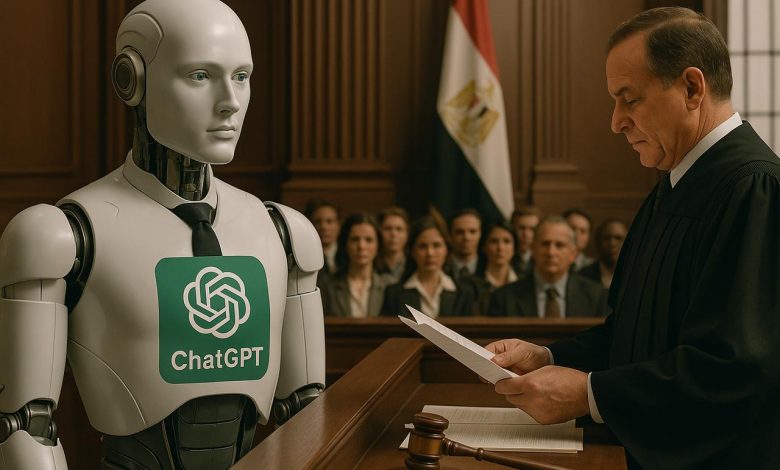
وظهر ذلك مؤخرا في قصة شاب كازاخستاني استخدم تطبيق شات جي بي تي للطعن على مخالفة مرورية دون الاستعانة بمحامي الأمر الذي جعلنا نطرح سؤال مهم هل يمكن أن نرى الذكاء الاصطناعي يوما يترافع داخل المحاكم المصرية
الذكاء الاصطناعي أداء مساعدة للمحامي وليست بديل عنه
صراحة أحد المحامين أن دور الذكاء الاصطناعي في المجال القانوني يجب أن يظل محدود ويقتصر فقد علي تحسين النظام الإداري أو تنظيم المعلومات فإنه لا يمكن ان يعوض المحامي البشري
وأوضح أن الذكاء الاصطناعي مجرد إلة تتلقى بيانات وتعيد إنتاجها دون أن تكون لديها قدرة على الفهم الحقيقي أو التقدير الإنساني فالذكاء الاصطناعي لا يعرف من الظالم ومن المظلوم ولا يملك إحساسا أو ضميرا وهما عنصر أساسيان في مهنة المحاماة
وضرب مثالا على ذلك بقضايا القتل قائلالو قدمت له أوراق قضية قتل فكل ما سيفعله هو تطبيق القانون والإقرار بأن العقوبة هي الإعدام أو المؤبد لكنه لا يستطيع أن يكتشف الثغرات أو الملابسات التي قد يستخدمها المحامي للدفاع عن المتهم كما شدد على أن لكل قضية ظروفها وتفاصيلها الخاصة وهو ما لا يمكن للذكاء الاصطناعي التعامل معه بنفس كفاءة وتقدير المحامي البشري
من جانبه قال المحامي فيصل محمد إن الذكاء الاصطناعي قد يمثل أداة مساعدة للمحامين في بعض المهام مثل مراجعة العقود أو إعداد المذكرات القانونية لكنه لا يمكن أن يحل محل المحامي البشري خصوصا في قضايا المرافعة التي تعتمد على الفهم العميق للسياق والتقدير الشخصي للمواقف كما اكد أن القوانين المصرية واضحة حيث يشترط أن يكون المحامي شخص معتمدا من نقابة المحامين ولا توجد أي نصوص قانونية تسمح للذكاء الاصطناعي بالترافع أو تمثيل الموكلين أمام القضاء وأشار إلى أن تطوير استخدام الذكاء الاصطناعي في المجال القانوني يحتاج إلى تشريعات جديدة تضع ضوابط وحدودا واضحة مؤكدا أن التكنولوجيا يمكن أن تكون مساعد لكنها لا تستطيع أن تحل محل المحامي في المحكمه
وفي السياق نفسه شدد المحامي محمد عاطف عبد الرسول محامي حر ومحاسب قانوني وخبير ضرائب حاصل على ماجستير في العلوم الجنائية والقضاء العسكري يري إن الاعتماد على الذكاء الاصطناعي في المجال القانوني يجب أن يكون بحذر معتبرا أن الذكاء الاصطناعي يفتقر إلى الرؤية القانوني والإدراك الأخلاقي الذي يميز المحامي البشري
وتابع حديثه قائلا ان القانون ليس مجرد قوانين تفسر أو تطبق، بل هو منظومة أخلاقية وإنسانية متكاملة المحامي لا يمثل فقط النص بل يمثل الضمير القانوني الذكاء الاصطناعي لا يستطيع أن يشعر أو يتعاطف أو يقدر الملابسات النفسية والاجتماعية المحيطة بكل قضية
وأشار إلى أن استخدام الذكاء الاصطناعي في الشؤون القانونية يتطلب تنظيم تشريعي دقيق يضع له حدودا واضحة مؤكدا أن دوره يجب أن يظل مساعد وليس بديلاً خاصة في ساحات القضاء
فعلى الرغم من التطور الملحوظ الذي حققه الذكاء الاصطناعي في مختلف المجالات لكن يبقي استخدامه كمحامي في المحاكم المصرية موضوع مثيرا للجدل يمكن للذكاء الاصطناعي أن يكون أداة مساعدة فعالة في بعض جوانب العمل القانوني مثل إعداد المذكرات القانونية أو تنظيم المعلومات لكن يبقى دور المحامي البشري أساسي في التحليل العميق للقضايا وفهم الظروف والملابسات