<?php

/**
 * Class for efficiently looking up and mapping string keys to string values, with limits.
 *
 * @package    WordPress
 * @since      6.6.0
 */

/**
 * WP_Token_Map class.
 *
 * Use this class in specific circumstances with a static set of lookup keys which map to
 * a static set of transformed values. For example, this class is used to map HTML named
 * character references to their equivalent UTF-8 values.
 *
 * This class works differently than code calling `in_array()` and other methods. It
 * internalizes lookup logic and provides helper interfaces to optimize lookup and
 * transformation. It provides a method for precomputing the lookup tables and storing
 * them as PHP source code.
 *
 * All tokens and substitutions must be shorter than 256 bytes.
 *
 * Example:
 *
 *     $smilies = WP_Token_Map::from_array( array(
 *         '8O' => '😯',
 *         ':(' => '🙁',
 *         ':)' => '🙂',
 *         ':?' => '😕',
 *      ) );
 *
 *      true  === $smilies->contains( ':)' );
 *      false === $smilies->contains( 'simile' );
 *
 *      '😕' === $smilies->read_token( 'Not sure :?.', 9, $length_of_smily_syntax );
 *      2    === $length_of_smily_syntax;
 *
 * ## Precomputing the Token Map.
 *
 * Creating the class involves some work sorting and organizing the tokens and their
 * replacement values. In order to skip this, it's possible for the class to export
 * its state and be used as actual PHP source code.
 *
 * Example:
 *
 *      // Export with four spaces as the indent, only for the sake of this docblock.
 *      // The default indent is a tab character.
 *      $indent = '    ';
 *      echo $smilies->precomputed_php_source_table( $indent );
 *
 *      // Output, to be pasted into a PHP source file:
 *      WP_Token_Map::from_precomputed_table(
 *          array(
 *              "storage_version" => "6.6.0",
 *              "key_length" => 2,
 *              "groups" => "",
 *              "long_words" => array(),
 *              "small_words" => "8O\x00:)\x00:(\x00:?\x00",
 *              "small_mappings" => array( "😯", "🙂", "🙁", "😕" )
 *          )
 *      );
 *
 * ## Large vs. small words.
 *
 * This class uses a short prefix called the "key" to optimize lookup of its tokens.
 * This means that some tokens may be shorter than or equal in length to that key.
 * Those words that are longer than the key are called "large" while those shorter
 * than or equal to the key length are called "small."
 *
 * This separation of large and small words is incidental to the way this class
 * optimizes lookup, and should be considered an internal implementation detail
 * of the class. It may still be important to be aware of it, however.
 *
 * ## Determining Key Length.
 *
 * The choice of the size of the key length should be based on the data being stored in
 * the token map. It should divide the data as evenly as possible, but should not create
 * so many groups that a large fraction of the groups only contain a single token.
 *
 * For the HTML5 named character references, a key length of 2 was found to provide a
 * sufficient spread and should be a good default for relatively large sets of tokens.
 *
 * However, for some data sets this might be too long. For example, a list of smilies
 * may be too small for a key length of 2. Perhaps 1 would be more appropriate. It's
 * best to experiment and determine empirically which values are appropriate.
 *
 * ## Generate Pre-Computed Source Code.
 *
 * Since the `WP_Token_Map` is designed for relatively static lookups, it can be
 * advantageous to precompute the values and instantiate a table that has already
 * sorted and grouped the tokens and built the lookup strings.
 *
 * This can be done with `WP_Token_Map::precomputed_php_source_table()`.
 *
 * Note that if there is a leading character that all tokens need, such as `&` for
 * HTML named character references, it can be beneficial to exclude this from the
 * token map. Instead, find occurrences of the leading character and then use the
 * token map to see if the following characters complete the token.
 *
 * Example:
 *
 *     $map = WP_Token_Map::from_array( array( 'simple_smile:' => '🙂', 'sob:' => '😭', 'soba:' => '🍜' ) );
 *     echo $map->precomputed_php_source_table();
 *     // Output
 *     WP_Token_Map::from_precomputed_table(
 *         array(
 *             "storage_version" => "6.6.0",
 *             "key_length" => 2,
 *             "groups" => "si\x00so\x00",
 *             "long_words" => array(
 *                 // simple_smile:[🙂].
 *                 "\x0bmple_smile:\x04🙂",
 *                 // soba:[🍜] sob:[😭].
 *                 "\x03ba:\x04🍜\x02b:\x04😭",
 *             ),
 *             "short_words" => "",
 *             "short_mappings" => array()
 *         }
 *     );
 *
 * This precomputed value can be stored directly in source code and will skip the
 * startup cost of generating the lookup strings. See `$html5_named_character_entities`.
 *
 * Note that any updates to the precomputed format should update the storage version
 * constant. It would also be best to provide an update function to take older known
 * versions and upgrade them in place when loading into `from_precomputed_table()`.
 *
 * ## Future Direction.
 *
 * It may be viable to dynamically increase the length limits such that there's no need to impose them.
 * The limit appears because of the packing structure, which indicates how many bytes each segment of
 * text in the lookup tables spans. If, however, care were taken to track the longest word length, then
 * the packing structure could change its representation to allow for that. Each additional byte storing
 * length, however, increases the memory overhead and lookup runtime.
 *
 * An alternative approach could be to borrow the UTF-8 variable-length encoding and store lengths of less
 * than 127 as a single byte with the high bit unset, storing longer lengths as the combination of
 * continuation bytes.
 *
 * Since it has not been shown during the development of this class that longer strings are required, this
 * update is deferred until such a need is clear.
 *
 * @since 6.6.0
 */
class WP_Token_Map {
	/**
	 * Denotes the version of the code which produces pre-computed source tables.
	 *
	 * This version will be used not only to verify pre-computed data, but also
	 * to upgrade pre-computed data from older versions. Choosing a name that
	 * corresponds to the WordPress release will help people identify where an
	 * old copy of data came from.
	 */
	const STORAGE_VERSION = '6.6.0-trunk';

	/**
	 * Maximum length for each key and each transformed value in the table (in bytes).
	 *
	 * @since 6.6.0
	 */
	const MAX_LENGTH = 256;

	/**
	 * How many bytes of each key are used to form a group key for lookup.
	 * This also determines whether a word is considered short or long.
	 *
	 * @since 6.6.0
	 *
	 * @var int
	 */
	private $key_length = 2;

	/**
	 * Stores an optimized form of the word set, where words are grouped
	 * by a prefix of the `$key_length` and then collapsed into a string.
	 *
	 * In each group, the keys and lookups form a packed data structure.
	 * The keys in the string are stripped of their "group key," which is
	 * the prefix of length `$this->key_length` shared by all of the items
	 * in the group. Each word in the string is prefixed by a single byte
	 * whose raw unsigned integer value represents how many bytes follow.
	 *
	 *     ┌────────────────┬───────────────┬─────────────────┬────────┐
	 *     │ Length of rest │ Rest of key   │ Length of value │ Value  │
	 *     │ of key (bytes) │               │ (bytes)         │        │
	 *     ├────────────────┼───────────────┼─────────────────┼────────┤
	 *     │ 0x08           │ nterDot;      │ 0x02            │ ·      │
	 *     └────────────────┴───────────────┴─────────────────┴────────┘
	 *
	 * In this example, the key `CenterDot;` has a group key `Ce`, leaving
	 * eight bytes for the rest of the key, `nterDot;`, and two bytes for
	 * the transformed value `·` (or U+B7 or "\xC2\xB7").
	 *
	 * Example:
	 *
	 *    // Stores array( 'CenterDot;' => '·', 'Cedilla;' => '¸' ).
	 *    $groups      = "Ce\x00";
	 *    $large_words = array( "\x08nterDot;\x02·\x06dilla;\x02¸" )
	 *
	 * The prefixes appear in the `$groups` string, each followed by a null
	 * byte. This makes for quick lookup of where in the group string the key
	 * is found, and then a simple division converts that offset into the index
	 * in the `$large_words` array where the group string is to be found.
	 *
	 * This lookup data structure is designed to optimize cache locality and
	 * minimize indirect memory reads when matching strings in the set.
	 *
	 * @since 6.6.0
	 *
	 * @var array
	 */
	private $large_words = array();

	/**
	 * Stores the group keys for sequential string lookup.
	 *
	 * The offset into this string where the group key appears corresponds with the index
	 * into the group array where the rest of the group string appears. This is an optimization
	 * to improve cache locality while searching and minimize indirect memory accesses.
	 *
	 * @since 6.6.0
	 *
	 * @var string
	 */
	private $groups = '';

	/**
	 * Stores an optimized row of small words, where every entry is
	 * `$this->key_size + 1` bytes long and zero-extended.
	 *
	 * This packing allows for direct lookup of a short word followed
	 * by the null byte, if extended to `$this->key_size + 1`.
	 *
	 * Example:
	 *
	 *     // Stores array( 'GT', 'LT', 'gt', 'lt' ).
	 *     "GT\x00LT\x00gt\x00lt\x00"
	 *
	 * @since 6.6.0
	 *
	 * @var string
	 */
	private $small_words = '';

	/**
	 * Replacements for the small words, in the same order they appear.
	 *
	 * With the position of a small word it's possible to index the translation
	 * directly, as its position in the `$small_words` string corresponds to
	 * the index of the replacement in the `$small_mapping` array.
	 *
	 * Example:
	 *
	 *     array( '>', '<', '>', '<' )
	 *
	 * @since 6.6.0
	 *
	 * @var string[]
	 */
	private $small_mappings = array();

	/**
	 * Create a token map using an associative array of key/value pairs as the input.
	 *
	 * Example:
	 *
	 *     $smilies = WP_Token_Map::from_array( array(
	 *          '8O' => '😯',
	 *          ':(' => '🙁',
	 *          ':)' => '🙂',
	 *          ':?' => '😕',
	 *       ) );
	 *
	 * @since 6.6.0
	 *
	 * @param array $mappings   The keys transform into the values, both are strings.
	 * @param int   $key_length Determines the group key length. Leave at the default value
	 *                          of 2 unless there's an empirical reason to change it.
	 *
	 * @return WP_Token_Map|null Token map, unless unable to create it.
	 */
	public static function from_array( array $mappings, int $key_length = 2 ): ?WP_Token_Map {
		$map             = new WP_Token_Map();
		$map->key_length = $key_length;

		// Start by grouping words.

		$groups = array();
		$shorts = array();
		foreach ( $mappings as $word => $mapping ) {
			if (
				self::MAX_LENGTH <= strlen( $word ) ||
				self::MAX_LENGTH <= strlen( $mapping )
			) {
				_doing_it_wrong(
					__METHOD__,
					sprintf(
						/* translators: 1: maximum byte length (a count) */
						__( 'Token Map tokens and substitutions must all be shorter than %1$d bytes.' ),
						self::MAX_LENGTH
					),
					'6.6.0'
				);
				return null;
			}

			$length = strlen( $word );

			if ( $key_length >= $length ) {
				$shorts[] = $word;
			} else {
				$group = substr( $word, 0, $key_length );

				if ( ! isset( $groups[ $group ] ) ) {
					$groups[ $group ] = array();
				}

				$groups[ $group ][] = array( substr( $word, $key_length ), $mapping );
			}
		}

		/*
		 * Sort the words to ensure that no smaller substring of a match masks the full match.
		 * For example, `Cap` should not match before `CapitalDifferentialD`.
		 */
		usort( $shorts, 'WP_Token_Map::longest_first_then_alphabetical' );
		foreach ( $groups as $group_key => $group ) {
			usort(
				$groups[ $group_key ],
				static function ( array $a, array $b ): int {
					return self::longest_first_then_alphabetical( $a[0], $b[0] );
				}
			);
		}

		// Finally construct the optimized lookups.

		foreach ( $shorts as $word ) {
			$map->small_words     .= str_pad( $word, $key_length + 1, "\x00", STR_PAD_RIGHT );
			$map->small_mappings[] = $mappings[ $word ];
		}

		$group_keys = array_keys( $groups );
		sort( $group_keys );

		foreach ( $group_keys as $group ) {
			$map->groups .= "{$group}\x00";

			$group_string = '';

			foreach ( $groups[ $group ] as $group_word ) {
				list( $word, $mapping ) = $group_word;

				$word_length    = pack( 'C', strlen( $word ) );
				$mapping_length = pack( 'C', strlen( $mapping ) );
				$group_string  .= "{$word_length}{$word}{$mapping_length}{$mapping}";
			}

			$map->large_words[] = $group_string;
		}

		return $map;
	}

	/**
	 * Creates a token map from a pre-computed table.
	 * This skips the initialization cost of generating the table.
	 *
	 * This function should only be used to load data created with
	 * WP_Token_Map::precomputed_php_source_tag().
	 *
	 * @since 6.6.0
	 *
	 * @param array $state {
	 *     Stores pre-computed state for directly loading into a Token Map.
	 *
	 *     @type string $storage_version Which version of the code produced this state.
	 *     @type int    $key_length      Group key length.
	 *     @type string $groups          Group lookup index.
	 *     @type array  $large_words     Large word groups and packed strings.
	 *     @type string $small_words     Small words packed string.
	 *     @type array  $small_mappings  Small word mappings.
	 * }
	 *
	 * @return WP_Token_Map Map with precomputed data loaded.
	 */
	public static function from_precomputed_table( $state ): ?WP_Token_Map {
		$has_necessary_state = isset(
			$state['storage_version'],
			$state['key_length'],
			$state['groups'],
			$state['large_words'],
			$state['small_words'],
			$state['small_mappings']
		);

		if ( ! $has_necessary_state ) {
			_doing_it_wrong(
				__METHOD__,
				__( 'Missing required inputs to pre-computed WP_Token_Map.' ),
				'6.6.0'
			);
			return null;
		}

		if ( self::STORAGE_VERSION !== $state['storage_version'] ) {
			_doing_it_wrong(
				__METHOD__,
				/* translators: 1: version string, 2: version string. */
				sprintf( __( 'Loaded version \'%1$s\' incompatible with expected version \'%2$s\'.' ), $state['storage_version'], self::STORAGE_VERSION ),
				'6.6.0'
			);
			return null;
		}

		$map = new WP_Token_Map();

		$map->key_length     = $state['key_length'];
		$map->groups         = $state['groups'];
		$map->large_words    = $state['large_words'];
		$map->small_words    = $state['small_words'];
		$map->small_mappings = $state['small_mappings'];

		return $map;
	}

	/**
	 * Indicates if a given word is a lookup key in the map.
	 *
	 * Example:
	 *
	 *     true  === $smilies->contains( ':)' );
	 *     false === $smilies->contains( 'simile' );
	 *
	 * @since 6.6.0
	 *
	 * @param string $word             Determine if this word is a lookup key in the map.
	 * @param string $case_sensitivity Optional. Pass 'ascii-case-insensitive' to ignore ASCII case when matching. Default 'case-sensitive'.
	 * @return bool Whether there's an entry for the given word in the map.
	 */
	public function contains( string $word, string $case_sensitivity = 'case-sensitive' ): bool {
		$ignore_case = 'ascii-case-insensitive' === $case_sensitivity;

		if ( $this->key_length >= strlen( $word ) ) {
			if ( 0 === strlen( $this->small_words ) ) {
				return false;
			}

			$term    = str_pad( $word, $this->key_length + 1, "\x00", STR_PAD_RIGHT );
			$word_at = $ignore_case ? stripos( $this->small_words, $term ) : strpos( $this->small_words, $term );
			if ( false === $word_at ) {
				return false;
			}

			return true;
		}

		$group_key = substr( $word, 0, $this->key_length );
		$group_at  = $ignore_case ? stripos( $this->groups, $group_key ) : strpos( $this->groups, $group_key );
		if ( false === $group_at ) {
			return false;
		}
		$group        = $this->large_words[ $group_at / ( $this->key_length + 1 ) ];
		$group_length = strlen( $group );
		$slug         = substr( $word, $this->key_length );
		$length       = strlen( $slug );
		$at           = 0;

		while ( $at < $group_length ) {
			$token_length   = unpack( 'C', $group[ $at++ ] )[1];
			$token_at       = $at;
			$at            += $token_length;
			$mapping_length = unpack( 'C', $group[ $at++ ] )[1];
			$mapping_at     = $at;

			if ( $token_length === $length && 0 === substr_compare( $group, $slug, $token_at, $token_length, $ignore_case ) ) {
				return true;
			}

			$at = $mapping_at + $mapping_length;
		}

		return false;
	}

	/**
	 * If the text starting at a given offset is a lookup key in the map,
	 * return the corresponding transformation from the map, else `false`.
	 *
	 * This function returns the translated string, but accepts an optional
	 * parameter `$matched_token_byte_length`, which communicates how many
	 * bytes long the lookup key was, if it found one. This can be used to
	 * advance a cursor in calling code if a lookup key was found.
	 *
	 * Example:
	 *
	 *     false === $smilies->read_token( 'Not sure :?.', 0, $token_byte_length );
	 *     '😕'  === $smilies->read_token( 'Not sure :?.', 9, $token_byte_length );
	 *     2     === $token_byte_length;
	 *
	 * Example:
	 *
	 *     while ( $at < strlen( $input ) ) {
	 *         $next_at = strpos( $input, ':', $at );
	 *         if ( false === $next_at ) {
	 *             break;
	 *         }
	 *
	 *         $smily = $smilies->read_token( $input, $next_at, $token_byte_length );
	 *         if ( false === $next_at ) {
	 *             ++$at;
	 *             continue;
	 *         }
	 *
	 *         $prefix  = substr( $input, $at, $next_at - $at );
	 *         $at     += $token_byte_length;
	 *         $output .= "{$prefix}{$smily}";
	 *     }
	 *
	 * @since 6.6.0
	 *
	 * @param string   $text                       String in which to search for a lookup key.
	 * @param int      $offset                     Optional. How many bytes into the string where the lookup key ought to start. Default 0.
	 * @param int|null &$matched_token_byte_length Optional. Holds byte-length of found token matched, otherwise not set. Default null.
	 * @param string   $case_sensitivity           Optional. Pass 'ascii-case-insensitive' to ignore ASCII case when matching. Default 'case-sensitive'.
	 *
	 * @return string|null Mapped value of lookup key if found, otherwise `null`.
	 */
	public function read_token( string $text, int $offset = 0, &$matched_token_byte_length = null, $case_sensitivity = 'case-sensitive' ): ?string {
		$ignore_case = 'ascii-case-insensitive' === $case_sensitivity;
		$text_length = strlen( $text );

		// Search for a long word first, if the text is long enough, and if that fails, a short one.
		if ( $text_length > $this->key_length ) {
			$group_key = substr( $text, $offset, $this->key_length );

			$group_at = $ignore_case ? stripos( $this->groups, $group_key ) : strpos( $this->groups, $group_key );
			if ( false === $group_at ) {
				// Perhaps a short word then.
				return strlen( $this->small_words ) > 0
					? $this->read_small_token( $text, $offset, $matched_token_byte_length, $case_sensitivity )
					: null;
			}

			$group        = $this->large_words[ $group_at / ( $this->key_length + 1 ) ];
			$group_length = strlen( $group );
			$at           = 0;
			while ( $at < $group_length ) {
				$token_length   = unpack( 'C', $group[ $at++ ] )[1];
				$token          = substr( $group, $at, $token_length );
				$at            += $token_length;
				$mapping_length = unpack( 'C', $group[ $at++ ] )[1];
				$mapping_at     = $at;

				if ( 0 === substr_compare( $text, $token, $offset + $this->key_length, $token_length, $ignore_case ) ) {
					$matched_token_byte_length = $this->key_length + $token_length;
					return substr( $group, $mapping_at, $mapping_length );
				}

				$at = $mapping_at + $mapping_length;
			}
		}

		// Perhaps a short word then.
		return strlen( $this->small_words ) > 0
			? $this->read_small_token( $text, $offset, $matched_token_byte_length, $case_sensitivity )
			: null;
	}

	/**
	 * Finds a match for a short word at the index.
	 *
	 * @since 6.6.0
	 *
	 * @param string   $text                       String in which to search for a lookup key.
	 * @param int      $offset                     Optional. How many bytes into the string where the lookup key ought to start. Default 0.
	 * @param int|null &$matched_token_byte_length Optional. Holds byte-length of found lookup key if matched, otherwise not set. Default null.
	 * @param string   $case_sensitivity           Optional. Pass 'ascii-case-insensitive' to ignore ASCII case when matching. Default 'case-sensitive'.
	 *
	 * @return string|null Mapped value of lookup key if found, otherwise `null`.
	 */
	private function read_small_token( string $text, int $offset = 0, &$matched_token_byte_length = null, $case_sensitivity = 'case-sensitive' ): ?string {
		$ignore_case  = 'ascii-case-insensitive' === $case_sensitivity;
		$small_length = strlen( $this->small_words );
		$search_text  = substr( $text, $offset, $this->key_length );
		if ( $ignore_case ) {
			$search_text = strtoupper( $search_text );
		}
		$starting_char = $search_text[0];

		$at = 0;
		while ( $at < $small_length ) {
			if (
				$starting_char !== $this->small_words[ $at ] &&
				( ! $ignore_case || strtoupper( $this->small_words[ $at ] ) !== $starting_char )
			) {
				$at += $this->key_length + 1;
				continue;
			}

			for ( $adjust = 1; $adjust < $this->key_length; $adjust++ ) {
				if ( "\x00" === $this->small_words[ $at + $adjust ] ) {
					$matched_token_byte_length = $adjust;
					return $this->small_mappings[ $at / ( $this->key_length + 1 ) ];
				}

				if (
					$search_text[ $adjust ] !== $this->small_words[ $at + $adjust ] &&
					( ! $ignore_case || strtoupper( $this->small_words[ $at + $adjust ] !== $search_text[ $adjust ] ) )
				) {
					$at += $this->key_length + 1;
					continue 2;
				}
			}

			$matched_token_byte_length = $adjust;
			return $this->small_mappings[ $at / ( $this->key_length + 1 ) ];
		}

		return null;
	}

	/**
	 * Exports the token map into an associate array of key/value pairs.
	 *
	 * Example:
	 *
	 *     $smilies->to_array() === array(
	 *         '8O' => '😯',
	 *         ':(' => '🙁',
	 *         ':)' => '🙂',
	 *         ':?' => '😕',
	 *     );
	 *
	 * @return array The lookup key/substitution values as an associate array.
	 */
	public function to_array(): array {
		$tokens = array();

		$at            = 0;
		$small_mapping = 0;
		$small_length  = strlen( $this->small_words );
		while ( $at < $small_length ) {
			$key            = rtrim( substr( $this->small_words, $at, $this->key_length + 1 ), "\x00" );
			$value          = $this->small_mappings[ $small_mapping++ ];
			$tokens[ $key ] = $value;

			$at += $this->key_length + 1;
		}

		foreach ( $this->large_words as $index => $group ) {
			$prefix       = substr( $this->groups, $index * ( $this->key_length + 1 ), 2 );
			$group_length = strlen( $group );
			$at           = 0;
			while ( $at < $group_length ) {
				$length = unpack( 'C', $group[ $at++ ] )[1];
				$key    = $prefix . substr( $group, $at, $length );

				$at    += $length;
				$length = unpack( 'C', $group[ $at++ ] )[1];
				$value  = substr( $group, $at, $length );

				$tokens[ $key ] = $value;
				$at            += $length;
			}
		}

		return $tokens;
	}

	/**
	 * Export the token map for quick loading in PHP source code.
	 *
	 * This function has a specific purpose, to make loading of static token maps fast.
	 * It's used to ensure that the HTML character reference lookups add a minimal cost
	 * to initializing the PHP process.
	 *
	 * Example:
	 *
	 *     echo $smilies->precomputed_php_source_table();
	 *
	 *     // Output.
	 *     WP_Token_Map::from_precomputed_table(
	 *         array(
	 *             "storage_version" => "6.6.0",
	 *             "key_length" => 2,
	 *             "groups" => "",
	 *             "long_words" => array(),
	 *             "small_words" => "8O\x00:)\x00:(\x00:?\x00",
	 *             "small_mappings" => array( "😯", "🙂", "🙁", "😕" )
	 *         )
	 *     );
	 *
	 * @since 6.6.0
	 *
	 * @param string $indent Optional. Use this string for indentation, or rely on the default horizontal tab character. Default "\t".
	 * @return string Value which can be pasted into a PHP source file for quick loading of table.
	 */
	public function precomputed_php_source_table( string $indent = "\t" ): string {
		$i1 = $indent;
		$i2 = $i1 . $indent;
		$i3 = $i2 . $indent;

		$class_version = self::STORAGE_VERSION;

		$output  = self::class . "::from_precomputed_table(\n";
		$output .= "{$i1}array(\n";
		$output .= "{$i2}\"storage_version\" => \"{$class_version}\",\n";
		$output .= "{$i2}\"key_length\" => {$this->key_length},\n";

		$group_line = str_replace( "\x00", "\\x00", $this->groups );
		$output    .= "{$i2}\"groups\" => \"{$group_line}\",\n";

		$output .= "{$i2}\"large_words\" => array(\n";

		$prefixes = explode( "\x00", $this->groups );
		foreach ( $prefixes as $index => $prefix ) {
			if ( '' === $prefix ) {
				break;
			}
			$group        = $this->large_words[ $index ];
			$group_length = strlen( $group );
			$comment_line = "{$i3}//";
			$data_line    = "{$i3}\"";
			$at           = 0;
			while ( $at < $group_length ) {
				$token_length   = unpack( 'C', $group[ $at++ ] )[1];
				$token          = substr( $group, $at, $token_length );
				$at            += $token_length;
				$mapping_length = unpack( 'C', $group[ $at++ ] )[1];
				$mapping        = substr( $group, $at, $mapping_length );
				$at            += $mapping_length;

				$token_digits   = str_pad( dechex( $token_length ), 2, '0', STR_PAD_LEFT );
				$mapping_digits = str_pad( dechex( $mapping_length ), 2, '0', STR_PAD_LEFT );

				$mapping = preg_replace_callback(
					"~[\\x00-\\x1f\\x22\\x5c]~",
					static function ( $match_result ) {
						switch ( $match_result[0] ) {
							case '"':
								return '\\"';

							case '\\':
								return '\\\\';

							default:
								$hex = dechex( ord( $match_result[0] ) );
								return "\\x{$hex}";
						}
					},
					$mapping
				);

				$comment_line .= " {$prefix}{$token}[{$mapping}]";
				$data_line    .= "\\x{$token_digits}{$token}\\x{$mapping_digits}{$mapping}";
			}
			$comment_line .= ".\n";
			$data_line    .= "\",\n";

			$output .= $comment_line;
			$output .= $data_line;
		}

		$output .= "{$i2}),\n";

		$small_words  = array();
		$small_length = strlen( $this->small_words );
		$at           = 0;
		while ( $at < $small_length ) {
			$small_words[] = substr( $this->small_words, $at, $this->key_length + 1 );
			$at           += $this->key_length + 1;
		}

		$small_text = str_replace( "\x00", '\x00', implode( '', $small_words ) );
		$output    .= "{$i2}\"small_words\" => \"{$small_text}\",\n";

		$output .= "{$i2}\"small_mappings\" => array(\n";
		foreach ( $this->small_mappings as $mapping ) {
			$output .= "{$i3}\"{$mapping}\",\n";
		}
		$output .= "{$i2})\n";
		$output .= "{$i1})\n";
		$output .= ')';

		return $output;
	}

	/**
	 * Compares two strings, returning the longest, or whichever
	 * is first alphabetically if they are the same length.
	 *
	 * This is an important sort when building the token map because
	 * it should not form a match on a substring of a longer potential
	 * match. For example, it should not detect `Cap` when matching
	 * against the string `CapitalDifferentialD`.
	 *
	 * @since 6.6.0
	 *
	 * @param string $a First string to compare.
	 * @param string $b Second string to compare.
	 * @return int -1 or lower if `$a` is less than `$b`; 1 or greater if `$a` is greater than `$b`, and 0 if they are equal.
	 */
	private static function longest_first_then_alphabetical( string $a, string $b ): int {
		if ( $a === $b ) {
			return 0;
		}

		$length_a = strlen( $a );
		$length_b = strlen( $b );

		// Longer strings are less-than for comparison's sake.
		if ( $length_a !== $length_b ) {
			return $length_b - $length_a;
		}

		return strcmp( $a, $b );
	}
}
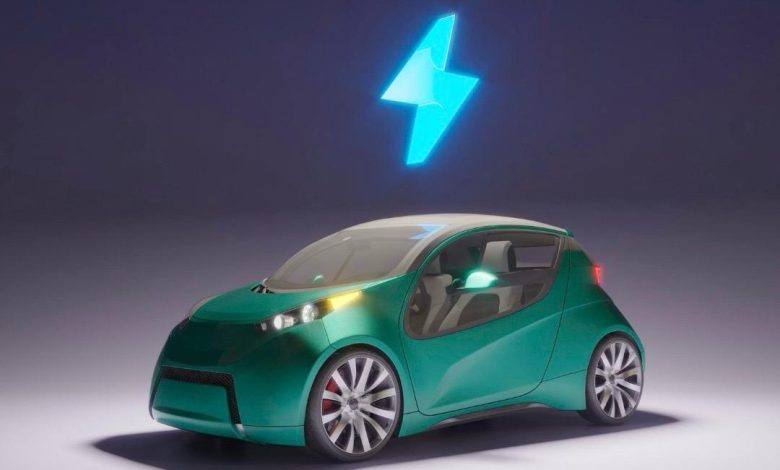
أحدثت التكنولوجيا تطورا كبيرا في عالم السيارات، أبرزها تطوير السيارات الكهربائية كحل مستدام للمستقبل. تتميز هذه السيارات بكفاءة عالية، وانبعاثات منخفضة، وتكاليف تشغيل أقل. رغم ذلك، لا تزال تواجه تحديات، ومع الابتكار المستمر تساهم التكنولوجيا في تجاوز هذه العقبات وتوسيع الاعتماد على النقل الكهربائي.
أكد الأستاذ هاني هشام، مدير إحدي معارض السيارات الكهربائية بالقاهرة، أن معرضة يُعد من المعارض الرائدة في مجال السيارات الكهربائية في مصر، حيث اتخذ خطوة جريئة بافتتاح معرض متخصص بالكامل في السيارات الكهربائية. وأضاف: “خطوتنا جاءت من إيماننا بأن المستقبل في سيارتك، لأن البنزين في طريقه للنهاية”. وأضاف، أن السبب الثاني لاتخاذ هذه الخطوة هو الارتفاع الكبير في تكلفة البنزين، مما يجعل السيارات الكهربائية هي البديل القوي للسيارات التقليدية خلال الفترة القادمة.
ومن جانبه، أكد الأستاذ مجدي كيلاني، أحد مسؤولي المبيعات لإحدي معارض السيارات بالقاهرة، أن التوجه للسيارات الكهربائية لم يعد رفاهية، بل ضرورة تفرضها المعايير البيئية والاقتصادية الحديثة. وأضاف أن المعرض يسعى لتوفير موديلات متنوعة تناسب احتياجات السوق المصري، مع تقديم خدمات ما بعد البيع وتوفير الدعم الفني اللازم، في خطوة تهدف إلى بناء ثقة المستهلك وتشجيعه على التحول لهذا النوع من السيارات
مميزات سيارات الكهرباء:
أوضح هشام، أنه من أبرز مميزات السيارات الكهربائية أنها تعتمد على بطاريات ليثيوم مما يجعل عمرها الافتراضي طويلاً ، ويجعلها أيضاً خيارًا عمليًا واقتصاديًا على المدى البعيد. كما أن قطع غيارها متوفرة، وصيانتها محدودة مقارنة بالسيارات التقليدية، كما أنها تحافظ على البيئة المحيطة بها وتُعد صديقة للبيئة، بفضل خلوّها من الانبعاثات الضارة.
وهناك نظام تمتاز به سيارات الكهرباء ليست في السيارات العادية وهي قدرتها على قراءة إرشادات الطريق الموجودة عليه، والتعرف على اللوحات والإشارات المنتشرة في الشوارع، مما يعزز من أمان القيادة ويسهل على السائقين التنقل بذكاء وسهولة.
اتفق معه كيلاني، وأضاف أن السيارات الكهربائية تتميز بعدة مزايا تجعلها خيارًا أفضل للمستقبل، أولها نها لا تستهلك البنزين، مما يجعلها وسيلة موفرة بالمقارنة بالسيارات التقليدية المستهلكة للبنزين المستمر.
وتزوّد بعض من انواع سيارات الكهرباء المتقدمة في الطراز بأنظمة أمان ذكية، خاصة في السيارات ذاتية القيادة، فعلى سبيل المثال، إذا وجدت طفلا يقطع الطريق فجأة، تقوم السيارة تلقائيًا بتفعيل وضع منع التصادم والتوقف الفوري، مما يعزز من مستوى الامان على الطرق و علي المستخدم.
التحديات التي تواجه سيارات الكهرباء :
قال هشام، إن أولى التحديات التي تواجه انتشار السيارات الكهربائية تتعلق بالعقلية و التفكير، حيث لايزال كثير من الناس غير مقتنعين تمامًا بفكرة الاعتماد على هذا النوع من السيارات، ويشعرون بالتخوف من السير بسيارة تعمل فقط بالبطارية. هذا التخوف يُشكل عامل قلق لدى العديد من الأفراد، نتيجة لعدم الاطمئنان الكامل تجاه مدى أمان البطارية وكفاءتها، وهو ما يتطلب جهود أكبر لنشر الوعي وتوضيح مزايا هذه التكنولوجيا الجديدة.
بينما يري الكيلاني، ان هناك تحدي واضح يتمثل في غياب المراكز المعتمدة لصيانتها حتى الآن فبالرغم من انها لا تحتاج صيانه في اغلب الاوقات الا انه لا يمكن شراء سيارة بدون معرفه مراكز صيانتها وذلك ايضا هو نوع من تخوف الافراد لشرائها، وذلك يحدث بسبب ضعف البنية التحتية اللازمة لدعم هذا النوع من السيارات بالشكل الكافي.
وحول مدى تطور التكنولوجيا في مجال السيارات الكهربائية، يرى الأستاذ هشام، أن ما وصلت إليه هذه الصناعة يؤكد انها تمثل المستقبل الحقيقي لعالم السيارات، وان هذا التطور التكنولوجي يسهم في تعزيز ثقة المستهلك ويدعم توجه السوق نحو البدائل النظيفة والمستدامة.
ومن جانبه، أشار الكيلاني، إلي أن هذا التطور يمهد لتحول في قطاع النقل، خاصة على المدى البعيد. وأكد أن انتشار السيارات الكهربائية سيسهم بشكل كبير في تقليل نسبة التلوث الذي يتعرض له الهواء نتيجة الانبعاثات الناتجة عن وقود السيارات التقليدية.
تمثل السيارات الكهربائية مستقبل النقل الذكي والمستدام، وسط التطور التكنولوجي المتسارع والجهود المستمرة لتجاوز هذه التحديات وبناء ثقة المستهلك نحو بيئة أنظف وقيادة أكثر كفاءة.