<?php
/**
 * Core User Role & Capabilities API
 *
 * @package WordPress
 * @subpackage Users
 */

/**
 * Maps a capability to the primitive capabilities required of the given user to
 * satisfy the capability being checked.
 *
 * This function also accepts an ID of an object to map against if the capability is a meta capability. Meta
 * capabilities such as `edit_post` and `edit_user` are capabilities used by this function to map to primitive
 * capabilities that a user or role requires, such as `edit_posts` and `edit_others_posts`.
 *
 * Example usage:
 *
 *     map_meta_cap( 'edit_posts', $user->ID );
 *     map_meta_cap( 'edit_post', $user->ID, $post->ID );
 *     map_meta_cap( 'edit_post_meta', $user->ID, $post->ID, $meta_key );
 *
 * This function does not check whether the user has the required capabilities,
 * it just returns what the required capabilities are.
 *
 * @since 2.0.0
 * @since 4.9.6 Added the `export_others_personal_data`, `erase_others_personal_data`,
 *              and `manage_privacy_options` capabilities.
 * @since 5.1.0 Added the `update_php` capability.
 * @since 5.2.0 Added the `resume_plugin` and `resume_theme` capabilities.
 * @since 5.3.0 Formalized the existing and already documented `...$args` parameter
 *              by adding it to the function signature.
 * @since 5.7.0 Added the `create_app_password`, `list_app_passwords`, `read_app_password`,
 *              `edit_app_password`, `delete_app_passwords`, `delete_app_password`,
 *              and `update_https` capabilities.
 * @since 6.7.0 Added the `edit_block_binding` capability.
 *
 * @global array $post_type_meta_caps Used to get post type meta capabilities.
 *
 * @param string $cap     Capability being checked.
 * @param int    $user_id User ID.
 * @param mixed  ...$args Optional further parameters, typically starting with an object ID.
 * @return string[] Primitive capabilities required of the user.
 */
function map_meta_cap( $cap, $user_id, ...$args ) {
	$caps = array();

	switch ( $cap ) {
		case 'remove_user':
			// In multisite the user must be a super admin to remove themselves.
			if ( isset( $args[0] ) && $user_id === (int) $args[0] && ! is_super_admin( $user_id ) ) {
				$caps[] = 'do_not_allow';
			} else {
				$caps[] = 'remove_users';
			}
			break;
		case 'promote_user':
		case 'add_users':
			$caps[] = 'promote_users';
			break;
		case 'edit_user':
		case 'edit_users':
			// Allow user to edit themselves.
			if ( 'edit_user' === $cap && isset( $args[0] ) && $user_id === (int) $args[0] ) {
				break;
			}

			// In multisite the user must have manage_network_users caps. If editing a super admin, the user must be a super admin.
			if ( is_multisite() && ( ( ! is_super_admin( $user_id ) && 'edit_user' === $cap && is_super_admin( $args[0] ) ) || ! user_can( $user_id, 'manage_network_users' ) ) ) {
				$caps[] = 'do_not_allow';
			} else {
				$caps[] = 'edit_users'; // edit_user maps to edit_users.
			}
			break;
		case 'delete_post':
		case 'delete_page':
			if ( ! isset( $args[0] ) ) {
				if ( 'delete_post' === $cap ) {
					/* translators: %s: Capability name. */
					$message = __( 'When checking for the %s capability, you must always check it against a specific post.' );
				} else {
					/* translators: %s: Capability name. */
					$message = __( 'When checking for the %s capability, you must always check it against a specific page.' );
				}

				_doing_it_wrong(
					__FUNCTION__,
					sprintf( $message, '<code>' . $cap . '</code>' ),
					'6.1.0'
				);

				$caps[] = 'do_not_allow';
				break;
			}

			$post = get_post( $args[0] );
			if ( ! $post ) {
				$caps[] = 'do_not_allow';
				break;
			}

			if ( 'revision' === $post->post_type ) {
				$caps[] = 'do_not_allow';
				break;
			}

			if ( (int) get_option( 'page_for_posts' ) === $post->ID
				|| (int) get_option( 'page_on_front' ) === $post->ID
			) {
				$caps[] = 'manage_options';
				break;
			}

			$post_type = get_post_type_object( $post->post_type );
			if ( ! $post_type ) {
				/* translators: 1: Post type, 2: Capability name. */
				$message = __( 'The post type %1$s is not registered, so it may not be reliable to check the capability %2$s against a post of that type.' );

				_doing_it_wrong(
					__FUNCTION__,
					sprintf(
						$message,
						'<code>' . $post->post_type . '</code>',
						'<code>' . $cap . '</code>'
					),
					'4.4.0'
				);

				$caps[] = 'edit_others_posts';
				break;
			}

			if ( ! $post_type->map_meta_cap ) {
				$caps[] = $post_type->cap->$cap;
				// Prior to 3.1 we would re-call map_meta_cap here.
				if ( 'delete_post' === $cap ) {
					$cap = $post_type->cap->$cap;
				}
				break;
			}

			// If the post author is set and the user is the author...
			if ( $post->post_author && $user_id === (int) $post->post_author ) {
				// If the post is published or scheduled...
				if ( in_array( $post->post_status, array( 'publish', 'future' ), true ) ) {
					$caps[] = $post_type->cap->delete_published_posts;
				} elseif ( 'trash' === $post->post_status ) {
					$status = get_post_meta( $post->ID, '_wp_trash_meta_status', true );
					if ( in_array( $status, array( 'publish', 'future' ), true ) ) {
						$caps[] = $post_type->cap->delete_published_posts;
					} else {
						$caps[] = $post_type->cap->delete_posts;
					}
				} else {
					// If the post is draft...
					$caps[] = $post_type->cap->delete_posts;
				}
			} else {
				// The user is trying to edit someone else's post.
				$caps[] = $post_type->cap->delete_others_posts;
				// The post is published or scheduled, extra cap required.
				if ( in_array( $post->post_status, array( 'publish', 'future' ), true ) ) {
					$caps[] = $post_type->cap->delete_published_posts;
				} elseif ( 'private' === $post->post_status ) {
					$caps[] = $post_type->cap->delete_private_posts;
				}
			}

			/*
			 * Setting the privacy policy page requires `manage_privacy_options`,
			 * so deleting it should require that too.
			 */
			if ( (int) get_option( 'wp_page_for_privacy_policy' ) === $post->ID ) {
				$caps = array_merge( $caps, map_meta_cap( 'manage_privacy_options', $user_id ) );
			}

			break;
		/*
		 * edit_post breaks down to edit_posts, edit_published_posts, or
		 * edit_others_posts.
		 */
		case 'edit_post':
		case 'edit_page':
			if ( ! isset( $args[0] ) ) {
				if ( 'edit_post' === $cap ) {
					/* translators: %s: Capability name. */
					$message = __( 'When checking for the %s capability, you must always check it against a specific post.' );
				} else {
					/* translators: %s: Capability name. */
					$message = __( 'When checking for the %s capability, you must always check it against a specific page.' );
				}

				_doing_it_wrong(
					__FUNCTION__,
					sprintf( $message, '<code>' . $cap . '</code>' ),
					'6.1.0'
				);

				$caps[] = 'do_not_allow';
				break;
			}

			$post = get_post( $args[0] );
			if ( ! $post ) {
				$caps[] = 'do_not_allow';
				break;
			}

			if ( 'revision' === $post->post_type ) {
				$post = get_post( $post->post_parent );
				if ( ! $post ) {
					$caps[] = 'do_not_allow';
					break;
				}
			}

			$post_type = get_post_type_object( $post->post_type );
			if ( ! $post_type ) {
				/* translators: 1: Post type, 2: Capability name. */
				$message = __( 'The post type %1$s is not registered, so it may not be reliable to check the capability %2$s against a post of that type.' );

				_doing_it_wrong(
					__FUNCTION__,
					sprintf(
						$message,
						'<code>' . $post->post_type . '</code>',
						'<code>' . $cap . '</code>'
					),
					'4.4.0'
				);

				$caps[] = 'edit_others_posts';
				break;
			}

			if ( ! $post_type->map_meta_cap ) {
				$caps[] = $post_type->cap->$cap;
				// Prior to 3.1 we would re-call map_meta_cap here.
				if ( 'edit_post' === $cap ) {
					$cap = $post_type->cap->$cap;
				}
				break;
			}

			// If the post author is set and the user is the author...
			if ( $post->post_author && $user_id === (int) $post->post_author ) {
				// If the post is published or scheduled...
				if ( in_array( $post->post_status, array( 'publish', 'future' ), true ) ) {
					$caps[] = $post_type->cap->edit_published_posts;
				} elseif ( 'trash' === $post->post_status ) {
					$status = get_post_meta( $post->ID, '_wp_trash_meta_status', true );
					if ( in_array( $status, array( 'publish', 'future' ), true ) ) {
						$caps[] = $post_type->cap->edit_published_posts;
					} else {
						$caps[] = $post_type->cap->edit_posts;
					}
				} else {
					// If the post is draft...
					$caps[] = $post_type->cap->edit_posts;
				}
			} else {
				// The user is trying to edit someone else's post.
				$caps[] = $post_type->cap->edit_others_posts;
				// The post is published or scheduled, extra cap required.
				if ( in_array( $post->post_status, array( 'publish', 'future' ), true ) ) {
					$caps[] = $post_type->cap->edit_published_posts;
				} elseif ( 'private' === $post->post_status ) {
					$caps[] = $post_type->cap->edit_private_posts;
				}
			}

			/*
			 * Setting the privacy policy page requires `manage_privacy_options`,
			 * so editing it should require that too.
			 */
			if ( (int) get_option( 'wp_page_for_privacy_policy' ) === $post->ID ) {
				$caps = array_merge( $caps, map_meta_cap( 'manage_privacy_options', $user_id ) );
			}

			break;
		case 'read_post':
		case 'read_page':
			if ( ! isset( $args[0] ) ) {
				if ( 'read_post' === $cap ) {
					/* translators: %s: Capability name. */
					$message = __( 'When checking for the %s capability, you must always check it against a specific post.' );
				} else {
					/* translators: %s: Capability name. */
					$message = __( 'When checking for the %s capability, you must always check it against a specific page.' );
				}

				_doing_it_wrong(
					__FUNCTION__,
					sprintf( $message, '<code>' . $cap . '</code>' ),
					'6.1.0'
				);

				$caps[] = 'do_not_allow';
				break;
			}

			$post = get_post( $args[0] );
			if ( ! $post ) {
				$caps[] = 'do_not_allow';
				break;
			}

			if ( 'revision' === $post->post_type ) {
				$post = get_post( $post->post_parent );
				if ( ! $post ) {
					$caps[] = 'do_not_allow';
					break;
				}
			}

			$post_type = get_post_type_object( $post->post_type );
			if ( ! $post_type ) {
				/* translators: 1: Post type, 2: Capability name. */
				$message = __( 'The post type %1$s is not registered, so it may not be reliable to check the capability %2$s against a post of that type.' );

				_doing_it_wrong(
					__FUNCTION__,
					sprintf(
						$message,
						'<code>' . $post->post_type . '</code>',
						'<code>' . $cap . '</code>'
					),
					'4.4.0'
				);

				$caps[] = 'edit_others_posts';
				break;
			}

			if ( ! $post_type->map_meta_cap ) {
				$caps[] = $post_type->cap->$cap;
				// Prior to 3.1 we would re-call map_meta_cap here.
				if ( 'read_post' === $cap ) {
					$cap = $post_type->cap->$cap;
				}
				break;
			}

			$status_obj = get_post_status_object( get_post_status( $post ) );
			if ( ! $status_obj ) {
				/* translators: 1: Post status, 2: Capability name. */
				$message = __( 'The post status %1$s is not registered, so it may not be reliable to check the capability %2$s against a post with that status.' );

				_doing_it_wrong(
					__FUNCTION__,
					sprintf(
						$message,
						'<code>' . get_post_status( $post ) . '</code>',
						'<code>' . $cap . '</code>'
					),
					'5.4.0'
				);

				$caps[] = 'edit_others_posts';
				break;
			}

			if ( $status_obj->public ) {
				$caps[] = $post_type->cap->read;
				break;
			}

			if ( $post->post_author && $user_id === (int) $post->post_author ) {
				$caps[] = $post_type->cap->read;
			} elseif ( $status_obj->private ) {
				$caps[] = $post_type->cap->read_private_posts;
			} else {
				$caps = map_meta_cap( 'edit_post', $user_id, $post->ID );
			}
			break;
		case 'publish_post':
			if ( ! isset( $args[0] ) ) {
				/* translators: %s: Capability name. */
				$message = __( 'When checking for the %s capability, you must always check it against a specific post.' );

				_doing_it_wrong(
					__FUNCTION__,
					sprintf( $message, '<code>' . $cap . '</code>' ),
					'6.1.0'
				);

				$caps[] = 'do_not_allow';
				break;
			}

			$post = get_post( $args[0] );
			if ( ! $post ) {
				$caps[] = 'do_not_allow';
				break;
			}

			$post_type = get_post_type_object( $post->post_type );
			if ( ! $post_type ) {
				/* translators: 1: Post type, 2: Capability name. */
				$message = __( 'The post type %1$s is not registered, so it may not be reliable to check the capability %2$s against a post of that type.' );

				_doing_it_wrong(
					__FUNCTION__,
					sprintf(
						$message,
						'<code>' . $post->post_type . '</code>',
						'<code>' . $cap . '</code>'
					),
					'4.4.0'
				);

				$caps[] = 'edit_others_posts';
				break;
			}

			$caps[] = $post_type->cap->publish_posts;
			break;
		case 'edit_post_meta':
		case 'delete_post_meta':
		case 'add_post_meta':
		case 'edit_comment_meta':
		case 'delete_comment_meta':
		case 'add_comment_meta':
		case 'edit_term_meta':
		case 'delete_term_meta':
		case 'add_term_meta':
		case 'edit_user_meta':
		case 'delete_user_meta':
		case 'add_user_meta':
			$object_type = explode( '_', $cap )[1];

			if ( ! isset( $args[0] ) ) {
				if ( 'post' === $object_type ) {
					/* translators: %s: Capability name. */
					$message = __( 'When checking for the %s capability, you must always check it against a specific post.' );
				} elseif ( 'comment' === $object_type ) {
					/* translators: %s: Capability name. */
					$message = __( 'When checking for the %s capability, you must always check it against a specific comment.' );
				} elseif ( 'term' === $object_type ) {
					/* translators: %s: Capability name. */
					$message = __( 'When checking for the %s capability, you must always check it against a specific term.' );
				} else {
					/* translators: %s: Capability name. */
					$message = __( 'When checking for the %s capability, you must always check it against a specific user.' );
				}

				_doing_it_wrong(
					__FUNCTION__,
					sprintf( $message, '<code>' . $cap . '</code>' ),
					'6.1.0'
				);

				$caps[] = 'do_not_allow';
				break;
			}

			$object_id = (int) $args[0];

			$object_subtype = get_object_subtype( $object_type, $object_id );

			if ( empty( $object_subtype ) ) {
				$caps[] = 'do_not_allow';
				break;
			}

			$caps = map_meta_cap( "edit_{$object_type}", $user_id, $object_id );

			$meta_key = isset( $args[1] ) ? $args[1] : false;

			if ( $meta_key ) {
				$allowed = ! is_protected_meta( $meta_key, $object_type );

				if ( ! empty( $object_subtype ) && has_filter( "auth_{$object_type}_meta_{$meta_key}_for_{$object_subtype}" ) ) {

					/**
					 * Filters whether the user is allowed to edit a specific meta key of a specific object type and subtype.
					 *
					 * The dynamic portions of the hook name, `$object_type`, `$meta_key`,
					 * and `$object_subtype`, refer to the metadata object type (comment, post, term or user),
					 * the meta key value, and the object subtype respectively.
					 *
					 * @since 4.9.8
					 *
					 * @param bool     $allowed   Whether the user can add the object meta. Default false.
					 * @param string   $meta_key  The meta key.
					 * @param int      $object_id Object ID.
					 * @param int      $user_id   User ID.
					 * @param string   $cap       Capability name.
					 * @param string[] $caps      Array of the user's capabilities.
					 */
					$allowed = apply_filters( "auth_{$object_type}_meta_{$meta_key}_for_{$object_subtype}", $allowed, $meta_key, $object_id, $user_id, $cap, $caps );
				} else {

					/**
					 * Filters whether the user is allowed to edit a specific meta key of a specific object type.
					 *
					 * Return true to have the mapped meta caps from `edit_{$object_type}` apply.
					 *
					 * The dynamic portion of the hook name, `$object_type` refers to the object type being filtered.
					 * The dynamic portion of the hook name, `$meta_key`, refers to the meta key passed to map_meta_cap().
					 *
					 * @since 3.3.0 As `auth_post_meta_{$meta_key}`.
					 * @since 4.6.0
					 *
					 * @param bool     $allowed   Whether the user can add the object meta. Default false.
					 * @param string   $meta_key  The meta key.
					 * @param int      $object_id Object ID.
					 * @param int      $user_id   User ID.
					 * @param string   $cap       Capability name.
					 * @param string[] $caps      Array of the user's capabilities.
					 */
					$allowed = apply_filters( "auth_{$object_type}_meta_{$meta_key}", $allowed, $meta_key, $object_id, $user_id, $cap, $caps );
				}

				if ( ! empty( $object_subtype ) ) {

					/**
					 * Filters whether the user is allowed to edit meta for specific object types/subtypes.
					 *
					 * Return true to have the mapped meta caps from `edit_{$object_type}` apply.
					 *
					 * The dynamic portion of the hook name, `$object_type` refers to the object type being filtered.
					 * The dynamic portion of the hook name, `$object_subtype` refers to the object subtype being filtered.
					 * The dynamic portion of the hook name, `$meta_key`, refers to the meta key passed to map_meta_cap().
					 *
					 * @since 4.6.0 As `auth_post_{$post_type}_meta_{$meta_key}`.
					 * @since 4.7.0 Renamed from `auth_post_{$post_type}_meta_{$meta_key}` to
					 *              `auth_{$object_type}_{$object_subtype}_meta_{$meta_key}`.
					 * @deprecated 4.9.8 Use {@see 'auth_{$object_type}_meta_{$meta_key}_for_{$object_subtype}'} instead.
					 *
					 * @param bool     $allowed   Whether the user can add the object meta. Default false.
					 * @param string   $meta_key  The meta key.
					 * @param int      $object_id Object ID.
					 * @param int      $user_id   User ID.
					 * @param string   $cap       Capability name.
					 * @param string[] $caps      Array of the user's capabilities.
					 */
					$allowed = apply_filters_deprecated(
						"auth_{$object_type}_{$object_subtype}_meta_{$meta_key}",
						array( $allowed, $meta_key, $object_id, $user_id, $cap, $caps ),
						'4.9.8',
						"auth_{$object_type}_meta_{$meta_key}_for_{$object_subtype}"
					);
				}

				if ( ! $allowed ) {
					$caps[] = $cap;
				}
			}
			break;
		case 'edit_comment':
			if ( ! isset( $args[0] ) ) {
				/* translators: %s: Capability name. */
				$message = __( 'When checking for the %s capability, you must always check it against a specific comment.' );

				_doing_it_wrong(
					__FUNCTION__,
					sprintf( $message, '<code>' . $cap . '</code>' ),
					'6.1.0'
				);

				$caps[] = 'do_not_allow';
				break;
			}

			$comment = get_comment( $args[0] );
			if ( ! $comment ) {
				$caps[] = 'do_not_allow';
				break;
			}

			$post = get_post( $comment->comment_post_ID );

			/*
			 * If the post doesn't exist, we have an orphaned comment.
			 * Fall back to the edit_posts capability, instead.
			 */
			if ( $post ) {
				$caps = map_meta_cap( 'edit_post', $user_id, $post->ID );
			} else {
				$caps = map_meta_cap( 'edit_posts', $user_id );
			}
			break;
		case 'unfiltered_upload':
			if ( defined( 'ALLOW_UNFILTERED_UPLOADS' ) && ALLOW_UNFILTERED_UPLOADS && ( ! is_multisite() || is_super_admin( $user_id ) ) ) {
				$caps[] = $cap;
			} else {
				$caps[] = 'do_not_allow';
			}
			break;
		case 'edit_css':
		case 'unfiltered_html':
			// Disallow unfiltered_html for all users, even admins and super admins.
			if ( defined( 'DISALLOW_UNFILTERED_HTML' ) && DISALLOW_UNFILTERED_HTML ) {
				$caps[] = 'do_not_allow';
			} elseif ( is_multisite() && ! is_super_admin( $user_id ) ) {
				$caps[] = 'do_not_allow';
			} else {
				$caps[] = 'unfiltered_html';
			}
			break;
		case 'edit_files':
		case 'edit_plugins':
		case 'edit_themes':
			// Disallow the file editors.
			if ( defined( 'DISALLOW_FILE_EDIT' ) && DISALLOW_FILE_EDIT ) {
				$caps[] = 'do_not_allow';
			} elseif ( ! wp_is_file_mod_allowed( 'capability_edit_themes' ) ) {
				$caps[] = 'do_not_allow';
			} elseif ( is_multisite() && ! is_super_admin( $user_id ) ) {
				$caps[] = 'do_not_allow';
			} else {
				$caps[] = $cap;
			}
			break;
		case 'update_plugins':
		case 'delete_plugins':
		case 'install_plugins':
		case 'upload_plugins':
		case 'update_themes':
		case 'delete_themes':
		case 'install_themes':
		case 'upload_themes':
		case 'update_core':
			/*
			 * Disallow anything that creates, deletes, or updates core, plugin, or theme files.
			 * Files in uploads are excepted.
			 */
			if ( ! wp_is_file_mod_allowed( 'capability_update_core' ) ) {
				$caps[] = 'do_not_allow';
			} elseif ( is_multisite() && ! is_super_admin( $user_id ) ) {
				$caps[] = 'do_not_allow';
			} elseif ( 'upload_themes' === $cap ) {
				$caps[] = 'install_themes';
			} elseif ( 'upload_plugins' === $cap ) {
				$caps[] = 'install_plugins';
			} else {
				$caps[] = $cap;
			}
			break;
		case 'install_languages':
		case 'update_languages':
			if ( ! wp_is_file_mod_allowed( 'can_install_language_pack' ) ) {
				$caps[] = 'do_not_allow';
			} elseif ( is_multisite() && ! is_super_admin( $user_id ) ) {
				$caps[] = 'do_not_allow';
			} else {
				$caps[] = 'install_languages';
			}
			break;
		case 'activate_plugins':
		case 'deactivate_plugins':
		case 'activate_plugin':
		case 'deactivate_plugin':
			$caps[] = 'activate_plugins';
			if ( is_multisite() ) {
				// update_, install_, and delete_ are handled above with is_super_admin().
				$menu_perms = get_site_option( 'menu_items', array() );
				if ( empty( $menu_perms['plugins'] ) ) {
					$caps[] = 'manage_network_plugins';
				}
			}
			break;
		case 'resume_plugin':
			$caps[] = 'resume_plugins';
			break;
		case 'resume_theme':
			$caps[] = 'resume_themes';
			break;
		case 'delete_user':
		case 'delete_users':
			// If multisite only super admins can delete users.
			if ( is_multisite() && ! is_super_admin( $user_id ) ) {
				$caps[] = 'do_not_allow';
			} else {
				$caps[] = 'delete_users'; // delete_user maps to delete_users.
			}
			break;
		case 'create_users':
			if ( ! is_multisite() ) {
				$caps[] = $cap;
			} elseif ( is_super_admin( $user_id ) || get_site_option( 'add_new_users' ) ) {
				$caps[] = $cap;
			} else {
				$caps[] = 'do_not_allow';
			}
			break;
		case 'manage_links':
			if ( get_option( 'link_manager_enabled' ) ) {
				$caps[] = $cap;
			} else {
				$caps[] = 'do_not_allow';
			}
			break;
		case 'customize':
			$caps[] = 'edit_theme_options';
			break;
		case 'delete_site':
			if ( is_multisite() ) {
				$caps[] = 'manage_options';
			} else {
				$caps[] = 'do_not_allow';
			}
			break;
		case 'edit_term':
		case 'delete_term':
		case 'assign_term':
			if ( ! isset( $args[0] ) ) {
				/* translators: %s: Capability name. */
				$message = __( 'When checking for the %s capability, you must always check it against a specific term.' );

				_doing_it_wrong(
					__FUNCTION__,
					sprintf( $message, '<code>' . $cap . '</code>' ),
					'6.1.0'
				);

				$caps[] = 'do_not_allow';
				break;
			}

			$term_id = (int) $args[0];
			$term    = get_term( $term_id );
			if ( ! $term || is_wp_error( $term ) ) {
				$caps[] = 'do_not_allow';
				break;
			}

			$tax = get_taxonomy( $term->taxonomy );
			if ( ! $tax ) {
				$caps[] = 'do_not_allow';
				break;
			}

			if ( 'delete_term' === $cap
				&& ( (int) get_option( 'default_' . $term->taxonomy ) === $term->term_id
					|| (int) get_option( 'default_term_' . $term->taxonomy ) === $term->term_id )
			) {
				$caps[] = 'do_not_allow';
				break;
			}

			$taxo_cap = $cap . 's';

			$caps = map_meta_cap( $tax->cap->$taxo_cap, $user_id, $term_id );

			break;
		case 'manage_post_tags':
		case 'edit_categories':
		case 'edit_post_tags':
		case 'delete_categories':
		case 'delete_post_tags':
			$caps[] = 'manage_categories';
			break;
		case 'assign_categories':
		case 'assign_post_tags':
			$caps[] = 'edit_posts';
			break;
		case 'create_sites':
		case 'delete_sites':
		case 'manage_network':
		case 'manage_sites':
		case 'manage_network_users':
		case 'manage_network_plugins':
		case 'manage_network_themes':
		case 'manage_network_options':
		case 'upgrade_network':
			$caps[] = $cap;
			break;
		case 'setup_network':
			if ( is_multisite() ) {
				$caps[] = 'manage_network_options';
			} else {
				$caps[] = 'manage_options';
			}
			break;
		case 'update_php':
			if ( is_multisite() && ! is_super_admin( $user_id ) ) {
				$caps[] = 'do_not_allow';
			} else {
				$caps[] = 'update_core';
			}
			break;
		case 'update_https':
			if ( is_multisite() && ! is_super_admin( $user_id ) ) {
				$caps[] = 'do_not_allow';
			} else {
				$caps[] = 'manage_options';
				$caps[] = 'update_core';
			}
			break;
		case 'export_others_personal_data':
		case 'erase_others_personal_data':
		case 'manage_privacy_options':
			$caps[] = is_multisite() ? 'manage_network' : 'manage_options';
			break;
		case 'create_app_password':
		case 'list_app_passwords':
		case 'read_app_password':
		case 'edit_app_password':
		case 'delete_app_passwords':
		case 'delete_app_password':
			$caps = map_meta_cap( 'edit_user', $user_id, $args[0] );
			break;
		case 'edit_block_binding':
			$block_editor_context = $args[0];
			if ( isset( $block_editor_context->post ) ) {
				$object_id = $block_editor_context->post->ID;
			}
			/*
			 * If the post ID is null, check if the context is the site editor.
			 * Fall back to the edit_theme_options in that case.
			 */
			if ( ! isset( $object_id ) ) {
				if ( ! isset( $block_editor_context->name ) || 'core/edit-site' !== $block_editor_context->name ) {
					$caps[] = 'do_not_allow';
					break;
				}
				$caps = map_meta_cap( 'edit_theme_options', $user_id );
				break;
			}

			$object_subtype = get_object_subtype( 'post', (int) $object_id );
			if ( empty( $object_subtype ) ) {
				$caps[] = 'do_not_allow';
				break;
			}
			$post_type_object = get_post_type_object( $object_subtype );
			// Initialize empty array if it doesn't exist.
			if ( ! isset( $post_type_object->capabilities ) ) {
				$post_type_object->capabilities = array();
			}
			$post_type_capabilities = get_post_type_capabilities( $post_type_object );
			$caps                   = map_meta_cap( $post_type_capabilities->edit_post, $user_id, $object_id );
			break;
		default:
			// Handle meta capabilities for custom post types.
			global $post_type_meta_caps;
			if ( isset( $post_type_meta_caps[ $cap ] ) ) {
				return map_meta_cap( $post_type_meta_caps[ $cap ], $user_id, ...$args );
			}

			// Block capabilities map to their post equivalent.
			$block_caps = array(
				'edit_blocks',
				'edit_others_blocks',
				'publish_blocks',
				'read_private_blocks',
				'delete_blocks',
				'delete_private_blocks',
				'delete_published_blocks',
				'delete_others_blocks',
				'edit_private_blocks',
				'edit_published_blocks',
			);
			if ( in_array( $cap, $block_caps, true ) ) {
				$cap = str_replace( '_blocks', '_posts', $cap );
			}

			// If no meta caps match, return the original cap.
			$caps[] = $cap;
	}

	/**
	 * Filters the primitive capabilities required of the given user to satisfy the
	 * capability being checked.
	 *
	 * @since 2.8.0
	 *
	 * @param string[] $caps    Primitive capabilities required of the user.
	 * @param string   $cap     Capability being checked.
	 * @param int      $user_id The user ID.
	 * @param array    $args    Adds context to the capability check, typically
	 *                          starting with an object ID.
	 */
	return apply_filters( 'map_meta_cap', $caps, $cap, $user_id, $args );
}

/**
 * Returns whether the current user has the specified capability.
 *
 * This function also accepts an ID of an object to check against if the capability is a meta capability. Meta
 * capabilities such as `edit_post` and `edit_user` are capabilities used by the `map_meta_cap()` function to
 * map to primitive capabilities that a user or role has, such as `edit_posts` and `edit_others_posts`.
 *
 * Example usage:
 *
 *     current_user_can( 'edit_posts' );
 *     current_user_can( 'edit_post', $post->ID );
 *     current_user_can( 'edit_post_meta', $post->ID, $meta_key );
 *
 * While checking against particular roles in place of a capability is supported
 * in part, this practice is discouraged as it may produce unreliable results.
 *
 * Note: Will always return true if the current user is a super admin, unless specifically denied.
 *
 * @since 2.0.0
 * @since 5.3.0 Formalized the existing and already documented `...$args` parameter
 *              by adding it to the function signature.
 * @since 5.8.0 Converted to wrapper for the user_can() function.
 *
 * @see WP_User::has_cap()
 * @see map_meta_cap()
 *
 * @param string $capability Capability name.
 * @param mixed  ...$args    Optional further parameters, typically starting with an object ID.
 * @return bool Whether the current user has the given capability. If `$capability` is a meta cap and `$object_id` is
 *              passed, whether the current user has the given meta capability for the given object.
 */
function current_user_can( $capability, ...$args ) {
	return user_can( wp_get_current_user(), $capability, ...$args );
}

/**
 * Returns whether the current user has the specified capability for a given site.
 *
 * This function also accepts an ID of an object to check against if the capability is a meta capability. Meta
 * capabilities such as `edit_post` and `edit_user` are capabilities used by the `map_meta_cap()` function to
 * map to primitive capabilities that a user or role has, such as `edit_posts` and `edit_others_posts`.
 *
 * This function replaces the current_user_can_for_blog() function.
 *
 * Example usage:
 *
 *     current_user_can_for_site( $site_id, 'edit_posts' );
 *     current_user_can_for_site( $site_id, 'edit_post', $post->ID );
 *     current_user_can_for_site( $site_id, 'edit_post_meta', $post->ID, $meta_key );
 *
 * @since 6.7.0
 *
 * @param int    $site_id    Site ID.
 * @param string $capability Capability name.
 * @param mixed  ...$args    Optional further parameters, typically starting with an object ID.
 * @return bool Whether the user has the given capability.
 */
function current_user_can_for_site( $site_id, $capability, ...$args ) {
	$switched = is_multisite() ? switch_to_blog( $site_id ) : false;

	$can = current_user_can( $capability, ...$args );

	if ( $switched ) {
		restore_current_blog();
	}

	return $can;
}

/**
 * Returns whether the author of the supplied post has the specified capability.
 *
 * This function also accepts an ID of an object to check against if the capability is a meta capability. Meta
 * capabilities such as `edit_post` and `edit_user` are capabilities used by the `map_meta_cap()` function to
 * map to primitive capabilities that a user or role has, such as `edit_posts` and `edit_others_posts`.
 *
 * Example usage:
 *
 *     author_can( $post, 'edit_posts' );
 *     author_can( $post, 'edit_post', $post->ID );
 *     author_can( $post, 'edit_post_meta', $post->ID, $meta_key );
 *
 * @since 2.9.0
 * @since 5.3.0 Formalized the existing and already documented `...$args` parameter
 *              by adding it to the function signature.
 *
 * @param int|WP_Post $post       Post ID or post object.
 * @param string      $capability Capability name.
 * @param mixed       ...$args    Optional further parameters, typically starting with an object ID.
 * @return bool Whether the post author has the given capability.
 */
function author_can( $post, $capability, ...$args ) {
	$post = get_post( $post );
	if ( ! $post ) {
		return false;
	}

	$author = get_userdata( $post->post_author );

	if ( ! $author ) {
		return false;
	}

	return $author->has_cap( $capability, ...$args );
}

/**
 * Returns whether a particular user has the specified capability.
 *
 * This function also accepts an ID of an object to check against if the capability is a meta capability. Meta
 * capabilities such as `edit_post` and `edit_user` are capabilities used by the `map_meta_cap()` function to
 * map to primitive capabilities that a user or role has, such as `edit_posts` and `edit_others_posts`.
 *
 * Example usage:
 *
 *     user_can( $user->ID, 'edit_posts' );
 *     user_can( $user->ID, 'edit_post', $post->ID );
 *     user_can( $user->ID, 'edit_post_meta', $post->ID, $meta_key );
 *
 * @since 3.1.0
 * @since 5.3.0 Formalized the existing and already documented `...$args` parameter
 *              by adding it to the function signature.
 *
 * @param int|WP_User $user       User ID or object.
 * @param string      $capability Capability name.
 * @param mixed       ...$args    Optional further parameters, typically starting with an object ID.
 * @return bool Whether the user has the given capability.
 */
function user_can( $user, $capability, ...$args ) {
	if ( ! is_object( $user ) ) {
		$user = get_userdata( $user );
	}

	if ( empty( $user ) ) {
		// User is logged out, create anonymous user object.
		$user = new WP_User( 0 );
		$user->init( new stdClass() );
	}

	return $user->has_cap( $capability, ...$args );
}

/**
 * Returns whether a particular user has the specified capability for a given site.
 *
 * This function also accepts an ID of an object to check against if the capability is a meta capability. Meta
 * capabilities such as `edit_post` and `edit_user` are capabilities used by the `map_meta_cap()` function to
 * map to primitive capabilities that a user or role has, such as `edit_posts` and `edit_others_posts`.
 *
 * Example usage:
 *
 *     user_can_for_site( $user->ID, $site_id, 'edit_posts' );
 *     user_can_for_site( $user->ID, $site_id, 'edit_post', $post->ID );
 *     user_can_for_site( $user->ID, $site_id, 'edit_post_meta', $post->ID, $meta_key );
 *
 * @since 6.7.0
 *
 * @param int|WP_User $user       User ID or object.
 * @param int         $site_id    Site ID.
 * @param string      $capability Capability name.
 * @param mixed       ...$args    Optional further parameters, typically starting with an object ID.
 * @return bool Whether the user has the given capability.
 */
function user_can_for_site( $user, $site_id, $capability, ...$args ) {
	if ( ! is_object( $user ) ) {
		$user = get_userdata( $user );
	}

	if ( empty( $user ) ) {
		// User is logged out, create anonymous user object.
		$user = new WP_User( 0 );
		$user->init( new stdClass() );
	}

	// Check if the blog ID is valid.
	if ( ! is_numeric( $site_id ) || $site_id <= 0 ) {
		return false;
	}

	$switched = is_multisite() ? switch_to_blog( $site_id ) : false;

	$can = user_can( $user->ID, $capability, ...$args );

	if ( $switched ) {
		restore_current_blog();
	}

	return $can;
}

/**
 * Retrieves the global WP_Roles instance and instantiates it if necessary.
 *
 * @since 4.3.0
 *
 * @global WP_Roles $wp_roles WordPress role management object.
 *
 * @return WP_Roles WP_Roles global instance if not already instantiated.
 */
function wp_roles() {
	global $wp_roles;

	if ( ! isset( $wp_roles ) ) {
		$wp_roles = new WP_Roles();
	}
	return $wp_roles;
}

/**
 * Retrieves role object.
 *
 * @since 2.0.0
 *
 * @param string $role Role name.
 * @return WP_Role|null WP_Role object if found, null if the role does not exist.
 */
function get_role( $role ) {
	return wp_roles()->get_role( $role );
}

/**
 * Adds a role, if it does not exist.
 *
 * @since 2.0.0
 *
 * @param string $role         Role name.
 * @param string $display_name Display name for role.
 * @param bool[] $capabilities List of capabilities keyed by the capability name,
 *                             e.g. array( 'edit_posts' => true, 'delete_posts' => false ).
 * @return WP_Role|void WP_Role object, if the role is added.
 */
function add_role( $role, $display_name, $capabilities = array() ) {
	if ( empty( $role ) ) {
		return;
	}

	return wp_roles()->add_role( $role, $display_name, $capabilities );
}

/**
 * Removes a role, if it exists.
 *
 * @since 2.0.0
 *
 * @param string $role Role name.
 */
function remove_role( $role ) {
	wp_roles()->remove_role( $role );
}

/**
 * Retrieves a list of super admins.
 *
 * @since 3.0.0
 *
 * @global array $super_admins
 *
 * @return string[] List of super admin logins.
 */
function get_super_admins() {
	global $super_admins;

	if ( isset( $super_admins ) ) {
		return $super_admins;
	} else {
		return get_site_option( 'site_admins', array( 'admin' ) );
	}
}

/**
 * Determines whether user is a site admin.
 *
 * @since 3.0.0
 *
 * @param int|false $user_id Optional. The ID of a user. Defaults to false, to check the current user.
 * @return bool Whether the user is a site admin.
 */
function is_super_admin( $user_id = false ) {
	if ( ! $user_id ) {
		$user = wp_get_current_user();
	} else {
		$user = get_userdata( $user_id );
	}

	if ( ! $user || ! $user->exists() ) {
		return false;
	}

	if ( is_multisite() ) {
		$super_admins = get_super_admins();
		if ( is_array( $super_admins ) && in_array( $user->user_login, $super_admins, true ) ) {
			return true;
		}
	} elseif ( $user->has_cap( 'delete_users' ) ) {
		return true;
	}

	return false;
}

/**
 * Grants Super Admin privileges.
 *
 * @since 3.0.0
 *
 * @global array $super_admins
 *
 * @param int $user_id ID of the user to be granted Super Admin privileges.
 * @return bool True on success, false on failure. This can fail when the user is
 *              already a super admin or when the `$super_admins` global is defined.
 */
function grant_super_admin( $user_id ) {
	// If global super_admins override is defined, there is nothing to do here.
	if ( isset( $GLOBALS['super_admins'] ) || ! is_multisite() ) {
		return false;
	}

	/**
	 * Fires before the user is granted Super Admin privileges.
	 *
	 * @since 3.0.0
	 *
	 * @param int $user_id ID of the user that is about to be granted Super Admin privileges.
	 */
	do_action( 'grant_super_admin', $user_id );

	// Directly fetch site_admins instead of using get_super_admins().
	$super_admins = get_site_option( 'site_admins', array( 'admin' ) );

	$user = get_userdata( $user_id );
	if ( $user && ! in_array( $user->user_login, $super_admins, true ) ) {
		$super_admins[] = $user->user_login;
		update_site_option( 'site_admins', $super_admins );

		/**
		 * Fires after the user is granted Super Admin privileges.
		 *
		 * @since 3.0.0
		 *
		 * @param int $user_id ID of the user that was granted Super Admin privileges.
		 */
		do_action( 'granted_super_admin', $user_id );
		return true;
	}
	return false;
}

/**
 * Revokes Super Admin privileges.
 *
 * @since 3.0.0
 *
 * @global array $super_admins
 *
 * @param int $user_id ID of the user Super Admin privileges to be revoked from.
 * @return bool True on success, false on failure. This can fail when the user's email
 *              is the network admin email or when the `$super_admins` global is defined.
 */
function revoke_super_admin( $user_id ) {
	// If global super_admins override is defined, there is nothing to do here.
	if ( isset( $GLOBALS['super_admins'] ) || ! is_multisite() ) {
		return false;
	}

	/**
	 * Fires before the user's Super Admin privileges are revoked.
	 *
	 * @since 3.0.0
	 *
	 * @param int $user_id ID of the user Super Admin privileges are being revoked from.
	 */
	do_action( 'revoke_super_admin', $user_id );

	// Directly fetch site_admins instead of using get_super_admins().
	$super_admins = get_site_option( 'site_admins', array( 'admin' ) );

	$user = get_userdata( $user_id );
	if ( $user && 0 !== strcasecmp( $user->user_email, get_site_option( 'admin_email' ) ) ) {
		$key = array_search( $user->user_login, $super_admins, true );
		if ( false !== $key ) {
			unset( $super_admins[ $key ] );
			update_site_option( 'site_admins', $super_admins );

			/**
			 * Fires after the user's Super Admin privileges are revoked.
			 *
			 * @since 3.0.0
			 *
			 * @param int $user_id ID of the user Super Admin privileges were revoked from.
			 */
			do_action( 'revoked_super_admin', $user_id );
			return true;
		}
	}
	return false;
}

/**
 * Filters the user capabilities to grant the 'install_languages' capability as necessary.
 *
 * A user must have at least one out of the 'update_core', 'install_plugins', and
 * 'install_themes' capabilities to qualify for 'install_languages'.
 *
 * @since 4.9.0
 *
 * @param bool[] $allcaps An array of all the user's capabilities.
 * @return bool[] Filtered array of the user's capabilities.
 */
function wp_maybe_grant_install_languages_cap( $allcaps ) {
	if ( ! empty( $allcaps['update_core'] ) || ! empty( $allcaps['install_plugins'] ) || ! empty( $allcaps['install_themes'] ) ) {
		$allcaps['install_languages'] = true;
	}

	return $allcaps;
}

/**
 * Filters the user capabilities to grant the 'resume_plugins' and 'resume_themes' capabilities as necessary.
 *
 * @since 5.2.0
 *
 * @param bool[] $allcaps An array of all the user's capabilities.
 * @return bool[] Filtered array of the user's capabilities.
 */
function wp_maybe_grant_resume_extensions_caps( $allcaps ) {
	// Even in a multisite, regular administrators should be able to resume plugins.
	if ( ! empty( $allcaps['activate_plugins'] ) ) {
		$allcaps['resume_plugins'] = true;
	}

	// Even in a multisite, regular administrators should be able to resume themes.
	if ( ! empty( $allcaps['switch_themes'] ) ) {
		$allcaps['resume_themes'] = true;
	}

	return $allcaps;
}

/**
 * Filters the user capabilities to grant the 'view_site_health_checks' capabilities as necessary.
 *
 * @since 5.2.2
 *
 * @param bool[]   $allcaps An array of all the user's capabilities.
 * @param string[] $caps    Required primitive capabilities for the requested capability.
 * @param array    $args {
 *     Arguments that accompany the requested capability check.
 *
 *     @type string    $0 Requested capability.
 *     @type int       $1 Concerned user ID.
 *     @type mixed  ...$2 Optional second and further parameters, typically object ID.
 * }
 * @param WP_User  $user    The user object.
 * @return bool[] Filtered array of the user's capabilities.
 */
function wp_maybe_grant_site_health_caps( $allcaps, $caps, $args, $user ) {
	if ( ! empty( $allcaps['install_plugins'] ) && ( ! is_multisite() || is_super_admin( $user->ID ) ) ) {
		$allcaps['view_site_health_checks'] = true;
	}

	return $allcaps;
}

return;

// Dummy gettext calls to get strings in the catalog.
/* translators: User role for administrators. */
_x( 'Administrator', 'User role' );
/* translators: User role for editors. */
_x( 'Editor', 'User role' );
/* translators: User role for authors. */
_x( 'Author', 'User role' );
/* translators: User role for contributors. */
_x( 'Contributor', 'User role' );
/* translators: User role for subscribers. */
_x( 'Subscriber', 'User role' );
في السنوات الأخيرة، احتلّ الذكاء الاصطناعي (AI) مكانة بارزة ضمن أدوات العناية والمكياج، لا سيما مع انتشار تطبيقات مثل ChatGPT. غير أن أولى خطوات دمج هذه التقنية بعالم التجميل انطلقت عام 2010، حين أطلقت شركة ModiFace خدمات تجربة مستحضرات التجميل افتراضيًا عبر الواقع المعزز (AR)
والذكاء الاصطناعي، بالتعاون مع علامات كبرى مثل Sephora و Estée Lauder و MAC Cosmetics.
•وفي 2018، استحوذت L’Oréal على ModiFace، فتوسّعت بذلك آفاق استخدام الذكاء الاصطناعي في التجميل لتشمل:
انتشار التطبيقات التجميلية المدعومة بالذكاء الاصطناعي
شهدت السنوات الأخيرة طفرة في عدد الشركات الناشئة والتطبيقات التي تقدّم حلولًا مبتكرة للعناية بالبشرة ومكافحة علامات التقدّم في السن. هذه الحلول تمتد من اقتراح مستحضرات التجميل المناسبة إلى الرصد المبكر لمشكلات الجلد، وأيضًا تصور الإجراءات التجميلية قبل التنفيذ. من بين أبرز هذه التطبيقات:
UMLYR، TressAi، Ai Beauty، Chisw، Consult-port، Generation Beauty Ai، Cotyinc، YouCam Makeup، Beautiful Ai، Epigencare، Prefect Corp، SkinVision، SkinAI، CureSkin، YouCamSkin، Google DeepMind، IBM Watson، My beauty by YouCam Makeup، Design، RoboDerm، DermaA.I، DeepSkin، Trove-skin.
• ولم تقتصر الحركة على الشركات الناشئة؛ فقد طرحت Amazon عام 2019 خدمة تجربة مستحضرات التجميل افتراضيًا قبل الشراء باستخدام تقنيات الذكاء الاصطناعىشركات تقود التحول الرقمي في صناعة التجميل
إلى جانب ModiFace، برزت شركات مثل BanubaTechnologies التي توفر منصات واقع معزز مدعومة بالذكاء الاصطناعي لتجربة الماكياج والعناية بالبشرة افتراضيًا. وعقب استحواذ L’Oréal على ModiFace، أطلقت الشركة مجموعة من التطبيقات والأجهزة الذكية:
: SkinConsultAI (2019)أداة تحليل بشرة تعتمد على الذكاء الاصطناعي
Skin Genius (2020): تحليل بشرة وتقديم توصيات شخصية.
: Beauty Genius (2024) مساعد تجميلي شخصي قائم على الذكاء الاصطناعي التوليدي.
كما طوّرت أجهزة مثل:
Perso (2020): جهاز صغير لتخصيص مستحضرات التجميل.
Cell BioPrint (2025): لتحليل بروتينات الجلد وتحديد عمر البشرة.
AirLight Pro مجفف شعر ذكي يقلّل التلف.
My Skin Track UV مستشعر للأشعة فوق البنفسجية.
L’Oréal Brow Magicجهاز مكياج حواجب بتقنية AR والطباعة.
HAPTA: جهاز مكياج لذوي الإعاقة الحركية.
Colorsonicجهاز ذكي لتلوين الشعر بعبوات قابلة لإعادة الاستخدام.
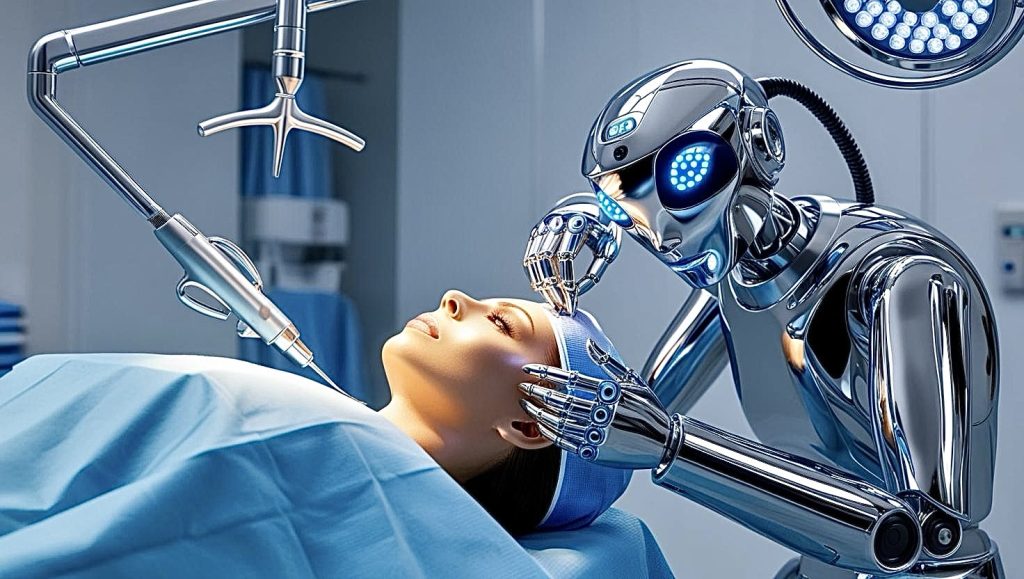
رافق ذلك بروز أنظمة الجراحة الروبوتية
مثل : ROSA . Da Vinci Surgical System,، وروبوتات الدردشة الطبية وأدوات مثلBuoy Health، Aysa، Neutrogena Skin360. وتطورّت برامج التصور المسبق للعمليات باستخدام FaceTouchUp، Vector 3D Imaging، Crisalix، Plastic Surgery Simulator، ومحاكي جراحات التجميلLite.
كمادخلتالسوقأجهزةمتقدمةأخرى،بينها:
Accure: لعلاج حب الشباب وتقدير درجة حرارة البشرة المثالية.
EXION AI يعالج لتجاعيد وندبات حب الشباب ويحفّز إنتاج الكولاجين بنسبة 224% بأمان ودون ألم أو نقاهة.
في ضوء ما سبق، يتساءل الكثيرون إلى أي مدى اتسعت استخدامات النساء لتقنيات الذكاء الاصطناعي؟ وهل شكّلت هذه التقنيات إضافة حقيقية أم تسبّبت في تشخيصات وتوصيات خاطئة؟ وهل تبدو إجراءات الذكاء الاصطناعي أكثر أمانًا أم أن ثقة المرأة بطبيب التجميل لا تزال الأساس في منحها الاطمئنان النفسي؟ أجرينا استبيانًا شمل 60 فتاة تتراوح أعمارهن بين نهاية سن المراهقة وبداية الثلاثينات، لرصد آرائهن وتجاربهن مع تقنيات الذكاء الاصطناعي في التجميل غير الجراحي، وكانت النتائج: التجربة المباشرة مع أدوات الذكاء الاصطناعي التجميلية
32 مشاركة (53.3%) استخدمن هذه الأدوات فعليًا.
28 مشاركة (46.7%) لم يستخدمنها بعد.
الثقة في التوصيات التجميلية التي تقدمها أنظمة الذكاء الاصطناعي
32 مشاركة (53.3%) يثقن بها.
28 مشاركة (46.7%) يفضلن استشارة طبيب بشري.
الذكاء الاصطناعي والتجميل غير الجراحي
36 فتاة (60%) يثقن بإسهام الذكاء الاصطناعي في تحسين نتائج البوتكس والفيلر.
24 فتاة (40%) تحفّظن على الاعتماد الكامل على التقنية في الإجراءات الدقيقة.
بشرة مثالية بضغطة زر تحتاجين طبيبآ ام تطبيقآ؟
في ظل التباين في آراء الفتيات، وجّهنا الأسئلة إلى أطباء التجميل حول مدى الاستفادة من الذكاء الاصطناعي في ممارساتهن التجميلية.ترى دكتورة التجميل “عبير أحمد” من الوسام المتحدة في جدة أن الذكاء الاصطناعي بات عنصرًا مساعدًا مهمًا، لكنَّه لا يحل محل الأطباء أو يقوم بالإجراءات بنفسه. التقنية مفيدة في تحليل نوع البشرة وتقييمها بدقة، ما يسهم في تحسين التشخيص ورسم خطط علاجية مخصّصة.وتؤكد أن تفاعل المرضى مع تطبيقات المحاكاة إيجابي، إذ تمنحهم تصورًا أوليًا للنتائج قبل أي تدخل فعلي. وتضيف أن بعض الأجهزة تساعد في تنفيذ خطوات دقيقة تزيد من معدّل نجاح الإجراءات، لكنها تظل مكملة لخبرة الطبيب، لا بديلًا عنها. وتلفت إلى أن تكاليف هذه الأدوات قد تمثل تحديًا أمام البعض.
فلترالواقع ….بينالتقنيةوالرأىالطبى .
• يقول دكتور “وائل صقر” استشاري جراحة التجميل إن الروبوتات الفرعية قادرة حاليًا على تنفيذ بعض الإجراءات التجميلية، لا سيما التي تتطلب دقة عالية أو تمكين الجراح من العمل عن بُعد. ويتوقع أن تتطور هذه الروبوتات لتؤدي مهامًا أكثر تعقيدًا دون تدخل مباشر، غير أنها لا تزال مكلفة وتتطلب تدريبًا طويلًا.
• وعن تقنيات الذكاء الاصطناعي في جراحات الوجه والفكين، يشير إلى دورها في تحليل صور الحروق وتخطيط العمليات باستخدام محاكاة ثلاثية الأبعاد، إضافةً إلى تقييم حيوية الشرائح الجلدية المزروعة. ويسهم الذكاء الاصطناعي في تقليل زمن العملية وتحسين دقة تشخيص الحالات المعقدة. ومع ذلك، لا يخلو الأمر من تحذير نفسي؛ إذ أن المحاكاة ليست دقيقة 100%، وقد تولّد توقعات مبالغًا فيها لدى المرضعلاج
تقنيةالذكاءالاصطناعي: فوائدمذهلةأممعاييرمزيفة؟
• يرى دكتور “ماهر محمود” استشاري الأمراض الجلدية أن الذكاء الاصطناعي يسرّع تشخيص أمراض خطرة مثل الميلانوما عبر تحليل الصور الطبية، كما يساعد في التفرقة بين الصدفية والإكزيما والذئبة الحمراء بدقة عالية. لكنه يحذر من الاعتماد الكلي على هذه التطبيقات دون إشراف طبي مباشر.
• ويشير إلى تطبيقات مثل “SkinVision” و“Derma Assist” و“VisualDX” في العيادات، وكذلك إلى تجربة “Surcast” التابعة لجمعية الصدفية الأمريكية التي ترصد تطور الحالة. ويشدّد على أن جودة الكاميرا والإضاءة تؤثر في دقة تحليلات التطبيقات الهاتفية، في حين تصل بعض الأنظمة إلى دقة 98% في توصية العلاجات البيولوجية، لكنها تحتاج إشرافًا بشريًا.
تحذير من الاعتماد الكامل على الذكاء الاصطناعي في تشخيص الأمراض الجلدية
حذّرت طبيبة الأمراض الجلدية “اغاريد الجمال” من أن تحليل الصور وحده لا يكفي لتشخيص أمراض مثل الصدفية والإكزيما، مشددةً على أهمية الفحص السريري وأخذ التاريخ الطبي الكامل، بما في ذلك العوامل الفطرية والبكتيرية التي لا تظهر في الصور. وتؤكد أن العلاقة الإنسانية بين الطبيب والمريض عنصر أساسي لضمان خطة علاجية ناجحة.
تؤكد خبيرة التجميل “هبة أبو بكر” أن التقنيات الحديثة غيّرت أدوات ومستحضرات التجميل وأداء الفتيات، خاصة منتجات تحضير البشرة والمصححات متعددة الألوان. وترى أن أجهزة مثل L’Oréal Brow Magic و HAPTA مفيدة للمبتدئين، لكن لا تضاهي براعة المحترفين. وفي تجربة المكياج الافتراضي، تعزز الثقة أولًا ثم يحتاج الأمر لتطبيق احترافي لاحقًا. وتضيف أن أدوات مثل Perso تساعد في اختيار اللون الأمثل، ما يقلل الخطأ ويحسّن النتائج. وقد لاحظت طلبات محددة من العملاء بعد تجربتهم الافتراضية، مما يدلّ على وعيٍ أكبر بنوع المكياج المناسب.
كيف يدعم الذكاء الاصطناعي عمل خبراء المكياج؟
ترى “هبة أبو بكر” أن الذكاء الاصطناعي أداة فعالة لتحسين جودة الصور والفيديوهات والإعلانات. وتؤكد أن التميز سيبقى مرهونًا بموهبة الخبير وقدرته على مواكبة التقنيات الجديدة. كما يشجع استخدام التقنية في ابتكار أنماط مكياج غير تقليدية، ويشدد على الدمج بين النظرية والتطبيق العملي مدعومًا بتقنيات الذكاء الاصطناعي لجعل التعلم أكثر تفاعلية ومتعة، لا سيما للمبتدئين
الذكاء الاصطناعي فى التجميل يخدم الثقة ام يولد القلق النفسي ؟
ما وراء الرسالة النفسية حول تفاوت قبول الفتيات لتقنيات الذكاء الاصطناعي في التجميل
قال الدكتور حمدي عبدالله أبو سنة، استشاري الصحة النفسية والأسرية وأستاذ علم النفس والاجتماع، إن تجربة الفتيات مع الذكاء الاصطناعي في التجميل تختلف باختلاف مستوى الرضا الذاتي والتجارب السابقة. فالفتيات غير الراضيات قد يكنّ أكثر استعدادًا لاستخدام التقنية، بينما اللاتي يشعرن بالثقة في مظهرهن يحافظن على طبيعة وجوههن.
العوامل النفسية والاجتماعية المؤثرةً
يوفر الذكاء الاصطناعي شعورًا بالتحكم لدى البعض، يعزّز استقلاليتهن وثقتهن بأنفسهن، لكنه قد يتعارض مع هوية الفتيات اللواتي يربطن مظهرهن بشخصيتهن. اجتماعيًا، يدفع ضغط معايير الجمال البعض نحو التجربة أو نحو الرفض حسب القيم الثقافية السائدة.
مخاوفوهواجسمتعلقةبالتكنولوجيا
تشمل المخاوف فقدان الخصوصية وعدم الثقة في خوارزميات غير شفافة، ونبذ فكرة أن تتحوّل هذه التقنيات إلى أدوات تروّج لجمال مصطنع بعيد عن الواقع.
الجانب الإيجابي والداعم نفسيًا
تتيح التقنية تحقيق الأهداف الجمالية بسرعة ودقة، ما يعزز الثقة بالنفس. كما يوفر التخصيص مساحة للراحة النفسية والتكيف مع المعايير المجتمعية بشكل أقل ضغطًا.
الإفراط في الاعتماد وتأثيره على التوازن النفسي
قد يخلق الاعتماد المفرط فجوة في الدعم النفسي بين المريضة والطبيب، بل ويؤدي إلى “إدمان تقني” يجعل قرارات الجمال مرهونة بالتكنولوجيا لا بالثقة الذاتية.
تعزيز معايير غير واقعية للجمال
من أبرز المخاطر أن ترسخ هذه التقنيات صورة مثالية مصطنعة عبر منصات التواصل، مما يرفع سقف التوقعات ويولّد شعورًا دائمًا بعدم الكمال.
التأهيل النفسي والتعامل المتوازن
تُعدّ برامج التوعية ضرورية لتعزيز تقدير الذات والجمال الطبيعي، وتشجيع الاستخدام المدروس للتقنيات دون اختزال قيمة الفرد في مظهره الخارجي.
الأساليب العلاجية والنفسية المقترحة
العلاج المعرفي السلوكي (CBT) من أبرز الوسائل لمساعدة الفتيات على تصحيح الأفكار السلبية المرتبطة بالمظهر، مع تشجيعهن على تقييم أنفسهن بشكل شامل ومتوازن واستخدام التقنية كدعم لا كتهديد.
خلاصة نفسية:
يتوقف تأثير الذكاء الاصطناعي في التجميل على طريقة استخدامه ومدى الوعي النفسي المصاحب له. فعندما يُدمج الوعي النفسي بالتقنية، تصبح الأداة دعماً لا ضغطًا. أما في غياب هذا الوعي، فقد تؤدي إلى تبنّي معايير تجميل غير واقعية وضغوط نفسية تعرقل ثقة الفتاة في ذاتها. بالتالي، يبقى التوازن والاختيار الواعي المفتاح الأساسي.
الاعتماد الكامل على هذه الأدوات قد يؤدي إلى مشكلات؛ فهي سلاح ذو حدين يجمع بين المنفعة والضرر، ما يستدعي دمج التوعية الطبية والنفسية ضمن أي نقاش حول مستقبل التجميل المدعوم بالذكاء الاصطناعي.