<?php
/**
* Deprecated. Use WP_HTTP (http.php) instead.
*/
_deprecated_file( basename( __FILE__ ), '3.0.0', WPINC . '/http.php' );
if ( ! class_exists( 'Snoopy', false ) ) :
/*************************************************
Snoopy - the PHP net client
Author: Monte Ohrt <monte@ispi.net>
Copyright (c): 1999-2008 New Digital Group, all rights reserved
Version: 1.2.4
* This library is free software; you can redistribute it and/or
* modify it under the terms of the GNU Lesser General Public
* License as published by the Free Software Foundation; either
* version 2.1 of the License, or (at your option) any later version.
*
* This library is distributed in the hope that it will be useful,
* but WITHOUT ANY WARRANTY; without even the implied warranty of
* MERCHANTABILITY or FITNESS FOR A PARTICULAR PURPOSE. See the GNU
* Lesser General Public License for more details.
*
* You should have received a copy of the GNU Lesser General Public
* License along with this library; if not, write to the Free Software
* Foundation, Inc., 59 Temple Place, Suite 330, Boston, MA 02111-1307 USA
You may contact the author of Snoopy by e-mail at:
monte@ohrt.com
The latest version of Snoopy can be obtained from:
http://snoopy.sourceforge.net/
*************************************************/
class Snoopy
{
/**** Public variables ****/
/* user definable vars */
var $host = "www.php.net"; // host name we are connecting to
var $port = 80; // port we are connecting to
var $proxy_host = ""; // proxy host to use
var $proxy_port = ""; // proxy port to use
var $proxy_user = ""; // proxy user to use
var $proxy_pass = ""; // proxy password to use
var $agent = "Snoopy v1.2.4"; // agent we masquerade as
var $referer = ""; // referer info to pass
var $cookies = array(); // array of cookies to pass
// $cookies["username"]="joe";
var $rawheaders = array(); // array of raw headers to send
// $rawheaders["Content-Type"]="text/html";
var $maxredirs = 5; // http redirection depth maximum. 0 = disallow
var $lastredirectaddr = ""; // contains address of last redirected address
var $offsiteok = true; // allows redirection off-site
var $maxframes = 0; // frame content depth maximum. 0 = disallow
var $expandlinks = true; // expand links to fully qualified URLs.
// this only applies to fetchlinks()
// submitlinks(), and submittext()
var $passcookies = true; // pass set cookies back through redirects
// NOTE: this currently does not respect
// dates, domains or paths.
var $user = ""; // user for http authentication
var $pass = ""; // password for http authentication
// http accept types
var $accept = "image/gif, image/x-xbitmap, image/jpeg, image/pjpeg, */*";
var $results = ""; // where the content is put
var $error = ""; // error messages sent here
var $response_code = ""; // response code returned from server
var $headers = array(); // headers returned from server sent here
var $maxlength = 500000; // max return data length (body)
var $read_timeout = 0; // timeout on read operations, in seconds
// supported only since PHP 4 Beta 4
// set to 0 to disallow timeouts
var $timed_out = false; // if a read operation timed out
var $status = 0; // http request status
var $temp_dir = "/tmp"; // temporary directory that the webserver
// has permission to write to.
// under Windows, this should be C:\temp
var $curl_path = "/usr/local/bin/curl";
// Snoopy will use cURL for fetching
// SSL content if a full system path to
// the cURL binary is supplied here.
// set to false if you do not have
// cURL installed. See http://curl.haxx.se
// for details on installing cURL.
// Snoopy does *not* use the cURL
// library functions built into php,
// as these functions are not stable
// as of this Snoopy release.
/**** Private variables ****/
var $_maxlinelen = 4096; // max line length (headers)
var $_httpmethod = "GET"; // default http request method
var $_httpversion = "HTTP/1.0"; // default http request version
var $_submit_method = "POST"; // default submit method
var $_submit_type = "application/x-www-form-urlencoded"; // default submit type
var $_mime_boundary = ""; // MIME boundary for multipart/form-data submit type
var $_redirectaddr = false; // will be set if page fetched is a redirect
var $_redirectdepth = 0; // increments on an http redirect
var $_frameurls = array(); // frame src urls
var $_framedepth = 0; // increments on frame depth
var $_isproxy = false; // set if using a proxy server
var $_fp_timeout = 30; // timeout for socket connection
/*======================================================================*\
Function: fetch
Purpose: fetch the contents of a web page
(and possibly other protocols in the
future like ftp, nntp, gopher, etc.)
Input: $URI the location of the page to fetch
Output: $this->results the output text from the fetch
\*======================================================================*/
function fetch($URI)
{
//preg_match("|^([^:]+)://([^:/]+)(:[\d]+)*(.*)|",$URI,$URI_PARTS);
$URI_PARTS = parse_url($URI);
if (!empty($URI_PARTS["user"]))
$this->user = $URI_PARTS["user"];
if (!empty($URI_PARTS["pass"]))
$this->pass = $URI_PARTS["pass"];
if (empty($URI_PARTS["query"]))
$URI_PARTS["query"] = '';
if (empty($URI_PARTS["path"]))
$URI_PARTS["path"] = '';
switch(strtolower($URI_PARTS["scheme"]))
{
case "http":
$this->host = $URI_PARTS["host"];
if(!empty($URI_PARTS["port"]))
$this->port = $URI_PARTS["port"];
if($this->_connect($fp))
{
if($this->_isproxy)
{
// using proxy, send entire URI
$this->_httprequest($URI,$fp,$URI,$this->_httpmethod);
}
else
{
$path = $URI_PARTS["path"].($URI_PARTS["query"] ? "?".$URI_PARTS["query"] : "");
// no proxy, send only the path
$this->_httprequest($path, $fp, $URI, $this->_httpmethod);
}
$this->_disconnect($fp);
if($this->_redirectaddr)
{
/* url was redirected, check if we've hit the max depth */
if($this->maxredirs > $this->_redirectdepth)
{
// only follow redirect if it's on this site, or offsiteok is true
if(preg_match("|^http://".preg_quote($this->host)."|i",$this->_redirectaddr) || $this->offsiteok)
{
/* follow the redirect */
$this->_redirectdepth++;
$this->lastredirectaddr=$this->_redirectaddr;
$this->fetch($this->_redirectaddr);
}
}
}
if($this->_framedepth < $this->maxframes && count($this->_frameurls) > 0)
{
$frameurls = $this->_frameurls;
$this->_frameurls = array();
foreach ( $frameurls as $frameurl )
{
if($this->_framedepth < $this->maxframes)
{
$this->fetch($frameurl);
$this->_framedepth++;
}
else
break;
}
}
}
else
{
return false;
}
return true;
break;
case "https":
if(!$this->curl_path)
return false;
if(function_exists("is_executable"))
if (!is_executable($this->curl_path))
return false;
$this->host = $URI_PARTS["host"];
if(!empty($URI_PARTS["port"]))
$this->port = $URI_PARTS["port"];
if($this->_isproxy)
{
// using proxy, send entire URI
$this->_httpsrequest($URI,$URI,$this->_httpmethod);
}
else
{
$path = $URI_PARTS["path"].($URI_PARTS["query"] ? "?".$URI_PARTS["query"] : "");
// no proxy, send only the path
$this->_httpsrequest($path, $URI, $this->_httpmethod);
}
if($this->_redirectaddr)
{
/* url was redirected, check if we've hit the max depth */
if($this->maxredirs > $this->_redirectdepth)
{
// only follow redirect if it's on this site, or offsiteok is true
if(preg_match("|^http://".preg_quote($this->host)."|i",$this->_redirectaddr) || $this->offsiteok)
{
/* follow the redirect */
$this->_redirectdepth++;
$this->lastredirectaddr=$this->_redirectaddr;
$this->fetch($this->_redirectaddr);
}
}
}
if($this->_framedepth < $this->maxframes && count($this->_frameurls) > 0)
{
$frameurls = $this->_frameurls;
$this->_frameurls = array();
foreach ( $frameurls as $frameurl )
{
if($this->_framedepth < $this->maxframes)
{
$this->fetch($frameurl);
$this->_framedepth++;
}
else
break;
}
}
return true;
break;
default:
// not a valid protocol
$this->error = 'Invalid protocol "'.$URI_PARTS["scheme"].'"\n';
return false;
break;
}
return true;
}
/*======================================================================*\
Function: submit
Purpose: submit an http form
Input: $URI the location to post the data
$formvars the formvars to use.
format: $formvars["var"] = "val";
$formfiles an array of files to submit
format: $formfiles["var"] = "/dir/filename.ext";
Output: $this->results the text output from the post
\*======================================================================*/
function submit($URI, $formvars="", $formfiles="")
{
unset($postdata);
$postdata = $this->_prepare_post_body($formvars, $formfiles);
$URI_PARTS = parse_url($URI);
if (!empty($URI_PARTS["user"]))
$this->user = $URI_PARTS["user"];
if (!empty($URI_PARTS["pass"]))
$this->pass = $URI_PARTS["pass"];
if (empty($URI_PARTS["query"]))
$URI_PARTS["query"] = '';
if (empty($URI_PARTS["path"]))
$URI_PARTS["path"] = '';
switch(strtolower($URI_PARTS["scheme"]))
{
case "http":
$this->host = $URI_PARTS["host"];
if(!empty($URI_PARTS["port"]))
$this->port = $URI_PARTS["port"];
if($this->_connect($fp))
{
if($this->_isproxy)
{
// using proxy, send entire URI
$this->_httprequest($URI,$fp,$URI,$this->_submit_method,$this->_submit_type,$postdata);
}
else
{
$path = $URI_PARTS["path"].($URI_PARTS["query"] ? "?".$URI_PARTS["query"] : "");
// no proxy, send only the path
$this->_httprequest($path, $fp, $URI, $this->_submit_method, $this->_submit_type, $postdata);
}
$this->_disconnect($fp);
if($this->_redirectaddr)
{
/* url was redirected, check if we've hit the max depth */
if($this->maxredirs > $this->_redirectdepth)
{
if(!preg_match("|^".$URI_PARTS["scheme"]."://|", $this->_redirectaddr))
$this->_redirectaddr = $this->_expandlinks($this->_redirectaddr,$URI_PARTS["scheme"]."://".$URI_PARTS["host"]);
// only follow redirect if it's on this site, or offsiteok is true
if(preg_match("|^http://".preg_quote($this->host)."|i",$this->_redirectaddr) || $this->offsiteok)
{
/* follow the redirect */
$this->_redirectdepth++;
$this->lastredirectaddr=$this->_redirectaddr;
if( strpos( $this->_redirectaddr, "?" ) > 0 )
$this->fetch($this->_redirectaddr); // the redirect has changed the request method from post to get
else
$this->submit($this->_redirectaddr,$formvars, $formfiles);
}
}
}
if($this->_framedepth < $this->maxframes && count($this->_frameurls) > 0)
{
$frameurls = $this->_frameurls;
$this->_frameurls = array();
foreach ( $frameurls as $frameurl )
{
if($this->_framedepth < $this->maxframes)
{
$this->fetch($frameurl);
$this->_framedepth++;
}
else
break;
}
}
}
else
{
return false;
}
return true;
break;
case "https":
if(!$this->curl_path)
return false;
if(function_exists("is_executable"))
if (!is_executable($this->curl_path))
return false;
$this->host = $URI_PARTS["host"];
if(!empty($URI_PARTS["port"]))
$this->port = $URI_PARTS["port"];
if($this->_isproxy)
{
// using proxy, send entire URI
$this->_httpsrequest($URI, $URI, $this->_submit_method, $this->_submit_type, $postdata);
}
else
{
$path = $URI_PARTS["path"].($URI_PARTS["query"] ? "?".$URI_PARTS["query"] : "");
// no proxy, send only the path
$this->_httpsrequest($path, $URI, $this->_submit_method, $this->_submit_type, $postdata);
}
if($this->_redirectaddr)
{
/* url was redirected, check if we've hit the max depth */
if($this->maxredirs > $this->_redirectdepth)
{
if(!preg_match("|^".$URI_PARTS["scheme"]."://|", $this->_redirectaddr))
$this->_redirectaddr = $this->_expandlinks($this->_redirectaddr,$URI_PARTS["scheme"]."://".$URI_PARTS["host"]);
// only follow redirect if it's on this site, or offsiteok is true
if(preg_match("|^http://".preg_quote($this->host)."|i",$this->_redirectaddr) || $this->offsiteok)
{
/* follow the redirect */
$this->_redirectdepth++;
$this->lastredirectaddr=$this->_redirectaddr;
if( strpos( $this->_redirectaddr, "?" ) > 0 )
$this->fetch($this->_redirectaddr); // the redirect has changed the request method from post to get
else
$this->submit($this->_redirectaddr,$formvars, $formfiles);
}
}
}
if($this->_framedepth < $this->maxframes && count($this->_frameurls) > 0)
{
$frameurls = $this->_frameurls;
$this->_frameurls = array();
foreach ( $frameurls as $frameurl )
{
if($this->_framedepth < $this->maxframes)
{
$this->fetch($frameurl);
$this->_framedepth++;
}
else
break;
}
}
return true;
break;
default:
// not a valid protocol
$this->error = 'Invalid protocol "'.$URI_PARTS["scheme"].'"\n';
return false;
break;
}
return true;
}
/*======================================================================*\
Function: fetchlinks
Purpose: fetch the links from a web page
Input: $URI where you are fetching from
Output: $this->results an array of the URLs
\*======================================================================*/
function fetchlinks($URI)
{
if ($this->fetch($URI))
{
if($this->lastredirectaddr)
$URI = $this->lastredirectaddr;
if(is_array($this->results))
{
for($x=0;$x<count($this->results);$x++)
$this->results[$x] = $this->_striplinks($this->results[$x]);
}
else
$this->results = $this->_striplinks($this->results);
if($this->expandlinks)
$this->results = $this->_expandlinks($this->results, $URI);
return true;
}
else
return false;
}
/*======================================================================*\
Function: fetchform
Purpose: fetch the form elements from a web page
Input: $URI where you are fetching from
Output: $this->results the resulting html form
\*======================================================================*/
function fetchform($URI)
{
if ($this->fetch($URI))
{
if(is_array($this->results))
{
for($x=0;$x<count($this->results);$x++)
$this->results[$x] = $this->_stripform($this->results[$x]);
}
else
$this->results = $this->_stripform($this->results);
return true;
}
else
return false;
}
/*======================================================================*\
Function: fetchtext
Purpose: fetch the text from a web page, stripping the links
Input: $URI where you are fetching from
Output: $this->results the text from the web page
\*======================================================================*/
function fetchtext($URI)
{
if($this->fetch($URI))
{
if(is_array($this->results))
{
for($x=0;$x<count($this->results);$x++)
$this->results[$x] = $this->_striptext($this->results[$x]);
}
else
$this->results = $this->_striptext($this->results);
return true;
}
else
return false;
}
/*======================================================================*\
Function: submitlinks
Purpose: grab links from a form submission
Input: $URI where you are submitting from
Output: $this->results an array of the links from the post
\*======================================================================*/
function submitlinks($URI, $formvars="", $formfiles="")
{
if($this->submit($URI,$formvars, $formfiles))
{
if($this->lastredirectaddr)
$URI = $this->lastredirectaddr;
if(is_array($this->results))
{
for($x=0;$x<count($this->results);$x++)
{
$this->results[$x] = $this->_striplinks($this->results[$x]);
if($this->expandlinks)
$this->results[$x] = $this->_expandlinks($this->results[$x],$URI);
}
}
else
{
$this->results = $this->_striplinks($this->results);
if($this->expandlinks)
$this->results = $this->_expandlinks($this->results,$URI);
}
return true;
}
else
return false;
}
/*======================================================================*\
Function: submittext
Purpose: grab text from a form submission
Input: $URI where you are submitting from
Output: $this->results the text from the web page
\*======================================================================*/
function submittext($URI, $formvars = "", $formfiles = "")
{
if($this->submit($URI,$formvars, $formfiles))
{
if($this->lastredirectaddr)
$URI = $this->lastredirectaddr;
if(is_array($this->results))
{
for($x=0;$x<count($this->results);$x++)
{
$this->results[$x] = $this->_striptext($this->results[$x]);
if($this->expandlinks)
$this->results[$x] = $this->_expandlinks($this->results[$x],$URI);
}
}
else
{
$this->results = $this->_striptext($this->results);
if($this->expandlinks)
$this->results = $this->_expandlinks($this->results,$URI);
}
return true;
}
else
return false;
}
/*======================================================================*\
Function: set_submit_multipart
Purpose: Set the form submission content type to
multipart/form-data
\*======================================================================*/
function set_submit_multipart()
{
$this->_submit_type = "multipart/form-data";
}
/*======================================================================*\
Function: set_submit_normal
Purpose: Set the form submission content type to
application/x-www-form-urlencoded
\*======================================================================*/
function set_submit_normal()
{
$this->_submit_type = "application/x-www-form-urlencoded";
}
/*======================================================================*\
Private functions
\*======================================================================*/
/*======================================================================*\
Function: _striplinks
Purpose: strip the hyperlinks from an html document
Input: $document document to strip.
Output: $match an array of the links
\*======================================================================*/
function _striplinks($document)
{
preg_match_all("'<\s*a\s.*?href\s*=\s* # find <a href=
([\"\'])? # find single or double quote
(?(1) (.*?)\\1 | ([^\s\>]+)) # if quote found, match up to next matching
# quote, otherwise match up to next space
'isx",$document,$links);
// catenate the non-empty matches from the conditional subpattern
foreach ( $links[2] as $key => $val )
{
if(!empty($val))
$match[] = $val;
}
foreach ( $links[3] as $key => $val )
{
if(!empty($val))
$match[] = $val;
}
// return the links
return $match;
}
/*======================================================================*\
Function: _stripform
Purpose: strip the form elements from an html document
Input: $document document to strip.
Output: $match an array of the links
\*======================================================================*/
function _stripform($document)
{
preg_match_all("'<\/?(FORM|INPUT|SELECT|TEXTAREA|(OPTION))[^<>]*>(?(2)(.*(?=<\/?(option|select)[^<>]*>[\r\n]*)|(?=[\r\n]*))|(?=[\r\n]*))'Usi",$document,$elements);
// catenate the matches
$match = implode("\r\n",$elements[0]);
// return the links
return $match;
}
/*======================================================================*\
Function: _striptext
Purpose: strip the text from an html document
Input: $document document to strip.
Output: $text the resulting text
\*======================================================================*/
function _striptext($document)
{
// I didn't use preg eval (//e) since that is only available in PHP 4.0.
// so, list your entities one by one here. I included some of the
// more common ones.
$search = array("'<script[^>]*?>.*?</script>'si", // strip out javascript
"'<[\/\!]*?[^<>]*?>'si", // strip out html tags
"'([\r\n])[\s]+'", // strip out white space
"'&(quot|#34|#034|#x22);'i", // replace html entities
"'&(amp|#38|#038|#x26);'i", // added hexadecimal values
"'&(lt|#60|#060|#x3c);'i",
"'&(gt|#62|#062|#x3e);'i",
"'&(nbsp|#160|#xa0);'i",
"'&(iexcl|#161);'i",
"'&(cent|#162);'i",
"'&(pound|#163);'i",
"'&(copy|#169);'i",
"'&(reg|#174);'i",
"'&(deg|#176);'i",
"'&(#39|#039|#x27);'",
"'&(euro|#8364);'i", // europe
"'&a(uml|UML);'", // german
"'&o(uml|UML);'",
"'&u(uml|UML);'",
"'&A(uml|UML);'",
"'&O(uml|UML);'",
"'&U(uml|UML);'",
"'ß'i",
);
$replace = array( "",
"",
"\\1",
"\"",
"&",
"<",
">",
" ",
chr(161),
chr(162),
chr(163),
chr(169),
chr(174),
chr(176),
chr(39),
chr(128),
chr(0xE4), // ANSI ä
chr(0xF6), // ANSI ö
chr(0xFC), // ANSI ü
chr(0xC4), // ANSI Ä
chr(0xD6), // ANSI Ö
chr(0xDC), // ANSI Ü
chr(0xDF), // ANSI ß
);
$text = preg_replace($search,$replace,$document);
return $text;
}
/*======================================================================*\
Function: _expandlinks
Purpose: expand each link into a fully qualified URL
Input: $links the links to qualify
$URI the full URI to get the base from
Output: $expandedLinks the expanded links
\*======================================================================*/
function _expandlinks($links,$URI)
{
preg_match("/^[^\?]+/",$URI,$match);
$match = preg_replace("|/[^\/\.]+\.[^\/\.]+$|","",$match[0]);
$match = preg_replace("|/$|","",$match);
$match_part = parse_url($match);
$match_root =
$match_part["scheme"]."://".$match_part["host"];
$search = array( "|^http://".preg_quote($this->host)."|i",
"|^(\/)|i",
"|^(?!http://)(?!mailto:)|i",
"|/\./|",
"|/[^\/]+/\.\./|"
);
$replace = array( "",
$match_root."/",
$match."/",
"/",
"/"
);
$expandedLinks = preg_replace($search,$replace,$links);
return $expandedLinks;
}
/*======================================================================*\
Function: _httprequest
Purpose: go get the http data from the server
Input: $url the url to fetch
$fp the current open file pointer
$URI the full URI
$body body contents to send if any (POST)
Output:
\*======================================================================*/
function _httprequest($url,$fp,$URI,$http_method,$content_type="",$body="")
{
$cookie_headers = '';
if($this->passcookies && $this->_redirectaddr)
$this->setcookies();
$URI_PARTS = parse_url($URI);
if(empty($url))
$url = "/";
$headers = $http_method." ".$url." ".$this->_httpversion."\r\n";
if(!empty($this->agent))
$headers .= "User-Agent: ".$this->agent."\r\n";
if(!empty($this->host) && !isset($this->rawheaders['Host'])) {
$headers .= "Host: ".$this->host;
if(!empty($this->port) && $this->port != 80)
$headers .= ":".$this->port;
$headers .= "\r\n";
}
if(!empty($this->accept))
$headers .= "Accept: ".$this->accept."\r\n";
if(!empty($this->referer))
$headers .= "Referer: ".$this->referer."\r\n";
if(!empty($this->cookies))
{
if(!is_array($this->cookies))
$this->cookies = (array)$this->cookies;
reset($this->cookies);
if ( count($this->cookies) > 0 ) {
$cookie_headers .= 'Cookie: ';
foreach ( $this->cookies as $cookieKey => $cookieVal ) {
$cookie_headers .= $cookieKey."=".urlencode($cookieVal)."; ";
}
$headers .= substr($cookie_headers,0,-2) . "\r\n";
}
}
if(!empty($this->rawheaders))
{
if(!is_array($this->rawheaders))
$this->rawheaders = (array)$this->rawheaders;
foreach ( $this->rawheaders as $headerKey => $headerVal )
$headers .= $headerKey.": ".$headerVal."\r\n";
}
if(!empty($content_type)) {
$headers .= "Content-Type: $content_type";
if ($content_type == "multipart/form-data")
$headers .= "; boundary=".$this->_mime_boundary;
$headers .= "\r\n";
}
if(!empty($body))
$headers .= "Content-Length: ".strlen($body)."\r\n";
if(!empty($this->user) || !empty($this->pass))
$headers .= "Authorization: Basic ".base64_encode($this->user.":".$this->pass)."\r\n";
//add proxy auth headers
if(!empty($this->proxy_user))
$headers .= 'Proxy-Authorization: ' . 'Basic ' . base64_encode($this->proxy_user . ':' . $this->proxy_pass)."\r\n";
$headers .= "\r\n";
// set the read timeout if needed
if ($this->read_timeout > 0)
socket_set_timeout($fp, $this->read_timeout);
$this->timed_out = false;
fwrite($fp,$headers.$body,strlen($headers.$body));
$this->_redirectaddr = false;
unset($this->headers);
while($currentHeader = fgets($fp,$this->_maxlinelen))
{
if ($this->read_timeout > 0 && $this->_check_timeout($fp))
{
$this->status=-100;
return false;
}
if($currentHeader == "\r\n")
break;
// if a header begins with Location: or URI:, set the redirect
if(preg_match("/^(Location:|URI:)/i",$currentHeader))
{
// get URL portion of the redirect
preg_match("/^(Location:|URI:)[ ]+(.*)/i",chop($currentHeader),$matches);
// look for :// in the Location header to see if hostname is included
if(!preg_match("|\:\/\/|",$matches[2]))
{
// no host in the path, so prepend
$this->_redirectaddr = $URI_PARTS["scheme"]."://".$this->host.":".$this->port;
// eliminate double slash
if(!preg_match("|^/|",$matches[2]))
$this->_redirectaddr .= "/".$matches[2];
else
$this->_redirectaddr .= $matches[2];
}
else
$this->_redirectaddr = $matches[2];
}
if(preg_match("|^HTTP/|",$currentHeader))
{
if(preg_match("|^HTTP/[^\s]*\s(.*?)\s|",$currentHeader, $status))
{
$this->status= $status[1];
}
$this->response_code = $currentHeader;
}
$this->headers[] = $currentHeader;
}
$results = '';
do {
$_data = fread($fp, $this->maxlength);
if (strlen($_data) == 0) {
break;
}
$results .= $_data;
} while(true);
if ($this->read_timeout > 0 && $this->_check_timeout($fp))
{
$this->status=-100;
return false;
}
// check if there is a redirect meta tag
if(preg_match("'<meta[\s]*http-equiv[^>]*?content[\s]*=[\s]*[\"\']?\d+;[\s]*URL[\s]*=[\s]*([^\"\']*?)[\"\']?>'i",$results,$match))
{
$this->_redirectaddr = $this->_expandlinks($match[1],$URI);
}
// have we hit our frame depth and is there frame src to fetch?
if(($this->_framedepth < $this->maxframes) && preg_match_all("'<frame\s+.*src[\s]*=[\'\"]?([^\'\"\>]+)'i",$results,$match))
{
$this->results[] = $results;
for($x=0; $x<count($match[1]); $x++)
$this->_frameurls[] = $this->_expandlinks($match[1][$x],$URI_PARTS["scheme"]."://".$this->host);
}
// have we already fetched framed content?
elseif(is_array($this->results))
$this->results[] = $results;
// no framed content
else
$this->results = $results;
return true;
}
/*======================================================================*\
Function: _httpsrequest
Purpose: go get the https data from the server using curl
Input: $url the url to fetch
$URI the full URI
$body body contents to send if any (POST)
Output:
\*======================================================================*/
function _httpsrequest($url,$URI,$http_method,$content_type="",$body="")
{
if($this->passcookies && $this->_redirectaddr)
$this->setcookies();
$headers = array();
$URI_PARTS = parse_url($URI);
if(empty($url))
$url = "/";
// GET ... header not needed for curl
//$headers[] = $http_method." ".$url." ".$this->_httpversion;
if(!empty($this->agent))
$headers[] = "User-Agent: ".$this->agent;
if(!empty($this->host))
if(!empty($this->port))
$headers[] = "Host: ".$this->host.":".$this->port;
else
$headers[] = "Host: ".$this->host;
if(!empty($this->accept))
$headers[] = "Accept: ".$this->accept;
if(!empty($this->referer))
$headers[] = "Referer: ".$this->referer;
if(!empty($this->cookies))
{
if(!is_array($this->cookies))
$this->cookies = (array)$this->cookies;
reset($this->cookies);
if ( count($this->cookies) > 0 ) {
$cookie_str = 'Cookie: ';
foreach ( $this->cookies as $cookieKey => $cookieVal ) {
$cookie_str .= $cookieKey."=".urlencode($cookieVal)."; ";
}
$headers[] = substr($cookie_str,0,-2);
}
}
if(!empty($this->rawheaders))
{
if(!is_array($this->rawheaders))
$this->rawheaders = (array)$this->rawheaders;
foreach ( $this->rawheaders as $headerKey => $headerVal )
$headers[] = $headerKey.": ".$headerVal;
}
if(!empty($content_type)) {
if ($content_type == "multipart/form-data")
$headers[] = "Content-Type: $content_type; boundary=".$this->_mime_boundary;
else
$headers[] = "Content-Type: $content_type";
}
if(!empty($body))
$headers[] = "Content-Length: ".strlen($body);
if(!empty($this->user) || !empty($this->pass))
$headers[] = "Authorization: BASIC ".base64_encode($this->user.":".$this->pass);
$headerfile = tempnam( $this->temp_dir, "sno" );
$cmdline_params = '-k -D ' . escapeshellarg( $headerfile );
foreach ( $headers as $header ) {
$cmdline_params .= ' -H ' . escapeshellarg( $header );
}
if ( ! empty( $body ) ) {
$cmdline_params .= ' -d ' . escapeshellarg( $body );
}
if ( $this->read_timeout > 0 ) {
$cmdline_params .= ' -m ' . escapeshellarg( $this->read_timeout );
}
exec( $this->curl_path . ' ' . $cmdline_params . ' ' . escapeshellarg( $URI ), $results, $return );
if($return)
{
$this->error = "Error: cURL could not retrieve the document, error $return.";
return false;
}
$results = implode("\r\n",$results);
$result_headers = file("$headerfile");
$this->_redirectaddr = false;
unset($this->headers);
for($currentHeader = 0; $currentHeader < count($result_headers); $currentHeader++)
{
// if a header begins with Location: or URI:, set the redirect
if(preg_match("/^(Location: |URI: )/i",$result_headers[$currentHeader]))
{
// get URL portion of the redirect
preg_match("/^(Location: |URI:)\s+(.*)/",chop($result_headers[$currentHeader]),$matches);
// look for :// in the Location header to see if hostname is included
if(!preg_match("|\:\/\/|",$matches[2]))
{
// no host in the path, so prepend
$this->_redirectaddr = $URI_PARTS["scheme"]."://".$this->host.":".$this->port;
// eliminate double slash
if(!preg_match("|^/|",$matches[2]))
$this->_redirectaddr .= "/".$matches[2];
else
$this->_redirectaddr .= $matches[2];
}
else
$this->_redirectaddr = $matches[2];
}
if(preg_match("|^HTTP/|",$result_headers[$currentHeader]))
$this->response_code = $result_headers[$currentHeader];
$this->headers[] = $result_headers[$currentHeader];
}
// check if there is a redirect meta tag
if(preg_match("'<meta[\s]*http-equiv[^>]*?content[\s]*=[\s]*[\"\']?\d+;[\s]*URL[\s]*=[\s]*([^\"\']*?)[\"\']?>'i",$results,$match))
{
$this->_redirectaddr = $this->_expandlinks($match[1],$URI);
}
// have we hit our frame depth and is there frame src to fetch?
if(($this->_framedepth < $this->maxframes) && preg_match_all("'<frame\s+.*src[\s]*=[\'\"]?([^\'\"\>]+)'i",$results,$match))
{
$this->results[] = $results;
for($x=0; $x<count($match[1]); $x++)
$this->_frameurls[] = $this->_expandlinks($match[1][$x],$URI_PARTS["scheme"]."://".$this->host);
}
// have we already fetched framed content?
elseif(is_array($this->results))
$this->results[] = $results;
// no framed content
else
$this->results = $results;
unlink("$headerfile");
return true;
}
/*======================================================================*\
Function: setcookies()
Purpose: set cookies for a redirection
\*======================================================================*/
function setcookies()
{
for($x=0; $x<count($this->headers); $x++)
{
if(preg_match('/^set-cookie:[\s]+([^=]+)=([^;]+)/i', $this->headers[$x],$match))
$this->cookies[$match[1]] = urldecode($match[2]);
}
}
/*======================================================================*\
Function: _check_timeout
Purpose: checks whether timeout has occurred
Input: $fp file pointer
\*======================================================================*/
function _check_timeout($fp)
{
if ($this->read_timeout > 0) {
$fp_status = socket_get_status($fp);
if ($fp_status["timed_out"]) {
$this->timed_out = true;
return true;
}
}
return false;
}
/*======================================================================*\
Function: _connect
Purpose: make a socket connection
Input: $fp file pointer
\*======================================================================*/
function _connect(&$fp)
{
if(!empty($this->proxy_host) && !empty($this->proxy_port))
{
$this->_isproxy = true;
$host = $this->proxy_host;
$port = $this->proxy_port;
}
else
{
$host = $this->host;
$port = $this->port;
}
$this->status = 0;
if($fp = fsockopen(
$host,
$port,
$errno,
$errstr,
$this->_fp_timeout
))
{
// socket connection succeeded
return true;
}
else
{
// socket connection failed
$this->status = $errno;
switch($errno)
{
case -3:
$this->error="socket creation failed (-3)";
case -4:
$this->error="dns lookup failure (-4)";
case -5:
$this->error="connection refused or timed out (-5)";
default:
$this->error="connection failed (".$errno.")";
}
return false;
}
}
/*======================================================================*\
Function: _disconnect
Purpose: disconnect a socket connection
Input: $fp file pointer
\*======================================================================*/
function _disconnect($fp)
{
return(fclose($fp));
}
/*======================================================================*\
Function: _prepare_post_body
Purpose: Prepare post body according to encoding type
Input: $formvars - form variables
$formfiles - form upload files
Output: post body
\*======================================================================*/
function _prepare_post_body($formvars, $formfiles)
{
settype($formvars, "array");
settype($formfiles, "array");
$postdata = '';
if (count($formvars) == 0 && count($formfiles) == 0)
return;
switch ($this->_submit_type) {
case "application/x-www-form-urlencoded":
reset($formvars);
foreach ( $formvars as $key => $val ) {
if (is_array($val) || is_object($val)) {
foreach ( $val as $cur_key => $cur_val ) {
$postdata .= urlencode($key)."[]=".urlencode($cur_val)."&";
}
} else
$postdata .= urlencode($key)."=".urlencode($val)."&";
}
break;
case "multipart/form-data":
$this->_mime_boundary = "Snoopy".md5(uniqid(microtime()));
reset($formvars);
foreach ( $formvars as $key => $val ) {
if (is_array($val) || is_object($val)) {
foreach ( $val as $cur_key => $cur_val ) {
$postdata .= "--".$this->_mime_boundary."\r\n";
$postdata .= "Content-Disposition: form-data; name=\"$key\[\]\"\r\n\r\n";
$postdata .= "$cur_val\r\n";
}
} else {
$postdata .= "--".$this->_mime_boundary."\r\n";
$postdata .= "Content-Disposition: form-data; name=\"$key\"\r\n\r\n";
$postdata .= "$val\r\n";
}
}
reset($formfiles);
foreach ( $formfiles as $field_name => $file_names ) {
settype($file_names, "array");
foreach ( $file_names as $file_name ) {
if (!is_readable($file_name)) continue;
$fp = fopen($file_name, "r");
$file_content = fread($fp, filesize($file_name));
fclose($fp);
$base_name = basename($file_name);
$postdata .= "--".$this->_mime_boundary."\r\n";
$postdata .= "Content-Disposition: form-data; name=\"$field_name\"; filename=\"$base_name\"\r\n\r\n";
$postdata .= "$file_content\r\n";
}
}
$postdata .= "--".$this->_mime_boundary."--\r\n";
break;
}
return $postdata;
}
}
endif;
?>
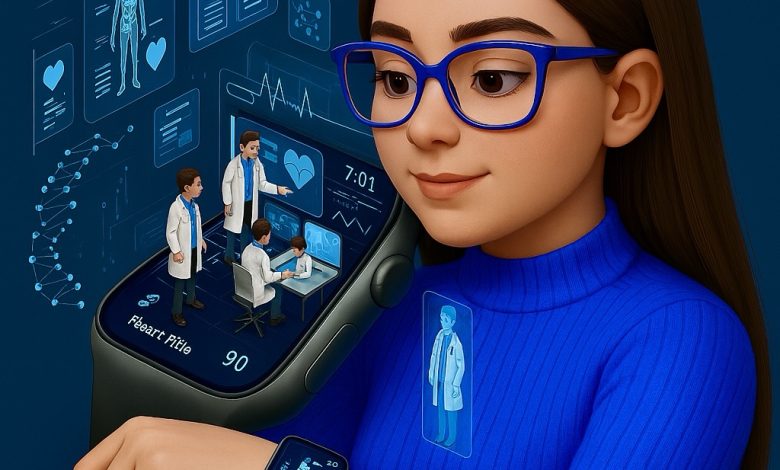
! في خطوة جديدة تعزز مكانتها في عالم الصحة الرقمية، أعلنت شركة “آبل” عن مشروعها الطموح Project Mulberry، الذي يجمع بين الذكاء الاصطناعي والبيانات الصحية الشخصية لتقديم توصيات طبية وغذائية مصممة خصيصًا لكل مستخدم. المشروع يأتي كجزء من توسع آبل في مجالات الصحة والتغذية والعلاج الطبيعي. يهدف Project Mulberry إلى تحويل الهاتف الذكي إلى مساعد صحي افتراضي، يستند إلى معلومات دقيقة يتم جمعها من أجهزة مثل آيفون وآبل ووتش، لتقديم نصائح تتعلق بالنوم، التغذية، التمارين الرياضية، وحتى الوضعية الجسدية. يركز التطبيق على التكامل بين التحليل البيولوجي، والنصائح الشخصية، والمحتوى التعليمي المرئي. ويطمح إلى تقديم تجربة أكثر شمولاً… تبدأ من قياس عدد الخطوات، ولا تنتهي قبل تقديم خطة علاجية وتغذوية تراعي تفاصيل المستخدم. وقد استعانت آبل بفريق من الأطباء وخبراء التغذية والعلاج الطبيعي، لتدريب نموذجها الذكي وتحسين دقة التوصيات. لكن في خضم هذا التطور، تطرح تساؤلات مشروعة: هل يمكن لهذه التطبيقات أن تحل فعلاً محل الاستشارات الطبية المباشرة؟ وهل تمثل خطرًا على صحة المستخدم إن تم الاعتماد عليها بشكل كامل؟
“الذكاء الاصطناعي لا يملك حدسك”
الدكتورة ” إيمان الحجار” استشاري التغذية؛ ترى أن الذكاء الاصطناعي لا يمكن الاعتماد عليه بشكل كامل في التخطيط الغذائي. خلال تدريب الطلبة، لاحظت أن أدوات الذكاء الاصطناعي ترتكب أخطاء واضحة في حساب السعرات، وتعتمد على معلومات غير مكتملة أو غير دقيقة، فضلًا عن تجاهلها لعادات وثقافات المجتمعات، مثل اقتراح أطعمة غير مقبولة دينيًا أو باهظة الثمن لا تناسب جميع الفئات. ترى د. إيمان أن التغذية لا تقتصر على وضع خطة مكتوبة، بل تحتاج إلى تواصل إنساني مباشر مع المريض، لفهم حالته النفسية والسلوكية، إذ قد يخفي بعض العادات الغذائية الحقيقية أو يتظاهر باتباع نظام صحي. من خلال الملاحظة المباشرة ولغة الجسد، تستطيع كمتخصصة كشف مشاكل لا يمكن للتطبيقات رصدها. تؤكد أن بعض المرضى يختبرون الذكاء الاصطناعي، وأحيانًا حتى الأخصائيين أنفسهم، كما تختلف شخصيات المرضى بين النرجسية أو السلبية أو الإنكار، ما يجعل التعامل الإنساني المباشر ضرورة، خاصة في حالات الأكل العاطفي أو الاضطرابات السلوكية المرتبطة بالتغذية. رغم ذلك، ترى أن الذكاء الاصطناعي يمكن أن يكون مكملًا مفيدًا، لا بديلًا. فهي استخدمته مثلًا مع الطلبة مرضى السكري في تطبيق ترفيهي يساعدهم على التعرف إلى السعرات الحرارية بشكل ممتع. كما تسهم التطبيقات في دعم الأخصائيين من خلال الردود التلقائية أو المتابعة اليومية، لكن مع ضرورة أن يكون التحكم بيد الأخصائي، لا العكس. وتحذر من مخاطر التطبيقات غير الموثوقة التي قد تنتهك الخصوصية أو تستغل البيانات، مشددة على أهمية المتابعة الشخصية مع الطبيب، لما تحققه من تواصل وجداني وتأثير نفسي إيجابي، خصوصًا عند إشراك المرضى في أنشطة جماعية ومشاركة وجباتهم، مما يشعرهم بالانتماء والدعم، ويقلل من العزلة والانطوائية. وتختم بأن العامل البشري لا غنى عنه، لأن مجرد الحوار بين المريض والأخصائي يمثل علاجًا بحد ذاته، ووسيلة لفهم أعمق ونتائج أفضل
العلاج الطبيعي: دعم لا بديل
أما في مجال العلاج الطبيعي، فيؤكد د. محمود عادل، استشاري العلاج الطبيعي –، أن الذكاء الاصطناعي يتمتع بإمكانات ملحوظة في تقديم إرشادات مخصصة اعتمادًا على تحليل بيانات المستخدمين، لكن الإشراف المتخصص يظل ضروريًا لضمان السلامة والفعالية، خاصة أن السلامة تمثل أولوية قصوى. ويشدد على أن المريض لا يجب أن يخضع لأي تجربة علاجية دون توجيه من مختص. يرى أن الذكاء الاصطناعي يمكن أن يكون مساعدًا في حالات محددة بسيطة أو لأغراض وقائية، وقد يشبه جزئيًا بعض جوانب جلسات العلاج الطبيعي. ومع ذلك، لا يمتلك القدرة على الحلول محل عملية التقييم والعلاج الشاملة التي يقوم بها الأخصائي، لأهمية المتابعة الدقيقة لحالة المريض. ويشير إلى أن مشروعًا مثل “Project Mulberry” يمكن أن يكون عنصرًا داعمًا لجلسات العلاج الطبيعي، لكنه لا يغني عنها، بل يسهل عملية المتابعة بين الجلسات ويوفر الوقت للمعالج والمريض. أما عن المخاطر، فيحذر من الاعتماد الكلي على التوجيهات التقنية دون استشارة أخصائي، لما قد يسببه ذلك من أخطاء في التشخيص أو أداء تمارين غير مناسبة، وهو ما قد يؤدي إلى تفاقم الإصابة، خصوصًا في حالات العضلات أو العمود الفقري. ويتابع: حتى مع تزويد التطبيقات بصور إشعاعية، يصعب عليها تقييم ما قد يضر المريض، كما أن الفيديوهات والصور يمكن أن تساعد في شرح التمارين، لكنها لا تعوض التوجيه المباشر، خاصة في الحالات المعقدة التي تتطلب تعديلاً مستمرًا بحسب استجابة الجسم التدريب الرياضي: حماس لا يمكن برمجته
المدرب الرقمي في جيبك…،
تؤكد المدربة المعتمدة شيماء بركات أن الذكاء الاصطناعي، رغم تطوره، لا يمكن أن يحل محل المدرب البشري بأي شكل من الأشكال. وترى شيماء أن أنظمة الذكاء الاصطناعي قد تكون مفيدة في بعض الجوانب التقنية، خاصة عند توفر بيانات دقيقة وواضحة، لكنها لا تمتلك الفهم الكامل لاحتياجات كل مستخدم على حدة. كما أن الاعتماد على كاميرا الهاتف لتحليل الحركات لا يضاهي الملاحظة الفورية والخبرة العملية التي يتمتع بها المدرب، لا سيما أن تقييم الأداء البدني يتطلب قراءة دقيقة لتفاعل الجسم واستجابته أثناء التمرين. وتحذر من الاعتماد الكلي على هذه التطبيقات دون إشراف بشري مباشر، مشيرة إلى أن غياب العنصر الإنساني قد يؤدي إلى مشكلات عديدة، أبرزها الإصابة أو الفشل في تحقيق الأهداف، إضافة إلى شعور المتدرب بالملل أو فقدان الحافز بسبب غياب التشجيع والدعم اللحظي. كما تلفت إلى أن الذكاء الاصطناعي قد لا يكون قادرًا على التعامل مع الحالات الفردية الجديدة أو النادرة، وهو ما قد ينتج عنه عواقب سلبية عند غياب التقييم البشري المتخصص. وتختتم شيماء رأيها بالتأكيد على أن “التطبيقات الذكية ستظل أدوات مساعدة مفيدة، لكنها لا يمكن أن تحل محل التفاعل البشري الحي، أو تلغي الحاجة إلى خبرة المدرب الشخصي ومتابعته الدقيقة.” ميزة التطوير المستمر… ولكن! مشروع آبل مدعوم بفريق طبي يعمل على تدريب نموذج الذكاء الاصطناعي باستمرار، ما يعزز دقة التوصيات مع الوقت. كما أن إضافة خاصية متابعة التغذية وتحليل نمط النوم ومراقبة التمارين تجعل من التطبيق منصة شاملة. ومع ذلك، يبقى الاعتماد الكلي على الخوارزميات محل جدل. “ربما يكون المشروع مكملاً ممتازًا للرعاية الصحية، لكنه لا يجب أن يكون بديلاً عنها” ، يقول د. محمود. أداة مساعدة لا بديل مطلق: من الواضح أن الذكاء الاصطناعي بدأ يلعب دورًا متزايدًا في عالم الصحة. لكن حتى الآن، تظل قدراته محدودة أمام تعقيد الجسد البشري. التطبيقات الذكية قد تسهم في تحسين نمط الحياة، لكنها لا يمكن أن تحل محل المعرفة البشرية المتخصصة. في النهاية، الصحة تظل مسؤولية مشتركة بين الإنسان… والتقنية.