<?php
/**
 * A class for displaying various tree-like structures.
 *
 * Extend the Walker class to use it, see examples below. Child classes
 * do not need to implement all of the abstract methods in the class. The child
 * only needs to implement the methods that are needed.
 *
 * @since 2.1.0
 *
 * @package WordPress
 * @abstract
 */
#[AllowDynamicProperties]
class Walker {
	/**
	 * What the class handles.
	 *
	 * @since 2.1.0
	 * @var string
	 */
	public $tree_type;

	/**
	 * DB fields to use.
	 *
	 * @since 2.1.0
	 * @var string[]
	 */
	public $db_fields;

	/**
	 * Max number of pages walked by the paged walker.
	 *
	 * @since 2.7.0
	 * @var int
	 */
	public $max_pages = 1;

	/**
	 * Whether the current element has children or not.
	 *
	 * To be used in start_el().
	 *
	 * @since 4.0.0
	 * @var bool
	 */
	public $has_children;

	/**
	 * Starts the list before the elements are added.
	 *
	 * The $args parameter holds additional values that may be used with the child
	 * class methods. This method is called at the start of the output list.
	 *
	 * @since 2.1.0
	 * @abstract
	 *
	 * @param string $output Used to append additional content (passed by reference).
	 * @param int    $depth  Depth of the item.
	 * @param array  $args   An array of additional arguments.
	 */
	public function start_lvl( &$output, $depth = 0, $args = array() ) {}

	/**
	 * Ends the list of after the elements are added.
	 *
	 * The $args parameter holds additional values that may be used with the child
	 * class methods. This method finishes the list at the end of output of the elements.
	 *
	 * @since 2.1.0
	 * @abstract
	 *
	 * @param string $output Used to append additional content (passed by reference).
	 * @param int    $depth  Depth of the item.
	 * @param array  $args   An array of additional arguments.
	 */
	public function end_lvl( &$output, $depth = 0, $args = array() ) {}

	/**
	 * Starts the element output.
	 *
	 * The $args parameter holds additional values that may be used with the child
	 * class methods. Also includes the element output.
	 *
	 * @since 2.1.0
	 * @since 5.9.0 Renamed `$object` (a PHP reserved keyword) to `$data_object` for PHP 8 named parameter support.
	 * @abstract
	 *
	 * @param string $output            Used to append additional content (passed by reference).
	 * @param object $data_object       The data object.
	 * @param int    $depth             Depth of the item.
	 * @param array  $args              An array of additional arguments.
	 * @param int    $current_object_id Optional. ID of the current item. Default 0.
	 */
	public function start_el( &$output, $data_object, $depth = 0, $args = array(), $current_object_id = 0 ) {}

	/**
	 * Ends the element output, if needed.
	 *
	 * The $args parameter holds additional values that may be used with the child class methods.
	 *
	 * @since 2.1.0
	 * @since 5.9.0 Renamed `$object` (a PHP reserved keyword) to `$data_object` for PHP 8 named parameter support.
	 * @abstract
	 *
	 * @param string $output      Used to append additional content (passed by reference).
	 * @param object $data_object The data object.
	 * @param int    $depth       Depth of the item.
	 * @param array  $args        An array of additional arguments.
	 */
	public function end_el( &$output, $data_object, $depth = 0, $args = array() ) {}

	/**
	 * Traverses elements to create list from elements.
	 *
	 * Display one element if the element doesn't have any children otherwise,
	 * display the element and its children. Will only traverse up to the max
	 * depth and no ignore elements under that depth. It is possible to set the
	 * max depth to include all depths, see walk() method.
	 *
	 * This method should not be called directly, use the walk() method instead.
	 *
	 * @since 2.5.0
	 *
	 * @param object $element           Data object.
	 * @param array  $children_elements List of elements to continue traversing (passed by reference).
	 * @param int    $max_depth         Max depth to traverse.
	 * @param int    $depth             Depth of current element.
	 * @param array  $args              An array of arguments.
	 * @param string $output            Used to append additional content (passed by reference).
	 */
	public function display_element( $element, &$children_elements, $max_depth, $depth, $args, &$output ) {
		if ( ! $element ) {
			return;
		}

		$max_depth = (int) $max_depth;
		$depth     = (int) $depth;

		$id_field = $this->db_fields['id'];
		$id       = $element->$id_field;

		// Display this element.
		$this->has_children = ! empty( $children_elements[ $id ] );
		if ( isset( $args[0] ) && is_array( $args[0] ) ) {
			$args[0]['has_children'] = $this->has_children; // Back-compat.
		}

		$this->start_el( $output, $element, $depth, ...array_values( $args ) );

		// Descend only when the depth is right and there are children for this element.
		if ( ( 0 === $max_depth || $max_depth > $depth + 1 ) && isset( $children_elements[ $id ] ) ) {

			foreach ( $children_elements[ $id ] as $child ) {

				if ( ! isset( $newlevel ) ) {
					$newlevel = true;
					// Start the child delimiter.
					$this->start_lvl( $output, $depth, ...array_values( $args ) );
				}
				$this->display_element( $child, $children_elements, $max_depth, $depth + 1, $args, $output );
			}
			unset( $children_elements[ $id ] );
		}

		if ( isset( $newlevel ) && $newlevel ) {
			// End the child delimiter.
			$this->end_lvl( $output, $depth, ...array_values( $args ) );
		}

		// End this element.
		$this->end_el( $output, $element, $depth, ...array_values( $args ) );
	}

	/**
	 * Displays array of elements hierarchically.
	 *
	 * Does not assume any existing order of elements.
	 *
	 * $max_depth = -1 means flatly display every element.
	 * $max_depth = 0 means display all levels.
	 * $max_depth > 0 specifies the number of display levels.
	 *
	 * @since 2.1.0
	 * @since 5.3.0 Formalized the existing `...$args` parameter by adding it
	 *              to the function signature.
	 *
	 * @param array $elements  An array of elements.
	 * @param int   $max_depth The maximum hierarchical depth.
	 * @param mixed ...$args   Optional additional arguments.
	 * @return string The hierarchical item output.
	 */
	public function walk( $elements, $max_depth, ...$args ) {
		$output = '';

		$max_depth = (int) $max_depth;

		// Invalid parameter or nothing to walk.
		if ( $max_depth < -1 || empty( $elements ) ) {
			return $output;
		}

		$parent_field = $this->db_fields['parent'];

		// Flat display.
		if ( -1 === $max_depth ) {
			$empty_array = array();
			foreach ( $elements as $e ) {
				$this->display_element( $e, $empty_array, 1, 0, $args, $output );
			}
			return $output;
		}

		/*
		 * Need to display in hierarchical order.
		 * Separate elements into two buckets: top level and children elements.
		 * Children_elements is two dimensional array. Example:
		 * Children_elements[10][] contains all sub-elements whose parent is 10.
		 */
		$top_level_elements = array();
		$children_elements  = array();
		foreach ( $elements as $e ) {
			if ( empty( $e->$parent_field ) ) {
				$top_level_elements[] = $e;
			} else {
				$children_elements[ $e->$parent_field ][] = $e;
			}
		}

		/*
		 * When none of the elements is top level.
		 * Assume the first one must be root of the sub elements.
		 */
		if ( empty( $top_level_elements ) ) {

			$first = array_slice( $elements, 0, 1 );
			$root  = $first[0];

			$top_level_elements = array();
			$children_elements  = array();
			foreach ( $elements as $e ) {
				if ( $root->$parent_field === $e->$parent_field ) {
					$top_level_elements[] = $e;
				} else {
					$children_elements[ $e->$parent_field ][] = $e;
				}
			}
		}

		foreach ( $top_level_elements as $e ) {
			$this->display_element( $e, $children_elements, $max_depth, 0, $args, $output );
		}

		/*
		 * If we are displaying all levels, and remaining children_elements is not empty,
		 * then we got orphans, which should be displayed regardless.
		 */
		if ( ( 0 === $max_depth ) && count( $children_elements ) > 0 ) {
			$empty_array = array();
			foreach ( $children_elements as $orphans ) {
				foreach ( $orphans as $op ) {
					$this->display_element( $op, $empty_array, 1, 0, $args, $output );
				}
			}
		}

		return $output;
	}

	/**
	 * Produces a page of nested elements.
	 *
	 * Given an array of hierarchical elements, the maximum depth, a specific page number,
	 * and number of elements per page, this function first determines all top level root elements
	 * belonging to that page, then lists them and all of their children in hierarchical order.
	 *
	 * $max_depth = 0 means display all levels.
	 * $max_depth > 0 specifies the number of display levels.
	 *
	 * @since 2.7.0
	 * @since 5.3.0 Formalized the existing `...$args` parameter by adding it
	 *              to the function signature.
	 *
	 * @param array $elements  An array of elements.
	 * @param int   $max_depth The maximum hierarchical depth.
	 * @param int   $page_num  The specific page number, beginning with 1.
	 * @param int   $per_page  Number of elements per page.
	 * @param mixed ...$args   Optional additional arguments.
	 * @return string XHTML of the specified page of elements.
	 */
	public function paged_walk( $elements, $max_depth, $page_num, $per_page, ...$args ) {
		$output = '';

		$max_depth = (int) $max_depth;

		if ( empty( $elements ) || $max_depth < -1 ) {
			return $output;
		}

		$parent_field = $this->db_fields['parent'];

		$count = -1;
		if ( -1 === $max_depth ) {
			$total_top = count( $elements );
		}
		if ( $page_num < 1 || $per_page < 0 ) {
			// No paging.
			$paging = false;
			$start  = 0;
			if ( -1 === $max_depth ) {
				$end = $total_top;
			}
			$this->max_pages = 1;
		} else {
			$paging = true;
			$start  = ( (int) $page_num - 1 ) * (int) $per_page;
			$end    = $start + $per_page;
			if ( -1 === $max_depth ) {
				$this->max_pages = (int) ceil( $total_top / $per_page );
			}
		}

		// Flat display.
		if ( -1 === $max_depth ) {
			if ( ! empty( $args[0]['reverse_top_level'] ) ) {
				$elements = array_reverse( $elements );
				$oldstart = $start;
				$start    = $total_top - $end;
				$end      = $total_top - $oldstart;
			}

			$empty_array = array();
			foreach ( $elements as $e ) {
				++$count;
				if ( $count < $start ) {
					continue;
				}
				if ( $count >= $end ) {
					break;
				}
				$this->display_element( $e, $empty_array, 1, 0, $args, $output );
			}
			return $output;
		}

		/*
		 * Separate elements into two buckets: top level and children elements.
		 * Children_elements is two dimensional array, e.g.
		 * $children_elements[10][] contains all sub-elements whose parent is 10.
		 */
		$top_level_elements = array();
		$children_elements  = array();
		foreach ( $elements as $e ) {
			if ( empty( $e->$parent_field ) ) {
				$top_level_elements[] = $e;
			} else {
				$children_elements[ $e->$parent_field ][] = $e;
			}
		}

		$total_top = count( $top_level_elements );
		if ( $paging ) {
			$this->max_pages = (int) ceil( $total_top / $per_page );
		} else {
			$end = $total_top;
		}

		if ( ! empty( $args[0]['reverse_top_level'] ) ) {
			$top_level_elements = array_reverse( $top_level_elements );
			$oldstart           = $start;
			$start              = $total_top - $end;
			$end                = $total_top - $oldstart;
		}
		if ( ! empty( $args[0]['reverse_children'] ) ) {
			foreach ( $children_elements as $parent => $children ) {
				$children_elements[ $parent ] = array_reverse( $children );
			}
		}

		foreach ( $top_level_elements as $e ) {
			++$count;

			// For the last page, need to unset earlier children in order to keep track of orphans.
			if ( $end >= $total_top && $count < $start ) {
					$this->unset_children( $e, $children_elements );
			}

			if ( $count < $start ) {
				continue;
			}

			if ( $count >= $end ) {
				break;
			}

			$this->display_element( $e, $children_elements, $max_depth, 0, $args, $output );
		}

		if ( $end >= $total_top && count( $children_elements ) > 0 ) {
			$empty_array = array();
			foreach ( $children_elements as $orphans ) {
				foreach ( $orphans as $op ) {
					$this->display_element( $op, $empty_array, 1, 0, $args, $output );
				}
			}
		}

		return $output;
	}

	/**
	 * Calculates the total number of root elements.
	 *
	 * @since 2.7.0
	 *
	 * @param array $elements Elements to list.
	 * @return int Number of root elements.
	 */
	public function get_number_of_root_elements( $elements ) {
		$num          = 0;
		$parent_field = $this->db_fields['parent'];

		foreach ( $elements as $e ) {
			if ( empty( $e->$parent_field ) ) {
				++$num;
			}
		}
		return $num;
	}

	/**
	 * Unsets all the children for a given top level element.
	 *
	 * @since 2.7.0
	 *
	 * @param object $element           The top level element.
	 * @param array  $children_elements The children elements.
	 */
	public function unset_children( $element, &$children_elements ) {
		if ( ! $element || ! $children_elements ) {
			return;
		}

		$id_field = $this->db_fields['id'];
		$id       = $element->$id_field;

		if ( ! empty( $children_elements[ $id ] ) && is_array( $children_elements[ $id ] ) ) {
			foreach ( (array) $children_elements[ $id ] as $child ) {
				$this->unset_children( $child, $children_elements );
			}
		}

		unset( $children_elements[ $id ] );
	}
}
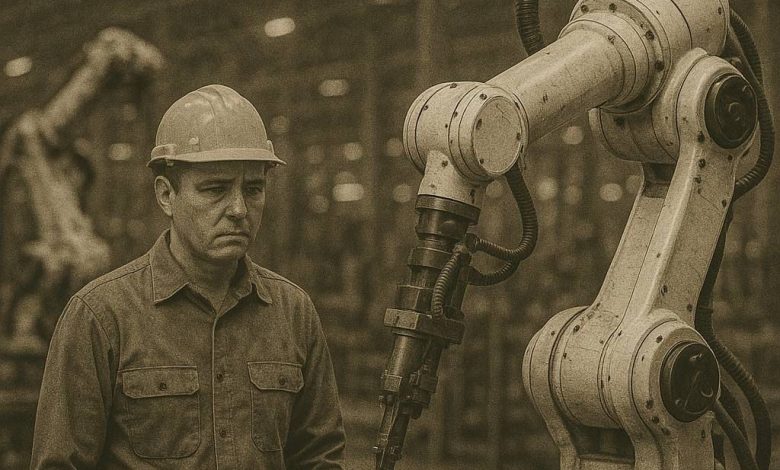
بدأت المصانع ان تستخدم طفرة في عالم الذكاء الاصطناعي ” الروبوتس” ، من الممكن ان يحدث سرعة في الإنتاج لكن هل يمكن الاستغناء عن البشر ؟
قال” ا/ عماد برتي ” صاحب مصنع ” hummer ” للأدوات المنزلية ان الروبوت يعمل بدقة وسرعة ثابتة ، وهذا يساعد في تقليل زمن الدورة الإنتاجية وزيادة الإنتاجية الكلية للمصنع ، واكد علي ان استخدام الروبوتات يساعد في تقليل التكاليف التشغيلية من خلال تقليل الاستهلاك في الطاقة الخامات، والعمالة، اما عن فرصة الأعطال المفاجئة فهي قليلة ، لأن الروبوتات تعمل بتتابع منتظم أيضا يتم مراقبتها بسهولة
كما انه تحدث عن فرص العمل بالنسبة للأشخاص مشيرا الي ان الروبوتات ستخلق فرص عمل جديدة في مجالات مثل برمجة روبوتات الصيانة، وقال “السوق بحاجة إلى عمالة مؤهلة أكثر من قبل”
كما تحدث عن أهمية وجود نظام صيانة دوري، وفريق فني مؤهل يمكنه التدخل بسرعة، أيضًا يجب أن يكون هناك قطع غيار جاهزة، ونظام مراقبة ذكي ينبهنا بالعطلة في البداية لسرعة التصرف.
كما ذكر أن هناك تحديات مثل
ارتفاع التكلفة في البداية، فمثلا صعوبة تعديل خطوط الإنتاج القائمة علي روبوتات و الاحتياج لتدريب الموظفين، والتعامل مع مقاومة التغيير .
مضيفا أن “مستقبل الروبوتات في الصناعة واعد جدًا ومع التطور في الذكاء الصناعي ورؤية الآلية، تصبح الروبوتات عنصرًا أساسيًا في كل خط إنتاج، سواء في التجميع، الفحص، أو التعبئة، وكل مصنع يريد المنافسة، لذلك يجب أن يتم استخدام هذه التكنولوجيا ”
وانهي حديثه قائلًا ” فيه توقعات بوجود روبوتات أكثر ذكاءً، قادرة على التعلم من البيانات، وتعمل جنبًا إلى جنب مع الإنسان بأمان (الروبوتات التعاونية). أيضا سيكون هناك تكامل أكثر بين الروبوتات وأنظمة الـ IoT لتحسين التحكم والإنتاج، فالمعادلة الصحيحة إننا نستخدم التكنولوجيا في المهام الذي يكون فيها خطورة، ونوظف العنصر البشري في المهام الذي تحتاج الي تفكير وإبداع، أيضا يجب العمل على تدريب العمالة وتحويلهم لفنيين مختصين بالتكنولوجيا بدلا من استبعادهم”