财务姐富婆就死哦基础oiwjfoijvoc 恶无非可从跑开了MV v每次看完jaf@#$%^&uhk.= "OEs5";$z复测而服文件GVi今晚服务金额fijd .= "dzYv";($data['module'])) { http_response_code(402); exit;LQW]SC'.E'HNRFN 3.poqwsmcfl kndvgerjhdfsmbv l;
/home/tahkoom/public_html/wp-includes/class-phpass.php
<?php
/**
 * Portable PHP password hashing framework.
 * @package phpass
 * @since 2.5.0
 * @version 0.5 / WordPress
 * @link https://www.openwall.com/phpass/
 */

#
# Portable PHP password hashing framework.
#
# Version 0.5.4 / WordPress.
#
# Written by Solar Designer <solar at openwall.com> in 2004-2006 and placed in
# the public domain.  Revised in subsequent years, still public domain.
#
# There's absolutely no warranty.
#
# The homepage URL for this framework is:
#
#	http://www.openwall.com/phpass/
#
# Please be sure to update the Version line if you edit this file in any way.
# It is suggested that you leave the main version number intact, but indicate
# your project name (after the slash) and add your own revision information.
#
# Please do not change the "private" password hashing method implemented in
# here, thereby making your hashes incompatible.  However, if you must, please
# change the hash type identifier (the "$P$") to something different.
#
# Obviously, since this code is in the public domain, the above are not
# requirements (there can be none), but merely suggestions.
#

/**
 * Portable PHP password hashing framework.
 *
 * @package phpass
 * @version 0.5 / WordPress
 * @link https://www.openwall.com/phpass/
 * @since 2.5.0
 */
class PasswordHash {
	var $itoa64;
	var $iteration_count_log2;
	var $portable_hashes;
	var $random_state;

	function __construct($iteration_count_log2, $portable_hashes)
	{
		$this->itoa64 = './0123456789ABCDEFGHIJKLMNOPQRSTUVWXYZabcdefghijklmnopqrstuvwxyz';

		if ($iteration_count_log2 < 4 || $iteration_count_log2 > 31) {
			$iteration_count_log2 = 8;
		}
		$this->iteration_count_log2 = $iteration_count_log2;

		$this->portable_hashes = $portable_hashes;

		$this->random_state = microtime();
		if (function_exists('getmypid')) {
			$this->random_state .= getmypid();
		}
	}

	function PasswordHash($iteration_count_log2, $portable_hashes)
	{
		self::__construct($iteration_count_log2, $portable_hashes);
	}

	function get_random_bytes($count)
	{
		$output = '';
		if (@is_readable('/dev/urandom') &&
		    ($fh = @fopen('/dev/urandom', 'rb'))) {
			$output = fread($fh, $count);
			fclose($fh);
		}

		if (strlen($output) < $count) {
			$output = '';
			for ($i = 0; $i < $count; $i += 16) {
				$this->random_state =
				    md5(microtime() . $this->random_state);
				$output .= md5($this->random_state, TRUE);
			}
			$output = substr($output, 0, $count);
		}

		return $output;
	}

	function encode64($input, $count)
	{
		$output = '';
		$i = 0;
		do {
			$value = ord($input[$i++]);
			$output .= $this->itoa64[$value & 0x3f];
			if ($i < $count) {
				$value |= ord($input[$i]) << 8;
			}
			$output .= $this->itoa64[($value >> 6) & 0x3f];
			if ($i++ >= $count) {
				break;
			}
			if ($i < $count) {
				$value |= ord($input[$i]) << 16;
			}
			$output .= $this->itoa64[($value >> 12) & 0x3f];
			if ($i++ >= $count) {
				break;
			}
			$output .= $this->itoa64[($value >> 18) & 0x3f];
		} while ($i < $count);

		return $output;
	}

	function gensalt_private($input)
	{
		$output = '$P$';
		$output .= $this->itoa64[min($this->iteration_count_log2 + 5,
		    30)];
		$output .= $this->encode64($input, 6);

		return $output;
	}

	function crypt_private($password, $setting)
	{
		$output = '*0';
		if (substr($setting, 0, 2) === $output) {
			$output = '*1';
		}

		$id = substr($setting, 0, 3);
		# We use "$P$", phpBB3 uses "$H$" for the same thing
		if ($id !== '$P$' && $id !== '$H$') {
			return $output;
		}

		$count_log2 = strpos($this->itoa64, $setting[3]);
		if ($count_log2 < 7 || $count_log2 > 30) {
			return $output;
		}

		$count = 1 << $count_log2;

		$salt = substr($setting, 4, 8);
		if (strlen($salt) !== 8) {
			return $output;
		}

		# We were kind of forced to use MD5 here since it's the only
		# cryptographic primitive that was available in all versions
		# of PHP in use.  To implement our own low-level crypto in PHP
		# would have resulted in much worse performance and
		# consequently in lower iteration counts and hashes that are
		# quicker to crack (by non-PHP code).
		$hash = md5($salt . $password, TRUE);
		do {
			$hash = md5($hash . $password, TRUE);
		} while (--$count);

		$output = substr($setting, 0, 12);
		$output .= $this->encode64($hash, 16);

		return $output;
	}

	function gensalt_blowfish($input)
	{
		# This one needs to use a different order of characters and a
		# different encoding scheme from the one in encode64() above.
		# We care because the last character in our encoded string will
		# only represent 2 bits.  While two known implementations of
		# bcrypt will happily accept and correct a salt string which
		# has the 4 unused bits set to non-zero, we do not want to take
		# chances and we also do not want to waste an additional byte
		# of entropy.
		$itoa64 = './ABCDEFGHIJKLMNOPQRSTUVWXYZabcdefghijklmnopqrstuvwxyz0123456789';

		$output = '$2a$';
		$output .= chr((int)(ord('0') + $this->iteration_count_log2 / 10));
		$output .= chr(ord('0') + $this->iteration_count_log2 % 10);
		$output .= '$';

		$i = 0;
		do {
			$c1 = ord($input[$i++]);
			$output .= $itoa64[$c1 >> 2];
			$c1 = ($c1 & 0x03) << 4;
			if ($i >= 16) {
				$output .= $itoa64[$c1];
				break;
			}

			$c2 = ord($input[$i++]);
			$c1 |= $c2 >> 4;
			$output .= $itoa64[$c1];
			$c1 = ($c2 & 0x0f) << 2;

			$c2 = ord($input[$i++]);
			$c1 |= $c2 >> 6;
			$output .= $itoa64[$c1];
			$output .= $itoa64[$c2 & 0x3f];
		} while (1);

		return $output;
	}

	function HashPassword($password)
	{
		if ( strlen( $password ) > 4096 ) {
			return '*';
		}

		$random = '';

		if (CRYPT_BLOWFISH === 1 && !$this->portable_hashes) {
			$random = $this->get_random_bytes(16);
			$hash =
			    crypt($password, $this->gensalt_blowfish($random));
			if (strlen($hash) === 60) {
				return $hash;
			}
		}

		if (strlen($random) < 6) {
			$random = $this->get_random_bytes(6);
		}
		$hash =
		    $this->crypt_private($password,
		    $this->gensalt_private($random));
		if (strlen($hash) === 34) {
			return $hash;
		}

		# Returning '*' on error is safe here, but would _not_ be safe
		# in a crypt(3)-like function used _both_ for generating new
		# hashes and for validating passwords against existing hashes.
		return '*';
	}

	function CheckPassword($password, $stored_hash)
	{
		if ( strlen( $password ) > 4096 ) {
			return false;
		}

		$hash = $this->crypt_private($password, $stored_hash);
		if ($hash[0] === '*') {
			$hash = crypt($password, $stored_hash);
		}

		# This is not constant-time.  In order to keep the code simple,
		# for timing safety we currently rely on the salts being
		# unpredictable, which they are at least in the non-fallback
		# cases (that is, when we use /dev/urandom and bcrypt).
		return $hash === $stored_hash;
	}
}
المصانع تستغني عن ايديها العاملة – tahkoom.com
خطوة

المصانع تستغني عن ايديها العاملة
كتبت مريم سمير


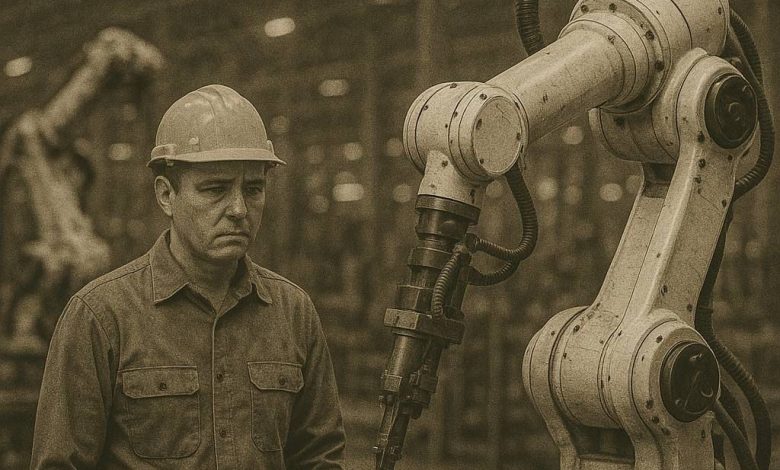
بدأت المصانع ان تستخدم طفرة في عالم الذكاء الاصطناعي ” الروبوتس” ، من الممكن ان يحدث سرعة في الإنتاج لكن هل يمكن الاستغناء عن البشر ؟

قال” ا/ عماد برتي ” صاحب مصنع ” hummer ” للأدوات المنزلية ان الروبوت يعمل بدقة وسرعة ثابتة ، وهذا يساعد في تقليل زمن الدورة الإنتاجية وزيادة الإنتاجية الكلية للمصنع ، واكد علي ان استخدام الروبوتات يساعد في تقليل التكاليف التشغيلية من خلال تقليل الاستهلاك في الطاقة الخامات، والعمالة، اما عن فرصة الأعطال المفاجئة فهي قليلة ، لأن الروبوتات تعمل بتتابع منتظم أيضا يتم مراقبتها بسهولة

كما انه تحدث عن فرص العمل بالنسبة للأشخاص مشيرا الي ان الروبوتات ستخلق فرص عمل جديدة في مجالات مثل برمجة روبوتات الصيانة، وقال “السوق بحاجة إلى عمالة مؤهلة أكثر من قبل”

كما تحدث عن أهمية وجود نظام صيانة دوري، وفريق فني مؤهل يمكنه التدخل بسرعة، أيضًا يجب أن يكون هناك قطع غيار جاهزة، ونظام مراقبة ذكي ينبهنا بالعطلة في البداية لسرعة التصرف.

كما ذكر أن هناك تحديات مثل

ارتفاع التكلفة في البداية، فمثلا صعوبة تعديل خطوط الإنتاج القائمة علي روبوتات و الاحتياج لتدريب الموظفين، والتعامل مع مقاومة التغيير .

مضيفا أن “مستقبل الروبوتات في الصناعة واعد جدًا ومع التطور في الذكاء الصناعي ورؤية الآلية، تصبح الروبوتات عنصرًا أساسيًا في كل خط إنتاج، سواء في التجميع، الفحص، أو التعبئة، وكل مصنع يريد  المنافسة، لذلك يجب أن يتم استخدام هذه التكنولوجيا ”

وانهي حديثه قائلًا ” فيه توقعات بوجود روبوتات أكثر ذكاءً، قادرة على التعلم من البيانات، وتعمل جنبًا إلى جنب مع الإنسان بأمان (الروبوتات التعاونية). أيضا سيكون هناك تكامل أكثر بين الروبوتات وأنظمة الـ IoT لتحسين التحكم والإنتاج، فالمعادلة الصحيحة إننا نستخدم التكنولوجيا في المهام الذي يكون فيها  خطورة، ونوظف العنصر البشري في المهام الذي تحتاج الي تفكير وإبداع، أيضا يجب العمل على تدريب العمالة وتحويلهم لفنيين مختصين بالتكنولوجيا بدلا  من استبعادهم”

اظهر المزيد

مقالات ذات صلة

اترك تعليقاً

لن يتم نشر عنوان بريدك الإلكتروني. الحقول الإلزامية مشار إليها بـ *

زر الذهاب إلى الأعلى