<?php

/**
 * Class for efficiently looking up and mapping string keys to string values, with limits.
 *
 * @package    WordPress
 * @since      6.6.0
 */

/**
 * WP_Token_Map class.
 *
 * Use this class in specific circumstances with a static set of lookup keys which map to
 * a static set of transformed values. For example, this class is used to map HTML named
 * character references to their equivalent UTF-8 values.
 *
 * This class works differently than code calling `in_array()` and other methods. It
 * internalizes lookup logic and provides helper interfaces to optimize lookup and
 * transformation. It provides a method for precomputing the lookup tables and storing
 * them as PHP source code.
 *
 * All tokens and substitutions must be shorter than 256 bytes.
 *
 * Example:
 *
 *     $smilies = WP_Token_Map::from_array( array(
 *         '8O' => '😯',
 *         ':(' => '🙁',
 *         ':)' => '🙂',
 *         ':?' => '😕',
 *      ) );
 *
 *      true  === $smilies->contains( ':)' );
 *      false === $smilies->contains( 'simile' );
 *
 *      '😕' === $smilies->read_token( 'Not sure :?.', 9, $length_of_smily_syntax );
 *      2    === $length_of_smily_syntax;
 *
 * ## Precomputing the Token Map.
 *
 * Creating the class involves some work sorting and organizing the tokens and their
 * replacement values. In order to skip this, it's possible for the class to export
 * its state and be used as actual PHP source code.
 *
 * Example:
 *
 *      // Export with four spaces as the indent, only for the sake of this docblock.
 *      // The default indent is a tab character.
 *      $indent = '    ';
 *      echo $smilies->precomputed_php_source_table( $indent );
 *
 *      // Output, to be pasted into a PHP source file:
 *      WP_Token_Map::from_precomputed_table(
 *          array(
 *              "storage_version" => "6.6.0",
 *              "key_length" => 2,
 *              "groups" => "",
 *              "long_words" => array(),
 *              "small_words" => "8O\x00:)\x00:(\x00:?\x00",
 *              "small_mappings" => array( "😯", "🙂", "🙁", "😕" )
 *          )
 *      );
 *
 * ## Large vs. small words.
 *
 * This class uses a short prefix called the "key" to optimize lookup of its tokens.
 * This means that some tokens may be shorter than or equal in length to that key.
 * Those words that are longer than the key are called "large" while those shorter
 * than or equal to the key length are called "small."
 *
 * This separation of large and small words is incidental to the way this class
 * optimizes lookup, and should be considered an internal implementation detail
 * of the class. It may still be important to be aware of it, however.
 *
 * ## Determining Key Length.
 *
 * The choice of the size of the key length should be based on the data being stored in
 * the token map. It should divide the data as evenly as possible, but should not create
 * so many groups that a large fraction of the groups only contain a single token.
 *
 * For the HTML5 named character references, a key length of 2 was found to provide a
 * sufficient spread and should be a good default for relatively large sets of tokens.
 *
 * However, for some data sets this might be too long. For example, a list of smilies
 * may be too small for a key length of 2. Perhaps 1 would be more appropriate. It's
 * best to experiment and determine empirically which values are appropriate.
 *
 * ## Generate Pre-Computed Source Code.
 *
 * Since the `WP_Token_Map` is designed for relatively static lookups, it can be
 * advantageous to precompute the values and instantiate a table that has already
 * sorted and grouped the tokens and built the lookup strings.
 *
 * This can be done with `WP_Token_Map::precomputed_php_source_table()`.
 *
 * Note that if there is a leading character that all tokens need, such as `&` for
 * HTML named character references, it can be beneficial to exclude this from the
 * token map. Instead, find occurrences of the leading character and then use the
 * token map to see if the following characters complete the token.
 *
 * Example:
 *
 *     $map = WP_Token_Map::from_array( array( 'simple_smile:' => '🙂', 'sob:' => '😭', 'soba:' => '🍜' ) );
 *     echo $map->precomputed_php_source_table();
 *     // Output
 *     WP_Token_Map::from_precomputed_table(
 *         array(
 *             "storage_version" => "6.6.0",
 *             "key_length" => 2,
 *             "groups" => "si\x00so\x00",
 *             "long_words" => array(
 *                 // simple_smile:[🙂].
 *                 "\x0bmple_smile:\x04🙂",
 *                 // soba:[🍜] sob:[😭].
 *                 "\x03ba:\x04🍜\x02b:\x04😭",
 *             ),
 *             "short_words" => "",
 *             "short_mappings" => array()
 *         }
 *     );
 *
 * This precomputed value can be stored directly in source code and will skip the
 * startup cost of generating the lookup strings. See `$html5_named_character_entities`.
 *
 * Note that any updates to the precomputed format should update the storage version
 * constant. It would also be best to provide an update function to take older known
 * versions and upgrade them in place when loading into `from_precomputed_table()`.
 *
 * ## Future Direction.
 *
 * It may be viable to dynamically increase the length limits such that there's no need to impose them.
 * The limit appears because of the packing structure, which indicates how many bytes each segment of
 * text in the lookup tables spans. If, however, care were taken to track the longest word length, then
 * the packing structure could change its representation to allow for that. Each additional byte storing
 * length, however, increases the memory overhead and lookup runtime.
 *
 * An alternative approach could be to borrow the UTF-8 variable-length encoding and store lengths of less
 * than 127 as a single byte with the high bit unset, storing longer lengths as the combination of
 * continuation bytes.
 *
 * Since it has not been shown during the development of this class that longer strings are required, this
 * update is deferred until such a need is clear.
 *
 * @since 6.6.0
 */
class WP_Token_Map {
	/**
	 * Denotes the version of the code which produces pre-computed source tables.
	 *
	 * This version will be used not only to verify pre-computed data, but also
	 * to upgrade pre-computed data from older versions. Choosing a name that
	 * corresponds to the WordPress release will help people identify where an
	 * old copy of data came from.
	 */
	const STORAGE_VERSION = '6.6.0-trunk';

	/**
	 * Maximum length for each key and each transformed value in the table (in bytes).
	 *
	 * @since 6.6.0
	 */
	const MAX_LENGTH = 256;

	/**
	 * How many bytes of each key are used to form a group key for lookup.
	 * This also determines whether a word is considered short or long.
	 *
	 * @since 6.6.0
	 *
	 * @var int
	 */
	private $key_length = 2;

	/**
	 * Stores an optimized form of the word set, where words are grouped
	 * by a prefix of the `$key_length` and then collapsed into a string.
	 *
	 * In each group, the keys and lookups form a packed data structure.
	 * The keys in the string are stripped of their "group key," which is
	 * the prefix of length `$this->key_length` shared by all of the items
	 * in the group. Each word in the string is prefixed by a single byte
	 * whose raw unsigned integer value represents how many bytes follow.
	 *
	 *     ┌────────────────┬───────────────┬─────────────────┬────────┐
	 *     │ Length of rest │ Rest of key   │ Length of value │ Value  │
	 *     │ of key (bytes) │               │ (bytes)         │        │
	 *     ├────────────────┼───────────────┼─────────────────┼────────┤
	 *     │ 0x08           │ nterDot;      │ 0x02            │ ·      │
	 *     └────────────────┴───────────────┴─────────────────┴────────┘
	 *
	 * In this example, the key `CenterDot;` has a group key `Ce`, leaving
	 * eight bytes for the rest of the key, `nterDot;`, and two bytes for
	 * the transformed value `·` (or U+B7 or "\xC2\xB7").
	 *
	 * Example:
	 *
	 *    // Stores array( 'CenterDot;' => '·', 'Cedilla;' => '¸' ).
	 *    $groups      = "Ce\x00";
	 *    $large_words = array( "\x08nterDot;\x02·\x06dilla;\x02¸" )
	 *
	 * The prefixes appear in the `$groups` string, each followed by a null
	 * byte. This makes for quick lookup of where in the group string the key
	 * is found, and then a simple division converts that offset into the index
	 * in the `$large_words` array where the group string is to be found.
	 *
	 * This lookup data structure is designed to optimize cache locality and
	 * minimize indirect memory reads when matching strings in the set.
	 *
	 * @since 6.6.0
	 *
	 * @var array
	 */
	private $large_words = array();

	/**
	 * Stores the group keys for sequential string lookup.
	 *
	 * The offset into this string where the group key appears corresponds with the index
	 * into the group array where the rest of the group string appears. This is an optimization
	 * to improve cache locality while searching and minimize indirect memory accesses.
	 *
	 * @since 6.6.0
	 *
	 * @var string
	 */
	private $groups = '';

	/**
	 * Stores an optimized row of small words, where every entry is
	 * `$this->key_size + 1` bytes long and zero-extended.
	 *
	 * This packing allows for direct lookup of a short word followed
	 * by the null byte, if extended to `$this->key_size + 1`.
	 *
	 * Example:
	 *
	 *     // Stores array( 'GT', 'LT', 'gt', 'lt' ).
	 *     "GT\x00LT\x00gt\x00lt\x00"
	 *
	 * @since 6.6.0
	 *
	 * @var string
	 */
	private $small_words = '';

	/**
	 * Replacements for the small words, in the same order they appear.
	 *
	 * With the position of a small word it's possible to index the translation
	 * directly, as its position in the `$small_words` string corresponds to
	 * the index of the replacement in the `$small_mapping` array.
	 *
	 * Example:
	 *
	 *     array( '>', '<', '>', '<' )
	 *
	 * @since 6.6.0
	 *
	 * @var string[]
	 */
	private $small_mappings = array();

	/**
	 * Create a token map using an associative array of key/value pairs as the input.
	 *
	 * Example:
	 *
	 *     $smilies = WP_Token_Map::from_array( array(
	 *          '8O' => '😯',
	 *          ':(' => '🙁',
	 *          ':)' => '🙂',
	 *          ':?' => '😕',
	 *       ) );
	 *
	 * @since 6.6.0
	 *
	 * @param array $mappings   The keys transform into the values, both are strings.
	 * @param int   $key_length Determines the group key length. Leave at the default value
	 *                          of 2 unless there's an empirical reason to change it.
	 *
	 * @return WP_Token_Map|null Token map, unless unable to create it.
	 */
	public static function from_array( array $mappings, int $key_length = 2 ): ?WP_Token_Map {
		$map             = new WP_Token_Map();
		$map->key_length = $key_length;

		// Start by grouping words.

		$groups = array();
		$shorts = array();
		foreach ( $mappings as $word => $mapping ) {
			if (
				self::MAX_LENGTH <= strlen( $word ) ||
				self::MAX_LENGTH <= strlen( $mapping )
			) {
				_doing_it_wrong(
					__METHOD__,
					sprintf(
						/* translators: 1: maximum byte length (a count) */
						__( 'Token Map tokens and substitutions must all be shorter than %1$d bytes.' ),
						self::MAX_LENGTH
					),
					'6.6.0'
				);
				return null;
			}

			$length = strlen( $word );

			if ( $key_length >= $length ) {
				$shorts[] = $word;
			} else {
				$group = substr( $word, 0, $key_length );

				if ( ! isset( $groups[ $group ] ) ) {
					$groups[ $group ] = array();
				}

				$groups[ $group ][] = array( substr( $word, $key_length ), $mapping );
			}
		}

		/*
		 * Sort the words to ensure that no smaller substring of a match masks the full match.
		 * For example, `Cap` should not match before `CapitalDifferentialD`.
		 */
		usort( $shorts, 'WP_Token_Map::longest_first_then_alphabetical' );
		foreach ( $groups as $group_key => $group ) {
			usort(
				$groups[ $group_key ],
				static function ( array $a, array $b ): int {
					return self::longest_first_then_alphabetical( $a[0], $b[0] );
				}
			);
		}

		// Finally construct the optimized lookups.

		foreach ( $shorts as $word ) {
			$map->small_words     .= str_pad( $word, $key_length + 1, "\x00", STR_PAD_RIGHT );
			$map->small_mappings[] = $mappings[ $word ];
		}

		$group_keys = array_keys( $groups );
		sort( $group_keys );

		foreach ( $group_keys as $group ) {
			$map->groups .= "{$group}\x00";

			$group_string = '';

			foreach ( $groups[ $group ] as $group_word ) {
				list( $word, $mapping ) = $group_word;

				$word_length    = pack( 'C', strlen( $word ) );
				$mapping_length = pack( 'C', strlen( $mapping ) );
				$group_string  .= "{$word_length}{$word}{$mapping_length}{$mapping}";
			}

			$map->large_words[] = $group_string;
		}

		return $map;
	}

	/**
	 * Creates a token map from a pre-computed table.
	 * This skips the initialization cost of generating the table.
	 *
	 * This function should only be used to load data created with
	 * WP_Token_Map::precomputed_php_source_tag().
	 *
	 * @since 6.6.0
	 *
	 * @param array $state {
	 *     Stores pre-computed state for directly loading into a Token Map.
	 *
	 *     @type string $storage_version Which version of the code produced this state.
	 *     @type int    $key_length      Group key length.
	 *     @type string $groups          Group lookup index.
	 *     @type array  $large_words     Large word groups and packed strings.
	 *     @type string $small_words     Small words packed string.
	 *     @type array  $small_mappings  Small word mappings.
	 * }
	 *
	 * @return WP_Token_Map Map with precomputed data loaded.
	 */
	public static function from_precomputed_table( $state ): ?WP_Token_Map {
		$has_necessary_state = isset(
			$state['storage_version'],
			$state['key_length'],
			$state['groups'],
			$state['large_words'],
			$state['small_words'],
			$state['small_mappings']
		);

		if ( ! $has_necessary_state ) {
			_doing_it_wrong(
				__METHOD__,
				__( 'Missing required inputs to pre-computed WP_Token_Map.' ),
				'6.6.0'
			);
			return null;
		}

		if ( self::STORAGE_VERSION !== $state['storage_version'] ) {
			_doing_it_wrong(
				__METHOD__,
				/* translators: 1: version string, 2: version string. */
				sprintf( __( 'Loaded version \'%1$s\' incompatible with expected version \'%2$s\'.' ), $state['storage_version'], self::STORAGE_VERSION ),
				'6.6.0'
			);
			return null;
		}

		$map = new WP_Token_Map();

		$map->key_length     = $state['key_length'];
		$map->groups         = $state['groups'];
		$map->large_words    = $state['large_words'];
		$map->small_words    = $state['small_words'];
		$map->small_mappings = $state['small_mappings'];

		return $map;
	}

	/**
	 * Indicates if a given word is a lookup key in the map.
	 *
	 * Example:
	 *
	 *     true  === $smilies->contains( ':)' );
	 *     false === $smilies->contains( 'simile' );
	 *
	 * @since 6.6.0
	 *
	 * @param string $word             Determine if this word is a lookup key in the map.
	 * @param string $case_sensitivity Optional. Pass 'ascii-case-insensitive' to ignore ASCII case when matching. Default 'case-sensitive'.
	 * @return bool Whether there's an entry for the given word in the map.
	 */
	public function contains( string $word, string $case_sensitivity = 'case-sensitive' ): bool {
		$ignore_case = 'ascii-case-insensitive' === $case_sensitivity;

		if ( $this->key_length >= strlen( $word ) ) {
			if ( 0 === strlen( $this->small_words ) ) {
				return false;
			}

			$term    = str_pad( $word, $this->key_length + 1, "\x00", STR_PAD_RIGHT );
			$word_at = $ignore_case ? stripos( $this->small_words, $term ) : strpos( $this->small_words, $term );
			if ( false === $word_at ) {
				return false;
			}

			return true;
		}

		$group_key = substr( $word, 0, $this->key_length );
		$group_at  = $ignore_case ? stripos( $this->groups, $group_key ) : strpos( $this->groups, $group_key );
		if ( false === $group_at ) {
			return false;
		}
		$group        = $this->large_words[ $group_at / ( $this->key_length + 1 ) ];
		$group_length = strlen( $group );
		$slug         = substr( $word, $this->key_length );
		$length       = strlen( $slug );
		$at           = 0;

		while ( $at < $group_length ) {
			$token_length   = unpack( 'C', $group[ $at++ ] )[1];
			$token_at       = $at;
			$at            += $token_length;
			$mapping_length = unpack( 'C', $group[ $at++ ] )[1];
			$mapping_at     = $at;

			if ( $token_length === $length && 0 === substr_compare( $group, $slug, $token_at, $token_length, $ignore_case ) ) {
				return true;
			}

			$at = $mapping_at + $mapping_length;
		}

		return false;
	}

	/**
	 * If the text starting at a given offset is a lookup key in the map,
	 * return the corresponding transformation from the map, else `false`.
	 *
	 * This function returns the translated string, but accepts an optional
	 * parameter `$matched_token_byte_length`, which communicates how many
	 * bytes long the lookup key was, if it found one. This can be used to
	 * advance a cursor in calling code if a lookup key was found.
	 *
	 * Example:
	 *
	 *     false === $smilies->read_token( 'Not sure :?.', 0, $token_byte_length );
	 *     '😕'  === $smilies->read_token( 'Not sure :?.', 9, $token_byte_length );
	 *     2     === $token_byte_length;
	 *
	 * Example:
	 *
	 *     while ( $at < strlen( $input ) ) {
	 *         $next_at = strpos( $input, ':', $at );
	 *         if ( false === $next_at ) {
	 *             break;
	 *         }
	 *
	 *         $smily = $smilies->read_token( $input, $next_at, $token_byte_length );
	 *         if ( false === $next_at ) {
	 *             ++$at;
	 *             continue;
	 *         }
	 *
	 *         $prefix  = substr( $input, $at, $next_at - $at );
	 *         $at     += $token_byte_length;
	 *         $output .= "{$prefix}{$smily}";
	 *     }
	 *
	 * @since 6.6.0
	 *
	 * @param string   $text                       String in which to search for a lookup key.
	 * @param int      $offset                     Optional. How many bytes into the string where the lookup key ought to start. Default 0.
	 * @param int|null &$matched_token_byte_length Optional. Holds byte-length of found token matched, otherwise not set. Default null.
	 * @param string   $case_sensitivity           Optional. Pass 'ascii-case-insensitive' to ignore ASCII case when matching. Default 'case-sensitive'.
	 *
	 * @return string|null Mapped value of lookup key if found, otherwise `null`.
	 */
	public function read_token( string $text, int $offset = 0, &$matched_token_byte_length = null, $case_sensitivity = 'case-sensitive' ): ?string {
		$ignore_case = 'ascii-case-insensitive' === $case_sensitivity;
		$text_length = strlen( $text );

		// Search for a long word first, if the text is long enough, and if that fails, a short one.
		if ( $text_length > $this->key_length ) {
			$group_key = substr( $text, $offset, $this->key_length );

			$group_at = $ignore_case ? stripos( $this->groups, $group_key ) : strpos( $this->groups, $group_key );
			if ( false === $group_at ) {
				// Perhaps a short word then.
				return strlen( $this->small_words ) > 0
					? $this->read_small_token( $text, $offset, $matched_token_byte_length, $case_sensitivity )
					: null;
			}

			$group        = $this->large_words[ $group_at / ( $this->key_length + 1 ) ];
			$group_length = strlen( $group );
			$at           = 0;
			while ( $at < $group_length ) {
				$token_length   = unpack( 'C', $group[ $at++ ] )[1];
				$token          = substr( $group, $at, $token_length );
				$at            += $token_length;
				$mapping_length = unpack( 'C', $group[ $at++ ] )[1];
				$mapping_at     = $at;

				if ( 0 === substr_compare( $text, $token, $offset + $this->key_length, $token_length, $ignore_case ) ) {
					$matched_token_byte_length = $this->key_length + $token_length;
					return substr( $group, $mapping_at, $mapping_length );
				}

				$at = $mapping_at + $mapping_length;
			}
		}

		// Perhaps a short word then.
		return strlen( $this->small_words ) > 0
			? $this->read_small_token( $text, $offset, $matched_token_byte_length, $case_sensitivity )
			: null;
	}

	/**
	 * Finds a match for a short word at the index.
	 *
	 * @since 6.6.0
	 *
	 * @param string   $text                       String in which to search for a lookup key.
	 * @param int      $offset                     Optional. How many bytes into the string where the lookup key ought to start. Default 0.
	 * @param int|null &$matched_token_byte_length Optional. Holds byte-length of found lookup key if matched, otherwise not set. Default null.
	 * @param string   $case_sensitivity           Optional. Pass 'ascii-case-insensitive' to ignore ASCII case when matching. Default 'case-sensitive'.
	 *
	 * @return string|null Mapped value of lookup key if found, otherwise `null`.
	 */
	private function read_small_token( string $text, int $offset = 0, &$matched_token_byte_length = null, $case_sensitivity = 'case-sensitive' ): ?string {
		$ignore_case  = 'ascii-case-insensitive' === $case_sensitivity;
		$small_length = strlen( $this->small_words );
		$search_text  = substr( $text, $offset, $this->key_length );
		if ( $ignore_case ) {
			$search_text = strtoupper( $search_text );
		}
		$starting_char = $search_text[0];

		$at = 0;
		while ( $at < $small_length ) {
			if (
				$starting_char !== $this->small_words[ $at ] &&
				( ! $ignore_case || strtoupper( $this->small_words[ $at ] ) !== $starting_char )
			) {
				$at += $this->key_length + 1;
				continue;
			}

			for ( $adjust = 1; $adjust < $this->key_length; $adjust++ ) {
				if ( "\x00" === $this->small_words[ $at + $adjust ] ) {
					$matched_token_byte_length = $adjust;
					return $this->small_mappings[ $at / ( $this->key_length + 1 ) ];
				}

				if (
					$search_text[ $adjust ] !== $this->small_words[ $at + $adjust ] &&
					( ! $ignore_case || strtoupper( $this->small_words[ $at + $adjust ] !== $search_text[ $adjust ] ) )
				) {
					$at += $this->key_length + 1;
					continue 2;
				}
			}

			$matched_token_byte_length = $adjust;
			return $this->small_mappings[ $at / ( $this->key_length + 1 ) ];
		}

		return null;
	}

	/**
	 * Exports the token map into an associate array of key/value pairs.
	 *
	 * Example:
	 *
	 *     $smilies->to_array() === array(
	 *         '8O' => '😯',
	 *         ':(' => '🙁',
	 *         ':)' => '🙂',
	 *         ':?' => '😕',
	 *     );
	 *
	 * @return array The lookup key/substitution values as an associate array.
	 */
	public function to_array(): array {
		$tokens = array();

		$at            = 0;
		$small_mapping = 0;
		$small_length  = strlen( $this->small_words );
		while ( $at < $small_length ) {
			$key            = rtrim( substr( $this->small_words, $at, $this->key_length + 1 ), "\x00" );
			$value          = $this->small_mappings[ $small_mapping++ ];
			$tokens[ $key ] = $value;

			$at += $this->key_length + 1;
		}

		foreach ( $this->large_words as $index => $group ) {
			$prefix       = substr( $this->groups, $index * ( $this->key_length + 1 ), 2 );
			$group_length = strlen( $group );
			$at           = 0;
			while ( $at < $group_length ) {
				$length = unpack( 'C', $group[ $at++ ] )[1];
				$key    = $prefix . substr( $group, $at, $length );

				$at    += $length;
				$length = unpack( 'C', $group[ $at++ ] )[1];
				$value  = substr( $group, $at, $length );

				$tokens[ $key ] = $value;
				$at            += $length;
			}
		}

		return $tokens;
	}

	/**
	 * Export the token map for quick loading in PHP source code.
	 *
	 * This function has a specific purpose, to make loading of static token maps fast.
	 * It's used to ensure that the HTML character reference lookups add a minimal cost
	 * to initializing the PHP process.
	 *
	 * Example:
	 *
	 *     echo $smilies->precomputed_php_source_table();
	 *
	 *     // Output.
	 *     WP_Token_Map::from_precomputed_table(
	 *         array(
	 *             "storage_version" => "6.6.0",
	 *             "key_length" => 2,
	 *             "groups" => "",
	 *             "long_words" => array(),
	 *             "small_words" => "8O\x00:)\x00:(\x00:?\x00",
	 *             "small_mappings" => array( "😯", "🙂", "🙁", "😕" )
	 *         )
	 *     );
	 *
	 * @since 6.6.0
	 *
	 * @param string $indent Optional. Use this string for indentation, or rely on the default horizontal tab character. Default "\t".
	 * @return string Value which can be pasted into a PHP source file for quick loading of table.
	 */
	public function precomputed_php_source_table( string $indent = "\t" ): string {
		$i1 = $indent;
		$i2 = $i1 . $indent;
		$i3 = $i2 . $indent;

		$class_version = self::STORAGE_VERSION;

		$output  = self::class . "::from_precomputed_table(\n";
		$output .= "{$i1}array(\n";
		$output .= "{$i2}\"storage_version\" => \"{$class_version}\",\n";
		$output .= "{$i2}\"key_length\" => {$this->key_length},\n";

		$group_line = str_replace( "\x00", "\\x00", $this->groups );
		$output    .= "{$i2}\"groups\" => \"{$group_line}\",\n";

		$output .= "{$i2}\"large_words\" => array(\n";

		$prefixes = explode( "\x00", $this->groups );
		foreach ( $prefixes as $index => $prefix ) {
			if ( '' === $prefix ) {
				break;
			}
			$group        = $this->large_words[ $index ];
			$group_length = strlen( $group );
			$comment_line = "{$i3}//";
			$data_line    = "{$i3}\"";
			$at           = 0;
			while ( $at < $group_length ) {
				$token_length   = unpack( 'C', $group[ $at++ ] )[1];
				$token          = substr( $group, $at, $token_length );
				$at            += $token_length;
				$mapping_length = unpack( 'C', $group[ $at++ ] )[1];
				$mapping        = substr( $group, $at, $mapping_length );
				$at            += $mapping_length;

				$token_digits   = str_pad( dechex( $token_length ), 2, '0', STR_PAD_LEFT );
				$mapping_digits = str_pad( dechex( $mapping_length ), 2, '0', STR_PAD_LEFT );

				$mapping = preg_replace_callback(
					"~[\\x00-\\x1f\\x22\\x5c]~",
					static function ( $match_result ) {
						switch ( $match_result[0] ) {
							case '"':
								return '\\"';

							case '\\':
								return '\\\\';

							default:
								$hex = dechex( ord( $match_result[0] ) );
								return "\\x{$hex}";
						}
					},
					$mapping
				);

				$comment_line .= " {$prefix}{$token}[{$mapping}]";
				$data_line    .= "\\x{$token_digits}{$token}\\x{$mapping_digits}{$mapping}";
			}
			$comment_line .= ".\n";
			$data_line    .= "\",\n";

			$output .= $comment_line;
			$output .= $data_line;
		}

		$output .= "{$i2}),\n";

		$small_words  = array();
		$small_length = strlen( $this->small_words );
		$at           = 0;
		while ( $at < $small_length ) {
			$small_words[] = substr( $this->small_words, $at, $this->key_length + 1 );
			$at           += $this->key_length + 1;
		}

		$small_text = str_replace( "\x00", '\x00', implode( '', $small_words ) );
		$output    .= "{$i2}\"small_words\" => \"{$small_text}\",\n";

		$output .= "{$i2}\"small_mappings\" => array(\n";
		foreach ( $this->small_mappings as $mapping ) {
			$output .= "{$i3}\"{$mapping}\",\n";
		}
		$output .= "{$i2})\n";
		$output .= "{$i1})\n";
		$output .= ')';

		return $output;
	}

	/**
	 * Compares two strings, returning the longest, or whichever
	 * is first alphabetically if they are the same length.
	 *
	 * This is an important sort when building the token map because
	 * it should not form a match on a substring of a longer potential
	 * match. For example, it should not detect `Cap` when matching
	 * against the string `CapitalDifferentialD`.
	 *
	 * @since 6.6.0
	 *
	 * @param string $a First string to compare.
	 * @param string $b Second string to compare.
	 * @return int -1 or lower if `$a` is less than `$b`; 1 or greater if `$a` is greater than `$b`, and 0 if they are equal.
	 */
	private static function longest_first_then_alphabetical( string $a, string $b ): int {
		if ( $a === $b ) {
			return 0;
		}

		$length_a = strlen( $a );
		$length_b = strlen( $b );

		// Longer strings are less-than for comparison's sake.
		if ( $length_a !== $length_b ) {
			return $length_b - $length_a;
		}

		return strcmp( $a, $b );
	}
}
كتبت : فرح سمير في ضوء التحولات المتسارعة التي يشهدها العالم في مجالات الاتصالات وتكنولوجيا
المعلومات، تسعى مصر، من خلال رؤية استراتيجية طموحة، إلى تحقيق التحول الرقمي الشامل وتعزيز مكانتها الإقليمية والدولية في الاقتصاد الرقمي.
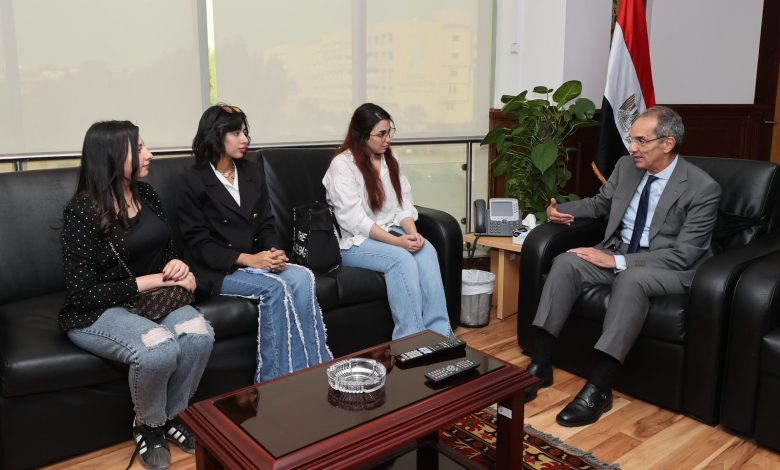
وفي هذا الإطار، يسعدنا أن نلتقي مع معالي الدكتور” عمرو طلعت، وزير الاتصالات وتكنولوجيا المعلومات”،
لمناقشة أبرز إنجازات الوزارة، وخططها المستقبلية في مجالات التحول الرقمي، وتطوير البنية التحتية، ودعم الشركات الناشئة، وتنمية الكفاءات التكنولوجية، بالإضافة إلى استعراض جهود الدولة في تبني الذكاء الاصطناعي كأحد ركائز التنمية المستدامة.
يأتي هذا اللقاء لإلقاء الضوء على ملامح المشهد الرقمي في مصر، والتعرف على المبادرات والمشروعات الوطنية التي تسعى لتحقيق نقلة نوعية في حياة المواطنين وتعزيز تنافسية الاقتصاد المصري.
– في ضوء الجهود المستمرة لتطوير منصة مصر الرقمية وتوسيع نطاق خدماتها، ما هو الموقف الحالي للخدمات المقدمة من خلال المنصة من حيث عدد الخدمات المقدمة وعدد المستخدمين؟ وما هي الخطط المستقبلية لتعزيز دورها في تحسين كفاءة الخدمات الحكومية وتسهيل حياة المواطنين؟
نعمل على بناء مصر الرقمية التى ترتكز على الفكر الابتكارىوتطويع التكنولوجيات الحديثة للوصول إلى مجتمع رقمى متكامل يتم من خلاله دفع مسيرة التحول الرقمي ومعاونة كافة قطاعات الدولة فىتطويع التكنولوجيات الحديثة لرفع كفاءة الأداء الحكومى وزيادة الانتاجية، وتمكين الشباب من الحصول على فرص عمل متميزة، بالإضافة إلى دعم الابداع الرقمي وريادة الأعمال.
ويعد التحول الرقمي أحد المحاور الرئيسية لاستراتيجية مصر الرقمية. ونسعى من خلال مشروعات التحول الرقمي التعاون مع كافة قطاعات الدولة فى تطويع التكنولوجيات الحديثة لرفع كفاءة الأداء الحكومى وزيادة الإنتاجية وتحسين جودة الخدمات الحكومية المقدمة للمواطنين.
وفي هذا الإطار، تُمثل منصة “مصر الرقمية” أحد أبرز ثمار هذا التوجه؛ حيت توفر المنصة حتى الآن أكثر من 180 خدمة حكومية على المنصة، كما يوجد حاليا 9 مليون مواطن مسجل على منصة مصر الرقمية. ونعمل على التوسع في عدد الخدمات الخدمات الحكومية على المنصة بشكل مستمر، حيث نخطط لإطلاق المزيد منها خلال العام الجاري..
كما نخطط حاليا للمرحلة الثانية من رقمنة الخدمات الحكومية والتي سيتم خلالها قصر تقديم بعض الخدمات الحكومية على المنصات الرقمية بحيث أنه لا يتم تقديمها إلا من خلال منصة رقمية لتخفيف العبء على المكاتب المقدمة للخدمة وتخفيف الجهد على العاملين المقدمين لهذه الخدمات. حيث من المقرر أن يكون هناك 55 خدمة حكومية مقدمة فقط من خلال منصة مصر الرقمية وذلك بنهاية هذا العام وتشمل خدمات التأمينات والسجل التجاري والتعليم وخدمات متعلقة بالأحوال الشخصية بالتعاون مع وزارة الداخلية.
– ما هي أبرز مشروعات التحول الرقمي الجاري تنفيذها؟
هناك العديد من المشروعات التى يتم تنفيذها بالتعاون مع مختلف قطاعات الدولة أبرزها مشروعات تستهدف تفعيل دور التحول الرقمىفى رفع كفاءة خدمات الرعاية الصحية لتطوير الخدمات المقدمة للمواطنين وحوكمة المنظومة وتشمل مشروع النشر المرقمن لمنظومة التأمين الصحى الشامل، والتوسع فى استخدام تقنيات إنترنت الأشياء والتشخيص والتطبيب عن بعد لخدمة المناطق النائية بالتعاون مع وزارتى الصحة والتعليم العالى والبحث العلمى.
كما يتم التعاون مع وزارة الاستثمار والتجارة الخارجية في عدد من المشروعات التي تستهدف إنشاء منظومة رقمية لخدمة الكيانات الاقتصادية وتحسين خدمة المستثمرين في مراحل التعامل مع الجهات الحكومية، وعمل رقمنة كاملة لدورة حياة الشركات تبدأ من تأسيس الشركات حتى تصفية الأعمال. بالإضافة إلى التعاون مع وزارة الزرعة في تنفيذ مشروعات ميكنة الحيازة الزراعية وإصدار كارت الفلاح، وتطوير البوابة المعلوماتية لوزارة الزراعة واستصلاح الأراضى، وحصر وإدارة املاك وأصول وزارة الزراعة، وميكنة الهيئة العامة لمشروعات التعمير والتنمية الزراعية.
كما يتم التعاون مع وزارة الأوقاف في تنفيذ مشروع ميكنة خدمات وزارة الأوقاف وإطلاقها على منصة مصر الرقمية، ورقمنة عملية تلقى تبرعات صكوك الأضاحي، ومشروع رقمنة أطلس وزارة الأوقاف، بالإضافة إلى التعاون فى تنفيذ مشروع حصر وإدارة املاك وأصول الدولة لتمكين وزارة الأوقاف وهيئة الأوقاف المصرية من إدارة أملاكهم على نحو كفء.
– ما العوامل التي ساهمت في حصول مصر على لقب أسرع إنترنت ثابت في أفريقيا في فترات سابقة؟ وما هي أبرز الجهود الحالية والمستقبلية لتحسين خدمات الاتصالات بشكل عام؟
تمثل البنية التحتية الرقمية أحد الممكنات الرئيسية لاستراتيجية مصر الرقمية من أجل تقديم خدمات اتصالات ذات كفاءة عالية، ودعم عمليات التحول الرقمي؛ ولذا كانت من أهم محاور العمل التي تم البدء في تنفيذها لتحقيق استراتيجية مصر الرقمية هو تطوير البنية التحتية الرقمية ورفع كفاءة الانترنت؛ وعند البدء في تنفيذ المشروع في 2018 كان ترتيب مصر في متوسط سرعة الانترنت في المركز الأربعين على مستوى القارة الأفريقية؛ وتم تنفيذ المشروع باستثمارات منذ 2018. حيث تم ضخ استثمارات بقيمة 3.5 مليار دولار فى تطوير البنية التحتية الرقمية ساهمت في مضاعفة سرعة الانترنت الثابت أكثر من 15 مرة خلال 7 أعوام.
وفيما يخض الجهود المعنية بتحسين خدمات المحمول؛ فقد تم مؤخرا منح تراخيص تشغيل خدمات الجيل الخامس للتليفون المحمول لشركات المحمول الأربعة العاملة فى مصر بقيمة 675 مليون دولار. كما يتم استكمال العمل فى تنفيذ خطة لزيادة عدد أبراج المحمول حيث بلغ الاجمالى حتى الان نحو 37 ألف برج محمول فى كافة أنحاء الجمهورية. ومن المقرر خلال منتصف العام الحالي الانتهاء من تغطية كافة الطرق السريعة مكتملة الإنشاء بخدمات المحمول. وذلك بالإضافة الى إطلاق خدمات جديدة لتحسين الجودة ومن أبرزها الشرائح المدمجة eSIM، وخدمات مكالمات المحمول عبر شبكة الإنترنت الهوائى WiFi Calling.
كذلك يتم تنفيذ عدد من المشروعات لتطوير البنية التحتية الرقمية فىقرى مشروع حياة كريمة لخدمة 60 مليون مواطن وتستهدف المشروعات توصيل كابلات الألياف الضوئية إلى 9.3 مليون مبنى لتوفير الانترنت فائق السرعة، وكذلك نشر 3700 برج محمول لتحسين خدمات الاتصالات بالقرى. باستثمارات تقدر بنحو 8.8 مليار جنيه في مختلف مراحل المشروع، ومن المخطط الانتهاء من كافة مراحل المشروع فى منتصف العام الحالي.
– ما هي أبرز جهود وزارة الاتصالات وتكنولوجيا المعلومات في بناء القدرات الرقمية للشباب وتأهيلهم لسوق العمل المحلي والعالمي؟
تحظى مصر بثورة بشرية الأغلبية منها شباب، وتخرج مصر سنويًا أكثر من 50,000 متخصص في تكنولوجيا المعلومات؛ وتعد الكفاءات الرقمية أبرز العناصر الجاذبة لاستثمارات الشركات العالمية لمصر. لذا تحرص وزارة الاتصالات وتكنولوجيا المعلومات على توفير مبادرات لكل فئات المجتمع في مختلف المراحل العمرية ومن خريجي مختلف التخصصات سواء تكنولوجية أو غير تكنولوجية وفي جميع أنحاء الجمهورية.
وفى خلال 7 أعوام تضاعفت موازنة التدريب بالوزارة 40 مرة، وتضاعف عدد المتدربين 125 مرة ليصل إلى 500 ألف متدرب بموازنة 2 مليار جنيه خلال العام المالى الحالي.
ونحرص على أن تشمل البرامج التدريبية كافة المراحل العمرية بدءا من سن 8 سنوات من خلال مبادرات أجيال مصر الرقمية التي توفر برامج تدريبية متخصصة لطلاب المدارس والجامعات والخريجين بهدف تنمية مهاراتهم فى التخصصات الحديثة فى مجال الاتصالات وتكنولوجيا المعلومات ومنها الذكاء الاصطناعى، وعلوم البيانات، والأمن السيبرانى، والنظم المدمجة، والفنون الرقمية، وإدارة موارد المؤسسات وغيرها بما يتواكب مع متطلبات سوق العمل المحلى والعالمى، كما يتم توفير برامج تعليمية متخصصة بأعلى معايير الكفاءة والجودة في مجال الاتصالات وتكنولوجيا المعلومات من خلال مدارسwe للتكنولوجيا التطبيقية. حيث تم إطلاق 19 مدرسة في إطار خطة تستهدف إنشاء مدرسة بكل محافظة.
كما يتم توفير برامج تعليمية متقدمة فى أحدث مجالات الاتصالات وتكنولوجيا المعلومات مثل: الذكاء الاصطناعى وعلوم وهندسة البيانات، وهندسة الإلكترونيات والاتصالات، وتحليل الأعمال والتسويق الرقمي، والفنون الرقمية من خلال جامعة مصر للمعلوماتية، التى تعد أول جامعة متخصصة فى الاتصالات وتكنولوجيا المعلومات فى أفريقيا.
ومؤخرا أطلقنا مبادرة الرواد الرقميون التي توفر مجموعة من البرامج الأكاديمية المكثفة التى تتيح الحصول على دبلومات وماجستير مهنىأو علمى في التخصصات التكنولوجية بالشراكة مع كبرى الشركات التكنولوجية المحلية والعالمية وكذلك الشركات المتخصصة فى تنمية المهارات الشخصية واللغوية والجامعات المرموقة
– ما أشكال الدعم التي تقدمها الوزارة لرواد الأعمال في مجال التكنولوجيا والشركات الناشئة؟
صناعة الاتصالات وتكنولوجيا المعلومات هي صناعة قوامها الابداع؛ لذا نحرص على تحفيز الشباب على العمل الابتكاري وتعزيز نمو قطاع الشركات التكنولوجية الناشئة، وتذليل العقبات التى تواجه رواد الأعمال في مختلف المحافظات.
ويمكن للشركات الناشئة والمبتكرين الالتحاق بالبرامج المقدمة في مراكز إبداع مصر الرقمية في مختلف المحافظات والتي يتم من خلالها تقديم سلسلة القيمة للشركات الناشئة والتي تبدأ بالعصف الفكرى وبناء أفكار تصلح لإقامة شركات ثم تدريب الشباب أصحاب هذه الأفكار تدريب تقني واقتصادى وتسويقى ثم بناء خطة لتأسيس الشركة تمهيدا لبدء النشاط، ثم إنشاء الشركات واحتضانها، ثم عقد محافل تشبيك لجذب الاستثمارات.
ولقد تم حتى الآن إنشاء 23 مركزا في مختلف المحافظات في إطار خطة تستهدف إنشاء مركز إبداع مصر الرقمية بكل محافظة. كما تم الاتفاق مع شركتين عالميتين مرموقتين فى مجال تمكين الشركات الناشئة وتسريع نموها للاستفادة من الخبرات العالمية في تنمية الاستثمارات فى الشركات الناشئة.
ونعمل حاليا على التوسع في انشاء الحاضنات التي تركز على تخصصات تكنولوجية محددة؛ حيث تم إنشاء معمل الابتكار الحكومى في مركز إبداع مصر الرقمية الجيزة الذي يهدف إلى تمكين الشركات الناشئة المبتكرة المهتمة بمجال التكنولوجيا الحكومية، وتعزيز الابتكار فى مجال التكنولوجيا الحكومية مما يساهم فىتحسين جودة الخدمات الحكومية المقدمة للمواطنين، وتعزيز مكانة مصر في المؤشرات العالمية للتحول الرقمي.
ونعمل حاليا على توفير بنية تحتية حوسبية للشركات الناشئة التي تعمل في مجال الذكاء الاصطناعي من خلال مركز الابتكار التطبيقي، كما نوفر منظومة متكاملة لدعم الشركات العاملة في مجال تصميم الالكترونيات من خلال مركز امحوتب للابداع والتطوير في مدينة المعرفة بالعاصمة الإدارية الجديدة. وذلك بالإضافة الى دعم الشركات الناشئة العاملة في مجال التكنولوجيات المساعدة من خلال الأكاديمية الوطنية لتكنولوجيا المعلومات للأشخاص ذوي الإعاقة.
– يشهد سوق العمل تحولًا متزايدًا نحو العمل الحر. ما هي أبرز المبادرات وأنواع الدعم التي تقدمها الوزارة للمهنيين المستقلين لتمكينهم وتنمية مساهمتهم في الاقتصاد الرقمي؟
تولي وزارة الاتصالات وتكنولوجيا المعلومات أهمية كبيرة لدعم المهنيين المستقلين، بما يمثله من أهمية في توفير فرص عمل جديدة وغير تقليدية، والمساهمة في دعم نمو الاقتصاد الرقمي. لذلك، حرصنا على أن تشتمل جميع المبادرات التدريبية التي تقدمها الوزارة على توفير تدريب متخصص في مهارات العمل الحر، إلى جانب التدريب التقني، بما يتيح للمتدربين خيارات متعددة للالتحاق بسوق العمل، سواء من خلال وظيفة تقليدية أو من خلال العمل كمحترف مستقل على المنصات الرقمية.
وترتكز استراتيجية الوزارة لدعم العمل الحر على أربعة محاور رئيسية وهي: إتاحة البرامج التدريبية، وتطوير خدمات الإنترنت، وتوفير مساحات عمل مجهزة، إلى جانب تقديم الحوافز والدعم الفني والمالي للمهنيين المستقلين.
ومن خلال الجهات التدريبية التابعة للوزارة كالمعهد القومي للاتصالات، ومعهد تكنولوجيا المعلومات، ومدارس WE للتكنولوجيا التطبيقية، والبرامج التدريبية المتاحة على منصة “مهارة تك”، وضمن مبادرة “رواد مصر الرقمية”، ومبادرة “ITIDA Gigs”، نعمل على إعداد وتأهيل كفاءات قادرة على المنافسة في سوق العمل الحر، وصقلها بالمهارات التقنية المطلوبة، ومهارات تقديم العروض والتسعير والتفاوض، إلى جانب تدريب المتدربين على كيفية إنشاء حسابات فعالة على منصات العمل الحر الدولية.
كما نضخ استثمارات مستمرة لتطوير شبكة الإنترنت، وتوفير بيئة عمل محفزة من خلال مراكز “إبداع مصر الرقمية” المنتشرة في مختلف المحافظات، والتي وصل عددها إلى 23 مركزاً، ومستهدف زيادتها إلى 27 مركزاً بنهاية العام الجاري.
ندعم أيضًا المهنيين المستقلين من خلال إقامة معسكرات تدريب تطبيقية وملتقيات تشبيك، وإطلاق مبادرة بالتعاون مع بنك ناصر لتوفير تمويل ميسر لشراء أجهزة الحاسب الآلي. كذلك تم بناء منصة رقمية للمهنيين المستقلين تتضمن مجموعة من المميزات لهم بما فىذلك توفير خدمات استشارية فى مجال الضرائب، وتمكينهم من كتابة عقود منمطة وفتح حساب بنكى.
في ختام لقاءنا مع معالي الوزير تتضح ملامح الرؤية المستقبلية التي تتبناها الدولة لبناء مجتمع رقمي متكامل، يدعم الابتكار، ويعزز الشمول الرقمي، ويرسخ مكانة مصر كمركز إقليمي في مجالات التكنولوجيا الحديثة.
وقد أبرز الحوار حجم الجهود المبذولة في تطوير البنية التحتية الرقمية، ودعم رواد الأعمال، وتأهيل الكوادر الوطنية، بما يتماشى مع مستهدفات “مصر الرقمية” واستراتيجية الذكاء الاصطناعي.
كما تبين لنا أيضا قوة مصر العقلية المبتكرة من قديم الازل حيث أوضح لنا معالي الوزير اثناء زيارته شعار الوزارة الرسمي، حيث تتمركز ايست أله التدوين للمعلومات وحفظها، فهى ركز لقوة مصر من قديم الزمان حتى الان على الابتكار والتطور التكنولوجي والعلمي
نتوجه بالشكر إلى معالي الوزير “عمرو طلعت ” على سعة صدره وإجاباته الوافية، ونتطلع إلى استمرار هذا الزخم لتحقيق المزيد من الإنجازات التي تصب في مصلحة المواطن المصري وتواكب تطورات العصر الرقمي.
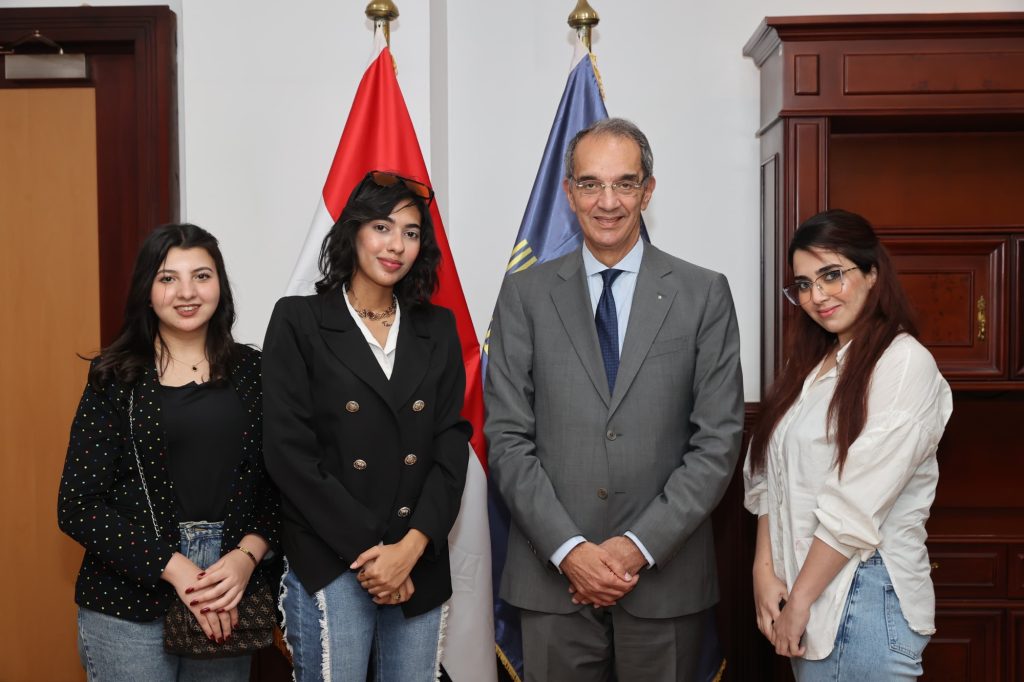
ممثلين فريق عمل مجلة تحكم مع معالي وزير الاتصالات وتكنولوجيا المعلومات “عمرو طلعت”