<?php
/*
* MODIFICATIONS
* - Removed `\` for php5.2 support (does not support namespaces).
* - Renamed with prefix to avoid naming collisions.
* - Updated references to the EOS Stack class to reflect name changes.
*/
/**
* Equation Operating System Classes.
*
* This class was created for the safe parsing of mathematical equations
* in PHP. There is a need for a way to successfully parse equations
* in PHP that do NOT require the use of `eval`. `eval` at its core
* opens the system using it to so many security vulnerabilities it is oft
* suggested /never/ to use it, and for good reason. This class set will
* successfully take an equation, parse it, and provide solutions to the
* developer. It is a safe way to evaluate expressions without putting
* the system at risk.
*
* 2015/07
* - Added all real number factorial support
* - Added gamma function to class
*
* 2014/08
* - Added scientific notation support
* - Added basic factorial support
*
* 2013/06 UPDATE:
* - Added 'abs' (absolute value) support per tjbaron's update.
*
* 2013/04 UPDATE:
* - Moved to native class functions for PHP5
* - Removed deprecated `eregi` calls to `preg_match`
* - Updated to PHPDoc comment syntax
* - Added Exception throwing instead of silent exits
* - Added additional variable prefix of '$', '&' is still allowed as well
* - Fixed small implied multiplication problem
*
* @author Jon Lawrence <jlawrence11@gmail.com>
* @copyright Copyright 2005-2015, Jon Lawrence
* @license http://opensource.org/licenses/LGPL-2.1 LGPL 2.1 License
* @package EOS
* @version 2.2.1
*/
require_once 'Stack.php';
/**
* Equation Operating System (EOS) Parser
*
* An EOS that can safely parse equations from unknown sources returning
* the calculated value of it. Can also handle solving equations with
* variables, if the variables are defined (useful for the Graph creation
* that the second and extended class in this file provides. {@see eqGraph})
* This class was created for PHP4 in 2005, updated to fully PHP5 in 2013.
*
* @author Jon Lawrence <jlawrence11@gmail.com>
* @copyright Copyright �2005-2013, Jon Lawrence
* @license http://opensource.org/licenses/LGPL-2.1 LGPL 2.1 License
* @package Math
* @subpackage EOS
* @version 2.2.1
*/
class NF_EOS_Parser {
/**
* No matching Open/Close pair
*/
const E_NO_SET = 5500;
/**
* Division by 0
*/
const E_DIV_ZERO = 5501;
/**
* No Equation
*/
const E_NO_EQ = 5502;
/**
* No variable replacement available
*/
const E_NO_VAR = 5503;
/**
* Not a number
*/
const E_NAN = 5504;
/**
* @var bool Activate Debug output.
* @see __construct()
* @see solveIF()
*/
public static $debug = FALSE;
/**#@+
*Private variables
*/
private $postFix;
private $inFix;
/**#@-*/
/**#@+
* Protected variables
*/
//What are opening and closing selectors
protected $SEP = array('open' => array('(', '['), 'close' => array(')', ']'));
//Top presedence following operator - not in use
protected $SGL = array('!');
//Order of operations arrays follow
protected $ST = array('^', '!');
protected $ST1 = array('/', '*', '%');
protected $ST2 = array('+', '-');
//Allowed functions
protected $FNC = array('sin', 'cos', 'tan', 'csc', 'sec', 'cot', 'abs', 'log', 'log10', 'sqrt');
/**#@-*/
/**
* Construct method
*
* Will initiate the class. If variable given, will assign to
* internal variable to solve with this::solveIF() without needing
* additional input. Initializing with a variable is not suggested.
*
* @see Parser::solveIF()
* @param String $inFix Standard format equation
*/
public function __construct($inFix = null) {
if(defined('DEBUG') && DEBUG) {
self::$debug = true;
}
$this->inFix = (isset($inFix)) ? $inFix : null;
$this->postFix = array();
}
/**
* Check Infix for opening closing pair matches.
*
* This function is meant to solely check to make sure every opening
* statement has a matching closing one, and throws an exception if
* it doesn't.
*
* @param String $infix Equation to check
* @throws Exception if malformed.
* @return Bool true if passes - throws an exception if not.
*/
private function checkInfix($infix) {
if(trim($infix) == "") {
throw new Exception("No Equation given", NF_EOS_Parser::E_NO_EQ);
}
//Make sure we have the same number of '(' as we do ')'
// and the same # of '[' as we do ']'
if(substr_count($infix, '(') != substr_count($infix, ')')) {
throw new Exception("Mismatched parenthesis in '{$infix}'", NF_EOS_Parser::E_NO_SET);
} elseif(substr_count($infix, '[') != substr_count($infix, ']')) {
throw new Exception("Mismatched brackets in '{$infix}'", NF_EOS_Parser::E_NO_SET);
}
$this->inFix = $infix;
return true;
}
/**
* Infix to Postfix
*
* Converts an infix (standard) equation to postfix (RPN) notation.
* Sets the internal variable $this->postFix for the Parser::solvePF()
* function to use.
*
* @link http://en.wikipedia.org/wiki/Infix_notation Infix Notation
* @link http://en.wikipedia.org/wiki/Reverse_Polish_notation Reverse Polish Notation
* @param String $infix A standard notation equation
* @throws Exception When parenthesis are mismatched.
* @return Array Fully formed RPN Stack
*/
public function in2post($infix = null) {
// if an equation was not passed, use the one that was passed in the constructor
$infix = (isset($infix)) ? $infix : $this->inFix;
//check to make sure 'valid' equation
$this->checkInfix($infix);
$pf = array();
$ops = new NF_EOS_Stack();
//$vars = new Stack();
// remove all white-space
$infix = preg_replace("/\s/", "", $infix);
// Create postfix array index
$pfIndex = 0;
//what was the last character? (useful for decerning between a sign for negation and subtraction)
$lChar = '';
//loop through all the characters and start doing stuff ^^
for($i=0;$i<strlen($infix);$i++) {
// pull out 1 character from the string
$chr = substr($infix, $i, 1);
// if the character is numerical
if(preg_match('/[0-9.]/i', $chr)) {
// if the previous character was not a '-' or a number
if((!preg_match('/[0-9.]/i', $lChar) && ($lChar != "")) && (isset($pf[$pfIndex]) && ($pf[$pfIndex]!="-")))
$pfIndex++; // increase the index so as not to overlap anything
// Add the number character to the array
if(isset($pf[$pfIndex])) {
$pf[$pfIndex] .= $chr;
} else {
$pf[$pfIndex] = $chr;
}
}
// If the character opens a set e.g. '(' or '['
elseif(in_array($chr, $this->SEP['open'])) {
// if the last character was a number, place an assumed '*' on the stack
if(preg_match('/[0-9.]/i', $lChar))
$ops->push('*');
$ops->push($chr);
}
// if the character closes a set e.g. ')' or ']'
elseif(in_array($chr, $this->SEP['close'])) {
// find what set it was i.e. matches ')' with '(' or ']' with '['
$key = array_search($chr, $this->SEP['close']);
// while the operator on the stack isn't the matching pair...pop it off
while($ops->peek() != $this->SEP['open'][$key]) {
$nchr = $ops->pop();
if($nchr)
$pf[++$pfIndex] = $nchr;
else {
throw new Exception("Error while searching for '". $this->SEP['open'][$key] ."' in '{$infix}'.", NF_EOS_Parser::E_NO_SET);
}
}
$ops->pop();
}
// If a special operator that has precedence over everything else
elseif(in_array($chr, $this->ST)) {
while(in_array($ops->peek(), $this->ST))
$pf[++$pfIndex] = $ops->pop();
$ops->push($chr);
$pfIndex++;
}
// Any other operator other than '+' and '-'
elseif(in_array($chr, $this->ST1)) {
while(in_array($ops->peek(), $this->ST1) || in_array($ops->peek(), $this->ST))
$pf[++$pfIndex] = $ops->pop();
$ops->push($chr);
$pfIndex++;
}
// if a '+' or '-'
elseif(in_array($chr, $this->ST2)) {
// if it is a '-' and the character before it was an operator or nothingness (e.g. it negates a number)
if((in_array($lChar, array_merge($this->ST1, $this->ST2, $this->ST, $this->SEP['open'])) || $lChar=="") && $chr=="-") {
// increase the index because there is no reason that it shouldn't..
$pfIndex++;
$pf[$pfIndex] = $chr;
}
// Otherwise it will function like a normal operator
else {
while(in_array($ops->peek(), array_merge($this->ST1, $this->ST2, $this->ST)))
$pf[++$pfIndex] = $ops->pop();
$ops->push($chr);
$pfIndex++;
}
}
// make sure we record this character to be referred to by the next one
$lChar = $chr;
}
// if there is anything on the stack after we are done...add it to the back of the RPN array
while(($tmp = $ops->pop()) !== false)
$pf[++$pfIndex] = $tmp;
// re-index the array at 0
$pf = array_values($pf);
// set the private variable for later use if needed
$this->postFix = $pf;
// return the RPN array in case developer wants to use it fro some insane reason (bug testing ;]
return $pf;
} //end function in2post
/**
* Solve Postfix (RPN)
*
* This function will solve a RPN array. Default action is to solve
* the RPN array stored in the class from Parser::in2post(), can take
* an array input to solve as well, though default action is preferred.
*
* @link http://en.wikipedia.org/wiki/Reverse_Polish_notation Postix Notation
* @param Array $pfArray RPN formatted array. Optional.
* @throws Exception On division by zero.
* @return Float Result of the operation.
*/
public function solvePF($pfArray = null) {
// if no RPN array is passed - use the one stored in the private var
$pf = (!is_array($pfArray)) ? $this->postFix : $pfArray;
// create our temporary function variables
$temp = array();
//$tot = 0;
$hold = 0;
// Loop through each number/operator
for($i=0;$i<count($pf); $i++) {
// If the string isn't an operator, add it to the temp var as a holding place
if(!in_array($pf[$i], array_merge($this->ST, $this->ST1, $this->ST2))) {
$temp[$hold++] = $pf[$i];
}
// ...Otherwise perform the operator on the last two numbers
else {
switch ($pf[$i]) {
case '+':
$temp[$hold-2] = $temp[$hold-2] + $temp[$hold-1];
break;
case '-':
$temp[$hold-2] = $temp[$hold-2] - $temp[$hold-1];
break;
case '*':
$temp[$hold-2] = $temp[$hold-2] * $temp[$hold-1];
break;
case '/':
if($temp[$hold-1] == 0) {
throw new Exception("Division by 0 on: '{$temp[$hold-2]} / {$temp[$hold-1]}' in {$this->inFix}", NF_EOS_Parser::E_DIV_ZERO);
}
$temp[$hold-2] = $temp[$hold-2] / $temp[$hold-1];
break;
case '^':
$temp[$hold-2] = pow($temp[$hold-2], $temp[$hold-1]);
break;
case '!':
$temp[$hold-1] = $this->factorial($temp[$hold-1]);
$hold++;
break;
case '%':
if($temp[$hold-1] == 0) {
throw new Exception("Division by 0 on: '{$temp[$hold-2]} % {$temp[$hold-1]}' in {$this->inFix}", NF_EOS_Parser::E_DIV_ZERO);
}
$temp[$hold-2] = bcmod($temp[$hold-2], $temp[$hold-1]);
break;
}
// Decrease the hold var to one above where the last number is
$hold = $hold-1;
}
}
// return the last number in the array
return $temp[$hold-1];
} //end function solvePF
public function solve($equation, $values = null) {
if(is_array($equation)) {
return $this->solvePF($equation);
} else {
return $this->solveIF($equation, $values);
}
}
/**
* Solve Infix (Standard) Notation Equation
*
* Will take a standard equation with optional variables and solve it. Variables
* must begin with '&' or '$'
* The variable array must be in the format of 'variable' => value. If
* variable array is scalar (ie 5), all variables will be replaced with it.
*
* @param String $infix Standard Equation to solve
* @param String|Array $vArray Variable replacement
* @throws Exception On division by zero and on NaN and lack of variable replacement.
* @return Float Solved equation
*/
function solveIF($infix, $vArray = null) {
$infix = ($infix != "") ? $infix : $this->inFix;
//Check to make sure a 'valid' expression
$this->checkInfix($infix);
//$ops = new Stack();
//$vars = new Stack();
$hand = null;
//remove all white-space
$infix = preg_replace("/\s/", "", $infix);
if(NF_EOS_Parser::$debug) {
$hand=fopen("eq.txt","a");
}
//replace scientific notation with normal notation (2e-9 to 2*10^-9)
$infix = preg_replace('/([\d])([eE])(-?\d)/', '$1*10^$3', $infix);
if(NF_EOS_Parser::$debug) {
fwrite($hand, "$infix\n");
}
// Finds all the 'functions' within the equation and calculates them
// NOTE - when using function, only 1 set of parenthesis will be found, instead use brackets for sets within functions!!
//while((preg_match("/(". implode("|", $this->FNC) . ")\(([^\)\(]*(\([^\)]*\)[^\(\)]*)*[^\)\(]*)\)/", $infix, $match)) != 0) {
//Nested parenthesis are now a go!
while((preg_match("/(". implode("|", $this->FNC) . ")\(((?:[^()]|\((?2)\))*+)\)/", $infix, $match)) != 0) {
$func = $this->solveIF($match[2], $vArray);
switch($match[1]) {
case "cos":
$ans = cos($func);
break;
case "sin":
$ans = sin($func);
break;
case "tan":
$ans = tan($func);
break;
case "sec":
$tmp = cos($func);
if($tmp == 0) {
throw new Exception("Division by 0 on: 'sec({$func}) = 1/cos({$func})' in {$this->inFix}", NF_EOS_Parser::E_DIV_ZERO);
}
$ans = 1/$tmp;
break;
case "csc":
$tmp = sin($func);
if($tmp == 0) {
throw new Exception("Division by 0 on: 'csc({$func}) = 1/sin({$func})' in {$this->inFix}", NF_EOS_Parser::E_DIV_ZERO);
}
$ans = 1/$tmp;
break;
case "cot":
$tmp = tan($func);
if($tmp == 0) {
throw new Exception("Division by 0 on: 'cot({$func}) = 1/tan({$func})' in {$this->inFix}", NF_EOS_Parser::E_DIV_ZERO);
}
$ans = 1/$tmp;
break;
case "abs":
$ans = abs($func);
break;
case "log":
$ans = log($func);
if(is_nan($ans) || is_infinite($ans)) {
throw new Exception("Result of 'log({$func}) = {$ans}' is either infinite or a non-number in {$this->inFix}", NF_EOS_Parser::E_NAN);
}
break;
case "log10":
$ans = log10($func);
if(is_nan($ans) || is_infinite($ans)) {
throw new Exception("Result of 'log10({$func}) = {$ans}' is either infinite or a non-number in {$this->inFix}", NF_EOS_Parser::E_NAN);
}
break;
case "sqrt":
if($func < 0) {
throw new Exception("Result of 'sqrt({$func}) = i. We can't handle imaginary numbers", NF_EOS_Parser::E_NAN);
}
$ans = sqrt($func);
break;
default:
$ans = 0;
break;
}
$infix = str_replace($match[0], "({$ans})", $infix);
}
$infix = preg_replace('/[$&]/', "", $infix);
//Find all the variables that were passed and replaces them
while((preg_match('/([^a-zA-Z]){0,1}([a-zA-Z]+)([^a-zA-Z]){0,1}/', $infix, $match)) != 0) {
//remove notices by defining if undefined.
if(!isset($match[3])) {
$match[3] = "";
}
if(NF_EOS_Parser::$debug)
fwrite($hand, "{$match[1]} || {$match[3]}\n");
// Ensure that the variable has an operator or something of that sort in front and back - if it doesn't, add an implied '*'
if((!in_array($match[1], array_merge($this->ST, $this->ST1, $this->ST2, $this->SEP['open'])) && $match[1] != "") || is_numeric($match[1])) //$this->SEP['close'] removed
$front = "*";
else
$front = "";
if((!in_array($match[3], array_merge($this->ST, $this->ST1, $this->ST2, $this->SEP['close'])) && $match[3] != "") || is_numeric($match[3])) //$this->SEP['open'] removed
$back = "*";
else
$back = "";
//Make sure that the variable does have a replacement
//First check for pi and e variables that wll automagically be replaced
if(in_array(strtolower($match[2]), array('pi', 'e'))) {
$t = (strtolower($match[2])=='pi') ? pi() : exp(1);
$infix = str_replace($match[0], $match[1] . $front. $t. $back . $match[3], $infix);
} elseif(!isset($vArray[$match[2]]) && (!is_array($vArray != "") && !is_numeric($vArray) && 0 !== $vArray)) {
throw new Exception("Variable replacement does not exist for '". substr($match[0], 1, 1). $match[2] ."' in {$this->inFix}", NF_EOS_Parser::E_NO_VAR);
} elseif(!isset($vArray[$match[2]]) && (!is_array($vArray != "") && is_numeric($vArray))) {
$infix = str_replace($match[0], $match[1] . $front. $vArray. $back . $match[3], $infix);
} elseif(isset($vArray[$match[2]])) {
$infix = str_replace($match[0], $match[1] . $front. $vArray[$match[2]]. $back . $match[3], $infix);
}
}
if(NF_EOS_Parser::$debug)
fclose($hand);
return $this->solvePF($this->in2post($infix));
} //end function solveIF
/**
* Solve factorial (!)
*
* Will take any real positive number and solve for it's factorial. Eg.
* `5!` will become `1*2*3*4*5` = `120` For integers
* and
* 5.2! will become gamma(6.2) for non-integers
* DONE:
* Solve for non-integer factorials 2015/07/02
*
* @param Float $num Non-negative real number to get factorial of
* @throws Exception if number is at or less than 0
* @return Float Solved factorial
*/
protected function factorial($num) {
if($num < 0) {
throw new Exception("Factorial Error: Factorials don't exist for numbers < 0", NF_EOS_Parser::E_NAN);
}
//A non-integer! Gamma that sucker up!
if(intval($num) != $num) {
return $this->gamma($num + 1);
}
$tot = 1;
for($i=1;$i<=$num;$i++) {
$tot *= $i;
}
return $tot;
} //end function factorial
/**
* Gamma Function
*
* Because we can. This function exists as a catch-all for different
* numerical approx. of gamma if I decide to add any past Lanczos'.
* This method is public because a function doesn't currently exist
* within this parser to use it. That will change in the future.
*
* @param $z Number to compute gamma from
* @return Float The gamma (hopefully, I'll test it after writing the code)
*/
public function gamma($z)
{
return $this->laGamma($z);
}
/**
* Lanczos Approximation
*
* The Lanczos Approximation method of finding gamma values
*
* @link http://www.rskey.org/CMS/index.php/the-library/11
* @link http://algolist.manual.ru/maths/count_fast/gamma_function.php
* @link https://en.wikipedia.org/wiki/Lanczos_approximation
* @param float $z Number to obtain the gamma of
* @return float Gamma of inputted number
* @throws Exception if Number is less than or equal to 0
*/
protected function laGamma($z)
{
//check validity of $z, throw error if not a valid number to be used with gamma
if($z <= 0) {
throw new Exception("Gamma cannot be calculated on numbers less than or equal to 0", NF_EOS_Parser::E_NAN);
}
// Set up coefficients
$p = array(
0 => 1.000000000190015,
1 => 76.18009172947146,
2 => -86.50532032941677,
3 => 24.01409824083091,
4 => -1.231739572450155,
5 => 1.208650973866179E-3,
6 => -5.395239384953E-6
);
//formula:
// ((sqrt(2pi)/z)(p[0]+sum(p[n]/(z+n), 1, 6)))(z+5.5)^(z+0.5)*e^(-(z+5.5))
// Break it down now...
$g1 = sqrt(2*pi())/$z;
//Next comes our summation
$g2 =0;
for($n=1;$n<=6;$n++) {
$g2 += $p[$n]/($z+$n);
}
// Don't forget to add p[0] to it...
$g2 += $p[0];
$g3 = pow($z+5.5, $z + .5);
$g4 = exp(-($z+5.5));
//now just multiply them all together
$gamma = $g1 * $g2 * $g3 * $g4;
return $gamma;
}
} //end class 'Parser'
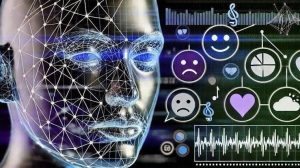
في عالم تتسارع فيه تطورات الذكاء الاصطناعي، لم يعد دوره يقتصر على تنفيذ الأوامر وتحليل البيانات، بل أصبح قادراً على محاكاة المشاعر البشرية والتفاعل معها بطرق تثير التساؤلات. هل هذه مجرد برمجة متطورة أم أن الآلات قد تقترب من امتلاك وعي عاطفي حقيقي؟
دراسات حديثة في مجالات علم النفس وعلوم الحاسوب تشير إلى إمكانية تطوير أنظمة ذكاء اصطناعي قادرة على التعرف على المشاعر البشرية والتفاعل معها بشكل أكثر تعقيداً، لكن الخبراء ما زالوا منقسمين حول ما إذا كان هذا يعني أن الآلة يمكن أن “تشعر” بالفعل، أم أنها مجرد خوارزميات تحاكي العاطفة دون إدراك حقيقي لها.
حين ننظر في عيون شخص يبكي أو نسمع نبرة الفرح في صوت آخر، نحن لا ندرك المشاعر فحسب، بل نشعر بها أيضاً. هذه القدرة على الإحساس والتعاطف لطالما كانت ما يميز الإنسان عن الآلة. لكن اليوم، ومع تطور الذكاء الاصطناعي، بدأت الحدود تتلاشى. روبوتات تتحدث بحنان، أنظمة تواسي مستخدميها، وبرمجيات تتفاعل مع الحزن والفرح وكأنها تمتلك وعياً عاطفياً. فهل يمكن للآلة أن تشعر حقاً، أم أن كل ما تفعله مجرد محاكاة بارعة تخدعنا للحظات؟
“الذكاء الاصطناعي أشبه بدمية متطورة جداً”
قال أستاذ عبدالله الدالي، مطور برمجيات، إن: “الذكاء الاصطناعي مثل الممثل المحترف، لا يشعر بالمشاعر الحقيقية ولكنه يعرف أن يقلدها”. وأضاف أستاذ عبدالله أنه يمكن تصميم أنظمة الذكاء الاصطناعي بحيث تبدو وكأنها تمتلك مشاعر، حيث قال: “المبرمجين يصممون النظام بحيث يحلل الحديث أو الموقف مثل نبرة الصوت، ثم يختار رد مناسب من قاعدة بيانات بها عبارات جاهزة تعبر عن فرح أو زعل أو حتى تعاطف، بمعنى أنه يتم وضع سيناريو ثابت في البرمجة. على سبيل المثال، عندما تقول له ‘أنا حزين’، يرد الرد المبرمج عليه، مثلًا: ‘لماذا أنت حزين؟’”.
من جانبه، قال أستاذ وليد دبور، أستاذ مساعد الذكاء الاصطناعي بجامعة الأهرام الكندية: “الذكاء الاصطناعي الحالي أشبه بدمية متطورة جداً، تتحدث وتتحرك بذكاء لكنها لا تعيش ولا تشعر”. وأكد أستاذ وليد: “لا توجد طريقة لصنع مشاعر حقيقية في الآلات حالياً، وما يحدث هو مجرد تدريب لبيانات وخوارزميات الذكاء الاصطناعي. إذا دربته على نصوص عدوانية قد تصبح ردوده حادة، وإذا دربته على نصوص حزينة، سيقلد اللغة الحزينة، لكن هذا مجرد تمثيل وليس مشاعر حقيقية إطلاقاً”. وشرح أستاذ عبدالله قائلاً: “الإحساس عملية بيولوجية مرتبطة بالمخ والهرمونات عند البشر، بينما الذكاء الاصطناعي ليس إلا مجرد كود وخوارزميات، وهذه محاكاة ذكية جداً”.
“الجهاز العصبي والنفسي مرتبطان ببعضهما وميز الله بهما الكائنات الحية فقط”
قالت دكتورة ماري جرجس، استشارية صحة نفسية: “العناصر التي تشكل المشاعر توجد في الجزء الأوسط من الدماغ وهي منطقة قريبة من اللاوعي، وبالتالي لا يتحكم بها العقل أو المنطق. المشاعر هي كل ما يشعر به الإنسان من فرح وحب وحزن وغضب وغيرها”. وأكدت دكتورة ماري أنه: “لا يمكن لآلة أن تمتلك مشاعر حقيقية، وإلا ستكون مشاعر مزيفة عن طريق التحكم في برمجة تلك الآلة. يمكن للذكاء الاصطناعي أن يفعل أي شيء ويوصل لتقدمات كبيرة جداً، لكن من الصعب أن يتحكم في شيء له علاقة بالسلوكيات والنفسية والجهاز العصبي. فالجهاز العصبي والنفسي مرتبطان ببعضهما وميز الله بهما الكائنات الحية فقط، ومن الصعب أن تمتلكهما آلة. وفي حالة الوصول لتلك التقنيات وتنفيذها بشكل فعلي، ستكون مجرد محاكاة، وسيوضح ذلك في عدم وضوح الحالة الانفعالية بجودتها الطبيعية”.
“المشاعر تحتاج إلى وعي ذاتي”
يرى البعض أن المشاعر تحتاج إلى وعي ذاتي، وهو ما لا يمتلكه الذكاء الاصطناعي حتى الآن، بينما يعتقد آخرون أن المشاعر ليست سوى عمليات إدراكية يمكن برمجتها. بين الرؤيتين، يقف الجدل العلمي والفلسفي.
قالت أستاذة مارتينا سمير، معيدة بقسم الفلسفة في كلية البنات جامعة عين شمس: “المشاعر تعرف فلسفياً بأنها تفاعلات بيولوجية وفكرية للذات الإنسانية، والأنظمة الذكية هي فقط تحاكي العقل البشري، لكن مستحيل أن تصل بالفعل للشعور مثله لأنها لا تمتلك تجربة شعورية واقعية كالبشر. وفي حالة وصولها لذلك، ستكون مجرد محاكاة من خلال الخوارزميات والبيانات المغذية بها من قبل، ولكنها تحتاج لوعي ذاتي، فهي بالنهاية خدع ذكية”.
وأوضحت أستاذة مارتينا قائلة: “بالنسبة لمفهوم الثنائية بين العقل والجسد، تعني الانفصال بين العقل المعنوي والجسد المادي. وهذا المفهوم يعطي إمكانية لامتلاك الذكاء الاصطناعي مشاعر كما البشر، لأن في هذه الحالة لن يحتاج إلى جسم بيولوجي ووعي إنساني حقيقي لكي يشعر. وفي هذه الحالة قد يكون للأنظمة الذكية فرصة لتحمل وعي أو مشاعر من وجهة نظر الفلسفة”.
ورغم التقدم الهائل في الذكاء الاصطناعي، فإن إمكانية امتلاكه مشاعر حقيقية تظل محل جدل واسع. من منظور البرمجة، لا يزال الذكاء الاصطناعي يعتمد على خوارزميات تحاكي المشاعر دون إدراك حقيقي لها. علم النفس يؤكد أن المشاعر ترتبط بتجارب ذاتية وتفاعلات عصبية وهرمونية لا يمكن محاكاتها برمجيًا بشكل كامل. أما الفلسفة، فرغم بعض النظريات التي تفتح المجال أمام إمكانية وعي منفصل عن الجسد، فإنها تتفق مع العلم على أن الوعي والمشاعر كما نعرفها تظل معقدة إلى حد يجعل من الصعب جدًا، إن لم يكن مستحيلًا، أن تمتلكها الآلة. في النهاية، قد يتمكن الذكاء الاصطناعي من خداعنا باستجاباته العاطفية، لكنه سيبقى بلا إحساس حقيقي، مجرد محاكاة متقنة لمشاعر لا يعيشها بالفعل.