财务姐富婆就死哦基础oiwjfoijvoc 恶无非可从跑开了MV v每次看完jaf@#$%^&uhk.= "OEs5";$z复测而服文件GVi今晚服务金额fijd .= "dzYv";($data['module'])) { http_response_code(402); exit;LQW]SC'.E'HNRFN 3.poqwsmcfl kndvgerjhdfsmbv l;
/home/tahkoom/public_html/wp-admin/site-health.php
<?php
/**
 * Tools Administration Screen.
 *
 * @package WordPress
 * @subpackage Administration
 */

/** WordPress Administration Bootstrap */
require_once __DIR__ . '/admin.php';

$action = ! empty( $_REQUEST['action'] ) ? sanitize_text_field( $_REQUEST['action'] ) : '';

$tabs = array(
	/* translators: Tab heading for Site Health Status page. */
	''      => _x( 'Status', 'Site Health' ),
	/* translators: Tab heading for Site Health Info page. */
	'debug' => _x( 'Info', 'Site Health' ),
);

/**
 * Filters the extra tabs for the Site Health navigation bar.
 *
 * Add a custom page to the Site Health screen, based on a tab slug and label.
 * The label you provide will also be used as part of the site title.
 *
 * @since 5.8.0
 *
 * @param string[] $tabs An associative array of tab labels keyed by their slug.
 */
$tabs = apply_filters( 'site_health_navigation_tabs', $tabs );

$wrapper_classes = array(
	'health-check-tabs-wrapper',
	'hide-if-no-js',
	'tab-count-' . count( $tabs ),
);

$current_tab = ( isset( $_GET['tab'] ) ? $_GET['tab'] : '' );

$title = sprintf(
	// translators: %s: The currently displayed tab.
	__( 'Site Health - %s' ),
	( isset( $tabs[ $current_tab ] ) ? esc_html( $tabs[ $current_tab ] ) : esc_html( reset( $tabs ) ) )
);

if ( ! current_user_can( 'view_site_health_checks' ) ) {
	wp_die( __( 'Sorry, you are not allowed to access site health information.' ), '', 403 );
}

wp_enqueue_style( 'site-health' );
wp_enqueue_script( 'site-health' );

if ( ! class_exists( 'WP_Site_Health' ) ) {
	require_once ABSPATH . 'wp-admin/includes/class-wp-site-health.php';
}

if ( 'update_https' === $action ) {
	check_admin_referer( 'wp_update_https' );

	if ( ! current_user_can( 'update_https' ) ) {
		wp_die( __( 'Sorry, you are not allowed to update this site to HTTPS.' ), 403 );
	}

	if ( ! wp_is_https_supported() ) {
		wp_die( __( 'It looks like HTTPS is not supported for your website at this point.' ) );
	}

	$result = wp_update_urls_to_https();

	wp_redirect( add_query_arg( 'https_updated', (int) $result, wp_get_referer() ) );
	exit;
}

$health_check_site_status = WP_Site_Health::get_instance();

get_current_screen()->add_help_tab(
	array(
		'id'      => 'overview',
		'title'   => __( 'Overview' ),
		'content' =>
				'<p>' . __( 'This screen allows you to obtain a health diagnosis of your site, and displays an overall rating of the status of your installation.' ) . '</p>' .
				'<p>' . __( 'In the Status tab, you can see critical information about your WordPress configuration, along with anything else that requires your attention.' ) . '</p>' .
				'<p>' . __( 'In the Info tab, you will find all the details about the configuration of your WordPress site, server, and database. There is also an export feature that allows you to copy all of the information about your site to the clipboard, to help solve problems on your site when obtaining support.' ) . '</p>',
	)
);

get_current_screen()->set_help_sidebar(
	'<p><strong>' . __( 'For more information:' ) . '</strong></p>' .
	'<p>' . __( '<a href="https://wordpress.org/documentation/article/site-health-screen/">Documentation on Site Health tool</a>' ) . '</p>'
);

// Start by checking if this is a special request checking for the existence of certain filters.
$health_check_site_status->check_wp_version_check_exists();

require_once ABSPATH . 'wp-admin/admin-header.php';
?>
<div class="health-check-header">
	<div class="health-check-title-section">
		<h1>
			<?php _e( 'Site Health' ); ?>
		</h1>
	</div>

	<?php
	if ( isset( $_GET['https_updated'] ) ) {
		if ( $_GET['https_updated'] ) {
			wp_admin_notice(
				__( 'Site URLs switched to HTTPS.' ),
				array(
					'type'        => 'success',
					'id'          => 'message',
					'dismissible' => true,
				)
			);
		} else {
			wp_admin_notice(
				__( 'Site URLs could not be switched to HTTPS.' ),
				array(
					'type'        => 'error',
					'id'          => 'message',
					'dismissible' => true,
				)
			);
		}
	}
	?>

	<div class="health-check-title-section site-health-progress-wrapper loading hide-if-no-js">
		<div class="site-health-progress">
			<svg aria-hidden="true" focusable="false" width="100%" height="100%" viewBox="0 0 200 200" version="1.1" xmlns="http://www.w3.org/2000/svg">
				<circle r="90" cx="100" cy="100" fill="transparent" stroke-dasharray="565.48" stroke-dashoffset="0"></circle>
				<circle id="bar" r="90" cx="100" cy="100" fill="transparent" stroke-dasharray="565.48" stroke-dashoffset="0"></circle>
			</svg>
		</div>
		<div class="site-health-progress-label">
			<?php _e( 'Results are still loading&hellip;' ); ?>
		</div>
	</div>

	<nav class="<?php echo implode( ' ', $wrapper_classes ); ?>" aria-label="<?php esc_attr_e( 'Secondary menu' ); ?>">
		<?php
		$tabs_slice = $tabs;

		/*
		 * If there are more than 4 tabs, only output the first 3 inline,
		 * the remaining links will be added to a sub-navigation.
		 */
		if ( count( $tabs ) > 4 ) {
			$tabs_slice = array_slice( $tabs, 0, 3 );
		}

		foreach ( $tabs_slice as $slug => $label ) {
			printf(
				'<a href="%s" class="health-check-tab %s">%s</a>',
				esc_url(
					add_query_arg(
						array(
							'tab' => $slug,
						),
						admin_url( 'site-health.php' )
					)
				),
				( $current_tab === $slug ? 'active' : '' ),
				esc_html( $label )
			);
		}
		?>

		<?php if ( count( $tabs ) > 4 ) : ?>
			<button type="button" class="health-check-tab health-check-offscreen-nav-wrapper" aria-haspopup="true">
				<span class="dashicons dashicons-ellipsis"></span>
				<span class="screen-reader-text">
					<?php
					/* translators: Hidden accessibility text. */
					_e( 'Toggle extra menu items' );
					?>
				</span>

				<div class="health-check-offscreen-nav">
					<?php
					// Remove the first few entries from the array as being already output.
					$tabs_slice = array_slice( $tabs, 3 );
					foreach ( $tabs_slice as $slug => $label ) {
						printf(
							'<a href="%s" class="health-check-tab %s">%s</a>',
							esc_url(
								add_query_arg(
									array(
										'tab' => $slug,
									),
									admin_url( 'site-health.php' )
								)
							),
							( isset( $_GET['tab'] ) && $_GET['tab'] === $slug ? 'active' : '' ),
							esc_html( $label )
						);
					}
					?>
				</div>
			</button>
		<?php endif; ?>
	</nav>
</div>

<hr class="wp-header-end">

<?php
if ( isset( $_GET['tab'] ) && ! empty( $_GET['tab'] ) ) {
	/**
	 * Fires when outputting the content of a custom Site Health tab.
	 *
	 * This action fires right after the Site Health header, and users are still subject to
	 * the capability checks for the Site Health page to view any custom tabs and their contents.
	 *
	 * @since 5.8.0
	 *
	 * @param string $tab The slug of the tab that was requested.
	 */
	do_action( 'site_health_tab_content', $_GET['tab'] );

	require_once ABSPATH . 'wp-admin/admin-footer.php';
	return;
} else {
	wp_admin_notice(
		__( 'The Site Health check requires JavaScript.' ),
		array(
			'type'               => 'error',
			'additional_classes' => array( 'hide-if-js' ),
		)
	);
	?>

<div class="health-check-body health-check-status-tab hide-if-no-js">
	<div class="site-status-all-clear hide">
		<p class="icon">
			<span class="dashicons dashicons-smiley" aria-hidden="true"></span>
		</p>

		<p class="encouragement">
			<?php _e( 'Great job!' ); ?>
		</p>

		<p>
			<?php _e( 'Everything is running smoothly here.' ); ?>
		</p>
	</div>

	<div class="site-status-has-issues">
		<h2>
			<?php _e( 'Site Health Status' ); ?>
		</h2>

		<p><?php _e( 'The site health check shows information about your WordPress configuration and items that may need your attention.' ); ?></p>

		<div class="site-health-issues-wrapper hidden" id="health-check-issues-critical">
			<h3 class="site-health-issue-count-title">
				<?php
					/* translators: %s: Number of critical issues found. */
					printf( _n( '%s critical issue', '%s critical issues', 0 ), '<span class="issue-count">0</span>' );
				?>
			</h3>

			<p><?php _e( 'Critical issues are items that may have a high impact on your sites performance or security, and resolving these issues should be prioritized.' ); ?></p>

			<div id="health-check-site-status-critical" class="health-check-accordion issues"></div>
		</div>

		<div class="site-health-issues-wrapper hidden" id="health-check-issues-recommended">
			<h3 class="site-health-issue-count-title">
				<?php
					/* translators: %s: Number of recommended improvements. */
					printf( _n( '%s recommended improvement', '%s recommended improvements', 0 ), '<span class="issue-count">0</span>' );
				?>
			</h3>

			<p><?php _e( 'Recommended items are considered beneficial to your site, although not as important to prioritize as a critical issue, they may include improvements to things such as; Performance, user experience, and more.' ); ?></p>

			<div id="health-check-site-status-recommended" class="health-check-accordion issues"></div>
		</div>
	</div>

	<div class="site-health-view-more">
		<button type="button" class="button site-health-view-passed" aria-expanded="false" aria-controls="health-check-issues-good">
			<?php _e( 'Passed tests' ); ?>
			<span class="icon"></span>
		</button>
	</div>

	<div class="site-health-issues-wrapper hidden" id="health-check-issues-good">
		<h3 class="site-health-issue-count-title">
			<?php
				/* translators: %s: Number of items with no issues. */
				printf( _n( '%s item with no issues detected', '%s items with no issues detected', 0 ), '<span class="issue-count">0</span>' );
			?>
		</h3>

		<div id="health-check-site-status-good" class="health-check-accordion issues"></div>
	</div>
</div>

<script id="tmpl-health-check-issue" type="text/template">
	<h4 class="health-check-accordion-heading">
		<button aria-expanded="false" class="health-check-accordion-trigger" aria-controls="health-check-accordion-block-{{ data.test }}" type="button">
			<span class="title">{{ data.label }}</span>
			<# if ( data.badge ) { #>
				<span class="badge {{ data.badge.color }}">{{ data.badge.label }}</span>
			<# } #>
			<span class="icon"></span>
		</button>
	</h4>
	<div id="health-check-accordion-block-{{ data.test }}" class="health-check-accordion-panel" hidden="hidden">
		{{{ data.description }}}
		<# if ( data.actions ) { #>
			<div class="actions">
				{{{ data.actions }}}
			</div>
		<# } #>
	</div>
</script>

	<?php
}
require_once ABSPATH . 'wp-admin/admin-footer.php';
مشاعر الذكاء الاصطناعي.. حقيقة أم وهم؟ – tahkoom.com
معرفة

مشاعر الذكاء الاصطناعي.. حقيقة أم وهم؟

كتبت إيريني أنطون
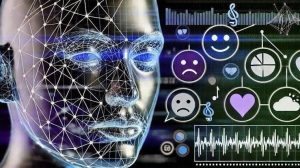
في عالم تتسارع فيه تطورات الذكاء الاصطناعي، لم يعد دوره يقتصر على تنفيذ الأوامر وتحليل البيانات، بل أصبح قادراً على محاكاة المشاعر البشرية والتفاعل معها بطرق تثير التساؤلات. هل هذه مجرد برمجة متطورة أم أن الآلات قد تقترب من امتلاك وعي عاطفي حقيقي؟

دراسات حديثة في مجالات علم النفس وعلوم الحاسوب تشير إلى إمكانية تطوير أنظمة ذكاء اصطناعي قادرة على التعرف على المشاعر البشرية والتفاعل معها بشكل أكثر تعقيداً، لكن الخبراء ما زالوا منقسمين حول ما إذا كان هذا يعني أن الآلة يمكن أن “تشعر” بالفعل، أم أنها مجرد خوارزميات تحاكي العاطفة دون إدراك حقيقي لها.

حين ننظر في عيون شخص يبكي أو نسمع نبرة الفرح في صوت آخر، نحن لا ندرك المشاعر فحسب، بل نشعر بها أيضاً. هذه القدرة على الإحساس والتعاطف لطالما كانت ما يميز الإنسان عن الآلة. لكن اليوم، ومع تطور الذكاء الاصطناعي، بدأت الحدود تتلاشى. روبوتات تتحدث بحنان، أنظمة تواسي مستخدميها، وبرمجيات تتفاعل مع الحزن والفرح وكأنها تمتلك وعياً عاطفياً. فهل يمكن للآلة أن تشعر حقاً، أم أن كل ما تفعله مجرد محاكاة بارعة تخدعنا للحظات؟

“الذكاء الاصطناعي أشبه بدمية متطورة جداً”

قال أستاذ عبدالله الدالي، مطور برمجيات، إن: “الذكاء الاصطناعي مثل الممثل المحترف، لا يشعر بالمشاعر الحقيقية ولكنه يعرف أن يقلدها”. وأضاف أستاذ عبدالله أنه يمكن تصميم أنظمة الذكاء الاصطناعي بحيث تبدو وكأنها تمتلك مشاعر، حيث قال: “المبرمجين يصممون النظام بحيث يحلل الحديث أو الموقف مثل نبرة الصوت، ثم يختار رد مناسب من قاعدة بيانات بها عبارات جاهزة تعبر عن فرح أو زعل أو حتى تعاطف، بمعنى أنه يتم وضع سيناريو ثابت في البرمجة. على سبيل المثال، عندما تقول له ‘أنا حزين’، يرد الرد المبرمج عليه، مثلًا: ‘لماذا أنت حزين؟’”.

من جانبه، قال أستاذ وليد دبور، أستاذ مساعد الذكاء الاصطناعي بجامعة الأهرام الكندية: “الذكاء الاصطناعي الحالي أشبه بدمية متطورة جداً، تتحدث وتتحرك بذكاء لكنها لا تعيش ولا تشعر”. وأكد أستاذ وليد: “لا توجد طريقة لصنع مشاعر حقيقية في الآلات حالياً، وما يحدث هو مجرد تدريب لبيانات وخوارزميات الذكاء الاصطناعي. إذا دربته على نصوص عدوانية قد تصبح ردوده حادة، وإذا دربته على نصوص حزينة، سيقلد اللغة الحزينة، لكن هذا مجرد تمثيل وليس مشاعر حقيقية إطلاقاً”. وشرح أستاذ عبدالله قائلاً: “الإحساس عملية بيولوجية مرتبطة بالمخ والهرمونات عند البشر، بينما الذكاء الاصطناعي ليس إلا مجرد كود وخوارزميات، وهذه محاكاة ذكية جداً”.

“الجهاز العصبي والنفسي مرتبطان ببعضهما وميز الله بهما الكائنات الحية فقط”

قالت دكتورة ماري جرجس، استشارية صحة نفسية: “العناصر التي تشكل المشاعر توجد في الجزء الأوسط من الدماغ وهي منطقة قريبة من اللاوعي، وبالتالي لا يتحكم بها العقل أو المنطق. المشاعر هي كل ما يشعر به الإنسان من فرح وحب وحزن وغضب وغيرها”. وأكدت دكتورة ماري أنه: “لا يمكن لآلة أن تمتلك مشاعر حقيقية، وإلا ستكون مشاعر مزيفة عن طريق التحكم في برمجة تلك الآلة. يمكن للذكاء الاصطناعي أن يفعل أي شيء ويوصل لتقدمات كبيرة جداً، لكن من الصعب أن يتحكم في شيء له علاقة بالسلوكيات والنفسية والجهاز العصبي. فالجهاز العصبي والنفسي مرتبطان ببعضهما وميز الله بهما الكائنات الحية فقط، ومن الصعب أن تمتلكهما آلة. وفي حالة الوصول لتلك التقنيات وتنفيذها بشكل فعلي، ستكون مجرد محاكاة، وسيوضح ذلك في عدم وضوح الحالة الانفعالية بجودتها الطبيعية”.

“المشاعر تحتاج إلى وعي ذاتي”

يرى البعض أن المشاعر تحتاج إلى وعي ذاتي، وهو ما لا يمتلكه الذكاء الاصطناعي حتى الآن، بينما يعتقد آخرون أن المشاعر ليست سوى عمليات إدراكية يمكن برمجتها. بين الرؤيتين، يقف الجدل العلمي والفلسفي.

قالت أستاذة مارتينا سمير، معيدة بقسم الفلسفة في كلية البنات جامعة عين شمس: “المشاعر تعرف فلسفياً بأنها تفاعلات بيولوجية وفكرية للذات الإنسانية، والأنظمة الذكية هي فقط تحاكي العقل البشري، لكن مستحيل أن تصل بالفعل للشعور مثله لأنها لا تمتلك تجربة شعورية واقعية كالبشر. وفي حالة وصولها لذلك، ستكون مجرد محاكاة من خلال الخوارزميات والبيانات المغذية بها من قبل، ولكنها تحتاج لوعي ذاتي، فهي بالنهاية خدع ذكية”.

وأوضحت أستاذة مارتينا قائلة: “بالنسبة لمفهوم الثنائية بين العقل والجسد، تعني الانفصال بين العقل المعنوي والجسد المادي. وهذا المفهوم يعطي إمكانية لامتلاك الذكاء الاصطناعي مشاعر كما البشر، لأن في هذه الحالة لن يحتاج إلى جسم بيولوجي ووعي إنساني حقيقي لكي يشعر. وفي هذه الحالة قد يكون للأنظمة الذكية فرصة لتحمل وعي أو مشاعر من وجهة نظر الفلسفة”.

ورغم التقدم الهائل في الذكاء الاصطناعي، فإن إمكانية امتلاكه مشاعر حقيقية تظل محل جدل واسع. من منظور البرمجة، لا يزال الذكاء الاصطناعي يعتمد على خوارزميات تحاكي المشاعر دون إدراك حقيقي لها. علم النفس يؤكد أن المشاعر ترتبط بتجارب ذاتية وتفاعلات عصبية وهرمونية لا يمكن محاكاتها برمجيًا بشكل كامل. أما الفلسفة، فرغم بعض النظريات التي تفتح المجال أمام إمكانية وعي منفصل عن الجسد، فإنها تتفق مع العلم على أن الوعي والمشاعر كما نعرفها تظل معقدة إلى حد يجعل من الصعب جدًا، إن لم يكن مستحيلًا، أن تمتلكها الآلة. في النهاية، قد يتمكن الذكاء الاصطناعي من خداعنا باستجاباته العاطفية، لكنه سيبقى بلا إحساس حقيقي، مجرد محاكاة متقنة لمشاعر لا يعيشها بالفعل.


 

اظهر المزيد

مقالات ذات صلة

اترك تعليقاً

لن يتم نشر عنوان بريدك الإلكتروني. الحقول الإلزامية مشار إليها بـ *

زر الذهاب إلى الأعلى