<?php
/**
 * Cookie storage object
 *
 * @package Requests\Cookies
 */

namespace WpOrg\Requests;

use WpOrg\Requests\Exception\InvalidArgument;
use WpOrg\Requests\Iri;
use WpOrg\Requests\Response\Headers;
use WpOrg\Requests\Utility\CaseInsensitiveDictionary;
use WpOrg\Requests\Utility\InputValidator;

/**
 * Cookie storage object
 *
 * @package Requests\Cookies
 */
class Cookie {
	/**
	 * Cookie name.
	 *
	 * @var string
	 */
	public $name;

	/**
	 * Cookie value.
	 *
	 * @var string
	 */
	public $value;

	/**
	 * Cookie attributes
	 *
	 * Valid keys are `'path'`, `'domain'`, `'expires'`, `'max-age'`, `'secure'` and
	 * `'httponly'`.
	 *
	 * @var \WpOrg\Requests\Utility\CaseInsensitiveDictionary|array Array-like object
	 */
	public $attributes = [];

	/**
	 * Cookie flags
	 *
	 * Valid keys are `'creation'`, `'last-access'`, `'persistent'` and `'host-only'`.
	 *
	 * @var array
	 */
	public $flags = [];

	/**
	 * Reference time for relative calculations
	 *
	 * This is used in place of `time()` when calculating Max-Age expiration and
	 * checking time validity.
	 *
	 * @var int
	 */
	public $reference_time = 0;

	/**
	 * Create a new cookie object
	 *
	 * @param string                                                  $name           The name of the cookie.
	 * @param string                                                  $value          The value for the cookie.
	 * @param array|\WpOrg\Requests\Utility\CaseInsensitiveDictionary $attributes Associative array of attribute data
	 * @param array                                                   $flags          The flags for the cookie.
	 *                                                                                Valid keys are `'creation'`, `'last-access'`,
	 *                                                                                `'persistent'` and `'host-only'`.
	 * @param int|null                                                $reference_time Reference time for relative calculations.
	 *
	 * @throws \WpOrg\Requests\Exception\InvalidArgument When the passed $name argument is not a string.
	 * @throws \WpOrg\Requests\Exception\InvalidArgument When the passed $value argument is not a string.
	 * @throws \WpOrg\Requests\Exception\InvalidArgument When the passed $attributes argument is not an array or iterable object with array access.
	 * @throws \WpOrg\Requests\Exception\InvalidArgument When the passed $flags argument is not an array.
	 * @throws \WpOrg\Requests\Exception\InvalidArgument When the passed $reference_time argument is not an integer or null.
	 */
	public function __construct($name, $value, $attributes = [], $flags = [], $reference_time = null) {
		if (is_string($name) === false) {
			throw InvalidArgument::create(1, '$name', 'string', gettype($name));
		}

		if (is_string($value) === false) {
			throw InvalidArgument::create(2, '$value', 'string', gettype($value));
		}

		if (InputValidator::has_array_access($attributes) === false || InputValidator::is_iterable($attributes) === false) {
			throw InvalidArgument::create(3, '$attributes', 'array|ArrayAccess&Traversable', gettype($attributes));
		}

		if (is_array($flags) === false) {
			throw InvalidArgument::create(4, '$flags', 'array', gettype($flags));
		}

		if ($reference_time !== null && is_int($reference_time) === false) {
			throw InvalidArgument::create(5, '$reference_time', 'integer|null', gettype($reference_time));
		}

		$this->name       = $name;
		$this->value      = $value;
		$this->attributes = $attributes;
		$default_flags    = [
			'creation'    => time(),
			'last-access' => time(),
			'persistent'  => false,
			'host-only'   => true,
		];
		$this->flags      = array_merge($default_flags, $flags);

		$this->reference_time = time();
		if ($reference_time !== null) {
			$this->reference_time = $reference_time;
		}

		$this->normalize();
	}

	/**
	 * Get the cookie value
	 *
	 * Attributes and other data can be accessed via methods.
	 */
	public function __toString() {
		return $this->value;
	}

	/**
	 * Check if a cookie is expired.
	 *
	 * Checks the age against $this->reference_time to determine if the cookie
	 * is expired.
	 *
	 * @return boolean True if expired, false if time is valid.
	 */
	public function is_expired() {
		// RFC6265, s. 4.1.2.2:
		// If a cookie has both the Max-Age and the Expires attribute, the Max-
		// Age attribute has precedence and controls the expiration date of the
		// cookie.
		if (isset($this->attributes['max-age'])) {
			$max_age = $this->attributes['max-age'];
			return $max_age < $this->reference_time;
		}

		if (isset($this->attributes['expires'])) {
			$expires = $this->attributes['expires'];
			return $expires < $this->reference_time;
		}

		return false;
	}

	/**
	 * Check if a cookie is valid for a given URI
	 *
	 * @param \WpOrg\Requests\Iri $uri URI to check
	 * @return boolean Whether the cookie is valid for the given URI
	 */
	public function uri_matches(Iri $uri) {
		if (!$this->domain_matches($uri->host)) {
			return false;
		}

		if (!$this->path_matches($uri->path)) {
			return false;
		}

		return empty($this->attributes['secure']) || $uri->scheme === 'https';
	}

	/**
	 * Check if a cookie is valid for a given domain
	 *
	 * @param string $domain Domain to check
	 * @return boolean Whether the cookie is valid for the given domain
	 */
	public function domain_matches($domain) {
		if (is_string($domain) === false) {
			return false;
		}

		if (!isset($this->attributes['domain'])) {
			// Cookies created manually; cookies created by Requests will set
			// the domain to the requested domain
			return true;
		}

		$cookie_domain = $this->attributes['domain'];
		if ($cookie_domain === $domain) {
			// The cookie domain and the passed domain are identical.
			return true;
		}

		// If the cookie is marked as host-only and we don't have an exact
		// match, reject the cookie
		if ($this->flags['host-only'] === true) {
			return false;
		}

		if (strlen($domain) <= strlen($cookie_domain)) {
			// For obvious reasons, the cookie domain cannot be a suffix if the passed domain
			// is shorter than the cookie domain
			return false;
		}

		if (substr($domain, -1 * strlen($cookie_domain)) !== $cookie_domain) {
			// The cookie domain should be a suffix of the passed domain.
			return false;
		}

		$prefix = substr($domain, 0, strlen($domain) - strlen($cookie_domain));
		if (substr($prefix, -1) !== '.') {
			// The last character of the passed domain that is not included in the
			// domain string should be a %x2E (".") character.
			return false;
		}

		// The passed domain should be a host name (i.e., not an IP address).
		return !preg_match('#^(.+\.)\d{1,3}\.\d{1,3}\.\d{1,3}\.\d{1,3}$#', $domain);
	}

	/**
	 * Check if a cookie is valid for a given path
	 *
	 * From the path-match check in RFC 6265 section 5.1.4
	 *
	 * @param string $request_path Path to check
	 * @return boolean Whether the cookie is valid for the given path
	 */
	public function path_matches($request_path) {
		if (empty($request_path)) {
			// Normalize empty path to root
			$request_path = '/';
		}

		if (!isset($this->attributes['path'])) {
			// Cookies created manually; cookies created by Requests will set
			// the path to the requested path
			return true;
		}

		if (is_scalar($request_path) === false) {
			return false;
		}

		$cookie_path = $this->attributes['path'];

		if ($cookie_path === $request_path) {
			// The cookie-path and the request-path are identical.
			return true;
		}

		if (strlen($request_path) > strlen($cookie_path) && substr($request_path, 0, strlen($cookie_path)) === $cookie_path) {
			if (substr($cookie_path, -1) === '/') {
				// The cookie-path is a prefix of the request-path, and the last
				// character of the cookie-path is %x2F ("/").
				return true;
			}

			if (substr($request_path, strlen($cookie_path), 1) === '/') {
				// The cookie-path is a prefix of the request-path, and the
				// first character of the request-path that is not included in
				// the cookie-path is a %x2F ("/") character.
				return true;
			}
		}

		return false;
	}

	/**
	 * Normalize cookie and attributes
	 *
	 * @return boolean Whether the cookie was successfully normalized
	 */
	public function normalize() {
		foreach ($this->attributes as $key => $value) {
			$orig_value = $value;

			if (is_string($key)) {
				$value = $this->normalize_attribute($key, $value);
			}

			if ($value === null) {
				unset($this->attributes[$key]);
				continue;
			}

			if ($value !== $orig_value) {
				$this->attributes[$key] = $value;
			}
		}

		return true;
	}

	/**
	 * Parse an individual cookie attribute
	 *
	 * Handles parsing individual attributes from the cookie values.
	 *
	 * @param string $name Attribute name
	 * @param string|int|bool $value Attribute value (string/integer value, or true if empty/flag)
	 * @return mixed Value if available, or null if the attribute value is invalid (and should be skipped)
	 */
	protected function normalize_attribute($name, $value) {
		switch (strtolower($name)) {
			case 'expires':
				// Expiration parsing, as per RFC 6265 section 5.2.1
				if (is_int($value)) {
					return $value;
				}

				$expiry_time = strtotime($value);
				if ($expiry_time === false) {
					return null;
				}

				return $expiry_time;

			case 'max-age':
				// Expiration parsing, as per RFC 6265 section 5.2.2
				if (is_int($value)) {
					return $value;
				}

				// Check that we have a valid age
				if (!preg_match('/^-?\d+$/', $value)) {
					return null;
				}

				$delta_seconds = (int) $value;
				if ($delta_seconds <= 0) {
					$expiry_time = 0;
				} else {
					$expiry_time = $this->reference_time + $delta_seconds;
				}

				return $expiry_time;

			case 'domain':
				// Domains are not required as per RFC 6265 section 5.2.3
				if (empty($value)) {
					return null;
				}

				// Domain normalization, as per RFC 6265 section 5.2.3
				if ($value[0] === '.') {
					$value = substr($value, 1);
				}

				return $value;

			default:
				return $value;
		}
	}

	/**
	 * Format a cookie for a Cookie header
	 *
	 * This is used when sending cookies to a server.
	 *
	 * @return string Cookie formatted for Cookie header
	 */
	public function format_for_header() {
		return sprintf('%s=%s', $this->name, $this->value);
	}

	/**
	 * Format a cookie for a Set-Cookie header
	 *
	 * This is used when sending cookies to clients. This isn't really
	 * applicable to client-side usage, but might be handy for debugging.
	 *
	 * @return string Cookie formatted for Set-Cookie header
	 */
	public function format_for_set_cookie() {
		$header_value = $this->format_for_header();
		if (!empty($this->attributes)) {
			$parts = [];
			foreach ($this->attributes as $key => $value) {
				// Ignore non-associative attributes
				if (is_numeric($key)) {
					$parts[] = $value;
				} else {
					$parts[] = sprintf('%s=%s', $key, $value);
				}
			}

			$header_value .= '; ' . implode('; ', $parts);
		}

		return $header_value;
	}

	/**
	 * Parse a cookie string into a cookie object
	 *
	 * Based on Mozilla's parsing code in Firefox and related projects, which
	 * is an intentional deviation from RFC 2109 and RFC 2616. RFC 6265
	 * specifies some of this handling, but not in a thorough manner.
	 *
	 * @param string $cookie_header Cookie header value (from a Set-Cookie header)
	 * @param string $name
	 * @param int|null $reference_time
	 * @return \WpOrg\Requests\Cookie Parsed cookie object
	 *
	 * @throws \WpOrg\Requests\Exception\InvalidArgument When the passed $cookie_header argument is not a string.
	 * @throws \WpOrg\Requests\Exception\InvalidArgument When the passed $name argument is not a string.
	 */
	public static function parse($cookie_header, $name = '', $reference_time = null) {
		if (is_string($cookie_header) === false) {
			throw InvalidArgument::create(1, '$cookie_header', 'string', gettype($cookie_header));
		}

		if (is_string($name) === false) {
			throw InvalidArgument::create(2, '$name', 'string', gettype($name));
		}

		$parts   = explode(';', $cookie_header);
		$kvparts = array_shift($parts);

		if (!empty($name)) {
			$value = $cookie_header;
		} elseif (strpos($kvparts, '=') === false) {
			// Some sites might only have a value without the equals separator.
			// Deviate from RFC 6265 and pretend it was actually a blank name
			// (`=foo`)
			//
			// https://bugzilla.mozilla.org/show_bug.cgi?id=169091
			$name  = '';
			$value = $kvparts;
		} else {
			list($name, $value) = explode('=', $kvparts, 2);
		}

		$name  = trim($name);
		$value = trim($value);

		// Attribute keys are handled case-insensitively
		$attributes = new CaseInsensitiveDictionary();

		if (!empty($parts)) {
			foreach ($parts as $part) {
				if (strpos($part, '=') === false) {
					$part_key   = $part;
					$part_value = true;
				} else {
					list($part_key, $part_value) = explode('=', $part, 2);
					$part_value                  = trim($part_value);
				}

				$part_key              = trim($part_key);
				$attributes[$part_key] = $part_value;
			}
		}

		return new static($name, $value, $attributes, [], $reference_time);
	}

	/**
	 * Parse all Set-Cookie headers from request headers
	 *
	 * @param \WpOrg\Requests\Response\Headers $headers Headers to parse from
	 * @param \WpOrg\Requests\Iri|null $origin URI for comparing cookie origins
	 * @param int|null $time Reference time for expiration calculation
	 * @return array
	 *
	 * @throws \WpOrg\Requests\Exception\InvalidArgument When the passed $origin argument is not null or an instance of the Iri class.
	 */
	public static function parse_from_headers(Headers $headers, $origin = null, $time = null) {
		$cookie_headers = $headers->getValues('Set-Cookie');
		if (empty($cookie_headers)) {
			return [];
		}

		if ($origin !== null && !($origin instanceof Iri)) {
			throw InvalidArgument::create(2, '$origin', Iri::class . ' or null', gettype($origin));
		}

		$cookies = [];
		foreach ($cookie_headers as $header) {
			$parsed = self::parse($header, '', $time);

			// Default domain/path attributes
			if (empty($parsed->attributes['domain']) && !empty($origin)) {
				$parsed->attributes['domain'] = $origin->host;
				$parsed->flags['host-only']   = true;
			} else {
				$parsed->flags['host-only'] = false;
			}

			$path_is_valid = (!empty($parsed->attributes['path']) && $parsed->attributes['path'][0] === '/');
			if (!$path_is_valid && !empty($origin)) {
				$path = $origin->path;

				// Default path normalization as per RFC 6265 section 5.1.4
				if (substr($path, 0, 1) !== '/') {
					// If the uri-path is empty or if the first character of
					// the uri-path is not a %x2F ("/") character, output
					// %x2F ("/") and skip the remaining steps.
					$path = '/';
				} elseif (substr_count($path, '/') === 1) {
					// If the uri-path contains no more than one %x2F ("/")
					// character, output %x2F ("/") and skip the remaining
					// step.
					$path = '/';
				} else {
					// Output the characters of the uri-path from the first
					// character up to, but not including, the right-most
					// %x2F ("/").
					$path = substr($path, 0, strrpos($path, '/'));
				}

				$parsed->attributes['path'] = $path;
			}

			// Reject invalid cookie domains
			if (!empty($origin) && !$parsed->domain_matches($origin->host)) {
				continue;
			}

			$cookies[$parsed->name] = $parsed;
		}

		return $cookies;
	}
}
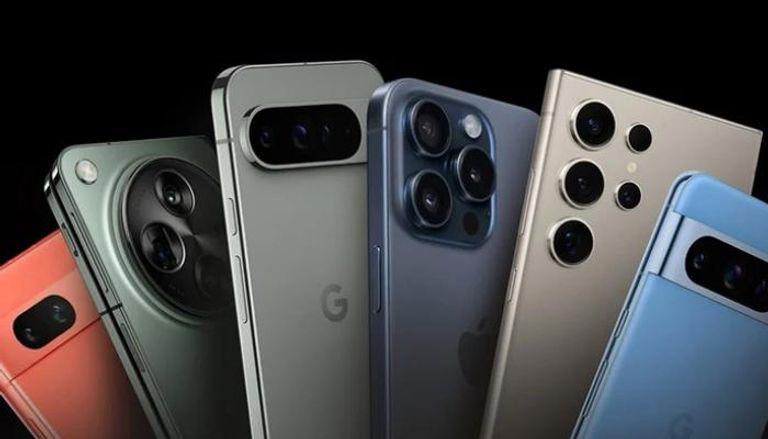
التكنولوجيا اصبحت تتسارع عبر الزمن وتسبقه بخطوة حيث انها أصبحت تلعب دورًا مهماً في إعادة تشكيل عالم التصوير، فلم تعد الهواتف الذكية مجرد أدوات للتواصل الاجتماعي فقط يل تحولت إلى منصات تصوير متطورة تنافس الكاميرات الاحترافية في العديد من الجوانب.
أكد الأستاذ مجدي إبراهيم، رئيس قسم التصوير وشعبة المصورين الصحفيين، أن دخول التكنولوجيا الحديثة في الهواتف الذكية له تأثير كبيرا جدا ومهم وشكل عامل ضغط كبير على الكاميرات لكن التكنولوجيا اثرت ايضا وطورت الكاميرات الاحترافية بشكل متسارع.
أوضح إبراهيم، أن إدخال الذكاء الاصطناعي (AI) في الكاميرات الاحترافية، فإننا نشهد تحولات كبيرة في جودة التصوير. لكنه أضاف أيضًا أن الهواتف الذكية تتقدم بخطى سريعة جدًا، حيث اصبح بإمكانها تقديم صور ومقاطع فيديو بجودة فائقة، مدعومة بتقنيات الذكاء الاصطناعي، ومعالجة الصور المتقدمة، ومستشعرات أكثر تطورًا
هواتف بكاميرات احترافية
بينما يري الأستاذ أمير أيمن، مصور محترف، الي أن الهواتف الذكية في وقتنا هذا تأتي بكاميرات قوية يوجد بها مستشعرات كبيرة وعدسات متنوعة (واسعة، تيليفوتو، ماكرو)، فأصبح من السهل تصوير أي شيء بجودة عالية بدون الاحتياج لكاميرا احترافية.
أضاف أيمن، أن الذكاء الاصطناعي أصبح يفعل كل شيء بسهولة مثلاً : الهاتف يحلل الصورة ويعدل الألوان والإضاءة تلقائيًا لكي تصبح بأفضل شكل، حتى في الليل أو الإضاءة الضعيفة، ميزة العزل في صور البورتريه وتحسين الصور تلقائيًا اصبحت تنافس الكاميرات الاحترافية.
اتفقا الطرفان علي، أن المستقبل قد يشهد استخدام الهواتف الذكية في تصوير البرامج لتلفزيونية والمسلسلات والأفلام السينمائية، حيث أصبح التطور الكبير لهذه الأجهزة يمكنها من التنافس مع الكاميرات الاحترافية، خاصة مع تحسينات البرمجيات وتقنيات التصوير التي تعالج الصور بشكل فوري وتعزز الجودة بطريقة لا يمكن للكاميرات التقليدية مجاراتها بسهولة .
يري الطرفان، أن الهواتف الذكية لن تحل محل الكاميرات الاحترافية بشكل كامل، ولكن يمكن أن تتوسع مجالات استخدامها لتشمل مجالات كانت في السابق مقتصره على المعدات لسينمائية المتخصصة. فمن خلال تحسينات مثل التصوير بتقنية HDR ، ومستشعرات الليزر للتركيز التلقائي، والقدرة على التصوير في ظروف إضاءة منخفضة، أصبحت الهواتف تقدم حلولًا عملية وسريعة يمكن الاعتماد عليها في العديد من الاستخدامات الاحترافية، مما قد جعلها الخيار الأول للعديد من المصورين وصناع المحتوى في المستقبل القريب .
كل هذه العوامل جعلت التصوير بالهواتف الذكية يتفوق في كثير من الجوانب، حيث أصبح جمع بين الجودة والسرعة في الإنتاج، وسهولة التعديل، والإمكانيات المتطورة، مما يفتح لمجال أمام المزيد من الابتكار والإبداع في عالم التصوير.
امثلة عن افلام وجمل اعلانية تم تصويرها بالموبايل :
Apple – “Shot on iPhone” Campaign .1
حملة إعلانية ضخمة أطلقتها آبل، تضمنت مقاطع فيديو وصور مذهلة تم تصويرها بالكامل باستخدام آيفون، وأثبتت أن الهاتف قادر على إنتاج محتوى احترافي.