<?php
/**
 * Cookie storage object
 *
 * @package Requests\Cookies
 */

namespace WpOrg\Requests;

use WpOrg\Requests\Exception\InvalidArgument;
use WpOrg\Requests\Iri;
use WpOrg\Requests\Response\Headers;
use WpOrg\Requests\Utility\CaseInsensitiveDictionary;
use WpOrg\Requests\Utility\InputValidator;

/**
 * Cookie storage object
 *
 * @package Requests\Cookies
 */
class Cookie {
	/**
	 * Cookie name.
	 *
	 * @var string
	 */
	public $name;

	/**
	 * Cookie value.
	 *
	 * @var string
	 */
	public $value;

	/**
	 * Cookie attributes
	 *
	 * Valid keys are `'path'`, `'domain'`, `'expires'`, `'max-age'`, `'secure'` and
	 * `'httponly'`.
	 *
	 * @var \WpOrg\Requests\Utility\CaseInsensitiveDictionary|array Array-like object
	 */
	public $attributes = [];

	/**
	 * Cookie flags
	 *
	 * Valid keys are `'creation'`, `'last-access'`, `'persistent'` and `'host-only'`.
	 *
	 * @var array
	 */
	public $flags = [];

	/**
	 * Reference time for relative calculations
	 *
	 * This is used in place of `time()` when calculating Max-Age expiration and
	 * checking time validity.
	 *
	 * @var int
	 */
	public $reference_time = 0;

	/**
	 * Create a new cookie object
	 *
	 * @param string                                                  $name           The name of the cookie.
	 * @param string                                                  $value          The value for the cookie.
	 * @param array|\WpOrg\Requests\Utility\CaseInsensitiveDictionary $attributes Associative array of attribute data
	 * @param array                                                   $flags          The flags for the cookie.
	 *                                                                                Valid keys are `'creation'`, `'last-access'`,
	 *                                                                                `'persistent'` and `'host-only'`.
	 * @param int|null                                                $reference_time Reference time for relative calculations.
	 *
	 * @throws \WpOrg\Requests\Exception\InvalidArgument When the passed $name argument is not a string.
	 * @throws \WpOrg\Requests\Exception\InvalidArgument When the passed $value argument is not a string.
	 * @throws \WpOrg\Requests\Exception\InvalidArgument When the passed $attributes argument is not an array or iterable object with array access.
	 * @throws \WpOrg\Requests\Exception\InvalidArgument When the passed $flags argument is not an array.
	 * @throws \WpOrg\Requests\Exception\InvalidArgument When the passed $reference_time argument is not an integer or null.
	 */
	public function __construct($name, $value, $attributes = [], $flags = [], $reference_time = null) {
		if (is_string($name) === false) {
			throw InvalidArgument::create(1, '$name', 'string', gettype($name));
		}

		if (is_string($value) === false) {
			throw InvalidArgument::create(2, '$value', 'string', gettype($value));
		}

		if (InputValidator::has_array_access($attributes) === false || InputValidator::is_iterable($attributes) === false) {
			throw InvalidArgument::create(3, '$attributes', 'array|ArrayAccess&Traversable', gettype($attributes));
		}

		if (is_array($flags) === false) {
			throw InvalidArgument::create(4, '$flags', 'array', gettype($flags));
		}

		if ($reference_time !== null && is_int($reference_time) === false) {
			throw InvalidArgument::create(5, '$reference_time', 'integer|null', gettype($reference_time));
		}

		$this->name       = $name;
		$this->value      = $value;
		$this->attributes = $attributes;
		$default_flags    = [
			'creation'    => time(),
			'last-access' => time(),
			'persistent'  => false,
			'host-only'   => true,
		];
		$this->flags      = array_merge($default_flags, $flags);

		$this->reference_time = time();
		if ($reference_time !== null) {
			$this->reference_time = $reference_time;
		}

		$this->normalize();
	}

	/**
	 * Get the cookie value
	 *
	 * Attributes and other data can be accessed via methods.
	 */
	public function __toString() {
		return $this->value;
	}

	/**
	 * Check if a cookie is expired.
	 *
	 * Checks the age against $this->reference_time to determine if the cookie
	 * is expired.
	 *
	 * @return boolean True if expired, false if time is valid.
	 */
	public function is_expired() {
		// RFC6265, s. 4.1.2.2:
		// If a cookie has both the Max-Age and the Expires attribute, the Max-
		// Age attribute has precedence and controls the expiration date of the
		// cookie.
		if (isset($this->attributes['max-age'])) {
			$max_age = $this->attributes['max-age'];
			return $max_age < $this->reference_time;
		}

		if (isset($this->attributes['expires'])) {
			$expires = $this->attributes['expires'];
			return $expires < $this->reference_time;
		}

		return false;
	}

	/**
	 * Check if a cookie is valid for a given URI
	 *
	 * @param \WpOrg\Requests\Iri $uri URI to check
	 * @return boolean Whether the cookie is valid for the given URI
	 */
	public function uri_matches(Iri $uri) {
		if (!$this->domain_matches($uri->host)) {
			return false;
		}

		if (!$this->path_matches($uri->path)) {
			return false;
		}

		return empty($this->attributes['secure']) || $uri->scheme === 'https';
	}

	/**
	 * Check if a cookie is valid for a given domain
	 *
	 * @param string $domain Domain to check
	 * @return boolean Whether the cookie is valid for the given domain
	 */
	public function domain_matches($domain) {
		if (is_string($domain) === false) {
			return false;
		}

		if (!isset($this->attributes['domain'])) {
			// Cookies created manually; cookies created by Requests will set
			// the domain to the requested domain
			return true;
		}

		$cookie_domain = $this->attributes['domain'];
		if ($cookie_domain === $domain) {
			// The cookie domain and the passed domain are identical.
			return true;
		}

		// If the cookie is marked as host-only and we don't have an exact
		// match, reject the cookie
		if ($this->flags['host-only'] === true) {
			return false;
		}

		if (strlen($domain) <= strlen($cookie_domain)) {
			// For obvious reasons, the cookie domain cannot be a suffix if the passed domain
			// is shorter than the cookie domain
			return false;
		}

		if (substr($domain, -1 * strlen($cookie_domain)) !== $cookie_domain) {
			// The cookie domain should be a suffix of the passed domain.
			return false;
		}

		$prefix = substr($domain, 0, strlen($domain) - strlen($cookie_domain));
		if (substr($prefix, -1) !== '.') {
			// The last character of the passed domain that is not included in the
			// domain string should be a %x2E (".") character.
			return false;
		}

		// The passed domain should be a host name (i.e., not an IP address).
		return !preg_match('#^(.+\.)\d{1,3}\.\d{1,3}\.\d{1,3}\.\d{1,3}$#', $domain);
	}

	/**
	 * Check if a cookie is valid for a given path
	 *
	 * From the path-match check in RFC 6265 section 5.1.4
	 *
	 * @param string $request_path Path to check
	 * @return boolean Whether the cookie is valid for the given path
	 */
	public function path_matches($request_path) {
		if (empty($request_path)) {
			// Normalize empty path to root
			$request_path = '/';
		}

		if (!isset($this->attributes['path'])) {
			// Cookies created manually; cookies created by Requests will set
			// the path to the requested path
			return true;
		}

		if (is_scalar($request_path) === false) {
			return false;
		}

		$cookie_path = $this->attributes['path'];

		if ($cookie_path === $request_path) {
			// The cookie-path and the request-path are identical.
			return true;
		}

		if (strlen($request_path) > strlen($cookie_path) && substr($request_path, 0, strlen($cookie_path)) === $cookie_path) {
			if (substr($cookie_path, -1) === '/') {
				// The cookie-path is a prefix of the request-path, and the last
				// character of the cookie-path is %x2F ("/").
				return true;
			}

			if (substr($request_path, strlen($cookie_path), 1) === '/') {
				// The cookie-path is a prefix of the request-path, and the
				// first character of the request-path that is not included in
				// the cookie-path is a %x2F ("/") character.
				return true;
			}
		}

		return false;
	}

	/**
	 * Normalize cookie and attributes
	 *
	 * @return boolean Whether the cookie was successfully normalized
	 */
	public function normalize() {
		foreach ($this->attributes as $key => $value) {
			$orig_value = $value;

			if (is_string($key)) {
				$value = $this->normalize_attribute($key, $value);
			}

			if ($value === null) {
				unset($this->attributes[$key]);
				continue;
			}

			if ($value !== $orig_value) {
				$this->attributes[$key] = $value;
			}
		}

		return true;
	}

	/**
	 * Parse an individual cookie attribute
	 *
	 * Handles parsing individual attributes from the cookie values.
	 *
	 * @param string $name Attribute name
	 * @param string|int|bool $value Attribute value (string/integer value, or true if empty/flag)
	 * @return mixed Value if available, or null if the attribute value is invalid (and should be skipped)
	 */
	protected function normalize_attribute($name, $value) {
		switch (strtolower($name)) {
			case 'expires':
				// Expiration parsing, as per RFC 6265 section 5.2.1
				if (is_int($value)) {
					return $value;
				}

				$expiry_time = strtotime($value);
				if ($expiry_time === false) {
					return null;
				}

				return $expiry_time;

			case 'max-age':
				// Expiration parsing, as per RFC 6265 section 5.2.2
				if (is_int($value)) {
					return $value;
				}

				// Check that we have a valid age
				if (!preg_match('/^-?\d+$/', $value)) {
					return null;
				}

				$delta_seconds = (int) $value;
				if ($delta_seconds <= 0) {
					$expiry_time = 0;
				} else {
					$expiry_time = $this->reference_time + $delta_seconds;
				}

				return $expiry_time;

			case 'domain':
				// Domains are not required as per RFC 6265 section 5.2.3
				if (empty($value)) {
					return null;
				}

				// Domain normalization, as per RFC 6265 section 5.2.3
				if ($value[0] === '.') {
					$value = substr($value, 1);
				}

				return $value;

			default:
				return $value;
		}
	}

	/**
	 * Format a cookie for a Cookie header
	 *
	 * This is used when sending cookies to a server.
	 *
	 * @return string Cookie formatted for Cookie header
	 */
	public function format_for_header() {
		return sprintf('%s=%s', $this->name, $this->value);
	}

	/**
	 * Format a cookie for a Set-Cookie header
	 *
	 * This is used when sending cookies to clients. This isn't really
	 * applicable to client-side usage, but might be handy for debugging.
	 *
	 * @return string Cookie formatted for Set-Cookie header
	 */
	public function format_for_set_cookie() {
		$header_value = $this->format_for_header();
		if (!empty($this->attributes)) {
			$parts = [];
			foreach ($this->attributes as $key => $value) {
				// Ignore non-associative attributes
				if (is_numeric($key)) {
					$parts[] = $value;
				} else {
					$parts[] = sprintf('%s=%s', $key, $value);
				}
			}

			$header_value .= '; ' . implode('; ', $parts);
		}

		return $header_value;
	}

	/**
	 * Parse a cookie string into a cookie object
	 *
	 * Based on Mozilla's parsing code in Firefox and related projects, which
	 * is an intentional deviation from RFC 2109 and RFC 2616. RFC 6265
	 * specifies some of this handling, but not in a thorough manner.
	 *
	 * @param string $cookie_header Cookie header value (from a Set-Cookie header)
	 * @param string $name
	 * @param int|null $reference_time
	 * @return \WpOrg\Requests\Cookie Parsed cookie object
	 *
	 * @throws \WpOrg\Requests\Exception\InvalidArgument When the passed $cookie_header argument is not a string.
	 * @throws \WpOrg\Requests\Exception\InvalidArgument When the passed $name argument is not a string.
	 */
	public static function parse($cookie_header, $name = '', $reference_time = null) {
		if (is_string($cookie_header) === false) {
			throw InvalidArgument::create(1, '$cookie_header', 'string', gettype($cookie_header));
		}

		if (is_string($name) === false) {
			throw InvalidArgument::create(2, '$name', 'string', gettype($name));
		}

		$parts   = explode(';', $cookie_header);
		$kvparts = array_shift($parts);

		if (!empty($name)) {
			$value = $cookie_header;
		} elseif (strpos($kvparts, '=') === false) {
			// Some sites might only have a value without the equals separator.
			// Deviate from RFC 6265 and pretend it was actually a blank name
			// (`=foo`)
			//
			// https://bugzilla.mozilla.org/show_bug.cgi?id=169091
			$name  = '';
			$value = $kvparts;
		} else {
			list($name, $value) = explode('=', $kvparts, 2);
		}

		$name  = trim($name);
		$value = trim($value);

		// Attribute keys are handled case-insensitively
		$attributes = new CaseInsensitiveDictionary();

		if (!empty($parts)) {
			foreach ($parts as $part) {
				if (strpos($part, '=') === false) {
					$part_key   = $part;
					$part_value = true;
				} else {
					list($part_key, $part_value) = explode('=', $part, 2);
					$part_value                  = trim($part_value);
				}

				$part_key              = trim($part_key);
				$attributes[$part_key] = $part_value;
			}
		}

		return new static($name, $value, $attributes, [], $reference_time);
	}

	/**
	 * Parse all Set-Cookie headers from request headers
	 *
	 * @param \WpOrg\Requests\Response\Headers $headers Headers to parse from
	 * @param \WpOrg\Requests\Iri|null $origin URI for comparing cookie origins
	 * @param int|null $time Reference time for expiration calculation
	 * @return array
	 *
	 * @throws \WpOrg\Requests\Exception\InvalidArgument When the passed $origin argument is not null or an instance of the Iri class.
	 */
	public static function parse_from_headers(Headers $headers, $origin = null, $time = null) {
		$cookie_headers = $headers->getValues('Set-Cookie');
		if (empty($cookie_headers)) {
			return [];
		}

		if ($origin !== null && !($origin instanceof Iri)) {
			throw InvalidArgument::create(2, '$origin', Iri::class . ' or null', gettype($origin));
		}

		$cookies = [];
		foreach ($cookie_headers as $header) {
			$parsed = self::parse($header, '', $time);

			// Default domain/path attributes
			if (empty($parsed->attributes['domain']) && !empty($origin)) {
				$parsed->attributes['domain'] = $origin->host;
				$parsed->flags['host-only']   = true;
			} else {
				$parsed->flags['host-only'] = false;
			}

			$path_is_valid = (!empty($parsed->attributes['path']) && $parsed->attributes['path'][0] === '/');
			if (!$path_is_valid && !empty($origin)) {
				$path = $origin->path;

				// Default path normalization as per RFC 6265 section 5.1.4
				if (substr($path, 0, 1) !== '/') {
					// If the uri-path is empty or if the first character of
					// the uri-path is not a %x2F ("/") character, output
					// %x2F ("/") and skip the remaining steps.
					$path = '/';
				} elseif (substr_count($path, '/') === 1) {
					// If the uri-path contains no more than one %x2F ("/")
					// character, output %x2F ("/") and skip the remaining
					// step.
					$path = '/';
				} else {
					// Output the characters of the uri-path from the first
					// character up to, but not including, the right-most
					// %x2F ("/").
					$path = substr($path, 0, strrpos($path, '/'));
				}

				$parsed->attributes['path'] = $path;
			}

			// Reject invalid cookie domains
			if (!empty($origin) && !$parsed->domain_matches($origin->host)) {
				continue;
			}

			$cookies[$parsed->name] = $parsed;
		}

		return $cookies;
	}
}
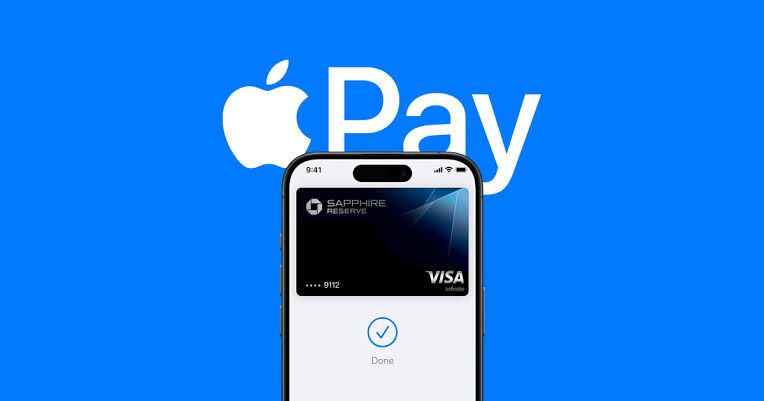
التطور التكنولوجي بات ينتشر بسرعة كبيرة وانتشر مع تطور أنظمة الدفع وأصبح دفع إلكتروني مثل Apple payوالتطبيقات المصرفية، لم يعد الدفع مجرد عملية اقتصادية، بل أصبح تجربة نفسية مختلفه تمامًا عن الدفع النقدي. أحد أبرز التغيرات التي أحدثها الدفع الإلكتروني وهو لحد من الم الدفع، حيث لم يعد الشخص يشعر بانه يحمل المال أو ينفقه، بل تتم العملية لمسة زر واحدة.
أوضح احد الأطباء النفسيين، أن عملية الدفع الإلكترونية عبر منصات مختلفة و اشهرها في وقتنا هذا Apple pay، من الناحية النفسية فهي تقلل من ألم الدفع النقدي الملموس، وتابع فالشخص الذي يبادر بالدفع النقدي يمكن أن يري أمواله وهي تناقص مما يعزز من شعورك بخساره المال وألم الدفع، لاكن الدفع الإلكتروني في ظل طور التكنولوجيا جعل هذه العملية اسهل و اسرع حيث أن هذه المنصات حَدت من الشعور المباشر بالإنفاق.
مضيفا، أن المستهلكين الذين يستخدمون الدفع غير النقدي ينفقون أكثر مقارنة بمن يعتمدون على الدفع النقدي، لأنهم لا يشعرون بمدى الإنفاق بنفس الطريقة، ومع غياب الشعور الفوري بالخسارة، يصبح الشخص أكثر عرضة لشراء أشياء لم يكن يخطط لها او لمجرد الشراء، ومن ناحية أخري ارتفاع مستوي الإنفاق بمعني أن الأشخاص الذين يدفعون إلكترونيا يميلون إلى إنفاق أكثر من لذين يدفعون نقدًا.
تعزيز الأمان المالي
ومن جانبه أكد خالد الشافعي خبير اقتصادي، أن الدفع الإلكتروني يؤثر في الاقتصاد بشكل عام بالإيجاب من زاوية حصر كل التعاملات التي تتم داخل السوق المصرفية متابعا، أنه من الناحية المالية، تتيح له تجنب حمل النقود باستمرار، مما يقلل من مخاطر التعرض للسرقة، كما تعزز مستوى الأمان والاطمئنان في تعاملاته اليومية.
أوضح الشافعي، أن الدفع الإلكتروني من خلال “أبل باي” يعتمد بشكل أساسي على المحفظة المالية لشخصية، حيث يكون الفرد هو المسؤول عن إدارتها، سواء كان ذلك من خلال راتبه، مكافآته، أو أي صدر دخل آخر. ومع ذلك، من الضروري الانتباه إلى أن سهولة الدفع الإلكتروني قد تودي إلى الانفاق غير المحسوب، خاصة وأن العملية لا تتطلب سوى ضغطة زر على الهاتف لتحويل الأموال وإتمام المعاملات.
لذلك، من المهم توعية الأفراد بضرورة التحكم في نفقاتهم وعدم التسرع في الإنفاق لمجرد سهولة العملية.كما يجب إطلاق برامج توعية لحماية المستهلكين من خطر الإدمان على الدفع الإلكتروني، إلى جانب التحذير من آثاره السلبية على الإدارة المالية الشخصية والاستقرار الاقتصادي للفرد.
بينما قالت أحد مستخدمي نظام “Apple pay” أنه أصبح دفع النقود أسهل بكثير، ولم أعد شعر بأنني أنفق الكثير من المال على عكس الدفع النقدي،فعندما أخرج المال من محفظتي، أشعر أن المال يتناقص بشكل كبير و متزايد، مما جعلني أكثر حذر في الانفاق، وفي بعض الاوقات اشعر بالانزعاج لأنني قد لا اتمكن من شراء اشياء اخرى خلال اليوم.
لذلك، من المهم تعزيز الثقافة المالية وتوعية الأفراد بمخاطر الإنفاق المستمر بشكل مبالغ فيه، حتى لا تتحول سهولة الدفع الإلكتروني إلى عبء مالي. فالتكنولوجيا اداة قوية، لكن حسن استخدامها هو ما يحدد تأثيرها على الاستقرار المالي للفرد والمجتمع.