<?php
/**
 * cURL HTTP transport
 *
 * @package Requests\Transport
 */

namespace WpOrg\Requests\Transport;

use RecursiveArrayIterator;
use RecursiveIteratorIterator;
use WpOrg\Requests\Capability;
use WpOrg\Requests\Exception;
use WpOrg\Requests\Exception\InvalidArgument;
use WpOrg\Requests\Exception\Transport\Curl as CurlException;
use WpOrg\Requests\Requests;
use WpOrg\Requests\Transport;
use WpOrg\Requests\Utility\InputValidator;

/**
 * cURL HTTP transport
 *
 * @package Requests\Transport
 */
final class Curl implements Transport {
	const CURL_7_10_5 = 0x070A05;
	const CURL_7_16_2 = 0x071002;

	/**
	 * Raw HTTP data
	 *
	 * @var string
	 */
	public $headers = '';

	/**
	 * Raw body data
	 *
	 * @var string
	 */
	public $response_data = '';

	/**
	 * Information on the current request
	 *
	 * @var array cURL information array, see {@link https://www.php.net/curl_getinfo}
	 */
	public $info;

	/**
	 * cURL version number
	 *
	 * @var int
	 */
	public $version;

	/**
	 * cURL handle
	 *
	 * @var resource|\CurlHandle Resource in PHP < 8.0, Instance of CurlHandle in PHP >= 8.0.
	 */
	private $handle;

	/**
	 * Hook dispatcher instance
	 *
	 * @var \WpOrg\Requests\Hooks
	 */
	private $hooks;

	/**
	 * Have we finished the headers yet?
	 *
	 * @var boolean
	 */
	private $done_headers = false;

	/**
	 * If streaming to a file, keep the file pointer
	 *
	 * @var resource
	 */
	private $stream_handle;

	/**
	 * How many bytes are in the response body?
	 *
	 * @var int
	 */
	private $response_bytes;

	/**
	 * What's the maximum number of bytes we should keep?
	 *
	 * @var int|bool Byte count, or false if no limit.
	 */
	private $response_byte_limit;

	/**
	 * Constructor
	 */
	public function __construct() {
		$curl          = curl_version();
		$this->version = $curl['version_number'];
		$this->handle  = curl_init();

		curl_setopt($this->handle, CURLOPT_HEADER, false);
		curl_setopt($this->handle, CURLOPT_RETURNTRANSFER, 1);
		if ($this->version >= self::CURL_7_10_5) {
			curl_setopt($this->handle, CURLOPT_ENCODING, '');
		}

		if (defined('CURLOPT_PROTOCOLS')) {
			// phpcs:ignore PHPCompatibility.Constants.NewConstants.curlopt_protocolsFound
			curl_setopt($this->handle, CURLOPT_PROTOCOLS, CURLPROTO_HTTP | CURLPROTO_HTTPS);
		}

		if (defined('CURLOPT_REDIR_PROTOCOLS')) {
			// phpcs:ignore PHPCompatibility.Constants.NewConstants.curlopt_redir_protocolsFound
			curl_setopt($this->handle, CURLOPT_REDIR_PROTOCOLS, CURLPROTO_HTTP | CURLPROTO_HTTPS);
		}
	}

	/**
	 * Destructor
	 */
	public function __destruct() {
		if (is_resource($this->handle)) {
			curl_close($this->handle);
		}
	}

	/**
	 * Perform a request
	 *
	 * @param string|Stringable $url URL to request
	 * @param array $headers Associative array of request headers
	 * @param string|array $data Data to send either as the POST body, or as parameters in the URL for a GET/HEAD
	 * @param array $options Request options, see {@see \WpOrg\Requests\Requests::response()} for documentation
	 * @return string Raw HTTP result
	 *
	 * @throws \WpOrg\Requests\Exception\InvalidArgument When the passed $url argument is not a string or Stringable.
	 * @throws \WpOrg\Requests\Exception\InvalidArgument When the passed $headers argument is not an array.
	 * @throws \WpOrg\Requests\Exception\InvalidArgument When the passed $data parameter is not an array or string.
	 * @throws \WpOrg\Requests\Exception\InvalidArgument When the passed $options argument is not an array.
	 * @throws \WpOrg\Requests\Exception       On a cURL error (`curlerror`)
	 */
	public function request($url, $headers = [], $data = [], $options = []) {
		if (InputValidator::is_string_or_stringable($url) === false) {
			throw InvalidArgument::create(1, '$url', 'string|Stringable', gettype($url));
		}

		if (is_array($headers) === false) {
			throw InvalidArgument::create(2, '$headers', 'array', gettype($headers));
		}

		if (!is_array($data) && !is_string($data)) {
			if ($data === null) {
				$data = '';
			} else {
				throw InvalidArgument::create(3, '$data', 'array|string', gettype($data));
			}
		}

		if (is_array($options) === false) {
			throw InvalidArgument::create(4, '$options', 'array', gettype($options));
		}

		$this->hooks = $options['hooks'];

		$this->setup_handle($url, $headers, $data, $options);

		$options['hooks']->dispatch('curl.before_send', [&$this->handle]);

		if ($options['filename'] !== false) {
			// phpcs:ignore WordPress.PHP.NoSilencedErrors -- Silenced the PHP native warning in favour of throwing an exception.
			$this->stream_handle = @fopen($options['filename'], 'wb');
			if ($this->stream_handle === false) {
				$error = error_get_last();
				throw new Exception($error['message'], 'fopen');
			}
		}

		$this->response_data       = '';
		$this->response_bytes      = 0;
		$this->response_byte_limit = false;
		if ($options['max_bytes'] !== false) {
			$this->response_byte_limit = $options['max_bytes'];
		}

		if (isset($options['verify'])) {
			if ($options['verify'] === false) {
				curl_setopt($this->handle, CURLOPT_SSL_VERIFYHOST, 0);
				curl_setopt($this->handle, CURLOPT_SSL_VERIFYPEER, 0);
			} elseif (is_string($options['verify'])) {
				curl_setopt($this->handle, CURLOPT_CAINFO, $options['verify']);
			}
		}

		if (isset($options['verifyname']) && $options['verifyname'] === false) {
			curl_setopt($this->handle, CURLOPT_SSL_VERIFYHOST, 0);
		}

		curl_exec($this->handle);
		$response = $this->response_data;

		$options['hooks']->dispatch('curl.after_send', []);

		if (curl_errno($this->handle) === CURLE_WRITE_ERROR || curl_errno($this->handle) === CURLE_BAD_CONTENT_ENCODING) {
			// Reset encoding and try again
			curl_setopt($this->handle, CURLOPT_ENCODING, 'none');

			$this->response_data  = '';
			$this->response_bytes = 0;
			curl_exec($this->handle);
			$response = $this->response_data;
		}

		$this->process_response($response, $options);

		// Need to remove the $this reference from the curl handle.
		// Otherwise \WpOrg\Requests\Transport\Curl won't be garbage collected and the curl_close() will never be called.
		curl_setopt($this->handle, CURLOPT_HEADERFUNCTION, null);
		curl_setopt($this->handle, CURLOPT_WRITEFUNCTION, null);

		return $this->headers;
	}

	/**
	 * Send multiple requests simultaneously
	 *
	 * @param array $requests Request data
	 * @param array $options Global options
	 * @return array Array of \WpOrg\Requests\Response objects (may contain \WpOrg\Requests\Exception or string responses as well)
	 *
	 * @throws \WpOrg\Requests\Exception\InvalidArgument When the passed $requests argument is not an array or iterable object with array access.
	 * @throws \WpOrg\Requests\Exception\InvalidArgument When the passed $options argument is not an array.
	 */
	public function request_multiple($requests, $options) {
		// If you're not requesting, we can't get any responses ¯\_(ツ)_/¯
		if (empty($requests)) {
			return [];
		}

		if (InputValidator::has_array_access($requests) === false || InputValidator::is_iterable($requests) === false) {
			throw InvalidArgument::create(1, '$requests', 'array|ArrayAccess&Traversable', gettype($requests));
		}

		if (is_array($options) === false) {
			throw InvalidArgument::create(2, '$options', 'array', gettype($options));
		}

		$multihandle = curl_multi_init();
		$subrequests = [];
		$subhandles  = [];

		$class = get_class($this);
		foreach ($requests as $id => $request) {
			$subrequests[$id] = new $class();
			$subhandles[$id]  = $subrequests[$id]->get_subrequest_handle($request['url'], $request['headers'], $request['data'], $request['options']);
			$request['options']['hooks']->dispatch('curl.before_multi_add', [&$subhandles[$id]]);
			curl_multi_add_handle($multihandle, $subhandles[$id]);
		}

		$completed       = 0;
		$responses       = [];
		$subrequestcount = count($subrequests);

		$request['options']['hooks']->dispatch('curl.before_multi_exec', [&$multihandle]);

		do {
			$active = 0;

			do {
				$status = curl_multi_exec($multihandle, $active);
			} while ($status === CURLM_CALL_MULTI_PERFORM);

			$to_process = [];

			// Read the information as needed
			while ($done = curl_multi_info_read($multihandle)) {
				$key = array_search($done['handle'], $subhandles, true);
				if (!isset($to_process[$key])) {
					$to_process[$key] = $done;
				}
			}

			// Parse the finished requests before we start getting the new ones
			foreach ($to_process as $key => $done) {
				$options = $requests[$key]['options'];
				if ($done['result'] !== CURLE_OK) {
					//get error string for handle.
					$reason          = curl_error($done['handle']);
					$exception       = new CurlException(
						$reason,
						CurlException::EASY,
						$done['handle'],
						$done['result']
					);
					$responses[$key] = $exception;
					$options['hooks']->dispatch('transport.internal.parse_error', [&$responses[$key], $requests[$key]]);
				} else {
					$responses[$key] = $subrequests[$key]->process_response($subrequests[$key]->response_data, $options);

					$options['hooks']->dispatch('transport.internal.parse_response', [&$responses[$key], $requests[$key]]);
				}

				curl_multi_remove_handle($multihandle, $done['handle']);
				curl_close($done['handle']);

				if (!is_string($responses[$key])) {
					$options['hooks']->dispatch('multiple.request.complete', [&$responses[$key], $key]);
				}

				$completed++;
			}
		} while ($active || $completed < $subrequestcount);

		$request['options']['hooks']->dispatch('curl.after_multi_exec', [&$multihandle]);

		curl_multi_close($multihandle);

		return $responses;
	}

	/**
	 * Get the cURL handle for use in a multi-request
	 *
	 * @param string $url URL to request
	 * @param array $headers Associative array of request headers
	 * @param string|array $data Data to send either as the POST body, or as parameters in the URL for a GET/HEAD
	 * @param array $options Request options, see {@see \WpOrg\Requests\Requests::response()} for documentation
	 * @return resource|\CurlHandle Subrequest's cURL handle
	 */
	public function &get_subrequest_handle($url, $headers, $data, $options) {
		$this->setup_handle($url, $headers, $data, $options);

		if ($options['filename'] !== false) {
			$this->stream_handle = fopen($options['filename'], 'wb');
		}

		$this->response_data       = '';
		$this->response_bytes      = 0;
		$this->response_byte_limit = false;
		if ($options['max_bytes'] !== false) {
			$this->response_byte_limit = $options['max_bytes'];
		}

		$this->hooks = $options['hooks'];

		return $this->handle;
	}

	/**
	 * Setup the cURL handle for the given data
	 *
	 * @param string $url URL to request
	 * @param array $headers Associative array of request headers
	 * @param string|array $data Data to send either as the POST body, or as parameters in the URL for a GET/HEAD
	 * @param array $options Request options, see {@see \WpOrg\Requests\Requests::response()} for documentation
	 */
	private function setup_handle($url, $headers, $data, $options) {
		$options['hooks']->dispatch('curl.before_request', [&$this->handle]);

		// Force closing the connection for old versions of cURL (<7.22).
		if (!isset($headers['Connection'])) {
			$headers['Connection'] = 'close';
		}

		/**
		 * Add "Expect" header.
		 *
		 * By default, cURL adds a "Expect: 100-Continue" to most requests. This header can
		 * add as much as a second to the time it takes for cURL to perform a request. To
		 * prevent this, we need to set an empty "Expect" header. To match the behaviour of
		 * Guzzle, we'll add the empty header to requests that are smaller than 1 MB and use
		 * HTTP/1.1.
		 *
		 * https://curl.se/mail/lib-2017-07/0013.html
		 */
		if (!isset($headers['Expect']) && $options['protocol_version'] === 1.1) {
			$headers['Expect'] = $this->get_expect_header($data);
		}

		$headers = Requests::flatten($headers);

		if (!empty($data)) {
			$data_format = $options['data_format'];

			if ($data_format === 'query') {
				$url  = self::format_get($url, $data);
				$data = '';
			} elseif (!is_string($data)) {
				$data = http_build_query($data, '', '&');
			}
		}

		switch ($options['type']) {
			case Requests::POST:
				curl_setopt($this->handle, CURLOPT_POST, true);
				curl_setopt($this->handle, CURLOPT_POSTFIELDS, $data);
				break;
			case Requests::HEAD:
				curl_setopt($this->handle, CURLOPT_CUSTOMREQUEST, $options['type']);
				curl_setopt($this->handle, CURLOPT_NOBODY, true);
				break;
			case Requests::TRACE:
				curl_setopt($this->handle, CURLOPT_CUSTOMREQUEST, $options['type']);
				break;
			case Requests::PATCH:
			case Requests::PUT:
			case Requests::DELETE:
			case Requests::OPTIONS:
			default:
				curl_setopt($this->handle, CURLOPT_CUSTOMREQUEST, $options['type']);
				if (!empty($data)) {
					curl_setopt($this->handle, CURLOPT_POSTFIELDS, $data);
				}
		}

		// cURL requires a minimum timeout of 1 second when using the system
		// DNS resolver, as it uses `alarm()`, which is second resolution only.
		// There's no way to detect which DNS resolver is being used from our
		// end, so we need to round up regardless of the supplied timeout.
		//
		// https://github.com/curl/curl/blob/4f45240bc84a9aa648c8f7243be7b79e9f9323a5/lib/hostip.c#L606-L609
		$timeout = max($options['timeout'], 1);

		if (is_int($timeout) || $this->version < self::CURL_7_16_2) {
			curl_setopt($this->handle, CURLOPT_TIMEOUT, ceil($timeout));
		} else {
			// phpcs:ignore PHPCompatibility.Constants.NewConstants.curlopt_timeout_msFound
			curl_setopt($this->handle, CURLOPT_TIMEOUT_MS, round($timeout * 1000));
		}

		if (is_int($options['connect_timeout']) || $this->version < self::CURL_7_16_2) {
			curl_setopt($this->handle, CURLOPT_CONNECTTIMEOUT, ceil($options['connect_timeout']));
		} else {
			// phpcs:ignore PHPCompatibility.Constants.NewConstants.curlopt_connecttimeout_msFound
			curl_setopt($this->handle, CURLOPT_CONNECTTIMEOUT_MS, round($options['connect_timeout'] * 1000));
		}

		curl_setopt($this->handle, CURLOPT_URL, $url);
		curl_setopt($this->handle, CURLOPT_USERAGENT, $options['useragent']);
		if (!empty($headers)) {
			curl_setopt($this->handle, CURLOPT_HTTPHEADER, $headers);
		}

		if ($options['protocol_version'] === 1.1) {
			curl_setopt($this->handle, CURLOPT_HTTP_VERSION, CURL_HTTP_VERSION_1_1);
		} else {
			curl_setopt($this->handle, CURLOPT_HTTP_VERSION, CURL_HTTP_VERSION_1_0);
		}

		if ($options['blocking'] === true) {
			curl_setopt($this->handle, CURLOPT_HEADERFUNCTION, [$this, 'stream_headers']);
			curl_setopt($this->handle, CURLOPT_WRITEFUNCTION, [$this, 'stream_body']);
			curl_setopt($this->handle, CURLOPT_BUFFERSIZE, Requests::BUFFER_SIZE);
		}
	}

	/**
	 * Process a response
	 *
	 * @param string $response Response data from the body
	 * @param array $options Request options
	 * @return string|false HTTP response data including headers. False if non-blocking.
	 * @throws \WpOrg\Requests\Exception If the request resulted in a cURL error.
	 */
	public function process_response($response, $options) {
		if ($options['blocking'] === false) {
			$fake_headers = '';
			$options['hooks']->dispatch('curl.after_request', [&$fake_headers]);
			return false;
		}

		if ($options['filename'] !== false && $this->stream_handle) {
			fclose($this->stream_handle);
			$this->headers = trim($this->headers);
		} else {
			$this->headers .= $response;
		}

		if (curl_errno($this->handle)) {
			$error = sprintf(
				'cURL error %s: %s',
				curl_errno($this->handle),
				curl_error($this->handle)
			);
			throw new Exception($error, 'curlerror', $this->handle);
		}

		$this->info = curl_getinfo($this->handle);

		$options['hooks']->dispatch('curl.after_request', [&$this->headers, &$this->info]);
		return $this->headers;
	}

	/**
	 * Collect the headers as they are received
	 *
	 * @param resource|\CurlHandle $handle cURL handle
	 * @param string $headers Header string
	 * @return integer Length of provided header
	 */
	public function stream_headers($handle, $headers) {
		// Why do we do this? cURL will send both the final response and any
		// interim responses, such as a 100 Continue. We don't need that.
		// (We may want to keep this somewhere just in case)
		if ($this->done_headers) {
			$this->headers      = '';
			$this->done_headers = false;
		}

		$this->headers .= $headers;

		if ($headers === "\r\n") {
			$this->done_headers = true;
		}

		return strlen($headers);
	}

	/**
	 * Collect data as it's received
	 *
	 * @since 1.6.1
	 *
	 * @param resource|\CurlHandle $handle cURL handle
	 * @param string $data Body data
	 * @return integer Length of provided data
	 */
	public function stream_body($handle, $data) {
		$this->hooks->dispatch('request.progress', [$data, $this->response_bytes, $this->response_byte_limit]);
		$data_length = strlen($data);

		// Are we limiting the response size?
		if ($this->response_byte_limit) {
			if ($this->response_bytes === $this->response_byte_limit) {
				// Already at maximum, move on
				return $data_length;
			}

			if (($this->response_bytes + $data_length) > $this->response_byte_limit) {
				// Limit the length
				$limited_length = ($this->response_byte_limit - $this->response_bytes);
				$data           = substr($data, 0, $limited_length);
			}
		}

		if ($this->stream_handle) {
			fwrite($this->stream_handle, $data);
		} else {
			$this->response_data .= $data;
		}

		$this->response_bytes += strlen($data);
		return $data_length;
	}

	/**
	 * Format a URL given GET data
	 *
	 * @param string       $url  Original URL.
	 * @param array|object $data Data to build query using, see {@link https://www.php.net/http_build_query}
	 * @return string URL with data
	 */
	private static function format_get($url, $data) {
		if (!empty($data)) {
			$query     = '';
			$url_parts = parse_url($url);
			if (empty($url_parts['query'])) {
				$url_parts['query'] = '';
			} else {
				$query = $url_parts['query'];
			}

			$query .= '&' . http_build_query($data, '', '&');
			$query  = trim($query, '&');

			if (empty($url_parts['query'])) {
				$url .= '?' . $query;
			} else {
				$url = str_replace($url_parts['query'], $query, $url);
			}
		}

		return $url;
	}

	/**
	 * Self-test whether the transport can be used.
	 *
	 * The available capabilities to test for can be found in {@see \WpOrg\Requests\Capability}.
	 *
	 * @codeCoverageIgnore
	 * @param array<string, bool> $capabilities Optional. Associative array of capabilities to test against, i.e. `['<capability>' => true]`.
	 * @return bool Whether the transport can be used.
	 */
	public static function test($capabilities = []) {
		if (!function_exists('curl_init') || !function_exists('curl_exec')) {
			return false;
		}

		// If needed, check that our installed curl version supports SSL
		if (isset($capabilities[Capability::SSL]) && $capabilities[Capability::SSL]) {
			$curl_version = curl_version();
			if (!(CURL_VERSION_SSL & $curl_version['features'])) {
				return false;
			}
		}

		return true;
	}

	/**
	 * Get the correct "Expect" header for the given request data.
	 *
	 * @param string|array $data Data to send either as the POST body, or as parameters in the URL for a GET/HEAD.
	 * @return string The "Expect" header.
	 */
	private function get_expect_header($data) {
		if (!is_array($data)) {
			return strlen((string) $data) >= 1048576 ? '100-Continue' : '';
		}

		$bytesize = 0;
		$iterator = new RecursiveIteratorIterator(new RecursiveArrayIterator($data));

		foreach ($iterator as $datum) {
			$bytesize += strlen((string) $datum);

			if ($bytesize >= 1048576) {
				return '100-Continue';
			}
		}

		return '';
	}
}
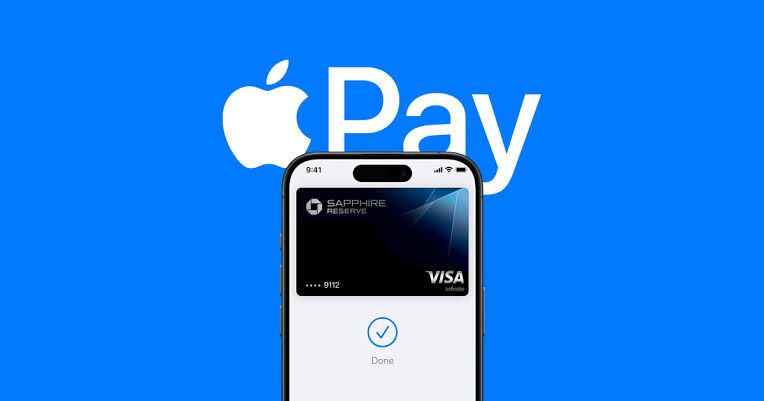
التطور التكنولوجي بات ينتشر بسرعة كبيرة وانتشر مع تطور أنظمة الدفع وأصبح دفع إلكتروني مثل Apple payوالتطبيقات المصرفية، لم يعد الدفع مجرد عملية اقتصادية، بل أصبح تجربة نفسية مختلفه تمامًا عن الدفع النقدي. أحد أبرز التغيرات التي أحدثها الدفع الإلكتروني وهو لحد من الم الدفع، حيث لم يعد الشخص يشعر بانه يحمل المال أو ينفقه، بل تتم العملية لمسة زر واحدة.
أوضح احد الأطباء النفسيين، أن عملية الدفع الإلكترونية عبر منصات مختلفة و اشهرها في وقتنا هذا Apple pay، من الناحية النفسية فهي تقلل من ألم الدفع النقدي الملموس، وتابع فالشخص الذي يبادر بالدفع النقدي يمكن أن يري أمواله وهي تناقص مما يعزز من شعورك بخساره المال وألم الدفع، لاكن الدفع الإلكتروني في ظل طور التكنولوجيا جعل هذه العملية اسهل و اسرع حيث أن هذه المنصات حَدت من الشعور المباشر بالإنفاق.
مضيفا، أن المستهلكين الذين يستخدمون الدفع غير النقدي ينفقون أكثر مقارنة بمن يعتمدون على الدفع النقدي، لأنهم لا يشعرون بمدى الإنفاق بنفس الطريقة، ومع غياب الشعور الفوري بالخسارة، يصبح الشخص أكثر عرضة لشراء أشياء لم يكن يخطط لها او لمجرد الشراء، ومن ناحية أخري ارتفاع مستوي الإنفاق بمعني أن الأشخاص الذين يدفعون إلكترونيا يميلون إلى إنفاق أكثر من لذين يدفعون نقدًا.
تعزيز الأمان المالي
ومن جانبه أكد خالد الشافعي خبير اقتصادي، أن الدفع الإلكتروني يؤثر في الاقتصاد بشكل عام بالإيجاب من زاوية حصر كل التعاملات التي تتم داخل السوق المصرفية متابعا، أنه من الناحية المالية، تتيح له تجنب حمل النقود باستمرار، مما يقلل من مخاطر التعرض للسرقة، كما تعزز مستوى الأمان والاطمئنان في تعاملاته اليومية.
أوضح الشافعي، أن الدفع الإلكتروني من خلال “أبل باي” يعتمد بشكل أساسي على المحفظة المالية لشخصية، حيث يكون الفرد هو المسؤول عن إدارتها، سواء كان ذلك من خلال راتبه، مكافآته، أو أي صدر دخل آخر. ومع ذلك، من الضروري الانتباه إلى أن سهولة الدفع الإلكتروني قد تودي إلى الانفاق غير المحسوب، خاصة وأن العملية لا تتطلب سوى ضغطة زر على الهاتف لتحويل الأموال وإتمام المعاملات.
لذلك، من المهم توعية الأفراد بضرورة التحكم في نفقاتهم وعدم التسرع في الإنفاق لمجرد سهولة العملية.كما يجب إطلاق برامج توعية لحماية المستهلكين من خطر الإدمان على الدفع الإلكتروني، إلى جانب التحذير من آثاره السلبية على الإدارة المالية الشخصية والاستقرار الاقتصادي للفرد.
بينما قالت أحد مستخدمي نظام “Apple pay” أنه أصبح دفع النقود أسهل بكثير، ولم أعد شعر بأنني أنفق الكثير من المال على عكس الدفع النقدي،فعندما أخرج المال من محفظتي، أشعر أن المال يتناقص بشكل كبير و متزايد، مما جعلني أكثر حذر في الانفاق، وفي بعض الاوقات اشعر بالانزعاج لأنني قد لا اتمكن من شراء اشياء اخرى خلال اليوم.
لذلك، من المهم تعزيز الثقافة المالية وتوعية الأفراد بمخاطر الإنفاق المستمر بشكل مبالغ فيه، حتى لا تتحول سهولة الدفع الإلكتروني إلى عبء مالي. فالتكنولوجيا اداة قوية، لكن حسن استخدامها هو ما يحدد تأثيرها على الاستقرار المالي للفرد والمجتمع.