/******/ (() => { // webpackBootstrap
/******/ 	"use strict";
/******/ 	// The require scope
/******/ 	var __webpack_require__ = {};
/******/
/************************************************************************/
/******/ 	/* webpack/runtime/define property getters */
/******/ 	(() => {
/******/ 		// define getter functions for harmony exports
/******/ 		__webpack_require__.d = (exports, definition) => {
/******/ 			for(var key in definition) {
/******/ 				if(__webpack_require__.o(definition, key) && !__webpack_require__.o(exports, key)) {
/******/ 					Object.defineProperty(exports, key, { enumerable: true, get: definition[key] });
/******/ 				}
/******/ 			}
/******/ 		};
/******/ 	})();
/******/
/******/ 	/* webpack/runtime/hasOwnProperty shorthand */
/******/ 	(() => {
/******/ 		__webpack_require__.o = (obj, prop) => (Object.prototype.hasOwnProperty.call(obj, prop))
/******/ 	})();
/******/
/************************************************************************/
var __webpack_exports__ = {};

// EXPORTS
__webpack_require__.d(__webpack_exports__, {
  "default": () => (/* binding */ build_module)
});

// UNUSED EXPORTS: attrs, fromMatch, next, regexp, replace, string

;// ./node_modules/memize/dist/index.js
/**
 * Memize options object.
 *
 * @typedef MemizeOptions
 *
 * @property {number} [maxSize] Maximum size of the cache.
 */

/**
 * Internal cache entry.
 *
 * @typedef MemizeCacheNode
 *
 * @property {?MemizeCacheNode|undefined} [prev] Previous node.
 * @property {?MemizeCacheNode|undefined} [next] Next node.
 * @property {Array<*>}                   args   Function arguments for cache
 *                                               entry.
 * @property {*}                          val    Function result.
 */

/**
 * Properties of the enhanced function for controlling cache.
 *
 * @typedef MemizeMemoizedFunction
 *
 * @property {()=>void} clear Clear the cache.
 */

/**
 * Accepts a function to be memoized, and returns a new memoized function, with
 * optional options.
 *
 * @template {(...args: any[]) => any} F
 *
 * @param {F}             fn        Function to memoize.
 * @param {MemizeOptions} [options] Options object.
 *
 * @return {((...args: Parameters<F>) => ReturnType<F>) & MemizeMemoizedFunction} Memoized function.
 */
function memize(fn, options) {
	var size = 0;

	/** @type {?MemizeCacheNode|undefined} */
	var head;

	/** @type {?MemizeCacheNode|undefined} */
	var tail;

	options = options || {};

	function memoized(/* ...args */) {
		var node = head,
			len = arguments.length,
			args,
			i;

		searchCache: while (node) {
			// Perform a shallow equality test to confirm that whether the node
			// under test is a candidate for the arguments passed. Two arrays
			// are shallowly equal if their length matches and each entry is
			// strictly equal between the two sets. Avoid abstracting to a
			// function which could incur an arguments leaking deoptimization.

			// Check whether node arguments match arguments length
			if (node.args.length !== arguments.length) {
				node = node.next;
				continue;
			}

			// Check whether node arguments match arguments values
			for (i = 0; i < len; i++) {
				if (node.args[i] !== arguments[i]) {
					node = node.next;
					continue searchCache;
				}
			}

			// At this point we can assume we've found a match

			// Surface matched node to head if not already
			if (node !== head) {
				// As tail, shift to previous. Must only shift if not also
				// head, since if both head and tail, there is no previous.
				if (node === tail) {
					tail = node.prev;
				}

				// Adjust siblings to point to each other. If node was tail,
				// this also handles new tail's empty `next` assignment.
				/** @type {MemizeCacheNode} */ (node.prev).next = node.next;
				if (node.next) {
					node.next.prev = node.prev;
				}

				node.next = head;
				node.prev = null;
				/** @type {MemizeCacheNode} */ (head).prev = node;
				head = node;
			}

			// Return immediately
			return node.val;
		}

		// No cached value found. Continue to insertion phase:

		// Create a copy of arguments (avoid leaking deoptimization)
		args = new Array(len);
		for (i = 0; i < len; i++) {
			args[i] = arguments[i];
		}

		node = {
			args: args,

			// Generate the result from original function
			val: fn.apply(null, args),
		};

		// Don't need to check whether node is already head, since it would
		// have been returned above already if it was

		// Shift existing head down list
		if (head) {
			head.prev = node;
			node.next = head;
		} else {
			// If no head, follows that there's no tail (at initial or reset)
			tail = node;
		}

		// Trim tail if we're reached max size and are pending cache insertion
		if (size === /** @type {MemizeOptions} */ (options).maxSize) {
			tail = /** @type {MemizeCacheNode} */ (tail).prev;
			/** @type {MemizeCacheNode} */ (tail).next = null;
		} else {
			size++;
		}

		head = node;

		return node.val;
	}

	memoized.clear = function () {
		head = null;
		tail = null;
		size = 0;
	};

	// Ignore reason: There's not a clear solution to create an intersection of
	// the function with additional properties, where the goal is to retain the
	// function signature of the incoming argument and add control properties
	// on the return value.

	// @ts-ignore
	return memoized;
}


;// ./node_modules/@wordpress/shortcode/build-module/index.js
/**
 * External dependencies
 */


/**
 * Find the next matching shortcode.
 *
 * @param {string} tag   Shortcode tag.
 * @param {string} text  Text to search.
 * @param {number} index Index to start search from.
 *
 * @return {import('./types').ShortcodeMatch | undefined} Matched information.
 */
function next(tag, text, index = 0) {
  const re = regexp(tag);
  re.lastIndex = index;
  const match = re.exec(text);
  if (!match) {
    return;
  }

  // If we matched an escaped shortcode, try again.
  if ('[' === match[1] && ']' === match[7]) {
    return next(tag, text, re.lastIndex);
  }
  const result = {
    index: match.index,
    content: match[0],
    shortcode: fromMatch(match)
  };

  // If we matched a leading `[`, strip it from the match and increment the
  // index accordingly.
  if (match[1]) {
    result.content = result.content.slice(1);
    result.index++;
  }

  // If we matched a trailing `]`, strip it from the match.
  if (match[7]) {
    result.content = result.content.slice(0, -1);
  }
  return result;
}

/**
 * Replace matching shortcodes in a block of text.
 *
 * @param {string}                            tag      Shortcode tag.
 * @param {string}                            text     Text to search.
 * @param {import('./types').ReplaceCallback} callback Function to process the match and return
 *                                                     replacement string.
 *
 * @return {string} Text with shortcodes replaced.
 */
function replace(tag, text, callback) {
  return text.replace(regexp(tag), function (match, left, $3, attrs, slash, content, closing, right) {
    // If both extra brackets exist, the shortcode has been properly
    // escaped.
    if (left === '[' && right === ']') {
      return match;
    }

    // Create the match object and pass it through the callback.
    const result = callback(fromMatch(arguments));

    // Make sure to return any of the extra brackets if they weren't used to
    // escape the shortcode.
    return result || result === '' ? left + result + right : match;
  });
}

/**
 * Generate a string from shortcode parameters.
 *
 * Creates a shortcode instance and returns a string.
 *
 * Accepts the same `options` as the `shortcode()` constructor, containing a
 * `tag` string, a string or object of `attrs`, a boolean indicating whether to
 * format the shortcode using a `single` tag, and a `content` string.
 *
 * @param {Object} options
 *
 * @return {string} String representation of the shortcode.
 */
function string(options) {
  return new shortcode(options).string();
}

/**
 * Generate a RegExp to identify a shortcode.
 *
 * The base regex is functionally equivalent to the one found in
 * `get_shortcode_regex()` in `wp-includes/shortcodes.php`.
 *
 * Capture groups:
 *
 * 1. An extra `[` to allow for escaping shortcodes with double `[[]]`
 * 2. The shortcode name
 * 3. The shortcode argument list
 * 4. The self closing `/`
 * 5. The content of a shortcode when it wraps some content.
 * 6. The closing tag.
 * 7. An extra `]` to allow for escaping shortcodes with double `[[]]`
 *
 * @param {string} tag Shortcode tag.
 *
 * @return {RegExp} Shortcode RegExp.
 */
function regexp(tag) {
  return new RegExp('\\[(\\[?)(' + tag + ')(?![\\w-])([^\\]\\/]*(?:\\/(?!\\])[^\\]\\/]*)*?)(?:(\\/)\\]|\\](?:([^\\[]*(?:\\[(?!\\/\\2\\])[^\\[]*)*)(\\[\\/\\2\\]))?)(\\]?)', 'g');
}

/**
 * Parse shortcode attributes.
 *
 * Shortcodes accept many types of attributes. These can chiefly be divided into
 * named and numeric attributes:
 *
 * Named attributes are assigned on a key/value basis, while numeric attributes
 * are treated as an array.
 *
 * Named attributes can be formatted as either `name="value"`, `name='value'`,
 * or `name=value`. Numeric attributes can be formatted as `"value"` or just
 * `value`.
 *
 * @param {string} text Serialised shortcode attributes.
 *
 * @return {import('./types').ShortcodeAttrs} Parsed shortcode attributes.
 */
const attrs = memize(text => {
  const named = {};
  const numeric = [];

  // This regular expression is reused from `shortcode_parse_atts()` in
  // `wp-includes/shortcodes.php`.
  //
  // Capture groups:
  //
  // 1. An attribute name, that corresponds to...
  // 2. a value in double quotes.
  // 3. An attribute name, that corresponds to...
  // 4. a value in single quotes.
  // 5. An attribute name, that corresponds to...
  // 6. an unquoted value.
  // 7. A numeric attribute in double quotes.
  // 8. A numeric attribute in single quotes.
  // 9. An unquoted numeric attribute.
  const pattern = /([\w-]+)\s*=\s*"([^"]*)"(?:\s|$)|([\w-]+)\s*=\s*'([^']*)'(?:\s|$)|([\w-]+)\s*=\s*([^\s'"]+)(?:\s|$)|"([^"]*)"(?:\s|$)|'([^']*)'(?:\s|$)|(\S+)(?:\s|$)/g;

  // Map zero-width spaces to actual spaces.
  text = text.replace(/[\u00a0\u200b]/g, ' ');
  let match;

  // Match and normalize attributes.
  while (match = pattern.exec(text)) {
    if (match[1]) {
      named[match[1].toLowerCase()] = match[2];
    } else if (match[3]) {
      named[match[3].toLowerCase()] = match[4];
    } else if (match[5]) {
      named[match[5].toLowerCase()] = match[6];
    } else if (match[7]) {
      numeric.push(match[7]);
    } else if (match[8]) {
      numeric.push(match[8]);
    } else if (match[9]) {
      numeric.push(match[9]);
    }
  }
  return {
    named,
    numeric
  };
});

/**
 * Generate a Shortcode Object from a RegExp match.
 *
 * Accepts a `match` object from calling `regexp.exec()` on a `RegExp` generated
 * by `regexp()`. `match` can also be set to the `arguments` from a callback
 * passed to `regexp.replace()`.
 *
 * @param {import('./types').Match} match Match array.
 *
 * @return {InstanceType<import('./types').shortcode>} Shortcode instance.
 */
function fromMatch(match) {
  let type;
  if (match[4]) {
    type = 'self-closing';
  } else if (match[6]) {
    type = 'closed';
  } else {
    type = 'single';
  }
  return new shortcode({
    tag: match[2],
    attrs: match[3],
    type,
    content: match[5]
  });
}

/**
 * Creates a shortcode instance.
 *
 * To access a raw representation of a shortcode, pass an `options` object,
 * containing a `tag` string, a string or object of `attrs`, a string indicating
 * the `type` of the shortcode ('single', 'self-closing', or 'closed'), and a
 * `content` string.
 *
 * @type {import('./types').shortcode} Shortcode instance.
 */
const shortcode = Object.assign(function (options) {
  const {
    tag,
    attrs: attributes,
    type,
    content
  } = options || {};
  Object.assign(this, {
    tag,
    type,
    content
  });

  // Ensure we have a correctly formatted `attrs` object.
  this.attrs = {
    named: {},
    numeric: []
  };
  if (!attributes) {
    return;
  }
  const attributeTypes = ['named', 'numeric'];

  // Parse a string of attributes.
  if (typeof attributes === 'string') {
    this.attrs = attrs(attributes);
    // Identify a correctly formatted `attrs` object.
  } else if (attributes.length === attributeTypes.length && attributeTypes.every((t, key) => t === attributes[key])) {
    this.attrs = attributes;
    // Handle a flat object of attributes.
  } else {
    Object.entries(attributes).forEach(([key, value]) => {
      this.set(key, value);
    });
  }
}, {
  next,
  replace,
  string,
  regexp,
  attrs,
  fromMatch
});
Object.assign(shortcode.prototype, {
  /**
   * Get a shortcode attribute.
   *
   * Automatically detects whether `attr` is named or numeric and routes it
   * accordingly.
   *
   * @param {(number|string)} attr Attribute key.
   *
   * @return {string} Attribute value.
   */
  get(attr) {
    return this.attrs[typeof attr === 'number' ? 'numeric' : 'named'][attr];
  },
  /**
   * Set a shortcode attribute.
   *
   * Automatically detects whether `attr` is named or numeric and routes it
   * accordingly.
   *
   * @param {(number|string)} attr  Attribute key.
   * @param {string}          value Attribute value.
   *
   * @return {InstanceType< import('./types').shortcode >} Shortcode instance.
   */
  set(attr, value) {
    this.attrs[typeof attr === 'number' ? 'numeric' : 'named'][attr] = value;
    return this;
  },
  /**
   * Transform the shortcode into a string.
   *
   * @return {string} String representation of the shortcode.
   */
  string() {
    let text = '[' + this.tag;
    this.attrs.numeric.forEach(value => {
      if (/\s/.test(value)) {
        text += ' "' + value + '"';
      } else {
        text += ' ' + value;
      }
    });
    Object.entries(this.attrs.named).forEach(([name, value]) => {
      text += ' ' + name + '="' + value + '"';
    });

    // If the tag is marked as `single` or `self-closing`, close the tag and
    // ignore any additional content.
    if ('single' === this.type) {
      return text + ']';
    } else if ('self-closing' === this.type) {
      return text + ' /]';
    }

    // Complete the opening tag.
    text += ']';
    if (this.content) {
      text += this.content;
    }

    // Add the closing tag.
    return text + '[/' + this.tag + ']';
  }
});
/* harmony default export */ const build_module = (shortcode);

(window.wp = window.wp || {}).shortcode = __webpack_exports__["default"];
/******/ })()
;
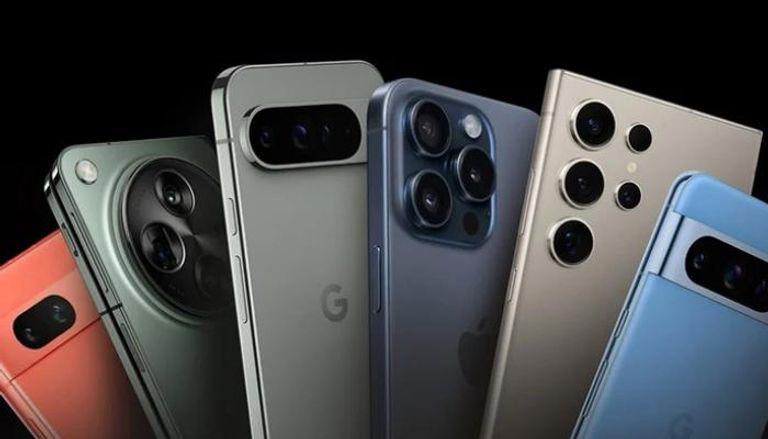
التكنولوجيا اصبحت تتسارع عبر الزمن وتسبقه بخطوة حيث انها أصبحت تلعب دورًا مهماً في إعادة تشكيل عالم التصوير، فلم تعد الهواتف الذكية مجرد أدوات للتواصل الاجتماعي فقط يل تحولت إلى منصات تصوير متطورة تنافس الكاميرات الاحترافية في العديد من الجوانب.
أكد الأستاذ مجدي إبراهيم، رئيس قسم التصوير وشعبة المصورين الصحفيين، أن دخول التكنولوجيا الحديثة في الهواتف الذكية له تأثير كبيرا جدا ومهم وشكل عامل ضغط كبير على الكاميرات لكن التكنولوجيا اثرت ايضا وطورت الكاميرات الاحترافية بشكل متسارع.
أوضح إبراهيم، أن إدخال الذكاء الاصطناعي (AI) في الكاميرات الاحترافية، فإننا نشهد تحولات كبيرة في جودة التصوير. لكنه أضاف أيضًا أن الهواتف الذكية تتقدم بخطى سريعة جدًا، حيث اصبح بإمكانها تقديم صور ومقاطع فيديو بجودة فائقة، مدعومة بتقنيات الذكاء الاصطناعي، ومعالجة الصور المتقدمة، ومستشعرات أكثر تطورًا
هواتف بكاميرات احترافية
بينما يري الأستاذ أمير أيمن، مصور محترف، الي أن الهواتف الذكية في وقتنا هذا تأتي بكاميرات قوية يوجد بها مستشعرات كبيرة وعدسات متنوعة (واسعة، تيليفوتو، ماكرو)، فأصبح من السهل تصوير أي شيء بجودة عالية بدون الاحتياج لكاميرا احترافية.
أضاف أيمن، أن الذكاء الاصطناعي أصبح يفعل كل شيء بسهولة مثلاً : الهاتف يحلل الصورة ويعدل الألوان والإضاءة تلقائيًا لكي تصبح بأفضل شكل، حتى في الليل أو الإضاءة الضعيفة، ميزة العزل في صور البورتريه وتحسين الصور تلقائيًا اصبحت تنافس الكاميرات الاحترافية.
اتفقا الطرفان علي، أن المستقبل قد يشهد استخدام الهواتف الذكية في تصوير البرامج لتلفزيونية والمسلسلات والأفلام السينمائية، حيث أصبح التطور الكبير لهذه الأجهزة يمكنها من التنافس مع الكاميرات الاحترافية، خاصة مع تحسينات البرمجيات وتقنيات التصوير التي تعالج الصور بشكل فوري وتعزز الجودة بطريقة لا يمكن للكاميرات التقليدية مجاراتها بسهولة .
يري الطرفان، أن الهواتف الذكية لن تحل محل الكاميرات الاحترافية بشكل كامل، ولكن يمكن أن تتوسع مجالات استخدامها لتشمل مجالات كانت في السابق مقتصره على المعدات لسينمائية المتخصصة. فمن خلال تحسينات مثل التصوير بتقنية HDR ، ومستشعرات الليزر للتركيز التلقائي، والقدرة على التصوير في ظروف إضاءة منخفضة، أصبحت الهواتف تقدم حلولًا عملية وسريعة يمكن الاعتماد عليها في العديد من الاستخدامات الاحترافية، مما قد جعلها الخيار الأول للعديد من المصورين وصناع المحتوى في المستقبل القريب .
كل هذه العوامل جعلت التصوير بالهواتف الذكية يتفوق في كثير من الجوانب، حيث أصبح جمع بين الجودة والسرعة في الإنتاج، وسهولة التعديل، والإمكانيات المتطورة، مما يفتح لمجال أمام المزيد من الابتكار والإبداع في عالم التصوير.
امثلة عن افلام وجمل اعلانية تم تصويرها بالموبايل :
Apple – “Shot on iPhone” Campaign .1
حملة إعلانية ضخمة أطلقتها آبل، تضمنت مقاطع فيديو وصور مذهلة تم تصويرها بالكامل باستخدام آيفون، وأثبتت أن الهاتف قادر على إنتاج محتوى احترافي.