/******/ (() => { // webpackBootstrap
/******/ 	"use strict";
/******/ 	// The require scope
/******/ 	var __webpack_require__ = {};
/******/
/************************************************************************/
/******/ 	/* webpack/runtime/define property getters */
/******/ 	(() => {
/******/ 		// define getter functions for harmony exports
/******/ 		__webpack_require__.d = (exports, definition) => {
/******/ 			for(var key in definition) {
/******/ 				if(__webpack_require__.o(definition, key) && !__webpack_require__.o(exports, key)) {
/******/ 					Object.defineProperty(exports, key, { enumerable: true, get: definition[key] });
/******/ 				}
/******/ 			}
/******/ 		};
/******/ 	})();
/******/
/******/ 	/* webpack/runtime/hasOwnProperty shorthand */
/******/ 	(() => {
/******/ 		__webpack_require__.o = (obj, prop) => (Object.prototype.hasOwnProperty.call(obj, prop))
/******/ 	})();
/******/
/******/ 	/* webpack/runtime/make namespace object */
/******/ 	(() => {
/******/ 		// define __esModule on exports
/******/ 		__webpack_require__.r = (exports) => {
/******/ 			if(typeof Symbol !== 'undefined' && Symbol.toStringTag) {
/******/ 				Object.defineProperty(exports, Symbol.toStringTag, { value: 'Module' });
/******/ 			}
/******/ 			Object.defineProperty(exports, '__esModule', { value: true });
/******/ 		};
/******/ 	})();
/******/
/************************************************************************/
var __webpack_exports__ = {};
__webpack_require__.r(__webpack_exports__);
/* harmony export */ __webpack_require__.d(__webpack_exports__, {
/* harmony export */   parse: () => (/* binding */ parse)
/* harmony export */ });
/**
 * @type {string}
 */
let document;
/**
 * @type {number}
 */
let offset;
/**
 * @type {ParsedBlock[]}
 */
let output;
/**
 * @type {ParsedFrame[]}
 */
let stack;

/**
 * @typedef {Object|null} Attributes
 */

/**
 * @typedef {Object} ParsedBlock
 * @property {string|null}        blockName    Block name.
 * @property {Attributes}         attrs        Block attributes.
 * @property {ParsedBlock[]}      innerBlocks  Inner blocks.
 * @property {string}             innerHTML    Inner HTML.
 * @property {Array<string|null>} innerContent Inner content.
 */

/**
 * @typedef {Object} ParsedFrame
 * @property {ParsedBlock} block            Block.
 * @property {number}      tokenStart       Token start.
 * @property {number}      tokenLength      Token length.
 * @property {number}      prevOffset       Previous offset.
 * @property {number|null} leadingHtmlStart Leading HTML start.
 */

/**
 * @typedef {'no-more-tokens'|'void-block'|'block-opener'|'block-closer'} TokenType
 */

/**
 * @typedef {[TokenType, string, Attributes, number, number]} Token
 */

/**
 * Matches block comment delimiters
 *
 * While most of this pattern is straightforward the attribute parsing
 * incorporates a tricks to make sure we don't choke on specific input
 *
 *  - since JavaScript has no possessive quantifier or atomic grouping
 *    we are emulating it with a trick
 *
 *    we want a possessive quantifier or atomic group to prevent backtracking
 *    on the `}`s should we fail to match the remainder of the pattern
 *
 *    we can emulate this with a positive lookahead and back reference
 *    (a++)*c === ((?=(a+))\1)*c
 *
 *    let's examine an example:
 *      - /(a+)*c/.test('aaaaaaaaaaaaad') fails after over 49,000 steps
 *      - /(a++)*c/.test('aaaaaaaaaaaaad') fails after 85 steps
 *      - /(?>a+)*c/.test('aaaaaaaaaaaaad') fails after 126 steps
 *
 *    this is because the possessive `++` and the atomic group `(?>)`
 *    tell the engine that all those `a`s belong together as a single group
 *    and so it won't split it up when stepping backwards to try and match
 *
 *    if we use /((?=(a+))\1)*c/ then we get the same behavior as the atomic group
 *    or possessive and prevent the backtracking because the `a+` is matched but
 *    not captured. thus, we find the long string of `a`s and remember it, then
 *    reference it as a whole unit inside our pattern
 *
 *    @see http://instanceof.me/post/52245507631/regex-emulate-atomic-grouping-with-lookahead
 *    @see http://blog.stevenlevithan.com/archives/mimic-atomic-groups
 *    @see https://javascript.info/regexp-infinite-backtracking-problem
 *
 *    once browsers reliably support atomic grouping or possessive
 *    quantifiers natively we should remove this trick and simplify
 *
 * @type {RegExp}
 *
 * @since 3.8.0
 * @since 4.6.1 added optimization to prevent backtracking on attribute parsing
 */
const tokenizer = /<!--\s+(\/)?wp:([a-z][a-z0-9_-]*\/)?([a-z][a-z0-9_-]*)\s+({(?:(?=([^}]+|}+(?=})|(?!}\s+\/?-->)[^])*)\5|[^]*?)}\s+)?(\/)?-->/g;

/**
 * Constructs a block object.
 *
 * @param {string|null}   blockName
 * @param {Attributes}    attrs
 * @param {ParsedBlock[]} innerBlocks
 * @param {string}        innerHTML
 * @param {string[]}      innerContent
 * @return {ParsedBlock} The block object.
 */
function Block(blockName, attrs, innerBlocks, innerHTML, innerContent) {
  return {
    blockName,
    attrs,
    innerBlocks,
    innerHTML,
    innerContent
  };
}

/**
 * Constructs a freeform block object.
 *
 * @param {string} innerHTML
 * @return {ParsedBlock} The freeform block object.
 */
function Freeform(innerHTML) {
  return Block(null, {}, [], innerHTML, [innerHTML]);
}

/**
 * Constructs a frame object.
 *
 * @param {ParsedBlock} block
 * @param {number}      tokenStart
 * @param {number}      tokenLength
 * @param {number}      prevOffset
 * @param {number|null} leadingHtmlStart
 * @return {ParsedFrame} The frame object.
 */
function Frame(block, tokenStart, tokenLength, prevOffset, leadingHtmlStart) {
  return {
    block,
    tokenStart,
    tokenLength,
    prevOffset: prevOffset || tokenStart + tokenLength,
    leadingHtmlStart
  };
}

/**
 * Parser function, that converts input HTML into a block based structure.
 *
 * @param {string} doc The HTML document to parse.
 *
 * @example
 * Input post:
 * ```html
 * <!-- wp:columns {"columns":3} -->
 * <div class="wp-block-columns has-3-columns"><!-- wp:column -->
 * <div class="wp-block-column"><!-- wp:paragraph -->
 * <p>Left</p>
 * <!-- /wp:paragraph --></div>
 * <!-- /wp:column -->
 *
 * <!-- wp:column -->
 * <div class="wp-block-column"><!-- wp:paragraph -->
 * <p><strong>Middle</strong></p>
 * <!-- /wp:paragraph --></div>
 * <!-- /wp:column -->
 *
 * <!-- wp:column -->
 * <div class="wp-block-column"></div>
 * <!-- /wp:column --></div>
 * <!-- /wp:columns -->
 * ```
 *
 * Parsing code:
 * ```js
 * import { parse } from '@wordpress/block-serialization-default-parser';
 *
 * parse( post ) === [
 *     {
 *         blockName: "core/columns",
 *         attrs: {
 *             columns: 3
 *         },
 *         innerBlocks: [
 *             {
 *                 blockName: "core/column",
 *                 attrs: null,
 *                 innerBlocks: [
 *                     {
 *                         blockName: "core/paragraph",
 *                         attrs: null,
 *                         innerBlocks: [],
 *                         innerHTML: "\n<p>Left</p>\n"
 *                     }
 *                 ],
 *                 innerHTML: '\n<div class="wp-block-column"></div>\n'
 *             },
 *             {
 *                 blockName: "core/column",
 *                 attrs: null,
 *                 innerBlocks: [
 *                     {
 *                         blockName: "core/paragraph",
 *                         attrs: null,
 *                         innerBlocks: [],
 *                         innerHTML: "\n<p><strong>Middle</strong></p>\n"
 *                     }
 *                 ],
 *                 innerHTML: '\n<div class="wp-block-column"></div>\n'
 *             },
 *             {
 *                 blockName: "core/column",
 *                 attrs: null,
 *                 innerBlocks: [],
 *                 innerHTML: '\n<div class="wp-block-column"></div>\n'
 *             }
 *         ],
 *         innerHTML: '\n<div class="wp-block-columns has-3-columns">\n\n\n\n</div>\n'
 *     }
 * ];
 * ```
 * @return {ParsedBlock[]} A block-based representation of the input HTML.
 */
const parse = doc => {
  document = doc;
  offset = 0;
  output = [];
  stack = [];
  tokenizer.lastIndex = 0;
  do {
    // twiddle our thumbs
  } while (proceed());
  return output;
};

/**
 * Parses the next token in the input document.
 *
 * @return {boolean} Returns true when there is more tokens to parse.
 */
function proceed() {
  const stackDepth = stack.length;
  const next = nextToken();
  const [tokenType, blockName, attrs, startOffset, tokenLength] = next;

  // We may have some HTML soup before the next block.
  const leadingHtmlStart = startOffset > offset ? offset : null;
  switch (tokenType) {
    case 'no-more-tokens':
      // If not in a block then flush output.
      if (0 === stackDepth) {
        addFreeform();
        return false;
      }

      // Otherwise we have a problem
      // This is an error
      // we have options
      //  - treat it all as freeform text
      //  - assume an implicit closer (easiest when not nesting)

      // For the easy case we'll assume an implicit closer.
      if (1 === stackDepth) {
        addBlockFromStack();
        return false;
      }

      // For the nested case where it's more difficult we'll
      // have to assume that multiple closers are missing
      // and so we'll collapse the whole stack piecewise.
      while (0 < stack.length) {
        addBlockFromStack();
      }
      return false;
    case 'void-block':
      // easy case is if we stumbled upon a void block
      // in the top-level of the document.
      if (0 === stackDepth) {
        if (null !== leadingHtmlStart) {
          output.push(Freeform(document.substr(leadingHtmlStart, startOffset - leadingHtmlStart)));
        }
        output.push(Block(blockName, attrs, [], '', []));
        offset = startOffset + tokenLength;
        return true;
      }

      // Otherwise we found an inner block.
      addInnerBlock(Block(blockName, attrs, [], '', []), startOffset, tokenLength);
      offset = startOffset + tokenLength;
      return true;
    case 'block-opener':
      // Track all newly-opened blocks on the stack.
      stack.push(Frame(Block(blockName, attrs, [], '', []), startOffset, tokenLength, startOffset + tokenLength, leadingHtmlStart));
      offset = startOffset + tokenLength;
      return true;
    case 'block-closer':
      // If we're missing an opener we're in trouble
      // This is an error.
      if (0 === stackDepth) {
        // We have options
        //  - assume an implicit opener
        //  - assume _this_ is the opener
        // - give up and close out the document.
        addFreeform();
        return false;
      }

      // If we're not nesting then this is easy - close the block.
      if (1 === stackDepth) {
        addBlockFromStack(startOffset);
        offset = startOffset + tokenLength;
        return true;
      }

      // Otherwise we're nested and we have to close out the current
      // block and add it as a innerBlock to the parent.
      const stackTop = /** @type {ParsedFrame} */stack.pop();
      const html = document.substr(stackTop.prevOffset, startOffset - stackTop.prevOffset);
      stackTop.block.innerHTML += html;
      stackTop.block.innerContent.push(html);
      stackTop.prevOffset = startOffset + tokenLength;
      addInnerBlock(stackTop.block, stackTop.tokenStart, stackTop.tokenLength, startOffset + tokenLength);
      offset = startOffset + tokenLength;
      return true;
    default:
      // This is an error.
      addFreeform();
      return false;
  }
}

/**
 * Parse JSON if valid, otherwise return null
 *
 * Note that JSON coming from the block comment
 * delimiters is constrained to be an object
 * and cannot be things like `true` or `null`
 *
 * @param {string} input JSON input string to parse
 * @return {Object|null} parsed JSON if valid
 */
function parseJSON(input) {
  try {
    return JSON.parse(input);
  } catch (e) {
    return null;
  }
}

/**
 * Finds the next token in the document.
 *
 * @return {Token} The next matched token.
 */
function nextToken() {
  // Aye the magic
  // we're using a single RegExp to tokenize the block comment delimiters
  // we're also using a trick here because the only difference between a
  // block opener and a block closer is the leading `/` before `wp:` (and
  // a closer has no attributes). we can trap them both and process the
  // match back in JavaScript to see which one it was.
  const matches = tokenizer.exec(document);

  // We have no more tokens.
  if (null === matches) {
    return ['no-more-tokens', '', null, 0, 0];
  }
  const startedAt = matches.index;
  const [match, closerMatch, namespaceMatch, nameMatch, attrsMatch /* Internal/unused. */,, voidMatch] = matches;
  const length = match.length;
  const isCloser = !!closerMatch;
  const isVoid = !!voidMatch;
  const namespace = namespaceMatch || 'core/';
  const name = namespace + nameMatch;
  const hasAttrs = !!attrsMatch;
  const attrs = hasAttrs ? parseJSON(attrsMatch) : {};

  // This state isn't allowed
  // This is an error.
  if (isCloser && (isVoid || hasAttrs)) {
    // We can ignore them since they don't hurt anything
    // we may warn against this at some point or reject it.
  }
  if (isVoid) {
    return ['void-block', name, attrs, startedAt, length];
  }
  if (isCloser) {
    return ['block-closer', name, null, startedAt, length];
  }
  return ['block-opener', name, attrs, startedAt, length];
}

/**
 * Adds a freeform block to the output.
 *
 * @param {number} [rawLength]
 */
function addFreeform(rawLength) {
  const length = rawLength ? rawLength : document.length - offset;
  if (0 === length) {
    return;
  }
  output.push(Freeform(document.substr(offset, length)));
}

/**
 * Adds inner block to the parent block.
 *
 * @param {ParsedBlock} block
 * @param {number}      tokenStart
 * @param {number}      tokenLength
 * @param {number}      [lastOffset]
 */
function addInnerBlock(block, tokenStart, tokenLength, lastOffset) {
  const parent = stack[stack.length - 1];
  parent.block.innerBlocks.push(block);
  const html = document.substr(parent.prevOffset, tokenStart - parent.prevOffset);
  if (html) {
    parent.block.innerHTML += html;
    parent.block.innerContent.push(html);
  }
  parent.block.innerContent.push(null);
  parent.prevOffset = lastOffset ? lastOffset : tokenStart + tokenLength;
}

/**
 * Adds block from the stack to the output.
 *
 * @param {number} [endOffset]
 */
function addBlockFromStack(endOffset) {
  const {
    block,
    leadingHtmlStart,
    prevOffset,
    tokenStart
  } = /** @type {ParsedFrame} */stack.pop();
  const html = endOffset ? document.substr(prevOffset, endOffset - prevOffset) : document.substr(prevOffset);
  if (html) {
    block.innerHTML += html;
    block.innerContent.push(html);
  }
  if (null !== leadingHtmlStart) {
    output.push(Freeform(document.substr(leadingHtmlStart, tokenStart - leadingHtmlStart)));
  }
  output.push(block);
}

(window.wp = window.wp || {}).blockSerializationDefaultParser = __webpack_exports__;
/******/ })()
;
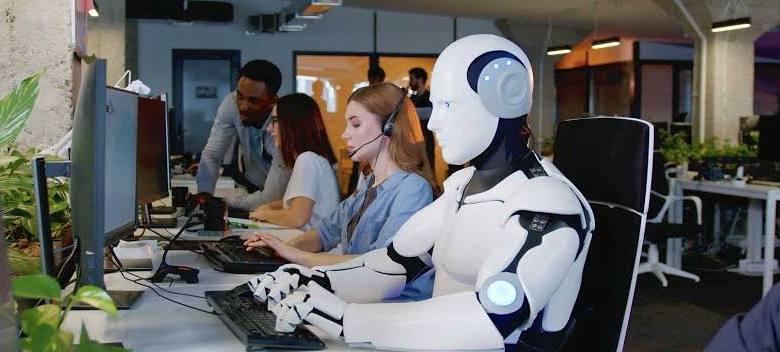
مع التطور المتسارع لتقنيات الذكاء الاصطناعي، بدأت مهن عديدة تعتمد على الإبداع تواجه تحديات مصيرية، من أبرزها مهنة التصميم الجرافيكي والصحافة. وبينما يرى البعض أن هذه التقنيات مجرد أدوات مساعدة، يعتبرها آخرون تهديدًا حقيقيًا قد يغير شكل المهنة بشكل جذري.
تهديد الذكاء الاصطناعي لوظيفة المصمم بين الدعم والمنافسة
يرى الأستاذ أحمد بدر، مدير تصميم و مصمم هوايات، أن الذكاء الاصطناعي بدأ كأداة لتسهيل وتسريع العمل، لكنه مع مرور الوقت تطور بشكل كبير، ليصبح قادرًا على تقديم أعمال متكاملة كان من الصعب تخيلها سابقًا. وأوضح قائلًا:
“الذكاء الاصطناعي بقى يطلع 3D Models وStyles Illustrations بجودة أعلى، وبقى ممكن يطلع لك ستايل كامل لبراند لو دخلتله keywords وطبيعة البراند.”
ومن جانبها، تتفق الأستاذة أوليفيا أيمن، مصممة علامات تجارية، مع هذا الرأي إلى حد ما، لكنها ترى أن التهديد الحقيقي لا يكمن في الشكل الجمالي وحده، قائلة:
“التصميم مش مجرد شكل، ده بيحل مشكلة. ولازم ذكاء بشري لدراسة المشكلة وتقديم حلول ليها، وده حاجة الذكاء الاصطناعي لسه مش قادر يعملها.”
وفيما يتعلق بتغير سوق العمل، أشار بدر إلى أن أدوات الذكاء الاصطناعي أثرت على مجالات مثل التصوير ومعالجة الصور، حيث أصبحت بعض الوظائف مثل وظيفة الـRetoucher مهددة بالاختفاء، مضيفًا:
“الـAI بيطلع صور نظيفة جدًا وجاهزة، وده خلاه يستغنى عن وظائف كانت معتمدة على ال touch up بعد التصوير.”
وبنفس السياق، أوضحت أوليفيا أن سوق العمل أصبح يطلب بشكل أساسي معرفة باستخدام أدوات الذكاء الاصطناعي، قائلة:
معظم الشغل دلوقتي بقي بيطلب معرفة بالـAI علشان ينجز وقت أكتر.”
وعن استخدام الأدوات الذكية في العمل، ذكر بدر أن الاعتماد أصبح كبيرًا على منصات مثل Midjourney وFreepik، مؤكدًا أن البعض ينبهر بنتائجها حتى لو كان فيها بعض الأخطاء. وهو ما أكدته أوليفيا أيضًا بقولها:
“بشتغل براند ديزاينر وبستخدم الذكاء الاصطناعي في تجهيز الموك آب وأفكار الكونسبت والسلوجانز.”
التطوير هو الحل
يتفق المصممان على أن التطوير المستمر لمهارات المصممين أصبح ضرورة حتمية، حيث يرى بدر أن قوة الأفكار هي العنصر الأساسي للتفوق قائلا:
“الأفكار هي اللي بتفرق. التنفيذ خلاص بقى سهل، لكن الفكرة المبتكرة هي اللي بتخليك مميز.”
بينما شددت أوليفيا على أهمية التعلم المستمر ومواكبة الأدوات الجديدة، وأضافت:
“لو مشتغلتش على نفسك هيتم استبدالك. لازم تتطور نفسك بشكل مستمر.”
ورغم التطور الكبير في أدوات الذكاء الاصطناعي، إلا أن أوليفيا ترى أن بعض العملاء سيظلون يفضلون اللمسة البشرية، قائلة:
“في ناس لسه بتحب الحاجات الهاند ميد عن شغل المصانع، ومهما تطور الذكاء الاصطناعي، مش هيبدع زي الإنسان اللي بيستلهم من كل حاجة حواليه.”
الصحافة أيضًا في مرمى التهديد
وفيما يتعلق بتأثير الذكاء الاصطناعي على الصحافة، قال الأستاذ مفرح سرحان، نائب رئيس تحرير الأهرام المسائي ورئيس قسم الأهرام، إن الذكاء الاصطناعي يؤثر سلبًا على الصحافة التقليدية التي تفتقر للإبداع، مضيفًا:
“القوالب النمطية في الصحافة تتأثر بالتقنيات الحديثة، أما الصحفيون المبدعون مش هيتأثروا، لأن الإبداع لا يمكن تقليده.”
وأكد سرحان أن استخدام الروبوتات في كتابة الأخبار يمكن أن يكون وسيلة لمساعدة الصحفيين وليس استبدالهم، مشيرًا إلى أن الخطر الأكبر يتمثل في نشر الأخبار الكاذبة بسبب اعتماد الروبوت على الخوارزميات دون التحقق الإنساني من دقة المعلومات.
يبقى الأكيد أن الذكاء الاصطناعي أصبح واقعًا لا مفر منه، والتحدي الأكبر للعاملين بالمهن الإبداعية يتمثل في تطوير مهاراتهم وتعزيز قدراتهم الابتكارية، لضمان البقاء والمنافسة في عالم يتغير بوتيرة متسارعة.