/**
 * @output wp-includes/js/customize-preview-nav-menus.js
 */

/* global _wpCustomizePreviewNavMenusExports */

/** @namespace wp.customize.navMenusPreview */
wp.customize.navMenusPreview = wp.customize.MenusCustomizerPreview = ( function( $, _, wp, api ) {
	'use strict';

	var self = {
		data: {
			navMenuInstanceArgs: {}
		}
	};
	if ( 'undefined' !== typeof _wpCustomizePreviewNavMenusExports ) {
		_.extend( self.data, _wpCustomizePreviewNavMenusExports );
	}

	/**
	 * Initialize nav menus preview.
	 */
	self.init = function() {
		var self = this, synced = false;

		/*
		 * Keep track of whether we synced to determine whether or not bindSettingListener
		 * should also initially fire the listener. This initial firing needs to wait until
		 * after all of the settings have been synced from the pane in order to prevent
		 * an infinite selective fallback-refresh. Note that this sync handler will be
		 * added after the sync handler in customize-preview.js, so it will be triggered
		 * after all of the settings are added.
		 */
		api.preview.bind( 'sync', function() {
			synced = true;
		} );

		if ( api.selectiveRefresh ) {
			// Listen for changes to settings related to nav menus.
			api.each( function( setting ) {
				self.bindSettingListener( setting );
			} );
			api.bind( 'add', function( setting ) {

				/*
				 * Handle case where an invalid nav menu item (one for which its associated object has been deleted)
				 * is synced from the controls into the preview. Since invalid nav menu items are filtered out from
				 * being exported to the frontend by the _is_valid_nav_menu_item filter in wp_get_nav_menu_items(),
				 * the customizer controls will have a nav_menu_item setting where the preview will have none, and
				 * this can trigger an infinite fallback refresh when the nav menu item lacks any valid items.
				 */
				if ( setting.get() && ! setting.get()._invalid ) {
					self.bindSettingListener( setting, { fire: synced } );
				}
			} );
			api.bind( 'remove', function( setting ) {
				self.unbindSettingListener( setting );
			} );

			/*
			 * Ensure that wp_nav_menu() instances nested inside of other partials
			 * will be recognized as being present on the page.
			 */
			api.selectiveRefresh.bind( 'render-partials-response', function( response ) {
				if ( response.nav_menu_instance_args ) {
					_.extend( self.data.navMenuInstanceArgs, response.nav_menu_instance_args );
				}
			} );
		}

		api.preview.bind( 'active', function() {
			self.highlightControls();
		} );
	};

	if ( api.selectiveRefresh ) {

		/**
		 * Partial representing an invocation of wp_nav_menu().
		 *
		 * @memberOf wp.customize.navMenusPreview
		 * @alias wp.customize.navMenusPreview.NavMenuInstancePartial
		 *
		 * @class
		 * @augments wp.customize.selectiveRefresh.Partial
		 * @since 4.5.0
		 */
		self.NavMenuInstancePartial = api.selectiveRefresh.Partial.extend(/** @lends wp.customize.navMenusPreview.NavMenuInstancePartial.prototype */{

			/**
			 * Constructor.
			 *
			 * @since 4.5.0
			 * @param {string} id - Partial ID.
			 * @param {Object} options
			 * @param {Object} options.params
			 * @param {Object} options.params.navMenuArgs
			 * @param {string} options.params.navMenuArgs.args_hmac
			 * @param {string} [options.params.navMenuArgs.theme_location]
			 * @param {number} [options.params.navMenuArgs.menu]
			 * @param {Object} [options.constructingContainerContext]
			 */
			initialize: function( id, options ) {
				var partial = this, matches, argsHmac;
				matches = id.match( /^nav_menu_instance\[([0-9a-f]{32})]$/ );
				if ( ! matches ) {
					throw new Error( 'Illegal id for nav_menu_instance partial. The key corresponds with the args HMAC.' );
				}
				argsHmac = matches[1];

				options = options || {};
				options.params = _.extend(
					{
						selector: '[data-customize-partial-id="' + id + '"]',
						navMenuArgs: options.constructingContainerContext || {},
						containerInclusive: true
					},
					options.params || {}
				);
				api.selectiveRefresh.Partial.prototype.initialize.call( partial, id, options );

				if ( ! _.isObject( partial.params.navMenuArgs ) ) {
					throw new Error( 'Missing navMenuArgs' );
				}
				if ( partial.params.navMenuArgs.args_hmac !== argsHmac ) {
					throw new Error( 'args_hmac mismatch with id' );
				}
			},

			/**
			 * Return whether the setting is related to this partial.
			 *
			 * @since 4.5.0
			 * @param {wp.customize.Value|string} setting  - Object or ID.
			 * @param {number|Object|false|null}  newValue - New value, or null if the setting was just removed.
			 * @param {number|Object|false|null}  oldValue - Old value, or null if the setting was just added.
			 * @return {boolean}
			 */
			isRelatedSetting: function( setting, newValue, oldValue ) {
				var partial = this, navMenuLocationSetting, navMenuId, isNavMenuItemSetting, _newValue, _oldValue, urlParser;
				if ( _.isString( setting ) ) {
					setting = api( setting );
				}

				/*
				 * Prevent nav_menu_item changes only containing type_label differences triggering a refresh.
				 * These settings in the preview do not include type_label property, and so if one of these
				 * nav_menu_item settings is dirty, after a refresh the nav menu instance would do a selective
				 * refresh immediately because the setting from the pane would have the type_label whereas
				 * the setting in the preview would not, thus triggering a change event. The following
				 * condition short-circuits this unnecessary selective refresh and also prevents an infinite
				 * loop in the case where a nav_menu_instance partial had done a fallback refresh.
				 * @todo Nav menu item settings should not include a type_label property to begin with.
				 */
				isNavMenuItemSetting = /^nav_menu_item\[/.test( setting.id );
				if ( isNavMenuItemSetting && _.isObject( newValue ) && _.isObject( oldValue ) ) {
					_newValue = _.clone( newValue );
					_oldValue = _.clone( oldValue );
					delete _newValue.type_label;
					delete _oldValue.type_label;

					// Normalize URL scheme when parent frame is HTTPS to prevent selective refresh upon initial page load.
					if ( 'https' === api.preview.scheme.get() ) {
						urlParser = document.createElement( 'a' );
						urlParser.href = _newValue.url;
						urlParser.protocol = 'https:';
						_newValue.url = urlParser.href;
						urlParser.href = _oldValue.url;
						urlParser.protocol = 'https:';
						_oldValue.url = urlParser.href;
					}

					// Prevent original_title differences from causing refreshes if title is present.
					if ( newValue.title ) {
						delete _oldValue.original_title;
						delete _newValue.original_title;
					}

					if ( _.isEqual( _oldValue, _newValue ) ) {
						return false;
					}
				}

				if ( partial.params.navMenuArgs.theme_location ) {
					if ( 'nav_menu_locations[' + partial.params.navMenuArgs.theme_location + ']' === setting.id ) {
						return true;
					}
					navMenuLocationSetting = api( 'nav_menu_locations[' + partial.params.navMenuArgs.theme_location + ']' );
				}

				navMenuId = partial.params.navMenuArgs.menu;
				if ( ! navMenuId && navMenuLocationSetting ) {
					navMenuId = navMenuLocationSetting();
				}

				if ( ! navMenuId ) {
					return false;
				}
				return (
					( 'nav_menu[' + navMenuId + ']' === setting.id ) ||
					( isNavMenuItemSetting && (
						( newValue && newValue.nav_menu_term_id === navMenuId ) ||
						( oldValue && oldValue.nav_menu_term_id === navMenuId )
					) )
				);
			},

			/**
			 * Make sure that partial fallback behavior is invoked if there is no associated menu.
			 *
			 * @since 4.5.0
			 *
			 * @return {Promise}
			 */
			refresh: function() {
				var partial = this, menuId, deferred = $.Deferred();

				// Make sure the fallback behavior is invoked when the partial is no longer associated with a menu.
				if ( _.isNumber( partial.params.navMenuArgs.menu ) ) {
					menuId = partial.params.navMenuArgs.menu;
				} else if ( partial.params.navMenuArgs.theme_location && api.has( 'nav_menu_locations[' + partial.params.navMenuArgs.theme_location + ']' ) ) {
					menuId = api( 'nav_menu_locations[' + partial.params.navMenuArgs.theme_location + ']' ).get();
				}
				if ( ! menuId ) {
					partial.fallback();
					deferred.reject();
					return deferred.promise();
				}

				return api.selectiveRefresh.Partial.prototype.refresh.call( partial );
			},

			/**
			 * Render content.
			 *
			 * @inheritdoc
			 * @param {wp.customize.selectiveRefresh.Placement} placement
			 */
			renderContent: function( placement ) {
				var partial = this, previousContainer = placement.container;

				// Do fallback behavior to refresh preview if menu is now empty.
				if ( '' === placement.addedContent ) {
					placement.partial.fallback();
				}

				if ( api.selectiveRefresh.Partial.prototype.renderContent.call( partial, placement ) ) {

					// Trigger deprecated event.
					$( document ).trigger( 'customize-preview-menu-refreshed', [ {
						instanceNumber: null, // @deprecated
						wpNavArgs: placement.context, // @deprecated
						wpNavMenuArgs: placement.context,
						oldContainer: previousContainer,
						newContainer: placement.container
					} ] );
				}
			}
		});

		api.selectiveRefresh.partialConstructor.nav_menu_instance = self.NavMenuInstancePartial;

		/**
		 * Request full refresh if there are nav menu instances that lack partials which also match the supplied args.
		 *
		 * @param {Object} navMenuInstanceArgs
		 */
		self.handleUnplacedNavMenuInstances = function( navMenuInstanceArgs ) {
			var unplacedNavMenuInstances;
			unplacedNavMenuInstances = _.filter( _.values( self.data.navMenuInstanceArgs ), function( args ) {
				return ! api.selectiveRefresh.partial.has( 'nav_menu_instance[' + args.args_hmac + ']' );
			} );
			if ( _.findWhere( unplacedNavMenuInstances, navMenuInstanceArgs ) ) {
				api.selectiveRefresh.requestFullRefresh();
				return true;
			}
			return false;
		};

		/**
		 * Add change listener for a nav_menu[], nav_menu_item[], or nav_menu_locations[] setting.
		 *
		 * @since 4.5.0
		 *
		 * @param {wp.customize.Value} setting
		 * @param {Object}             [options]
		 * @param {boolean}            options.fire Whether to invoke the callback after binding.
		 *                                          This is used when a dynamic setting is added.
		 * @return {boolean} Whether the setting was bound.
		 */
		self.bindSettingListener = function( setting, options ) {
			var matches;
			options = options || {};

			matches = setting.id.match( /^nav_menu\[(-?\d+)]$/ );
			if ( matches ) {
				setting._navMenuId = parseInt( matches[1], 10 );
				setting.bind( this.onChangeNavMenuSetting );
				if ( options.fire ) {
					this.onChangeNavMenuSetting.call( setting, setting(), false );
				}
				return true;
			}

			matches = setting.id.match( /^nav_menu_item\[(-?\d+)]$/ );
			if ( matches ) {
				setting._navMenuItemId = parseInt( matches[1], 10 );
				setting.bind( this.onChangeNavMenuItemSetting );
				if ( options.fire ) {
					this.onChangeNavMenuItemSetting.call( setting, setting(), false );
				}
				return true;
			}

			matches = setting.id.match( /^nav_menu_locations\[(.+?)]/ );
			if ( matches ) {
				setting._navMenuThemeLocation = matches[1];
				setting.bind( this.onChangeNavMenuLocationsSetting );
				if ( options.fire ) {
					this.onChangeNavMenuLocationsSetting.call( setting, setting(), false );
				}
				return true;
			}

			return false;
		};

		/**
		 * Remove change listeners for nav_menu[], nav_menu_item[], or nav_menu_locations[] setting.
		 *
		 * @since 4.5.0
		 *
		 * @param {wp.customize.Value} setting
		 */
		self.unbindSettingListener = function( setting ) {
			setting.unbind( this.onChangeNavMenuSetting );
			setting.unbind( this.onChangeNavMenuItemSetting );
			setting.unbind( this.onChangeNavMenuLocationsSetting );
		};

		/**
		 * Handle change for nav_menu[] setting for nav menu instances lacking partials.
		 *
		 * @since 4.5.0
		 *
		 * @this {wp.customize.Value}
		 */
		self.onChangeNavMenuSetting = function() {
			var setting = this;

			self.handleUnplacedNavMenuInstances( {
				menu: setting._navMenuId
			} );

			// Ensure all nav menu instances with a theme_location assigned to this menu are handled.
			api.each( function( otherSetting ) {
				if ( ! otherSetting._navMenuThemeLocation ) {
					return;
				}
				if ( setting._navMenuId === otherSetting() ) {
					self.handleUnplacedNavMenuInstances( {
						theme_location: otherSetting._navMenuThemeLocation
					} );
				}
			} );
		};

		/**
		 * Handle change for nav_menu_item[] setting for nav menu instances lacking partials.
		 *
		 * @since 4.5.0
		 *
		 * @param {Object} newItem New value for nav_menu_item[] setting.
		 * @param {Object} oldItem Old value for nav_menu_item[] setting.
		 * @this {wp.customize.Value}
		 */
		self.onChangeNavMenuItemSetting = function( newItem, oldItem ) {
			var item = newItem || oldItem, navMenuSetting;
			navMenuSetting = api( 'nav_menu[' + String( item.nav_menu_term_id ) + ']' );
			if ( navMenuSetting ) {
				self.onChangeNavMenuSetting.call( navMenuSetting );
			}
		};

		/**
		 * Handle change for nav_menu_locations[] setting for nav menu instances lacking partials.
		 *
		 * @since 4.5.0
		 *
		 * @this {wp.customize.Value}
		 */
		self.onChangeNavMenuLocationsSetting = function() {
			var setting = this, hasNavMenuInstance;
			self.handleUnplacedNavMenuInstances( {
				theme_location: setting._navMenuThemeLocation
			} );

			// If there are no wp_nav_menu() instances that refer to the theme location, do full refresh.
			hasNavMenuInstance = !! _.findWhere( _.values( self.data.navMenuInstanceArgs ), {
				theme_location: setting._navMenuThemeLocation
			} );
			if ( ! hasNavMenuInstance ) {
				api.selectiveRefresh.requestFullRefresh();
			}
		};
	}

	/**
	 * Connect nav menu items with their corresponding controls in the pane.
	 *
	 * Setup shift-click on nav menu items which are more granular than the nav menu partial itself.
	 * Also this applies even if a nav menu is not partial-refreshable.
	 *
	 * @since 4.5.0
	 */
	self.highlightControls = function() {
		var selector = '.menu-item';

		// Skip adding highlights if not in the customizer preview iframe.
		if ( ! api.settings.channel ) {
			return;
		}

		// Focus on the menu item control when shift+clicking the menu item.
		$( document ).on( 'click', selector, function( e ) {
			var navMenuItemParts;
			if ( ! e.shiftKey ) {
				return;
			}

			navMenuItemParts = $( this ).attr( 'class' ).match( /(?:^|\s)menu-item-(-?\d+)(?:\s|$)/ );
			if ( navMenuItemParts ) {
				e.preventDefault();
				e.stopPropagation(); // Make sure a sub-nav menu item will get focused instead of parent items.
				api.preview.send( 'focus-nav-menu-item-control', parseInt( navMenuItemParts[1], 10 ) );
			}
		});
	};

	api.bind( 'preview-ready', function() {
		self.init();
	} );

	return self;

}( jQuery, _, wp, wp.customize ) );
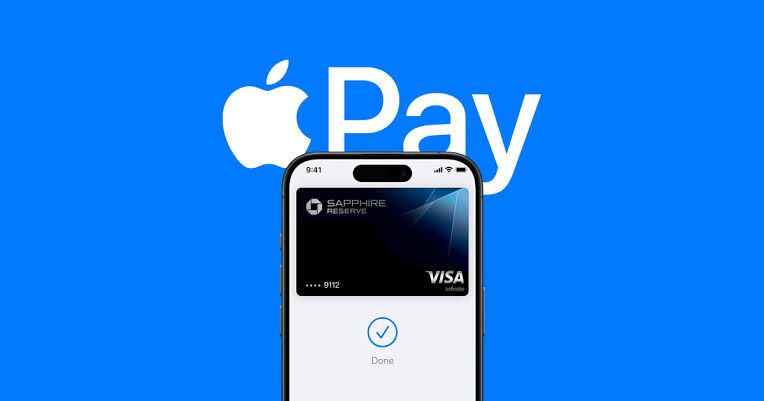
التطور التكنولوجي بات ينتشر بسرعة كبيرة وانتشر مع تطور أنظمة الدفع وأصبح دفع إلكتروني مثل Apple payوالتطبيقات المصرفية، لم يعد الدفع مجرد عملية اقتصادية، بل أصبح تجربة نفسية مختلفه تمامًا عن الدفع النقدي. أحد أبرز التغيرات التي أحدثها الدفع الإلكتروني وهو لحد من الم الدفع، حيث لم يعد الشخص يشعر بانه يحمل المال أو ينفقه، بل تتم العملية لمسة زر واحدة.
أوضح احد الأطباء النفسيين، أن عملية الدفع الإلكترونية عبر منصات مختلفة و اشهرها في وقتنا هذا Apple pay، من الناحية النفسية فهي تقلل من ألم الدفع النقدي الملموس، وتابع فالشخص الذي يبادر بالدفع النقدي يمكن أن يري أمواله وهي تناقص مما يعزز من شعورك بخساره المال وألم الدفع، لاكن الدفع الإلكتروني في ظل طور التكنولوجيا جعل هذه العملية اسهل و اسرع حيث أن هذه المنصات حَدت من الشعور المباشر بالإنفاق.
مضيفا، أن المستهلكين الذين يستخدمون الدفع غير النقدي ينفقون أكثر مقارنة بمن يعتمدون على الدفع النقدي، لأنهم لا يشعرون بمدى الإنفاق بنفس الطريقة، ومع غياب الشعور الفوري بالخسارة، يصبح الشخص أكثر عرضة لشراء أشياء لم يكن يخطط لها او لمجرد الشراء، ومن ناحية أخري ارتفاع مستوي الإنفاق بمعني أن الأشخاص الذين يدفعون إلكترونيا يميلون إلى إنفاق أكثر من لذين يدفعون نقدًا.
تعزيز الأمان المالي
ومن جانبه أكد خالد الشافعي خبير اقتصادي، أن الدفع الإلكتروني يؤثر في الاقتصاد بشكل عام بالإيجاب من زاوية حصر كل التعاملات التي تتم داخل السوق المصرفية متابعا، أنه من الناحية المالية، تتيح له تجنب حمل النقود باستمرار، مما يقلل من مخاطر التعرض للسرقة، كما تعزز مستوى الأمان والاطمئنان في تعاملاته اليومية.
أوضح الشافعي، أن الدفع الإلكتروني من خلال “أبل باي” يعتمد بشكل أساسي على المحفظة المالية لشخصية، حيث يكون الفرد هو المسؤول عن إدارتها، سواء كان ذلك من خلال راتبه، مكافآته، أو أي صدر دخل آخر. ومع ذلك، من الضروري الانتباه إلى أن سهولة الدفع الإلكتروني قد تودي إلى الانفاق غير المحسوب، خاصة وأن العملية لا تتطلب سوى ضغطة زر على الهاتف لتحويل الأموال وإتمام المعاملات.
لذلك، من المهم توعية الأفراد بضرورة التحكم في نفقاتهم وعدم التسرع في الإنفاق لمجرد سهولة العملية.كما يجب إطلاق برامج توعية لحماية المستهلكين من خطر الإدمان على الدفع الإلكتروني، إلى جانب التحذير من آثاره السلبية على الإدارة المالية الشخصية والاستقرار الاقتصادي للفرد.
بينما قالت أحد مستخدمي نظام “Apple pay” أنه أصبح دفع النقود أسهل بكثير، ولم أعد شعر بأنني أنفق الكثير من المال على عكس الدفع النقدي،فعندما أخرج المال من محفظتي، أشعر أن المال يتناقص بشكل كبير و متزايد، مما جعلني أكثر حذر في الانفاق، وفي بعض الاوقات اشعر بالانزعاج لأنني قد لا اتمكن من شراء اشياء اخرى خلال اليوم.
لذلك، من المهم تعزيز الثقافة المالية وتوعية الأفراد بمخاطر الإنفاق المستمر بشكل مبالغ فيه، حتى لا تتحول سهولة الدفع الإلكتروني إلى عبء مالي. فالتكنولوجيا اداة قوية، لكن حسن استخدامها هو ما يحدد تأثيرها على الاستقرار المالي للفرد والمجتمع.