(function (global, factory) {
typeof exports === 'object' && typeof module !== 'undefined' ? factory() :
typeof define === 'function' && define.amd ? define('inert', factory) :
(factory());
}(this, (function () { 'use strict';
var _createClass = function () { function defineProperties(target, props) { for (var i = 0; i < props.length; i++) { var descriptor = props[i]; descriptor.enumerable = descriptor.enumerable || false; descriptor.configurable = true; if ("value" in descriptor) descriptor.writable = true; Object.defineProperty(target, descriptor.key, descriptor); } } return function (Constructor, protoProps, staticProps) { if (protoProps) defineProperties(Constructor.prototype, protoProps); if (staticProps) defineProperties(Constructor, staticProps); return Constructor; }; }();
function _classCallCheck(instance, Constructor) { if (!(instance instanceof Constructor)) { throw new TypeError("Cannot call a class as a function"); } }
/**
* This work is licensed under the W3C Software and Document License
* (http://www.w3.org/Consortium/Legal/2015/copyright-software-and-document).
*/
(function () {
// Return early if we're not running inside of the browser.
if (typeof window === 'undefined' || typeof Element === 'undefined') {
return;
}
// Convenience function for converting NodeLists.
/** @type {typeof Array.prototype.slice} */
var slice = Array.prototype.slice;
/**
* IE has a non-standard name for "matches".
* @type {typeof Element.prototype.matches}
*/
var matches = Element.prototype.matches || Element.prototype.msMatchesSelector;
/** @type {string} */
var _focusableElementsString = ['a[href]', 'area[href]', 'input:not([disabled])', 'select:not([disabled])', 'textarea:not([disabled])', 'button:not([disabled])', 'details', 'summary', 'iframe', 'object', 'embed', 'video', '[contenteditable]'].join(',');
/**
* `InertRoot` manages a single inert subtree, i.e. a DOM subtree whose root element has an `inert`
* attribute.
*
* Its main functions are:
*
* - to create and maintain a set of managed `InertNode`s, including when mutations occur in the
* subtree. The `makeSubtreeUnfocusable()` method handles collecting `InertNode`s via registering
* each focusable node in the subtree with the singleton `InertManager` which manages all known
* focusable nodes within inert subtrees. `InertManager` ensures that a single `InertNode`
* instance exists for each focusable node which has at least one inert root as an ancestor.
*
* - to notify all managed `InertNode`s when this subtree stops being inert (i.e. when the `inert`
* attribute is removed from the root node). This is handled in the destructor, which calls the
* `deregister` method on `InertManager` for each managed inert node.
*/
var InertRoot = function () {
/**
* @param {!HTMLElement} rootElement The HTMLElement at the root of the inert subtree.
* @param {!InertManager} inertManager The global singleton InertManager object.
*/
function InertRoot(rootElement, inertManager) {
_classCallCheck(this, InertRoot);
/** @type {!InertManager} */
this._inertManager = inertManager;
/** @type {!HTMLElement} */
this._rootElement = rootElement;
/**
* @type {!Set<!InertNode>}
* All managed focusable nodes in this InertRoot's subtree.
*/
this._managedNodes = new Set();
// Make the subtree hidden from assistive technology
if (this._rootElement.hasAttribute('aria-hidden')) {
/** @type {?string} */
this._savedAriaHidden = this._rootElement.getAttribute('aria-hidden');
} else {
this._savedAriaHidden = null;
}
this._rootElement.setAttribute('aria-hidden', 'true');
// Make all focusable elements in the subtree unfocusable and add them to _managedNodes
this._makeSubtreeUnfocusable(this._rootElement);
// Watch for:
// - any additions in the subtree: make them unfocusable too
// - any removals from the subtree: remove them from this inert root's managed nodes
// - attribute changes: if `tabindex` is added, or removed from an intrinsically focusable
// element, make that node a managed node.
this._observer = new MutationObserver(this._onMutation.bind(this));
this._observer.observe(this._rootElement, { attributes: true, childList: true, subtree: true });
}
/**
* Call this whenever this object is about to become obsolete. This unwinds all of the state
* stored in this object and updates the state of all of the managed nodes.
*/
_createClass(InertRoot, [{
key: 'destructor',
value: function destructor() {
this._observer.disconnect();
if (this._rootElement) {
if (this._savedAriaHidden !== null) {
this._rootElement.setAttribute('aria-hidden', this._savedAriaHidden);
} else {
this._rootElement.removeAttribute('aria-hidden');
}
}
this._managedNodes.forEach(function (inertNode) {
this._unmanageNode(inertNode.node);
}, this);
// Note we cast the nulls to the ANY type here because:
// 1) We want the class properties to be declared as non-null, or else we
// need even more casts throughout this code. All bets are off if an
// instance has been destroyed and a method is called.
// 2) We don't want to cast "this", because we want type-aware optimizations
// to know which properties we're setting.
this._observer = /** @type {?} */null;
this._rootElement = /** @type {?} */null;
this._managedNodes = /** @type {?} */null;
this._inertManager = /** @type {?} */null;
}
/**
* @return {!Set<!InertNode>} A copy of this InertRoot's managed nodes set.
*/
}, {
key: '_makeSubtreeUnfocusable',
/**
* @param {!Node} startNode
*/
value: function _makeSubtreeUnfocusable(startNode) {
var _this2 = this;
composedTreeWalk(startNode, function (node) {
return _this2._visitNode(node);
});
var activeElement = document.activeElement;
if (!document.body.contains(startNode)) {
// startNode may be in shadow DOM, so find its nearest shadowRoot to get the activeElement.
var node = startNode;
/** @type {!ShadowRoot|undefined} */
var root = undefined;
while (node) {
if (node.nodeType === Node.DOCUMENT_FRAGMENT_NODE) {
root = /** @type {!ShadowRoot} */node;
break;
}
node = node.parentNode;
}
if (root) {
activeElement = root.activeElement;
}
}
if (startNode.contains(activeElement)) {
activeElement.blur();
// In IE11, if an element is already focused, and then set to tabindex=-1
// calling blur() will not actually move the focus.
// To work around this we call focus() on the body instead.
if (activeElement === document.activeElement) {
document.body.focus();
}
}
}
/**
* @param {!Node} node
*/
}, {
key: '_visitNode',
value: function _visitNode(node) {
if (node.nodeType !== Node.ELEMENT_NODE) {
return;
}
var element = /** @type {!HTMLElement} */node;
// If a descendant inert root becomes un-inert, its descendants will still be inert because of
// this inert root, so all of its managed nodes need to be adopted by this InertRoot.
if (element !== this._rootElement && element.hasAttribute('inert')) {
this._adoptInertRoot(element);
}
if (matches.call(element, _focusableElementsString) || element.hasAttribute('tabindex')) {
this._manageNode(element);
}
}
/**
* Register the given node with this InertRoot and with InertManager.
* @param {!Node} node
*/
}, {
key: '_manageNode',
value: function _manageNode(node) {
var inertNode = this._inertManager.register(node, this);
this._managedNodes.add(inertNode);
}
/**
* Unregister the given node with this InertRoot and with InertManager.
* @param {!Node} node
*/
}, {
key: '_unmanageNode',
value: function _unmanageNode(node) {
var inertNode = this._inertManager.deregister(node, this);
if (inertNode) {
this._managedNodes['delete'](inertNode);
}
}
/**
* Unregister the entire subtree starting at `startNode`.
* @param {!Node} startNode
*/
}, {
key: '_unmanageSubtree',
value: function _unmanageSubtree(startNode) {
var _this3 = this;
composedTreeWalk(startNode, function (node) {
return _this3._unmanageNode(node);
});
}
/**
* If a descendant node is found with an `inert` attribute, adopt its managed nodes.
* @param {!HTMLElement} node
*/
}, {
key: '_adoptInertRoot',
value: function _adoptInertRoot(node) {
var inertSubroot = this._inertManager.getInertRoot(node);
// During initialisation this inert root may not have been registered yet,
// so register it now if need be.
if (!inertSubroot) {
this._inertManager.setInert(node, true);
inertSubroot = this._inertManager.getInertRoot(node);
}
inertSubroot.managedNodes.forEach(function (savedInertNode) {
this._manageNode(savedInertNode.node);
}, this);
}
/**
* Callback used when mutation observer detects subtree additions, removals, or attribute changes.
* @param {!Array<!MutationRecord>} records
* @param {!MutationObserver} self
*/
}, {
key: '_onMutation',
value: function _onMutation(records, self) {
records.forEach(function (record) {
var target = /** @type {!HTMLElement} */record.target;
if (record.type === 'childList') {
// Manage added nodes
slice.call(record.addedNodes).forEach(function (node) {
this._makeSubtreeUnfocusable(node);
}, this);
// Un-manage removed nodes
slice.call(record.removedNodes).forEach(function (node) {
this._unmanageSubtree(node);
}, this);
} else if (record.type === 'attributes') {
if (record.attributeName === 'tabindex') {
// Re-initialise inert node if tabindex changes
this._manageNode(target);
} else if (target !== this._rootElement && record.attributeName === 'inert' && target.hasAttribute('inert')) {
// If a new inert root is added, adopt its managed nodes and make sure it knows about the
// already managed nodes from this inert subroot.
this._adoptInertRoot(target);
var inertSubroot = this._inertManager.getInertRoot(target);
this._managedNodes.forEach(function (managedNode) {
if (target.contains(managedNode.node)) {
inertSubroot._manageNode(managedNode.node);
}
});
}
}
}, this);
}
}, {
key: 'managedNodes',
get: function get() {
return new Set(this._managedNodes);
}
/** @return {boolean} */
}, {
key: 'hasSavedAriaHidden',
get: function get() {
return this._savedAriaHidden !== null;
}
/** @param {?string} ariaHidden */
}, {
key: 'savedAriaHidden',
set: function set(ariaHidden) {
this._savedAriaHidden = ariaHidden;
}
/** @return {?string} */
,
get: function get() {
return this._savedAriaHidden;
}
}]);
return InertRoot;
}();
/**
* `InertNode` initialises and manages a single inert node.
* A node is inert if it is a descendant of one or more inert root elements.
*
* On construction, `InertNode` saves the existing `tabindex` value for the node, if any, and
* either removes the `tabindex` attribute or sets it to `-1`, depending on whether the element
* is intrinsically focusable or not.
*
* `InertNode` maintains a set of `InertRoot`s which are descendants of this `InertNode`. When an
* `InertRoot` is destroyed, and calls `InertManager.deregister()`, the `InertManager` notifies the
* `InertNode` via `removeInertRoot()`, which in turn destroys the `InertNode` if no `InertRoot`s
* remain in the set. On destruction, `InertNode` reinstates the stored `tabindex` if one exists,
* or removes the `tabindex` attribute if the element is intrinsically focusable.
*/
var InertNode = function () {
/**
* @param {!Node} node A focusable element to be made inert.
* @param {!InertRoot} inertRoot The inert root element associated with this inert node.
*/
function InertNode(node, inertRoot) {
_classCallCheck(this, InertNode);
/** @type {!Node} */
this._node = node;
/** @type {boolean} */
this._overrodeFocusMethod = false;
/**
* @type {!Set<!InertRoot>} The set of descendant inert roots.
* If and only if this set becomes empty, this node is no longer inert.
*/
this._inertRoots = new Set([inertRoot]);
/** @type {?number} */
this._savedTabIndex = null;
/** @type {boolean} */
this._destroyed = false;
// Save any prior tabindex info and make this node untabbable
this.ensureUntabbable();
}
/**
* Call this whenever this object is about to become obsolete.
* This makes the managed node focusable again and deletes all of the previously stored state.
*/
_createClass(InertNode, [{
key: 'destructor',
value: function destructor() {
this._throwIfDestroyed();
if (this._node && this._node.nodeType === Node.ELEMENT_NODE) {
var element = /** @type {!HTMLElement} */this._node;
if (this._savedTabIndex !== null) {
element.setAttribute('tabindex', this._savedTabIndex);
} else {
element.removeAttribute('tabindex');
}
// Use `delete` to restore native focus method.
if (this._overrodeFocusMethod) {
delete element.focus;
}
}
// See note in InertRoot.destructor for why we cast these nulls to ANY.
this._node = /** @type {?} */null;
this._inertRoots = /** @type {?} */null;
this._destroyed = true;
}
/**
* @type {boolean} Whether this object is obsolete because the managed node is no longer inert.
* If the object has been destroyed, any attempt to access it will cause an exception.
*/
}, {
key: '_throwIfDestroyed',
/**
* Throw if user tries to access destroyed InertNode.
*/
value: function _throwIfDestroyed() {
if (this.destroyed) {
throw new Error('Trying to access destroyed InertNode');
}
}
/** @return {boolean} */
}, {
key: 'ensureUntabbable',
/** Save the existing tabindex value and make the node untabbable and unfocusable */
value: function ensureUntabbable() {
if (this.node.nodeType !== Node.ELEMENT_NODE) {
return;
}
var element = /** @type {!HTMLElement} */this.node;
if (matches.call(element, _focusableElementsString)) {
if ( /** @type {!HTMLElement} */element.tabIndex === -1 && this.hasSavedTabIndex) {
return;
}
if (element.hasAttribute('tabindex')) {
this._savedTabIndex = /** @type {!HTMLElement} */element.tabIndex;
}
element.setAttribute('tabindex', '-1');
if (element.nodeType === Node.ELEMENT_NODE) {
element.focus = function () {};
this._overrodeFocusMethod = true;
}
} else if (element.hasAttribute('tabindex')) {
this._savedTabIndex = /** @type {!HTMLElement} */element.tabIndex;
element.removeAttribute('tabindex');
}
}
/**
* Add another inert root to this inert node's set of managing inert roots.
* @param {!InertRoot} inertRoot
*/
}, {
key: 'addInertRoot',
value: function addInertRoot(inertRoot) {
this._throwIfDestroyed();
this._inertRoots.add(inertRoot);
}
/**
* Remove the given inert root from this inert node's set of managing inert roots.
* If the set of managing inert roots becomes empty, this node is no longer inert,
* so the object should be destroyed.
* @param {!InertRoot} inertRoot
*/
}, {
key: 'removeInertRoot',
value: function removeInertRoot(inertRoot) {
this._throwIfDestroyed();
this._inertRoots['delete'](inertRoot);
if (this._inertRoots.size === 0) {
this.destructor();
}
}
}, {
key: 'destroyed',
get: function get() {
return (/** @type {!InertNode} */this._destroyed
);
}
}, {
key: 'hasSavedTabIndex',
get: function get() {
return this._savedTabIndex !== null;
}
/** @return {!Node} */
}, {
key: 'node',
get: function get() {
this._throwIfDestroyed();
return this._node;
}
/** @param {?number} tabIndex */
}, {
key: 'savedTabIndex',
set: function set(tabIndex) {
this._throwIfDestroyed();
this._savedTabIndex = tabIndex;
}
/** @return {?number} */
,
get: function get() {
this._throwIfDestroyed();
return this._savedTabIndex;
}
}]);
return InertNode;
}();
/**
* InertManager is a per-document singleton object which manages all inert roots and nodes.
*
* When an element becomes an inert root by having an `inert` attribute set and/or its `inert`
* property set to `true`, the `setInert` method creates an `InertRoot` object for the element.
* The `InertRoot` in turn registers itself as managing all of the element's focusable descendant
* nodes via the `register()` method. The `InertManager` ensures that a single `InertNode` instance
* is created for each such node, via the `_managedNodes` map.
*/
var InertManager = function () {
/**
* @param {!Document} document
*/
function InertManager(document) {
_classCallCheck(this, InertManager);
if (!document) {
throw new Error('Missing required argument; InertManager needs to wrap a document.');
}
/** @type {!Document} */
this._document = document;
/**
* All managed nodes known to this InertManager. In a map to allow looking up by Node.
* @type {!Map<!Node, !InertNode>}
*/
this._managedNodes = new Map();
/**
* All inert roots known to this InertManager. In a map to allow looking up by Node.
* @type {!Map<!Node, !InertRoot>}
*/
this._inertRoots = new Map();
/**
* Observer for mutations on `document.body`.
* @type {!MutationObserver}
*/
this._observer = new MutationObserver(this._watchForInert.bind(this));
// Add inert style.
addInertStyle(document.head || document.body || document.documentElement);
// Wait for document to be loaded.
if (document.readyState === 'loading') {
document.addEventListener('DOMContentLoaded', this._onDocumentLoaded.bind(this));
} else {
this._onDocumentLoaded();
}
}
/**
* Set whether the given element should be an inert root or not.
* @param {!HTMLElement} root
* @param {boolean} inert
*/
_createClass(InertManager, [{
key: 'setInert',
value: function setInert(root, inert) {
if (inert) {
if (this._inertRoots.has(root)) {
// element is already inert
return;
}
var inertRoot = new InertRoot(root, this);
root.setAttribute('inert', '');
this._inertRoots.set(root, inertRoot);
// If not contained in the document, it must be in a shadowRoot.
// Ensure inert styles are added there.
if (!this._document.body.contains(root)) {
var parent = root.parentNode;
while (parent) {
if (parent.nodeType === 11) {
addInertStyle(parent);
}
parent = parent.parentNode;
}
}
} else {
if (!this._inertRoots.has(root)) {
// element is already non-inert
return;
}
var _inertRoot = this._inertRoots.get(root);
_inertRoot.destructor();
this._inertRoots['delete'](root);
root.removeAttribute('inert');
}
}
/**
* Get the InertRoot object corresponding to the given inert root element, if any.
* @param {!Node} element
* @return {!InertRoot|undefined}
*/
}, {
key: 'getInertRoot',
value: function getInertRoot(element) {
return this._inertRoots.get(element);
}
/**
* Register the given InertRoot as managing the given node.
* In the case where the node has a previously existing inert root, this inert root will
* be added to its set of inert roots.
* @param {!Node} node
* @param {!InertRoot} inertRoot
* @return {!InertNode} inertNode
*/
}, {
key: 'register',
value: function register(node, inertRoot) {
var inertNode = this._managedNodes.get(node);
if (inertNode !== undefined) {
// node was already in an inert subtree
inertNode.addInertRoot(inertRoot);
} else {
inertNode = new InertNode(node, inertRoot);
}
this._managedNodes.set(node, inertNode);
return inertNode;
}
/**
* De-register the given InertRoot as managing the given inert node.
* Removes the inert root from the InertNode's set of managing inert roots, and remove the inert
* node from the InertManager's set of managed nodes if it is destroyed.
* If the node is not currently managed, this is essentially a no-op.
* @param {!Node} node
* @param {!InertRoot} inertRoot
* @return {?InertNode} The potentially destroyed InertNode associated with this node, if any.
*/
}, {
key: 'deregister',
value: function deregister(node, inertRoot) {
var inertNode = this._managedNodes.get(node);
if (!inertNode) {
return null;
}
inertNode.removeInertRoot(inertRoot);
if (inertNode.destroyed) {
this._managedNodes['delete'](node);
}
return inertNode;
}
/**
* Callback used when document has finished loading.
*/
}, {
key: '_onDocumentLoaded',
value: function _onDocumentLoaded() {
// Find all inert roots in document and make them actually inert.
var inertElements = slice.call(this._document.querySelectorAll('[inert]'));
inertElements.forEach(function (inertElement) {
this.setInert(inertElement, true);
}, this);
// Comment this out to use programmatic API only.
this._observer.observe(this._document.body || this._document.documentElement, { attributes: true, subtree: true, childList: true });
}
/**
* Callback used when mutation observer detects attribute changes.
* @param {!Array<!MutationRecord>} records
* @param {!MutationObserver} self
*/
}, {
key: '_watchForInert',
value: function _watchForInert(records, self) {
var _this = this;
records.forEach(function (record) {
switch (record.type) {
case 'childList':
slice.call(record.addedNodes).forEach(function (node) {
if (node.nodeType !== Node.ELEMENT_NODE) {
return;
}
var inertElements = slice.call(node.querySelectorAll('[inert]'));
if (matches.call(node, '[inert]')) {
inertElements.unshift(node);
}
inertElements.forEach(function (inertElement) {
this.setInert(inertElement, true);
}, _this);
}, _this);
break;
case 'attributes':
if (record.attributeName !== 'inert') {
return;
}
var target = /** @type {!HTMLElement} */record.target;
var inert = target.hasAttribute('inert');
_this.setInert(target, inert);
break;
}
}, this);
}
}]);
return InertManager;
}();
/**
* Recursively walk the composed tree from |node|.
* @param {!Node} node
* @param {(function (!HTMLElement))=} callback Callback to be called for each element traversed,
* before descending into child nodes.
* @param {?ShadowRoot=} shadowRootAncestor The nearest ShadowRoot ancestor, if any.
*/
function composedTreeWalk(node, callback, shadowRootAncestor) {
if (node.nodeType == Node.ELEMENT_NODE) {
var element = /** @type {!HTMLElement} */node;
if (callback) {
callback(element);
}
// Descend into node:
// If it has a ShadowRoot, ignore all child elements - these will be picked
// up by the <content> or <shadow> elements. Descend straight into the
// ShadowRoot.
var shadowRoot = /** @type {!HTMLElement} */element.shadowRoot;
if (shadowRoot) {
composedTreeWalk(shadowRoot, callback, shadowRoot);
return;
}
// If it is a <content> element, descend into distributed elements - these
// are elements from outside the shadow root which are rendered inside the
// shadow DOM.
if (element.localName == 'content') {
var content = /** @type {!HTMLContentElement} */element;
// Verifies if ShadowDom v0 is supported.
var distributedNodes = content.getDistributedNodes ? content.getDistributedNodes() : [];
for (var i = 0; i < distributedNodes.length; i++) {
composedTreeWalk(distributedNodes[i], callback, shadowRootAncestor);
}
return;
}
// If it is a <slot> element, descend into assigned nodes - these
// are elements from outside the shadow root which are rendered inside the
// shadow DOM.
if (element.localName == 'slot') {
var slot = /** @type {!HTMLSlotElement} */element;
// Verify if ShadowDom v1 is supported.
var _distributedNodes = slot.assignedNodes ? slot.assignedNodes({ flatten: true }) : [];
for (var _i = 0; _i < _distributedNodes.length; _i++) {
composedTreeWalk(_distributedNodes[_i], callback, shadowRootAncestor);
}
return;
}
}
// If it is neither the parent of a ShadowRoot, a <content> element, a <slot>
// element, nor a <shadow> element recurse normally.
var child = node.firstChild;
while (child != null) {
composedTreeWalk(child, callback, shadowRootAncestor);
child = child.nextSibling;
}
}
/**
* Adds a style element to the node containing the inert specific styles
* @param {!Node} node
*/
function addInertStyle(node) {
if (node.querySelector('style#inert-style, link#inert-style')) {
return;
}
var style = document.createElement('style');
style.setAttribute('id', 'inert-style');
style.textContent = '\n' + '[inert] {\n' + ' pointer-events: none;\n' + ' cursor: default;\n' + '}\n' + '\n' + '[inert], [inert] * {\n' + ' -webkit-user-select: none;\n' + ' -moz-user-select: none;\n' + ' -ms-user-select: none;\n' + ' user-select: none;\n' + '}\n';
node.appendChild(style);
}
if (!HTMLElement.prototype.hasOwnProperty('inert')) {
/** @type {!InertManager} */
var inertManager = new InertManager(document);
Object.defineProperty(HTMLElement.prototype, 'inert', {
enumerable: true,
/** @this {!HTMLElement} */
get: function get() {
return this.hasAttribute('inert');
},
/** @this {!HTMLElement} */
set: function set(inert) {
inertManager.setInert(this, inert);
}
});
}
})();
})));
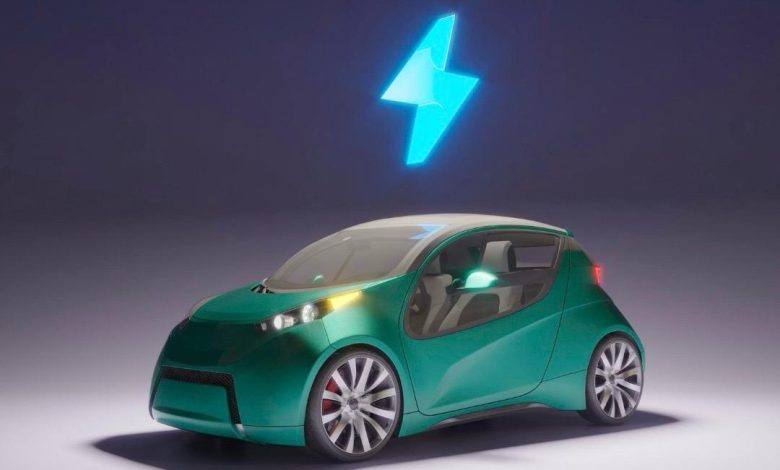
أحدثت التكنولوجيا تطورا كبيرا في عالم السيارات، أبرزها تطوير السيارات الكهربائية كحل مستدام للمستقبل. تتميز هذه السيارات بكفاءة عالية، وانبعاثات منخفضة، وتكاليف تشغيل أقل. رغم ذلك، لا تزال تواجه تحديات، ومع الابتكار المستمر تساهم التكنولوجيا في تجاوز هذه العقبات وتوسيع الاعتماد على النقل الكهربائي.
أكد الأستاذ هاني هشام، مدير إحدي معارض السيارات الكهربائية بالقاهرة، أن معرضة يُعد من المعارض الرائدة في مجال السيارات الكهربائية في مصر، حيث اتخذ خطوة جريئة بافتتاح معرض متخصص بالكامل في السيارات الكهربائية. وأضاف: “خطوتنا جاءت من إيماننا بأن المستقبل في سيارتك، لأن البنزين في طريقه للنهاية”. وأضاف، أن السبب الثاني لاتخاذ هذه الخطوة هو الارتفاع الكبير في تكلفة البنزين، مما يجعل السيارات الكهربائية هي البديل القوي للسيارات التقليدية خلال الفترة القادمة.
ومن جانبه، أكد الأستاذ مجدي كيلاني، أحد مسؤولي المبيعات لإحدي معارض السيارات بالقاهرة، أن التوجه للسيارات الكهربائية لم يعد رفاهية، بل ضرورة تفرضها المعايير البيئية والاقتصادية الحديثة. وأضاف أن المعرض يسعى لتوفير موديلات متنوعة تناسب احتياجات السوق المصري، مع تقديم خدمات ما بعد البيع وتوفير الدعم الفني اللازم، في خطوة تهدف إلى بناء ثقة المستهلك وتشجيعه على التحول لهذا النوع من السيارات
مميزات سيارات الكهرباء:
أوضح هشام، أنه من أبرز مميزات السيارات الكهربائية أنها تعتمد على بطاريات ليثيوم مما يجعل عمرها الافتراضي طويلاً ، ويجعلها أيضاً خيارًا عمليًا واقتصاديًا على المدى البعيد. كما أن قطع غيارها متوفرة، وصيانتها محدودة مقارنة بالسيارات التقليدية، كما أنها تحافظ على البيئة المحيطة بها وتُعد صديقة للبيئة، بفضل خلوّها من الانبعاثات الضارة.
وهناك نظام تمتاز به سيارات الكهرباء ليست في السيارات العادية وهي قدرتها على قراءة إرشادات الطريق الموجودة عليه، والتعرف على اللوحات والإشارات المنتشرة في الشوارع، مما يعزز من أمان القيادة ويسهل على السائقين التنقل بذكاء وسهولة.
اتفق معه كيلاني، وأضاف أن السيارات الكهربائية تتميز بعدة مزايا تجعلها خيارًا أفضل للمستقبل، أولها نها لا تستهلك البنزين، مما يجعلها وسيلة موفرة بالمقارنة بالسيارات التقليدية المستهلكة للبنزين المستمر.
وتزوّد بعض من انواع سيارات الكهرباء المتقدمة في الطراز بأنظمة أمان ذكية، خاصة في السيارات ذاتية القيادة، فعلى سبيل المثال، إذا وجدت طفلا يقطع الطريق فجأة، تقوم السيارة تلقائيًا بتفعيل وضع منع التصادم والتوقف الفوري، مما يعزز من مستوى الامان على الطرق و علي المستخدم.
التحديات التي تواجه سيارات الكهرباء :
قال هشام، إن أولى التحديات التي تواجه انتشار السيارات الكهربائية تتعلق بالعقلية و التفكير، حيث لايزال كثير من الناس غير مقتنعين تمامًا بفكرة الاعتماد على هذا النوع من السيارات، ويشعرون بالتخوف من السير بسيارة تعمل فقط بالبطارية. هذا التخوف يُشكل عامل قلق لدى العديد من الأفراد، نتيجة لعدم الاطمئنان الكامل تجاه مدى أمان البطارية وكفاءتها، وهو ما يتطلب جهود أكبر لنشر الوعي وتوضيح مزايا هذه التكنولوجيا الجديدة.
بينما يري الكيلاني، ان هناك تحدي واضح يتمثل في غياب المراكز المعتمدة لصيانتها حتى الآن فبالرغم من انها لا تحتاج صيانه في اغلب الاوقات الا انه لا يمكن شراء سيارة بدون معرفه مراكز صيانتها وذلك ايضا هو نوع من تخوف الافراد لشرائها، وذلك يحدث بسبب ضعف البنية التحتية اللازمة لدعم هذا النوع من السيارات بالشكل الكافي.
وحول مدى تطور التكنولوجيا في مجال السيارات الكهربائية، يرى الأستاذ هشام، أن ما وصلت إليه هذه الصناعة يؤكد انها تمثل المستقبل الحقيقي لعالم السيارات، وان هذا التطور التكنولوجي يسهم في تعزيز ثقة المستهلك ويدعم توجه السوق نحو البدائل النظيفة والمستدامة.
ومن جانبه، أشار الكيلاني، إلي أن هذا التطور يمهد لتحول في قطاع النقل، خاصة على المدى البعيد. وأكد أن انتشار السيارات الكهربائية سيسهم بشكل كبير في تقليل نسبة التلوث الذي يتعرض له الهواء نتيجة الانبعاثات الناتجة عن وقود السيارات التقليدية.
تمثل السيارات الكهربائية مستقبل النقل الذكي والمستدام، وسط التطور التكنولوجي المتسارع والجهود المستمرة لتجاوز هذه التحديات وبناء ثقة المستهلك نحو بيئة أنظف وقيادة أكثر كفاءة.